Where we stand
Regulated hunting is either part of how African wildlife survives or it is not. We think it is, and we would rather make that argument openly than avoid the subject.
The argument, plainly
Wildlife in Africa survives on land. Land has alternative uses — cattle, crops, settlement — and those uses pay. If wildlife on a piece of ground is worth less to the people living there than cattle would be, the wildlife goes and the cattle come. That is not cynicism, it is what has happened across most of the continent over the last century.
Regulated hunting gives wildlife a measurable financial value on land that is usually too remote, too dry or too disease-prone for photographic tourism to reach. A hunting concession generates revenue from a very small number of animals, and that revenue funds anti-poaching patrols, employs local people, and gives communities a concrete reason to tolerate animals that eat their crops and occasionally kill their livestock.
It is not a perfect system and it is not the only tool. But where it has been removed without replacing the revenue, wildlife populations have generally fallen rather than risen, because the land stopped paying its way.
Where the money actually goes
On the concessions we hunt, revenue is split between government licence and quota fees, concession fees paid to the communities or authorities that hold the land, anti-poaching operations, and camp employment.
The employment part is easy to overlook and it matters enormously. A working safari camp employs trackers, skinners, cooks, drivers, general staff and their extended networks, in places that have very few other employers. On a fourteen-day hunt the meat from a buffalo or elephant feeds a significant number of people who otherwise eat very little protein.
Why we hunt old animals
Sustainable hunting takes males past breeding age, in numbers small enough that the population absorbs them without noticing. That is not a marketing line, it is arithmetic.
On elephant it means bulls that are thin over the shoulders and hips, with worn and often broken ivory, well past the point of contributing genetically. On buffalo it means fully hard-bossed bulls pushed out of the herd. On plains game it means mature males that have already passed on their genetics several times over.
This is also, conveniently, how you end up with a better trophy. The interests line up.
What we will not do
Canned hunting
We do not hunt animals released into an enclosure to be shot. Ever. There is no version of this we consider acceptable and it has done enormous damage to the reputation of legitimate hunting.
Captive-bred lion
We do not offer captive-bred lion hunting under any circumstances. It contributes nothing to conservation and we want no part of it.
Misrepresenting the ground
Where we hunt managed land, we say so plainly before you book. You will never arrive expecting unfenced wilderness and find something else.
Abandoning a wounded animal
If an animal is wounded, we follow it for as long as it takes and we do not stop because the light is going or the day is done. This is not negotiable.
Pressuring a shot
You will never be pushed into taking a shot you are not comfortable with, or onto an animal that is too young. Passing is always the right answer if you are unsure.
Exceeding quota
Quotas are set by government and are not suggestions. When a concession's quota is used, the hunting stops, regardless of what is booked.
Fair chase
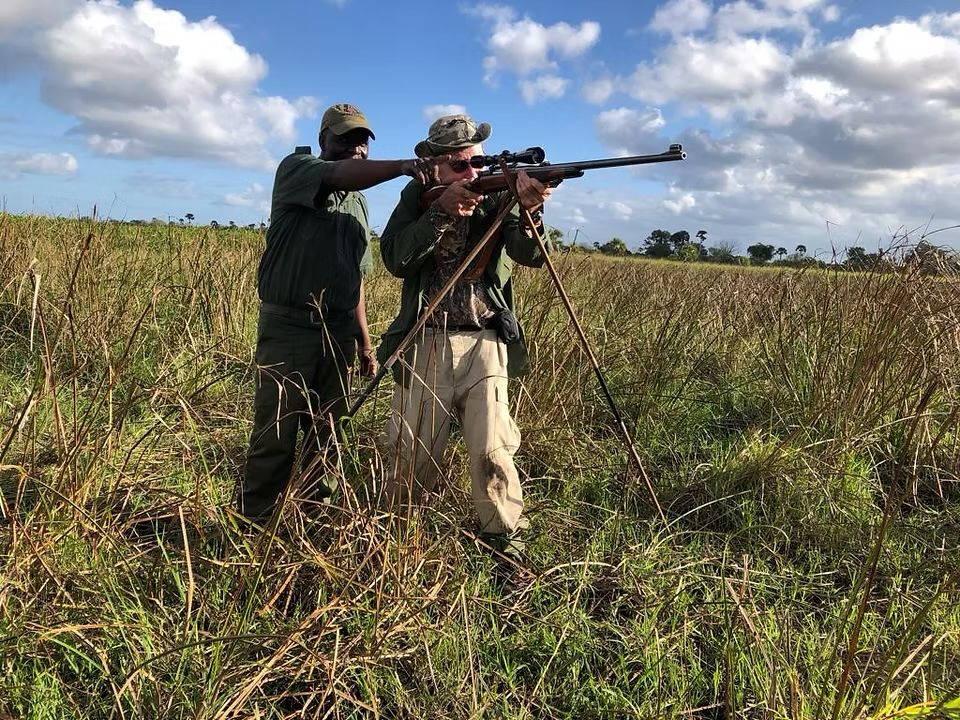
Fair chase means the animal has a genuine chance of detecting you and escaping, and that you have not engineered away the difficulty. In practice that means hunting on foot, tracking rather than driving up to animals, working the wind, and accepting that a great many days end with nothing.
It also means the shot. Taking a marginal shot at an animal you cannot see clearly, at a range you have not practised, is the single most common way a hunt goes wrong. Your professional hunter will tell you not to take it, and that is the job you are paying him for.
What we ask of you
- Be honest about your fitness and your shooting before you book
- Practise standing, off sticks, at realistic ranges
- Accept your PH's judgement on an animal's age and on whether a shot is on
- Be willing to pass, and to go home without something
- Follow instructions without argument during a follow-up on wounded dangerous game
If you disagree
Plenty of thoughtful people do, and the debate is a legitimate one. We are not interested in shouting anyone down about it, and we do not think the case for regulated hunting is served by pretending it has no difficulties.
What we will say is that the outcome that matters is whether there is more wild land with more wild animals on it in fifty years. Everything we have described here is aimed at that, and we are happy to be judged on it.
Ask us the hard questions
If you have doubts about any of this, raise them. We would rather have the conversation than have you book something you are not comfortable with.