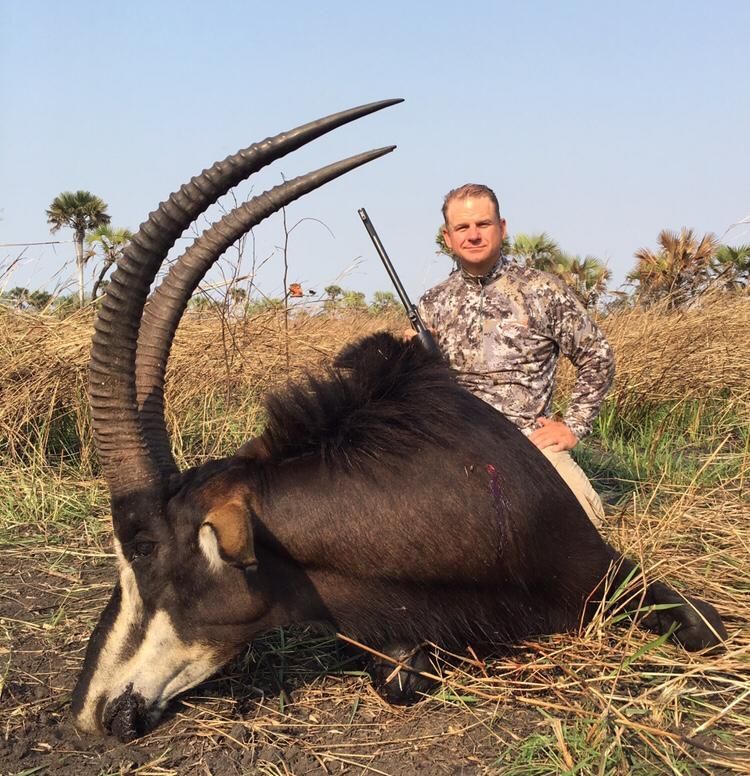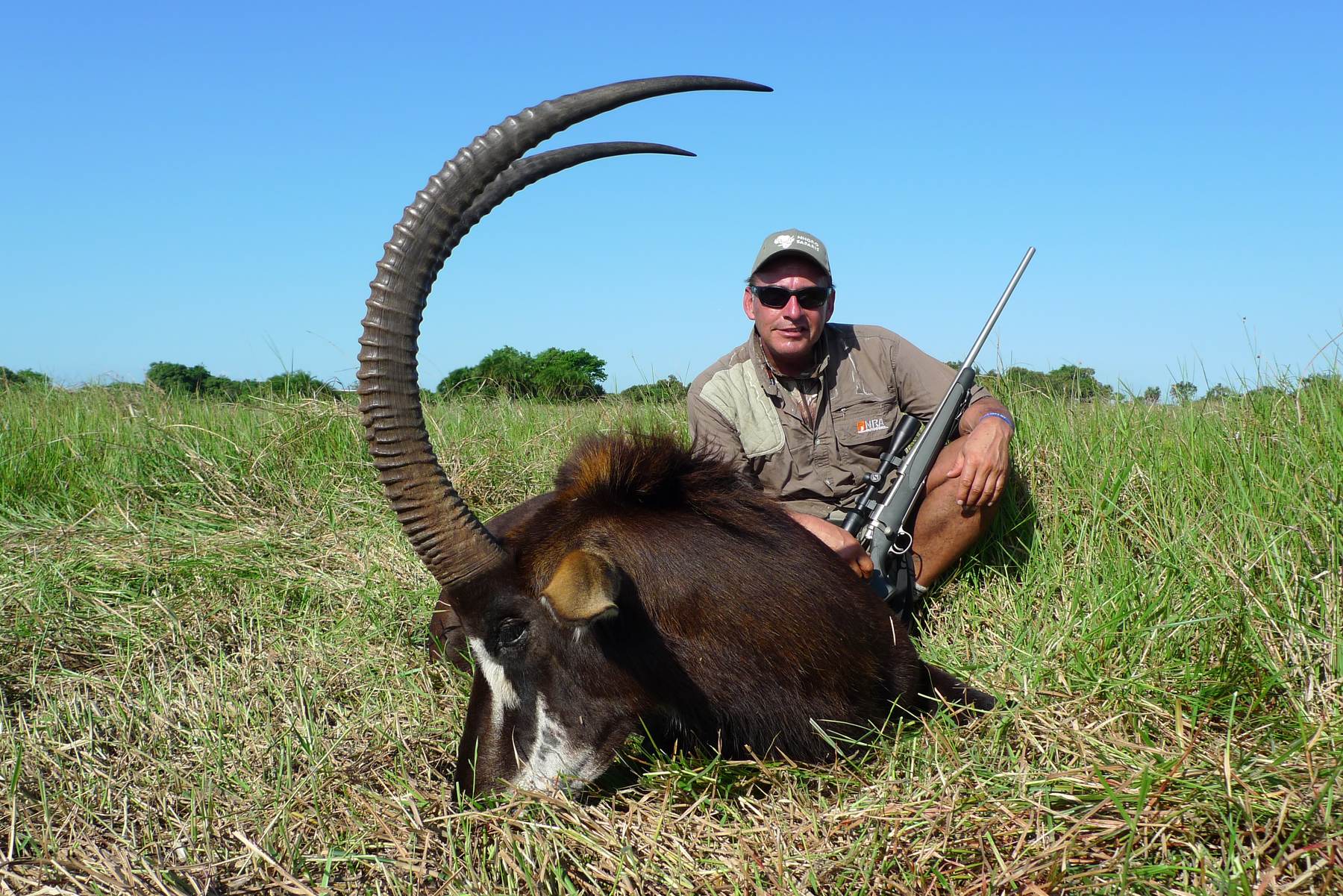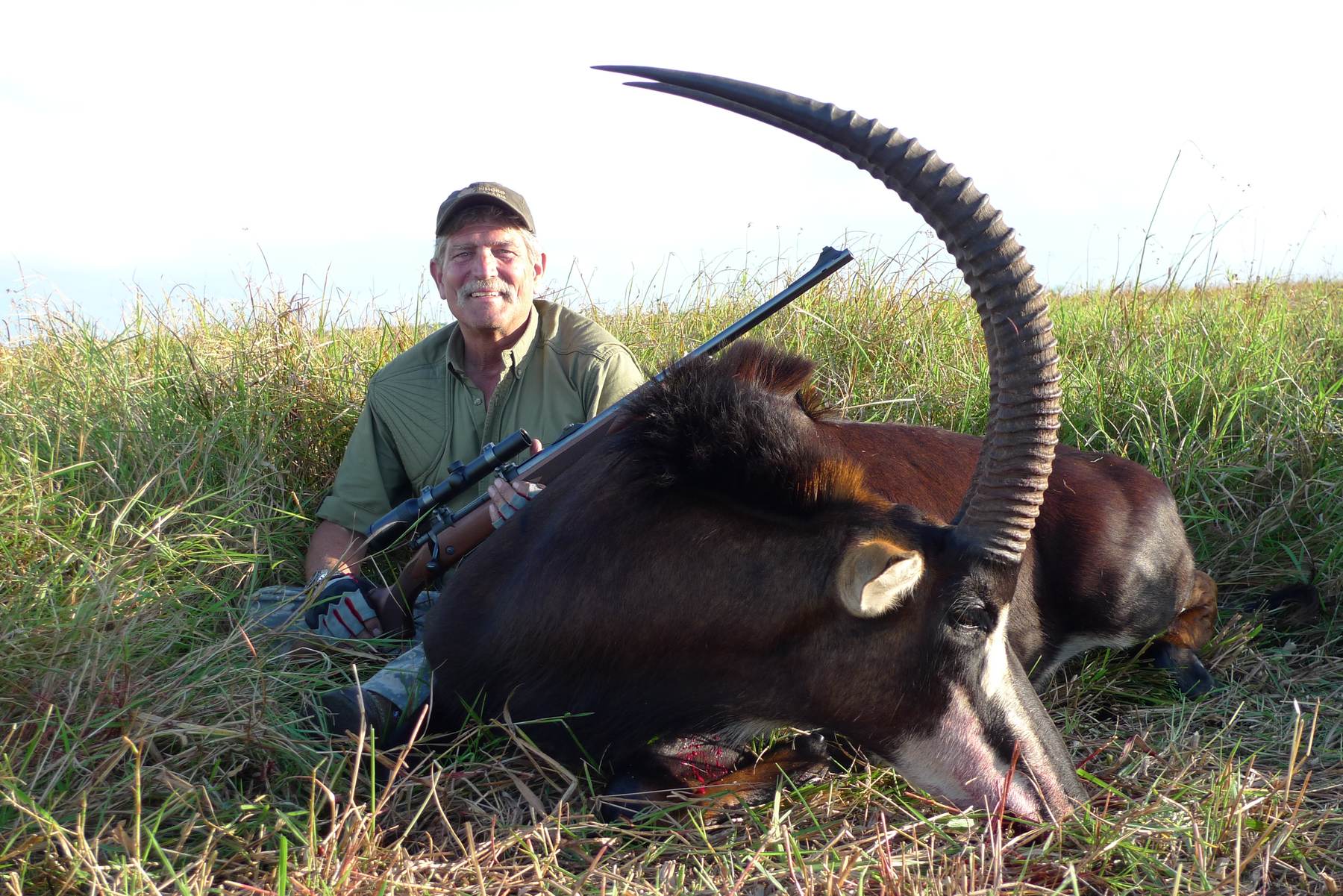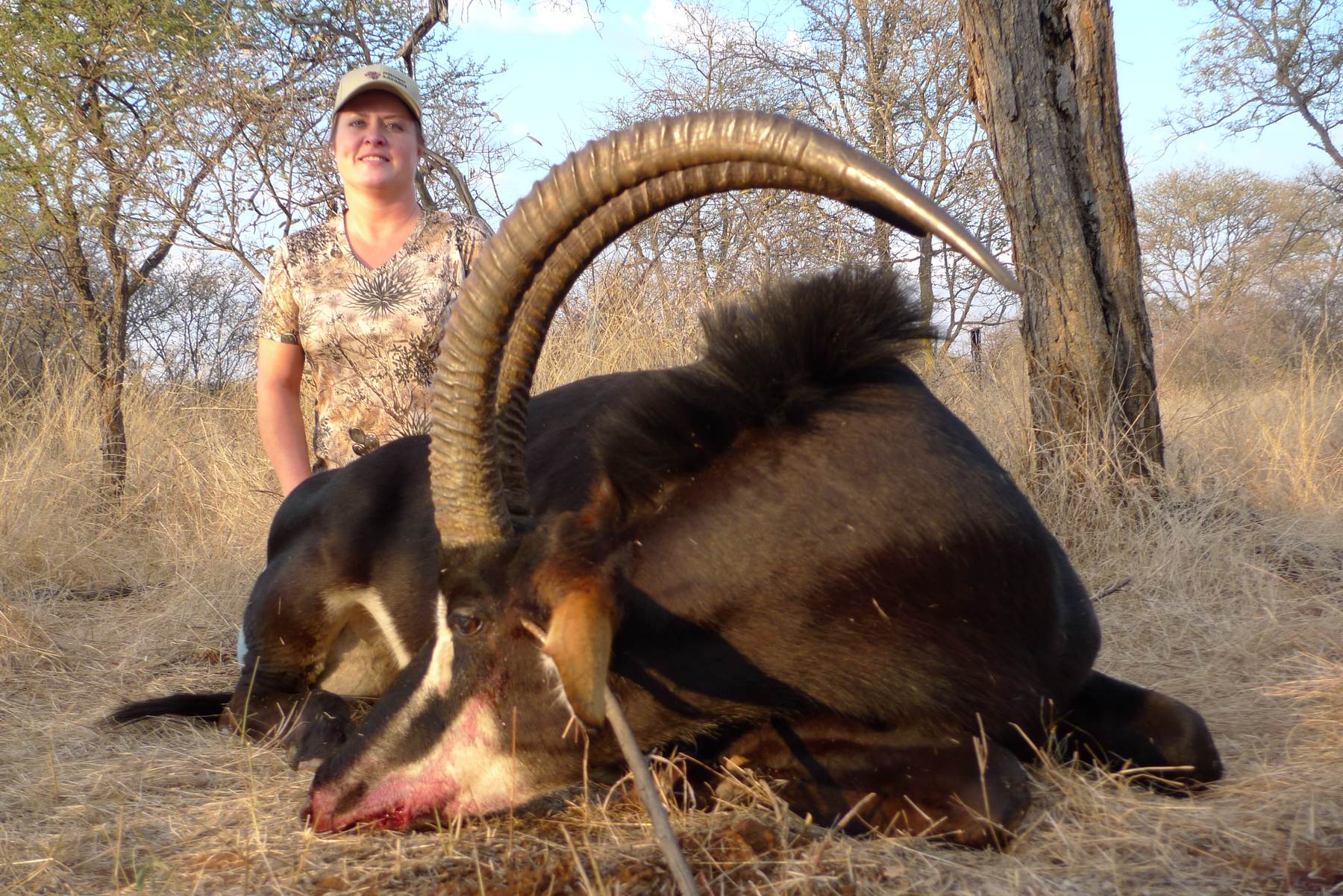
The animal
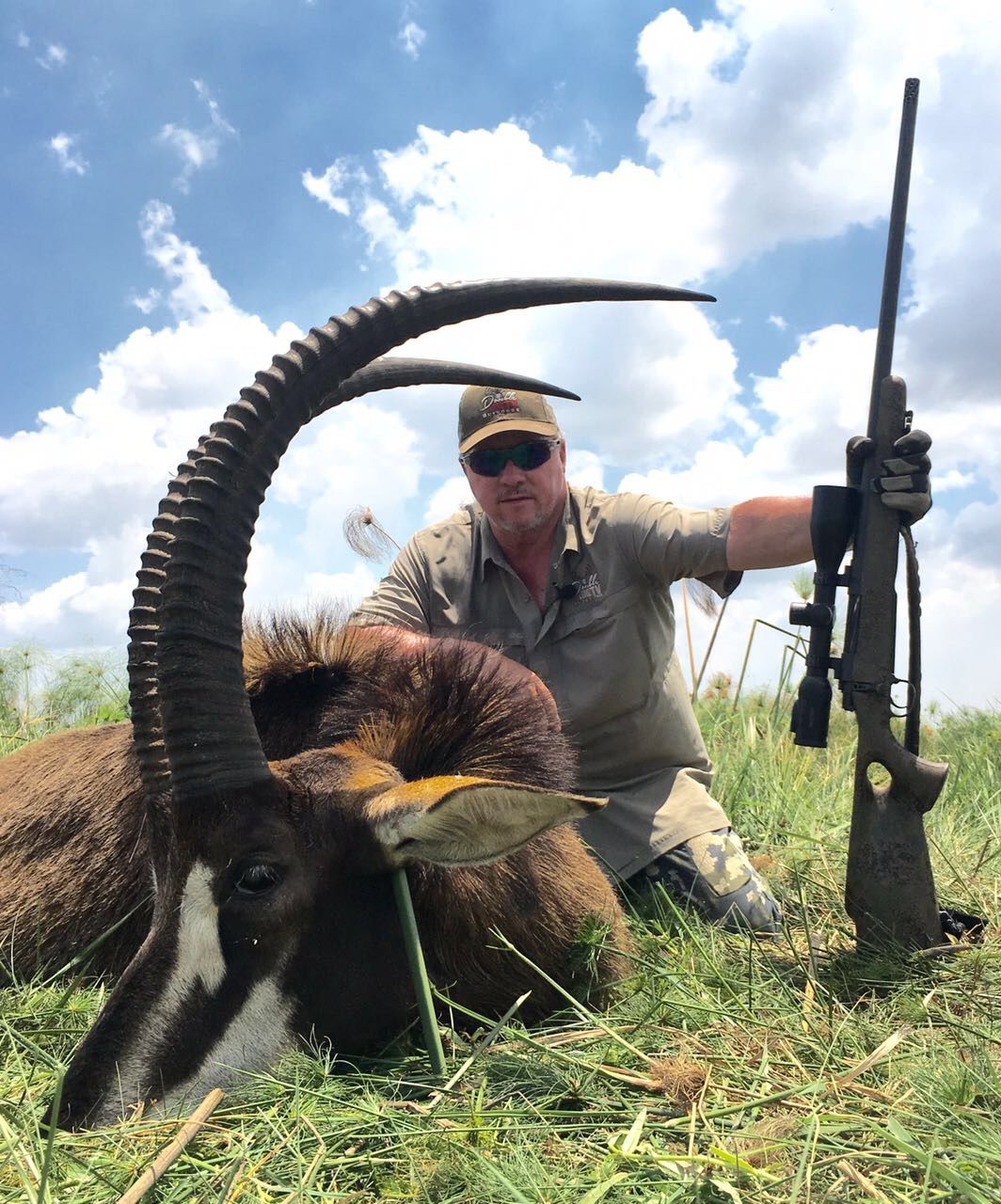
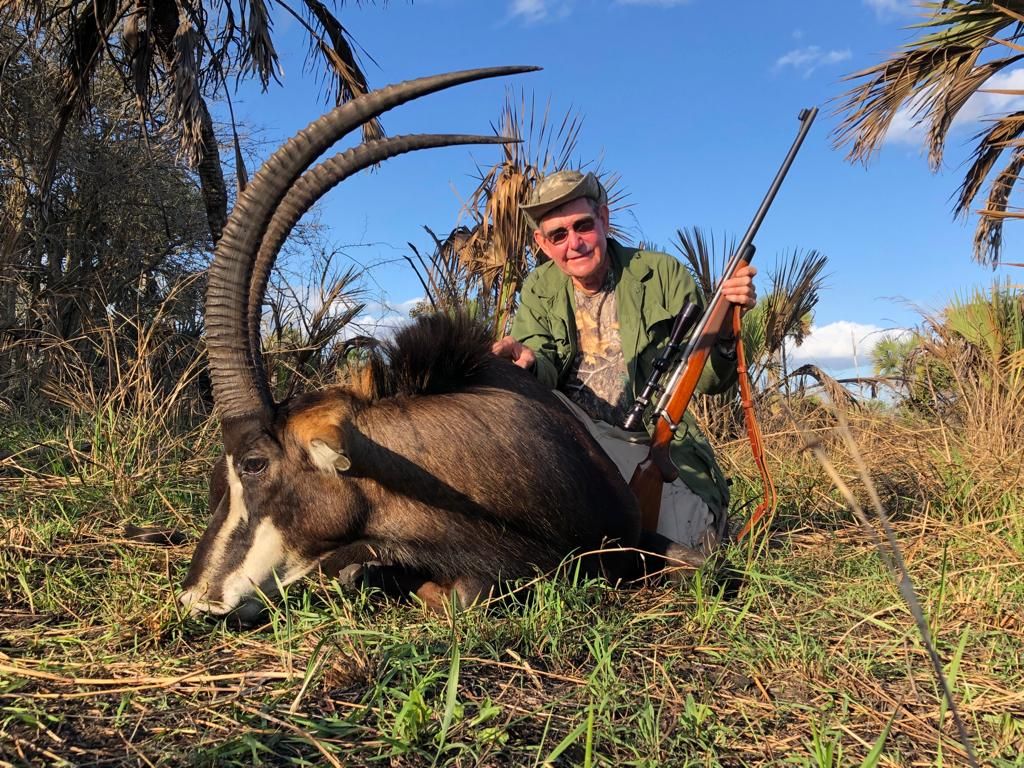
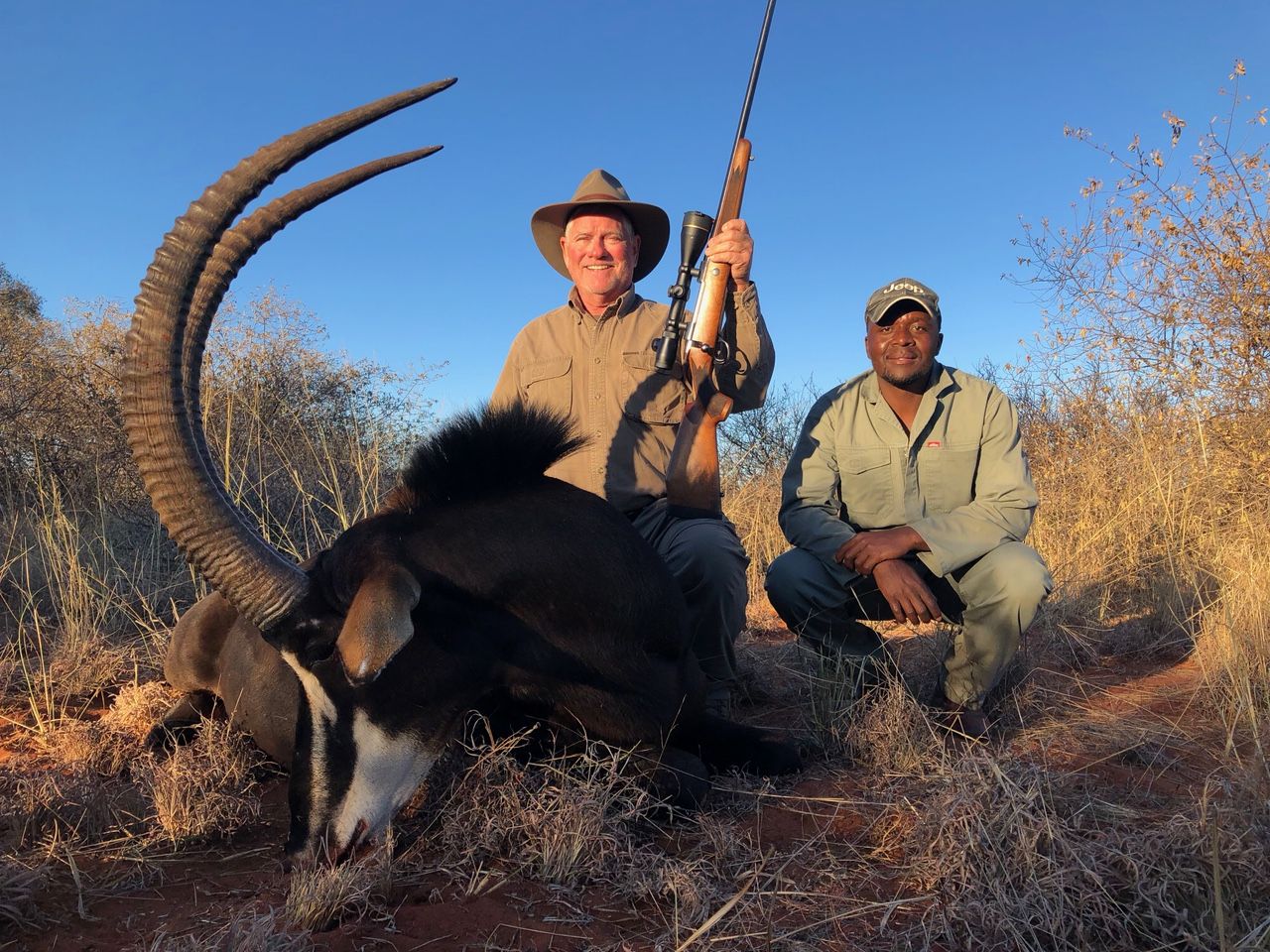
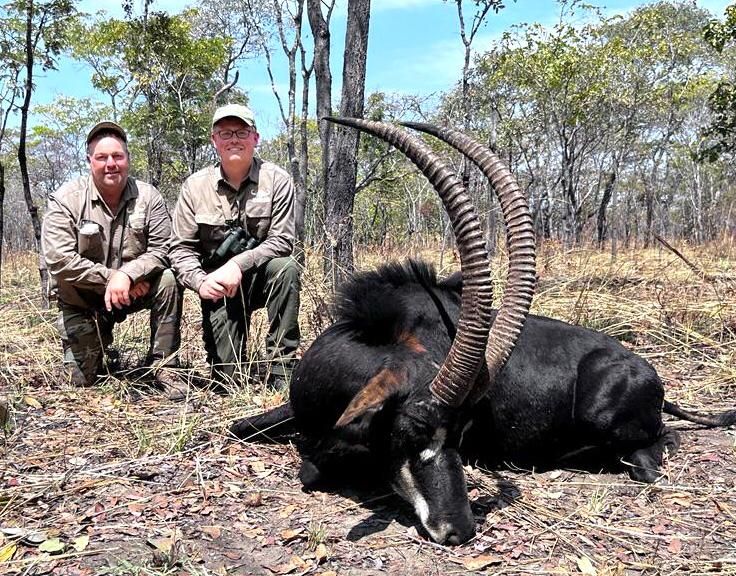
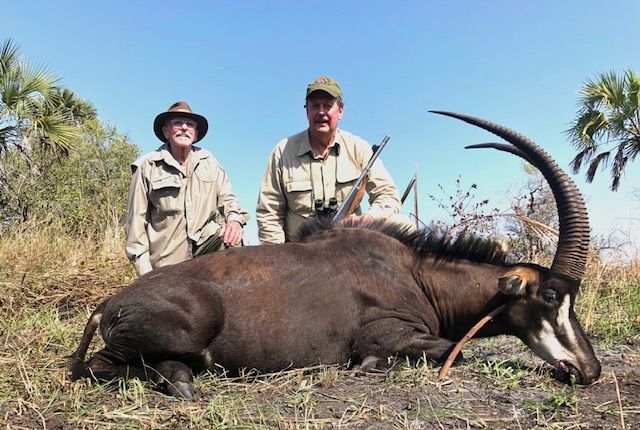
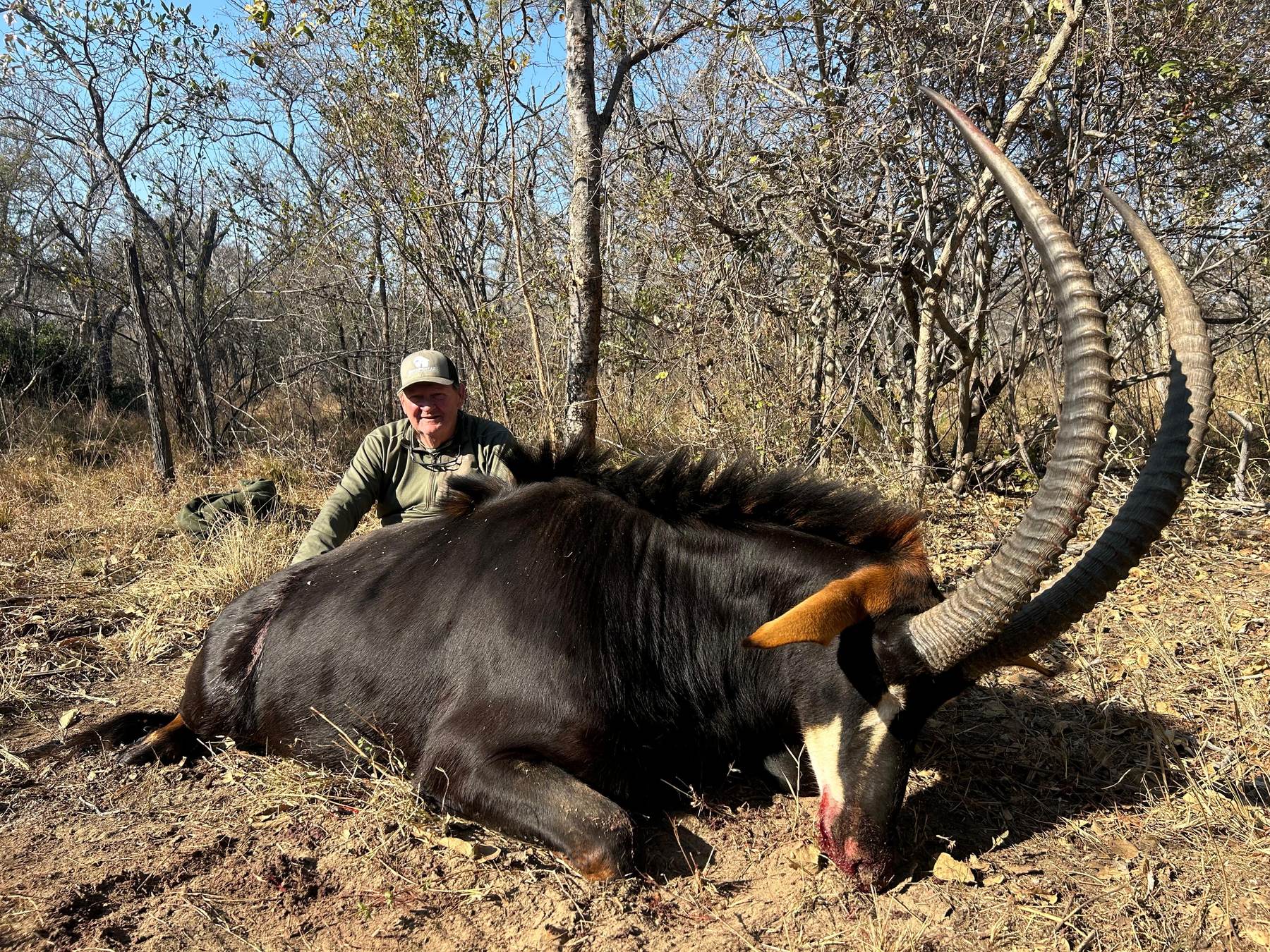
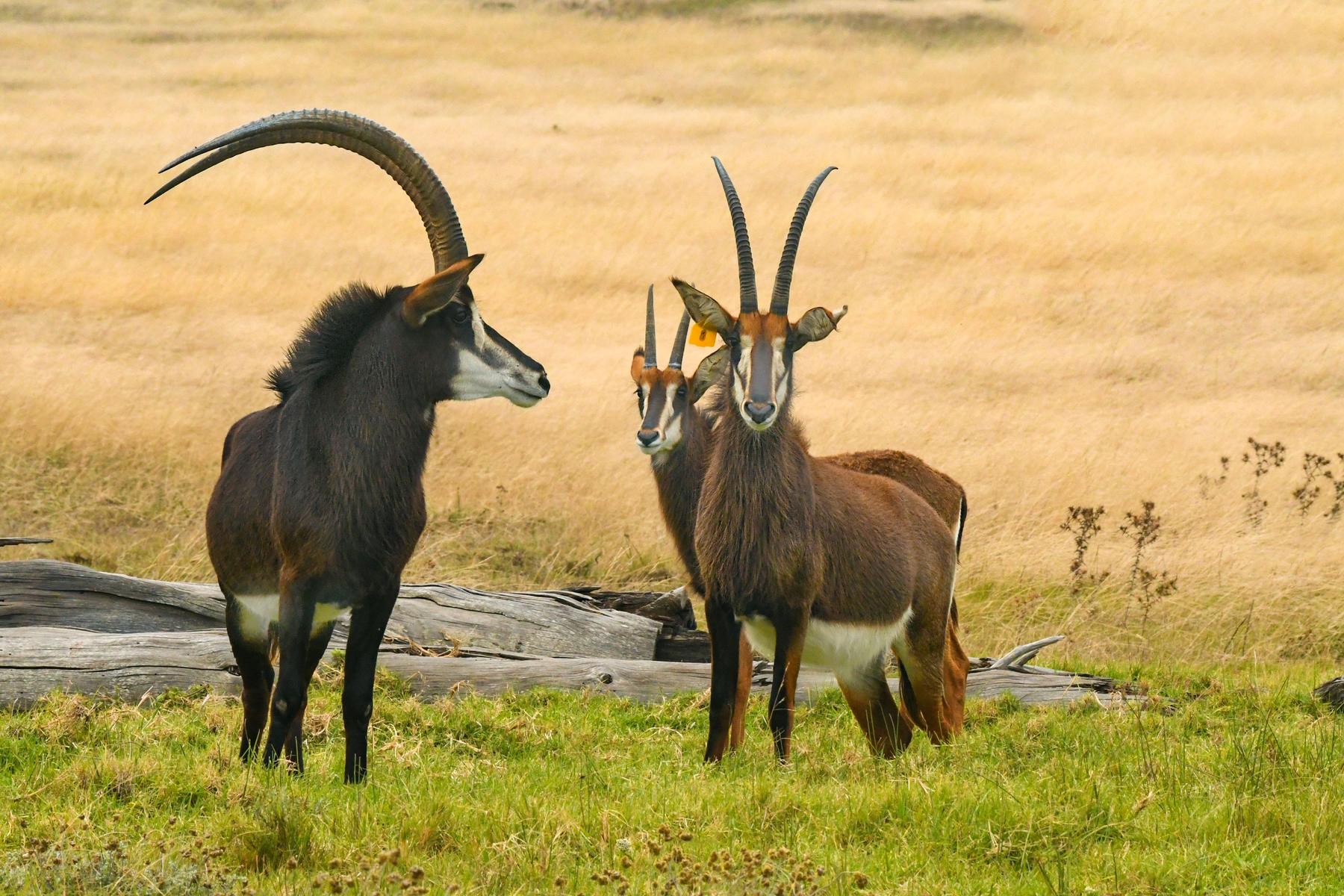
A fully mature sable bull is jet black, with a white belly and facial blaze, a stiff upright mane, and horns that sweep back over his shoulders in a scimitar curve. He weighs around 230 kilograms and he is not remotely afraid of you.
Sable are aggressive animals. Bulls fight seriously and frequently, and a wounded sable is one of the few plains game animals that will genuinely come for you. They have killed lion. Treat the follow-up on a sable the way you would treat a wounded buffalo.
Colour tells you age
Sable bulls are born a reddish-brown, essentially the same colour as the cows. As they mature they darken through chocolate to a deep, oiled black, and the process takes years.
That gives you a straightforward field guide to age. A jet-black bull with a sharply defined white facial mask is old, and old is what you want. A brown or dark-brown bull is young, regardless of how long his horns look. Cows carry horns too, and shorter, thinner ones, which catches out inexperienced hunters at distance.
For measurement, look at horn length along the curve and at the ringing. A mature bull carries deep, heavy ridges from the base to roughly two-thirds up the horn, and worn smooth tips.
Where we hunt them
Mozambique is our strongest sable ground. The Delta concession and its surrounding woodland hold genuinely wild, free-ranging sable with excellent horn, and this is where our best bulls come from.
Zimbabwe produces heavy, long-horned sable in the miombo of the north-west, usually taken alongside an elephant or cat hunt.
South Africa offers the most accessible sable hunting on managed ground, with shorter safaris and easier logistics. Good option if sable is a secondary species on a plains game trip.
The hunt
Sable are herd animals and the herd is led by a dominant bull. Younger bulls are pushed out and live singly or in bachelor groups, and these are often the easier animals to approach.
Hunting is spot-and-stalk in open miombo. You glass from termite mounds and vehicle tracks in the early morning, identify a herd, and then work out how to get inside 150 metres of the bull without the twenty cows around him deciding otherwise. Sable are alert and they move constantly while feeding.
The stalk is frequently ruined not by the bull but by an impala or a warthog you did not see. That is plains game hunting.
Rifle and shot placement
Do not under-gun a sable. A .300 Winchester Magnum with a premium 200-grain bullet is a sensible baseline; .338 and .375 are better. Their heavy shoulder bone, dense muscle and remarkable will to keep going mean a marginal shot on a sable is a serious problem.
Take the broadside shoulder shot if it is offered. Break bone. Then be ready for a follow-up shot immediately, and stay well behind the professional hunter if the animal goes into cover.
Bow hunting sable
Sable are hunted with a bow from blinds over water on several of our concessions. It demands seventy pounds of draw weight as a minimum and heavy, well-tuned arrows. August through October, when heat drives daily drinking, is the window.
A note on cost
Sable are among the more expensive plains game animals in Africa and the trophy fee varies significantly between countries and between wild and managed populations. We will be direct with you about what you are paying for and where the animal comes from before you commit to anything.