
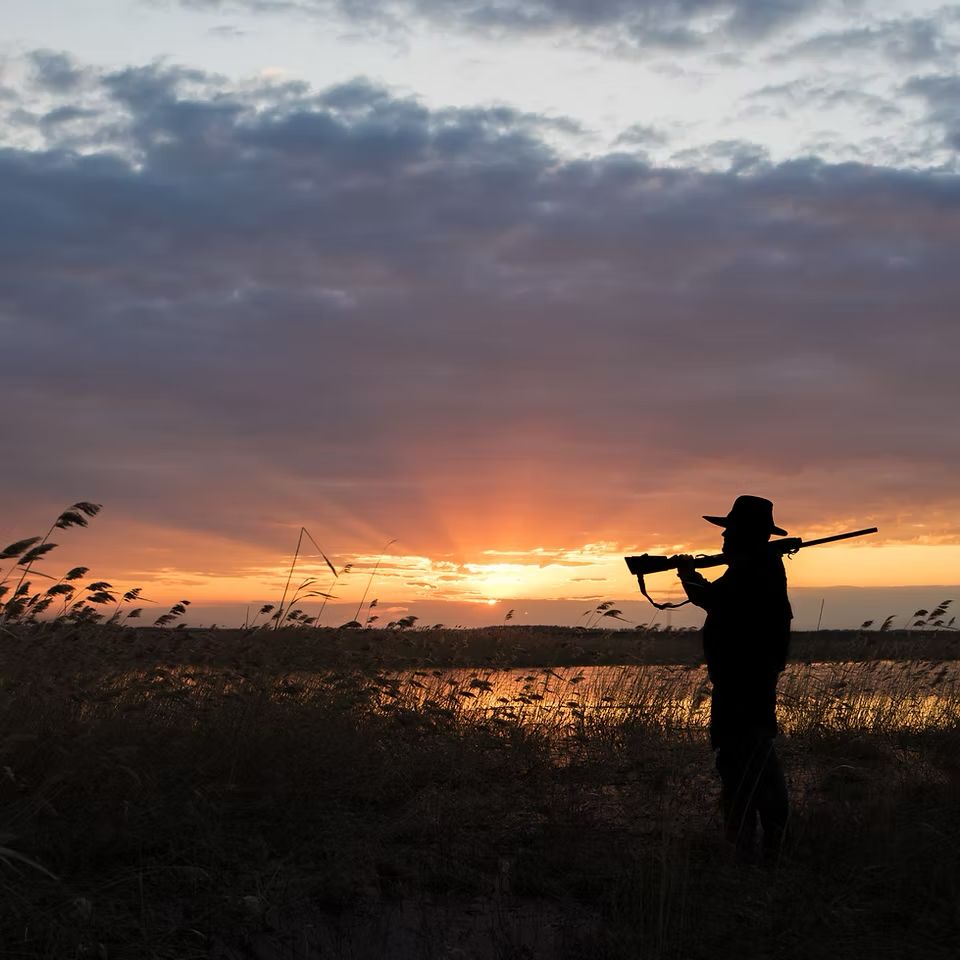
What a day actually looks like
Most of a safari is not the shot. It is the walking, the waiting, the heat of the middle of the day, and the fire at the end of it. Here is the honest version.
The rhythm of a hunting day
One thing worth clearing up, because it puts people off unnecessarily: this is not a pre-dawn, coffee-in-the-dark operation. In Zimbabwe, Mozambique and South Africa our camp sits on the hunting ground itself, so there is no long drive out to a concession each morning. You wake just before sunrise, eat something, and head out as the light breaks. If a particular hunt genuinely needs an earlier start we will make one — but that is the exception, not the routine.
-
05:45
Up just before the sun
No alarm in the dark and no pre-dawn scramble. You wake shortly before sunrise, with enough time to dress properly and come through to the fire without rushing. Winter mornings in Southern Africa are genuinely cold and everyone underestimates it on their first day — bring a jacket.
-
06:15
Coffee and a light breakfast
Coffee, something light to eat, and a few minutes to check your rifle, your ammunition and your water. Because camp is on the hunting ground itself in all three of our countries, there is no transfer to make and no reason to bolt your food.
-
06:45
Out as the sun breaks
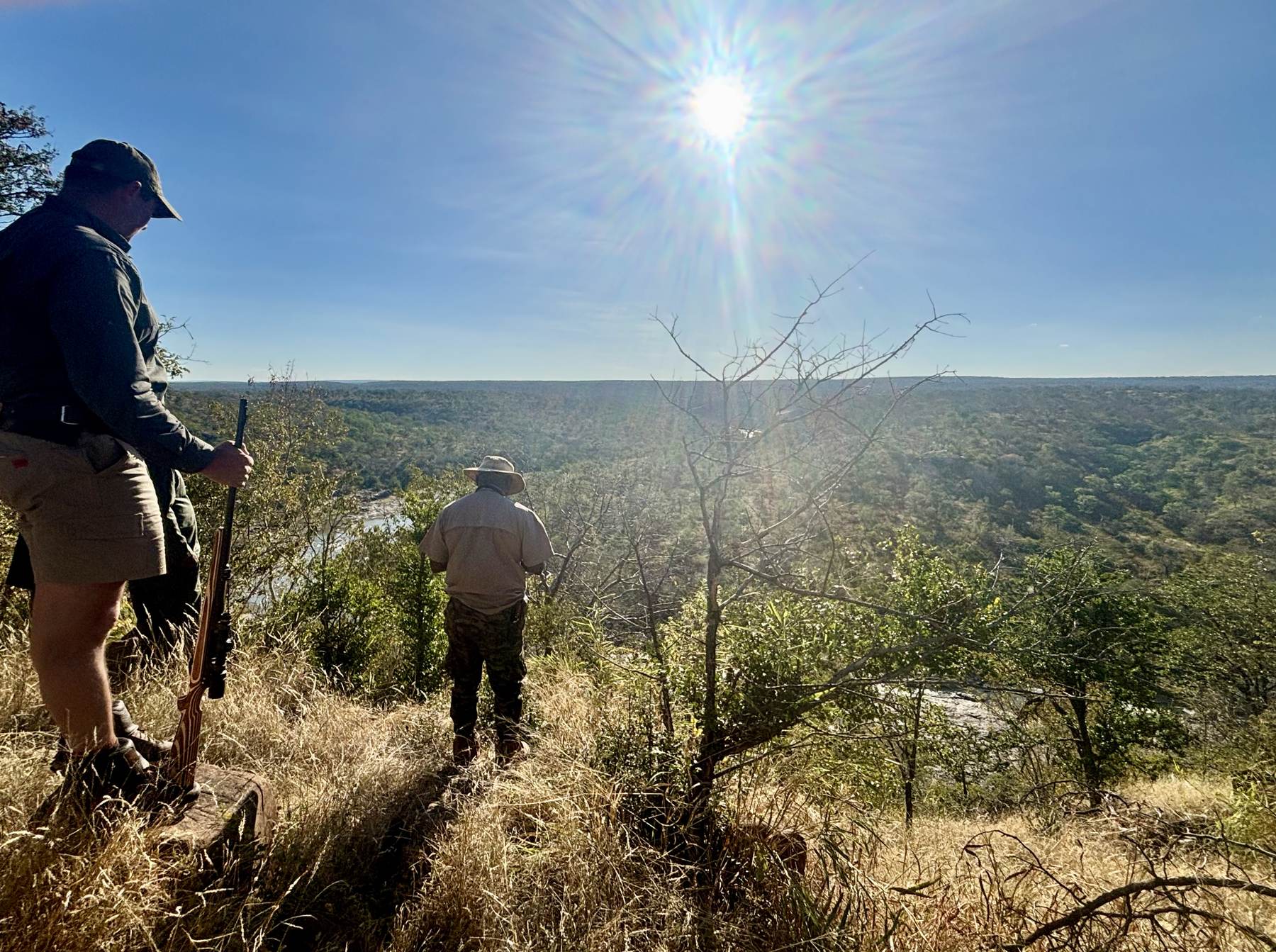
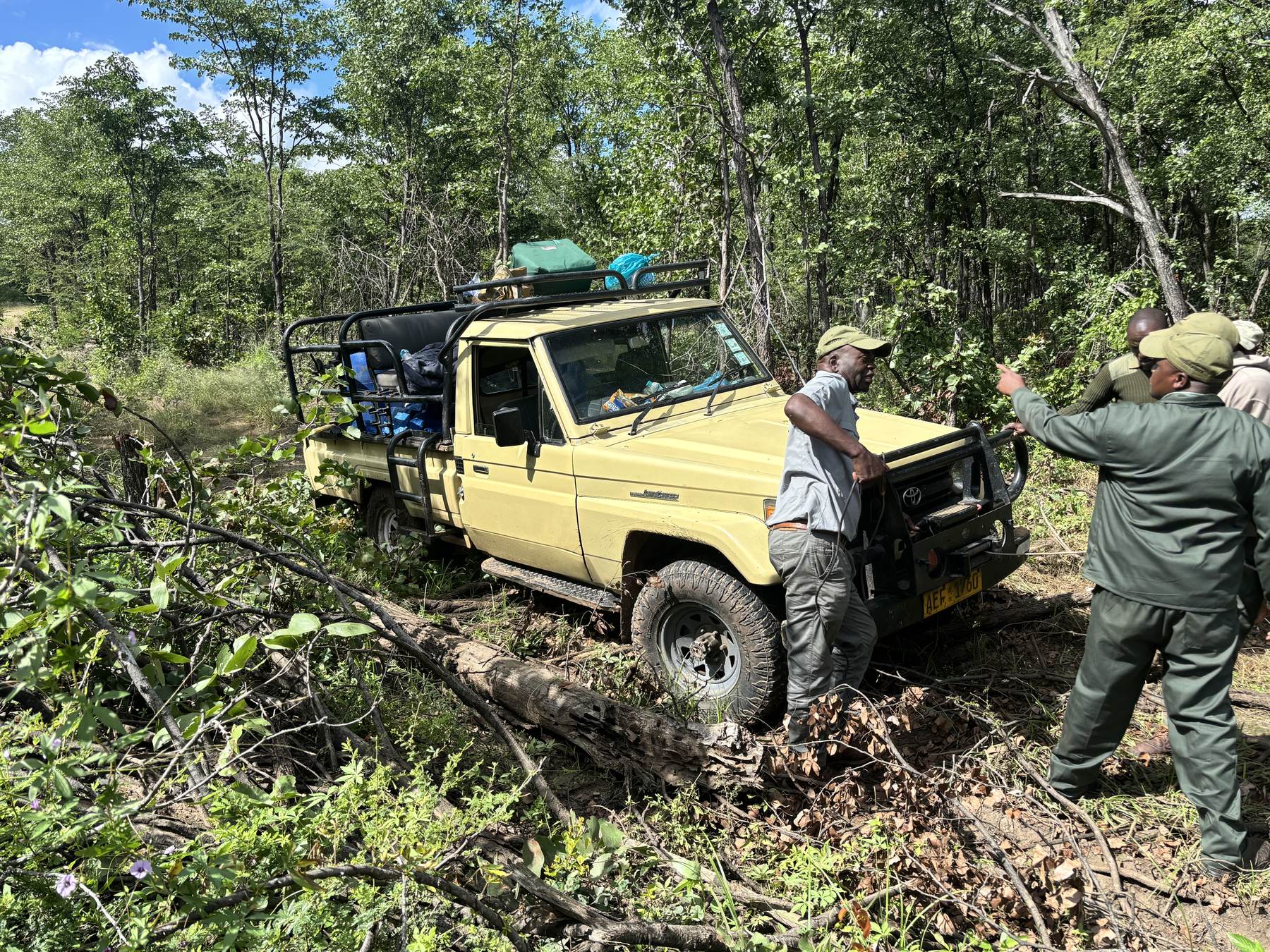
You leave camp right as the light comes up, which is when the game is moving. The first hour is spent working cutlines, drainage lines and sand rivers, reading what moved overnight. The trackers ride on the back and see everything you do not.
-
07:30
On the tracks
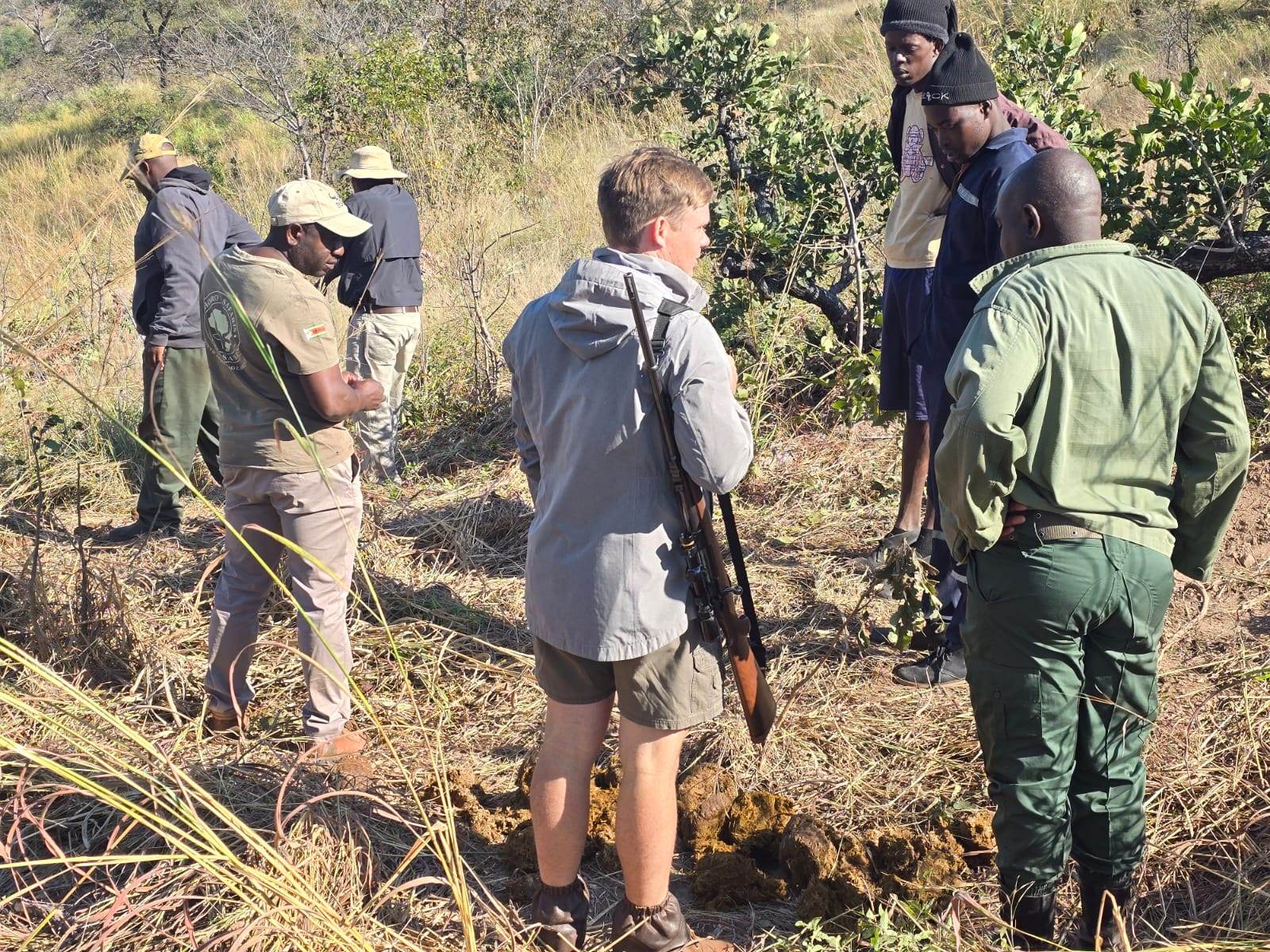
If the sign is fresh and worth following, the walking starts. Tracker in front, professional hunter next, you behind. Nobody talks. On a buffalo or elephant track this can run for hours and you may cover a great deal of ground before anything happens.
-
11:30
The heat of the day
By late morning the game has moved into shade and so does everyone else. Because camp is on the property you can be back for a proper lunch and an hour off your feet, or stay out with a packed lunch if you are on something worth staying with.
-
15:30
Out again
The second hunt of the day, working until last light. Animals move again as it cools, and this is often when it comes together — the light is better, the wind steadies, and everyone is calmer than they were at dawn.
-
18:30
Back before dark
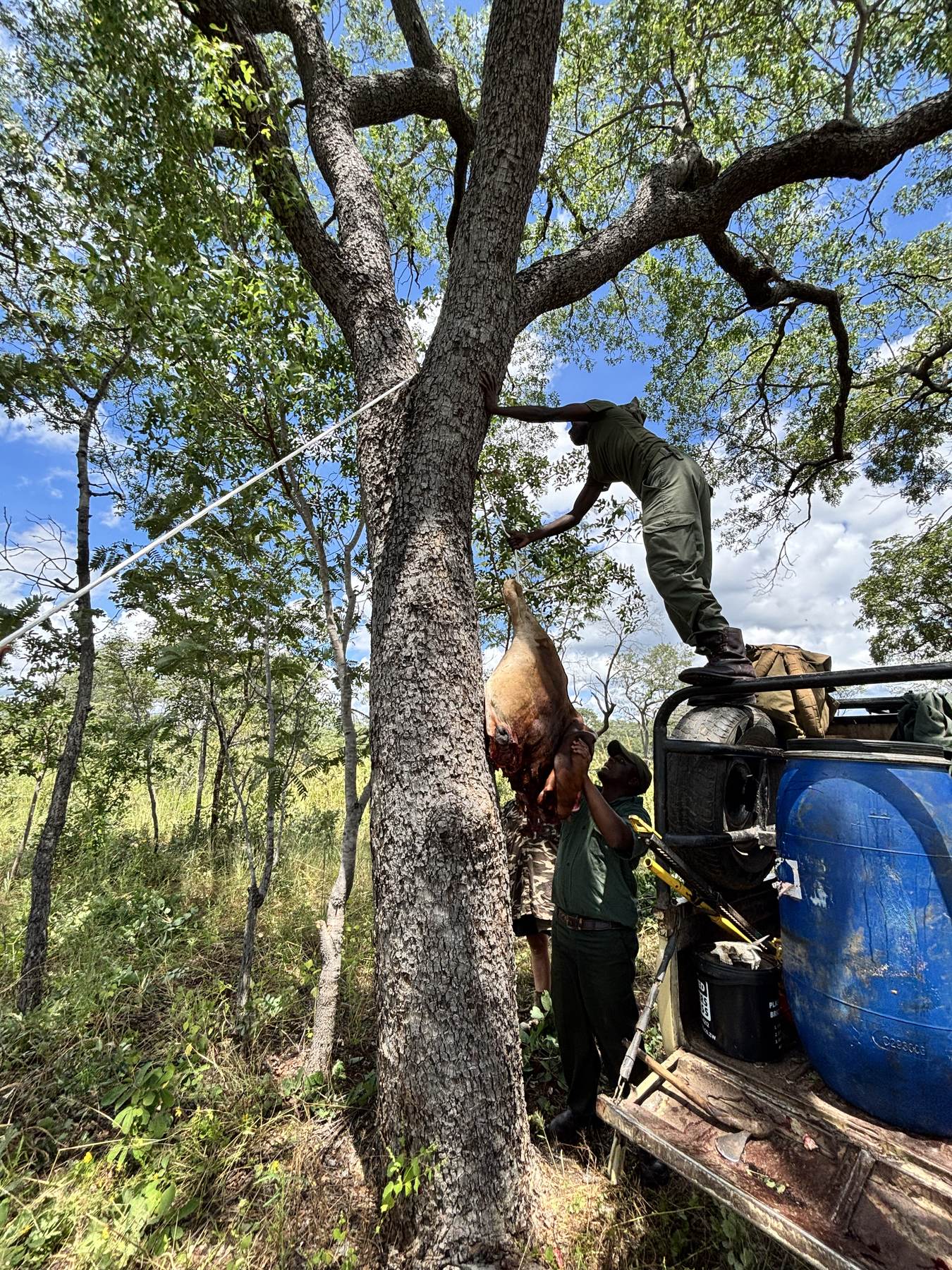
If you took an animal the skinners are already working by the time you have washed. Photographs get taken properly in good light rather than in the dark. Then a shower, a drink, and the fire.
-
20:00
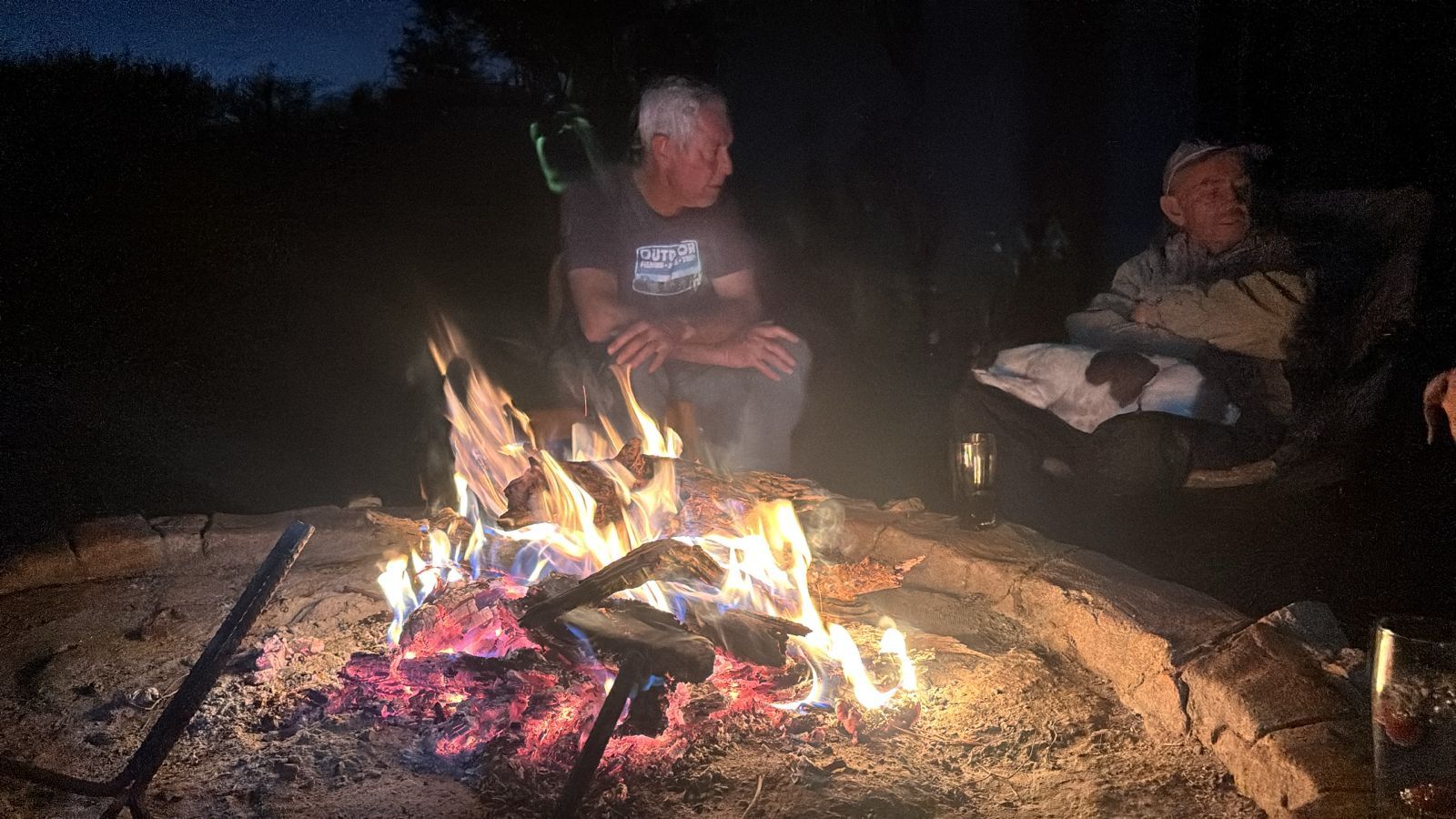
Dinner and the fire
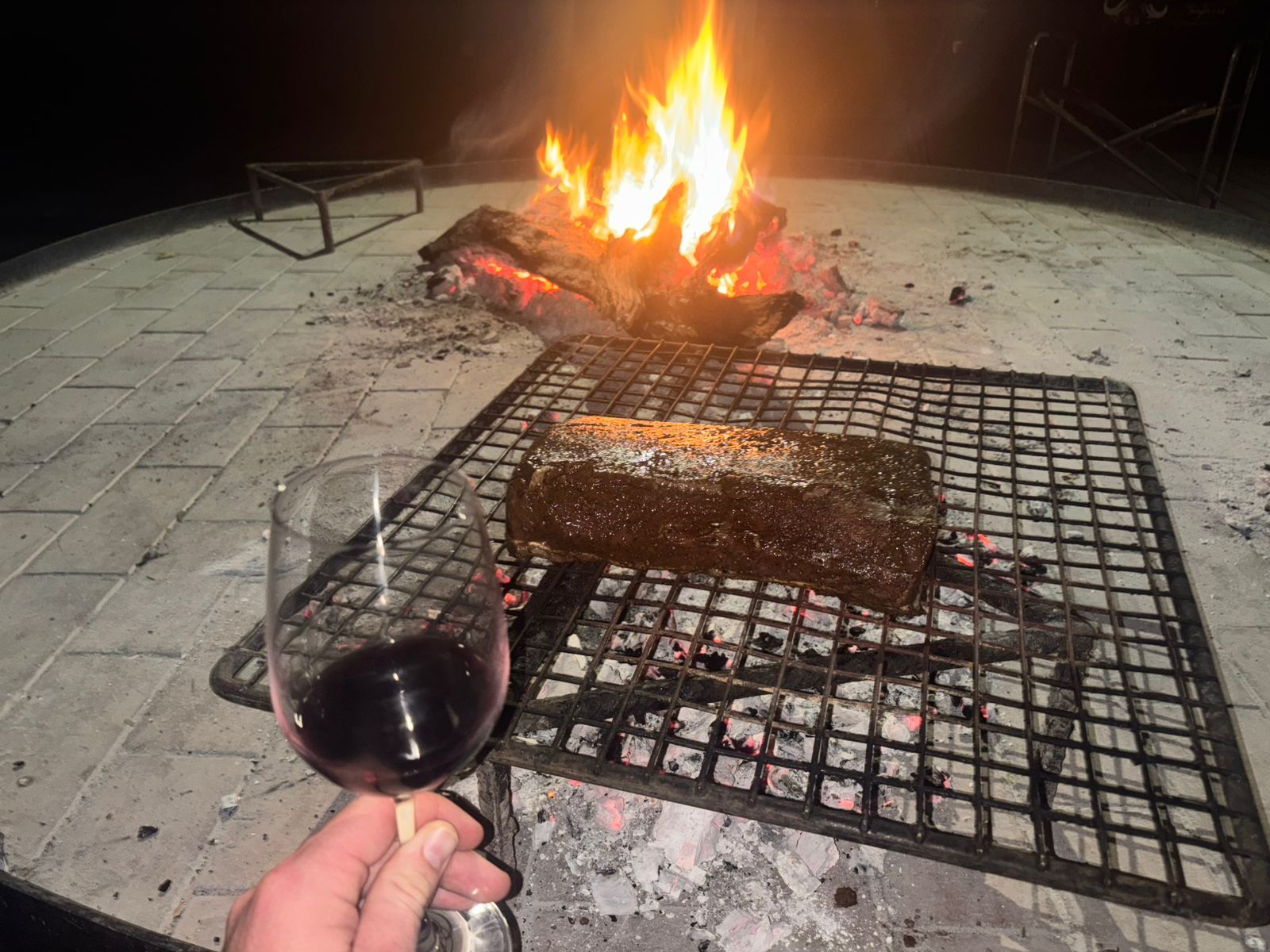
Dinner is usually game taken on the safari. Afterwards nobody rushes to bed. This is the part clients describe years later and the reason most of them come back.
Camp
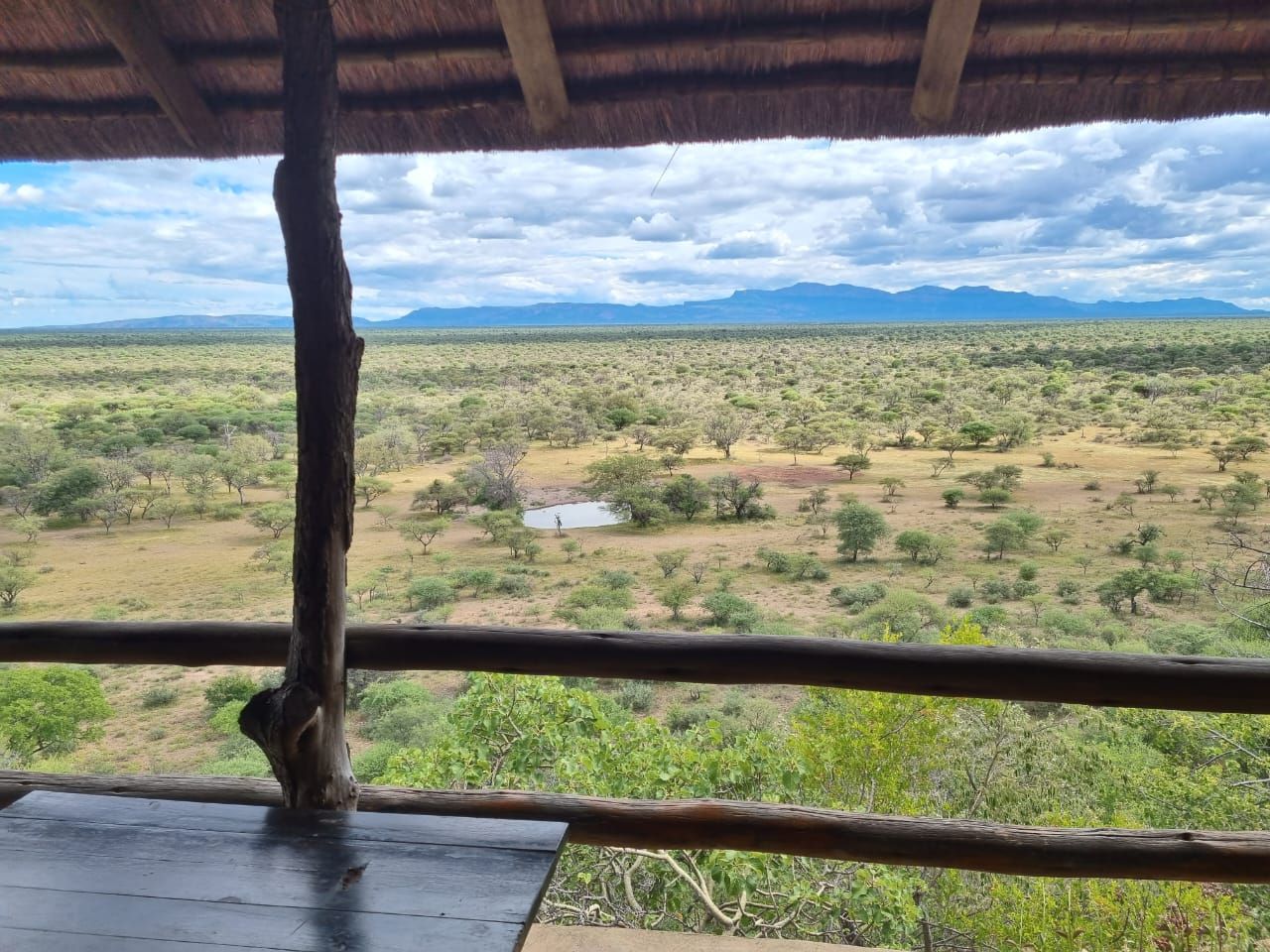
What camp means depends on where you are hunting. In South Africa it is a permanent lodge on the property with en-suite rooms, mains power and hot water. In Zimbabwe and on the Zambezi Delta it is a permanent tented camp — canvas under shade, proper beds, en-suite bathrooms, generator and solar power.
The important thing all three have in common is that camp is on the hunting ground. You are not driving an hour out and an hour back each day, which makes the days considerably less tiring and gives you a real break through the heat.
Neither is roughing it. Both have hot water, cold beer and someone who has been cooking over a fire for twenty years. What the remote camps do not have is phone signal, and after the second day nobody misses it.
Food
Better than you are expecting. Camp cooks in this part of the world are very good, and a great deal of what you eat will be game taken on your own safari — eland fillet, kudu steaks, impala on the coals.
Breakfast is cooked and substantial because you may not eat again until three. Lunch is light. Dinner is three courses and it happens outside, near the fire, unless the weather makes that impossible.
Tell us about allergies and dietary requirements when you book and they will be handled without any fuss at all.
The people around you
A working safari runs on more people than most clients expect. Your professional hunter, one or two trackers, a skinner, a driver, a cook, and camp staff. On a fourteen-day hunt you will get to know all of them.
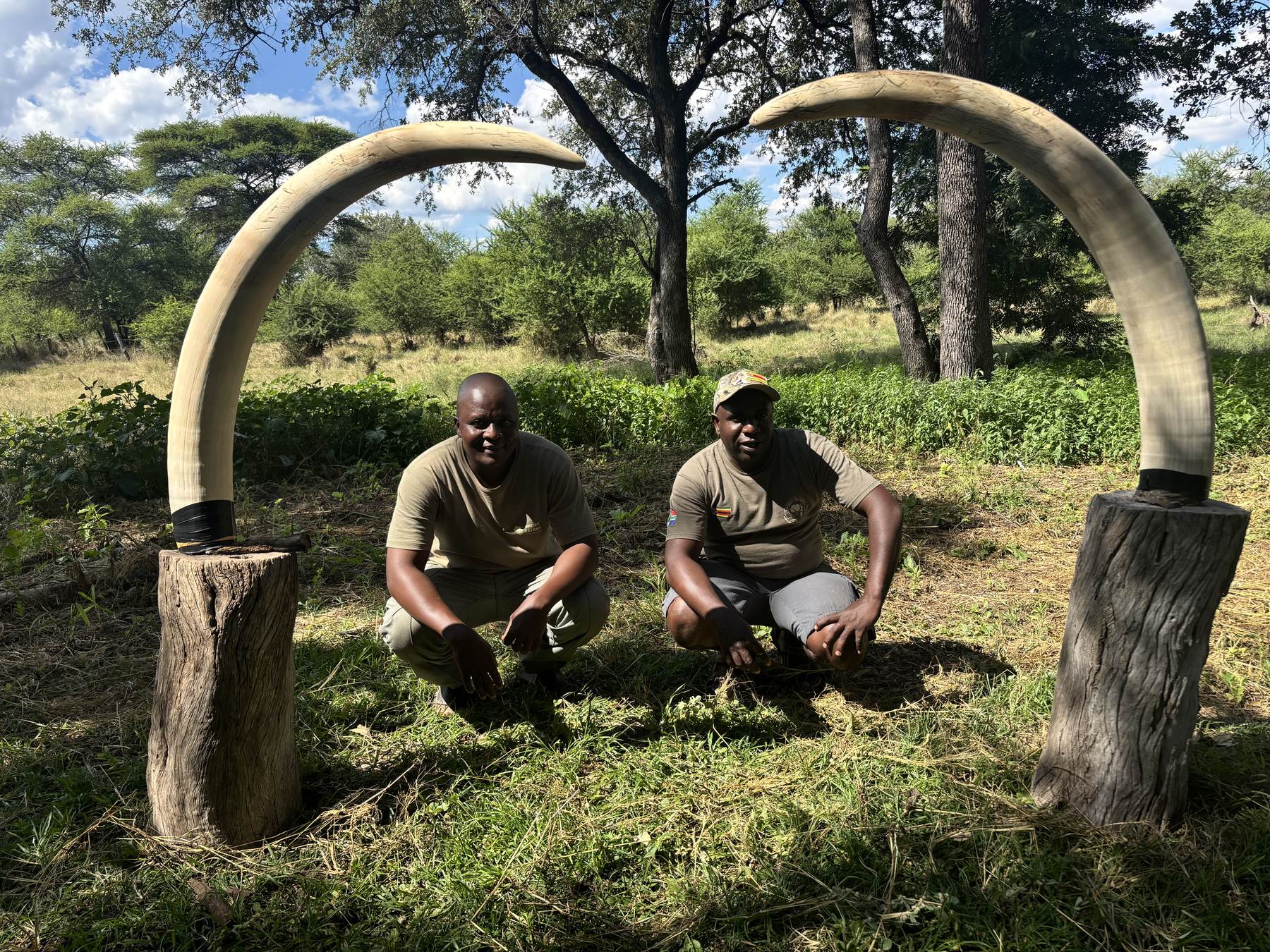
The trackers are the ones worth paying attention to. Several of ours have worked this ground for more than twenty years and can tell you the age, sex and roughly how long ago an animal passed from a print you cannot even see.
Camp in photographs
Come and see it for yourself
Tell us when you can travel and what you want to hunt. We will tell you honestly what the days will be like.