The animal
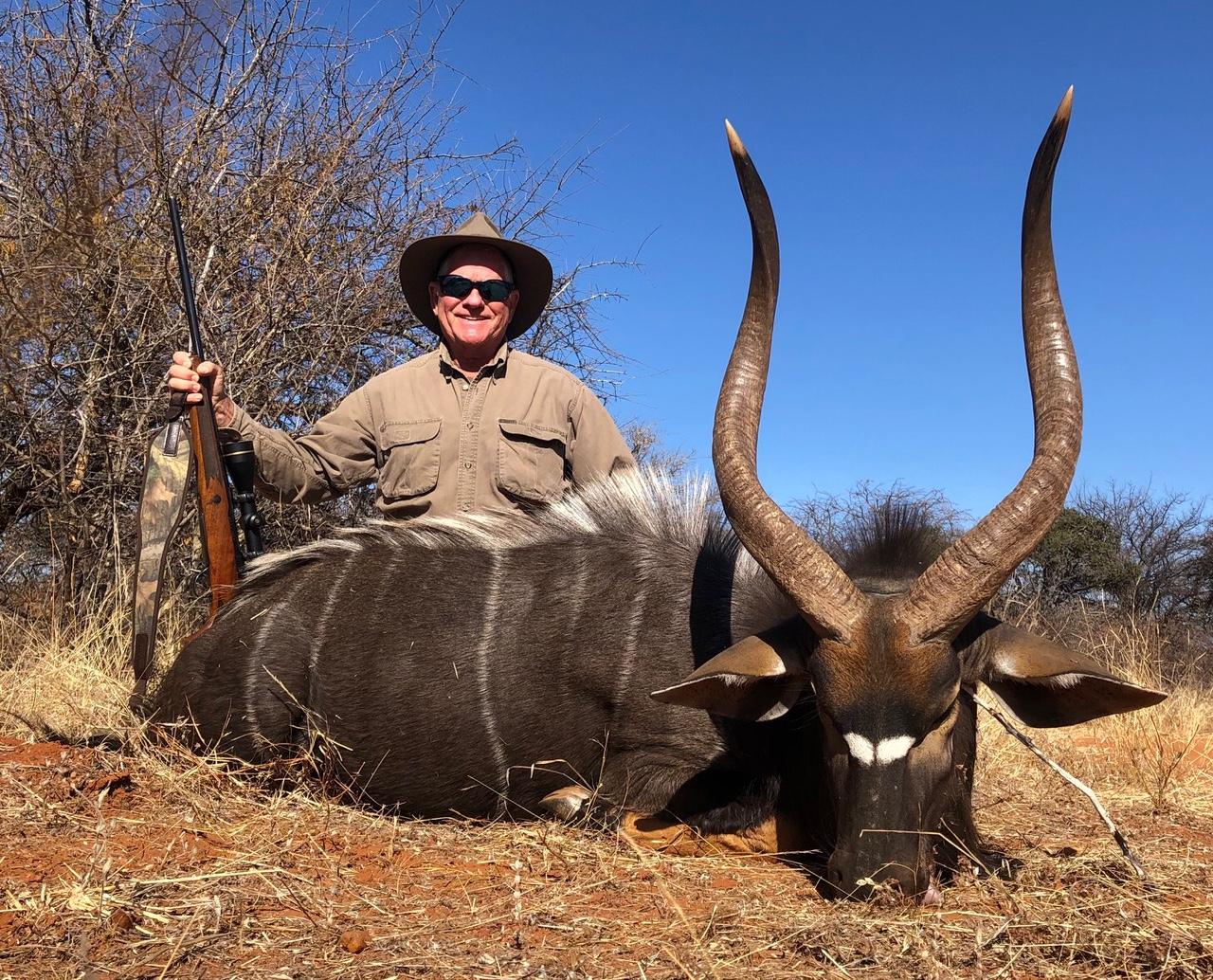
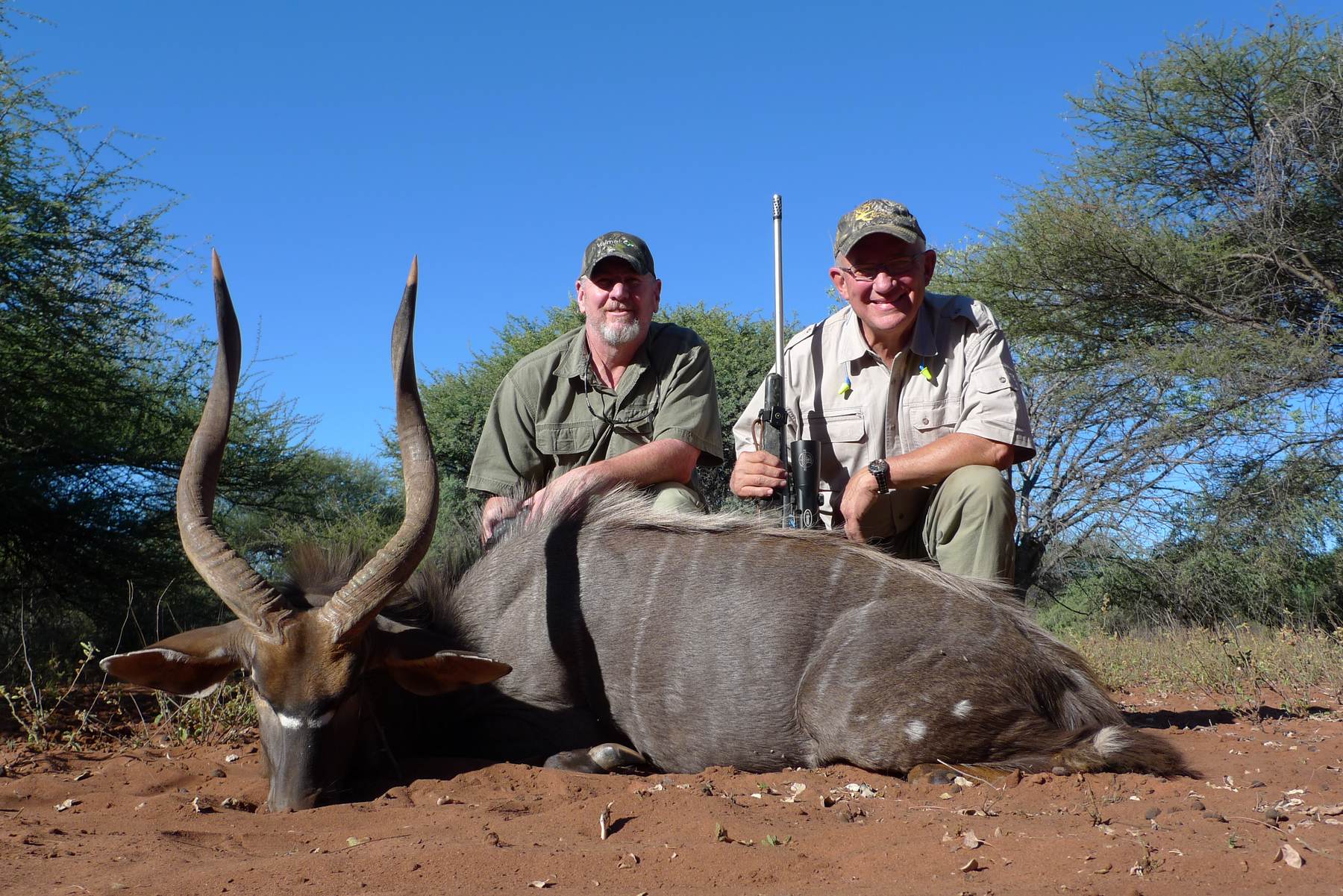
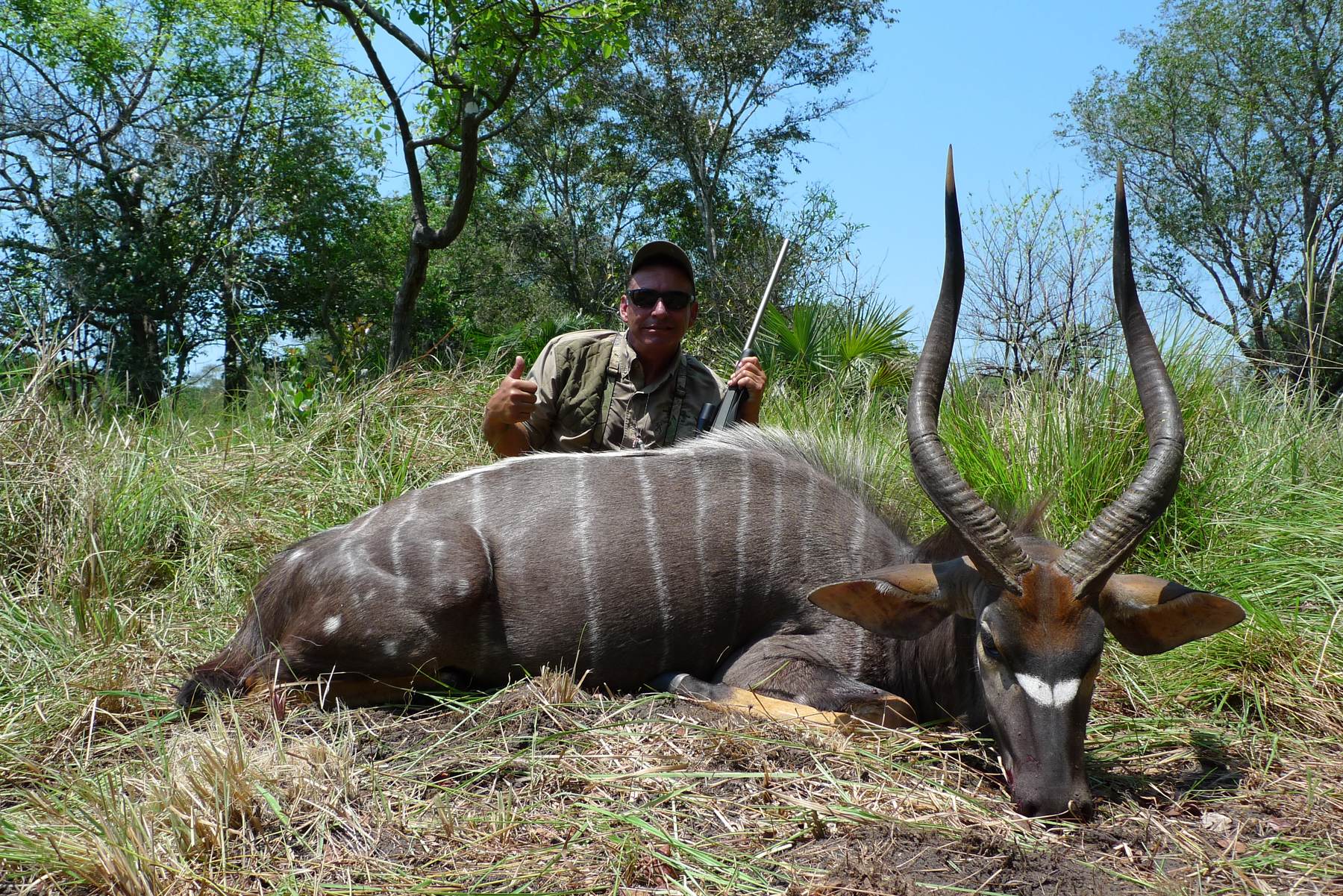
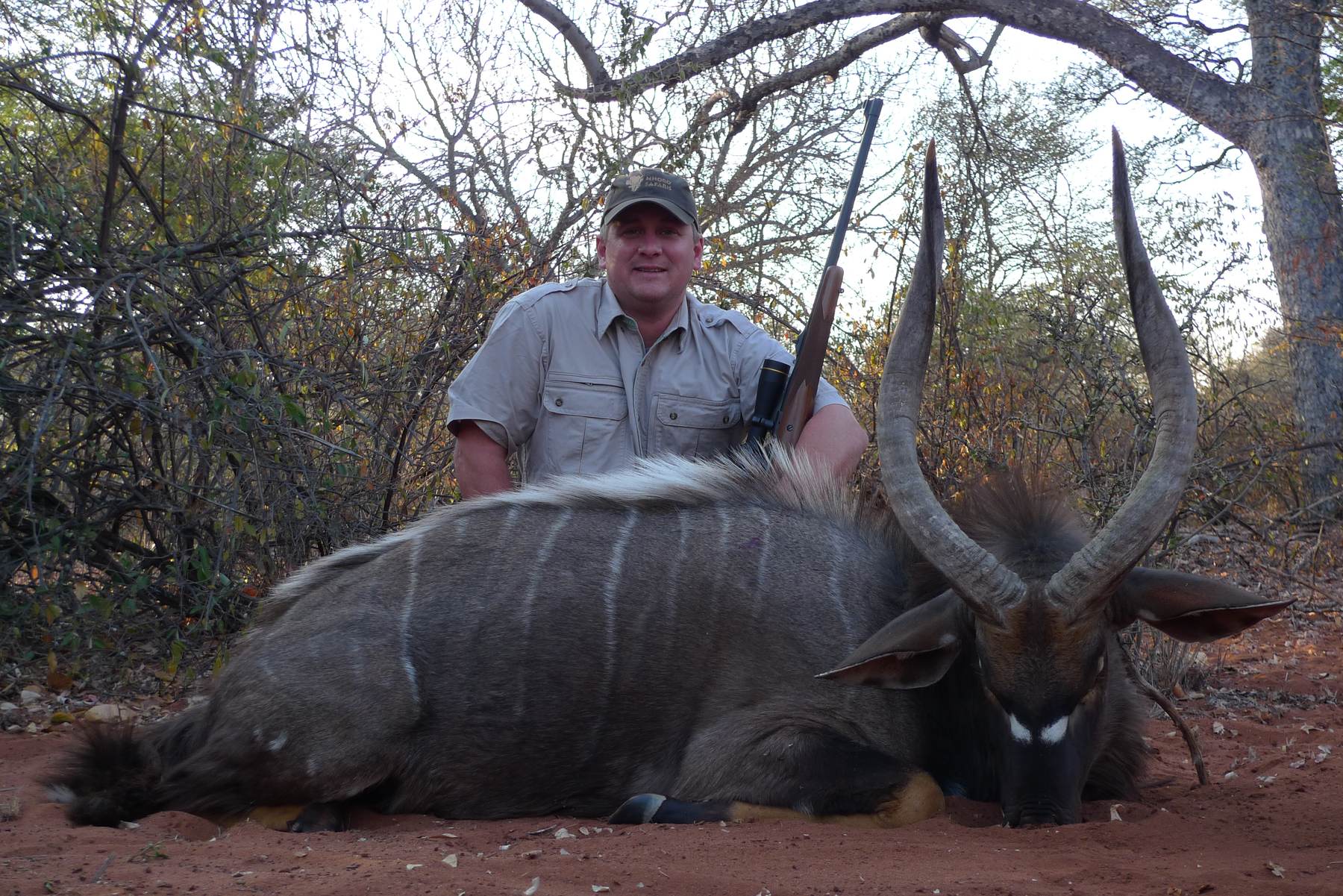
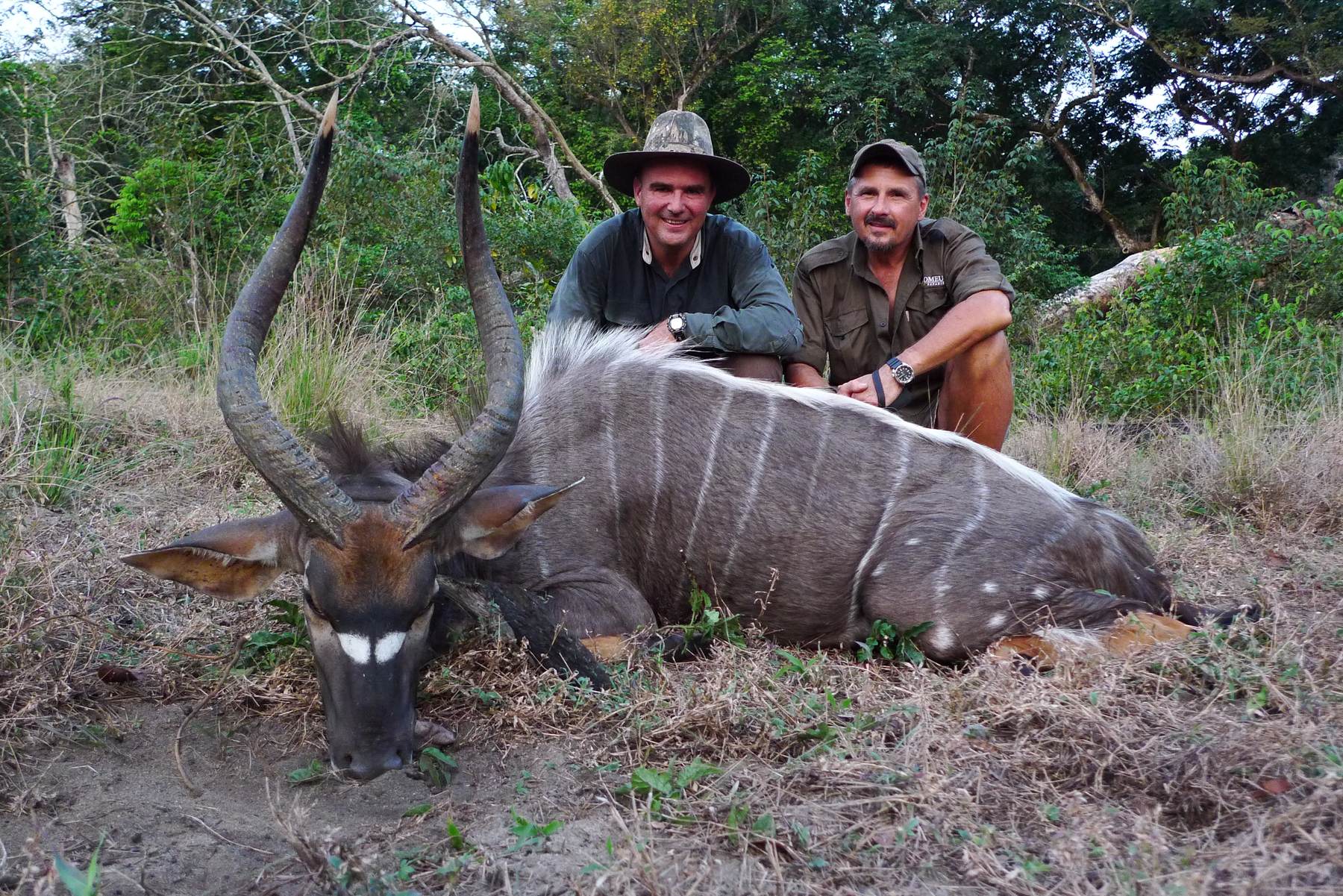
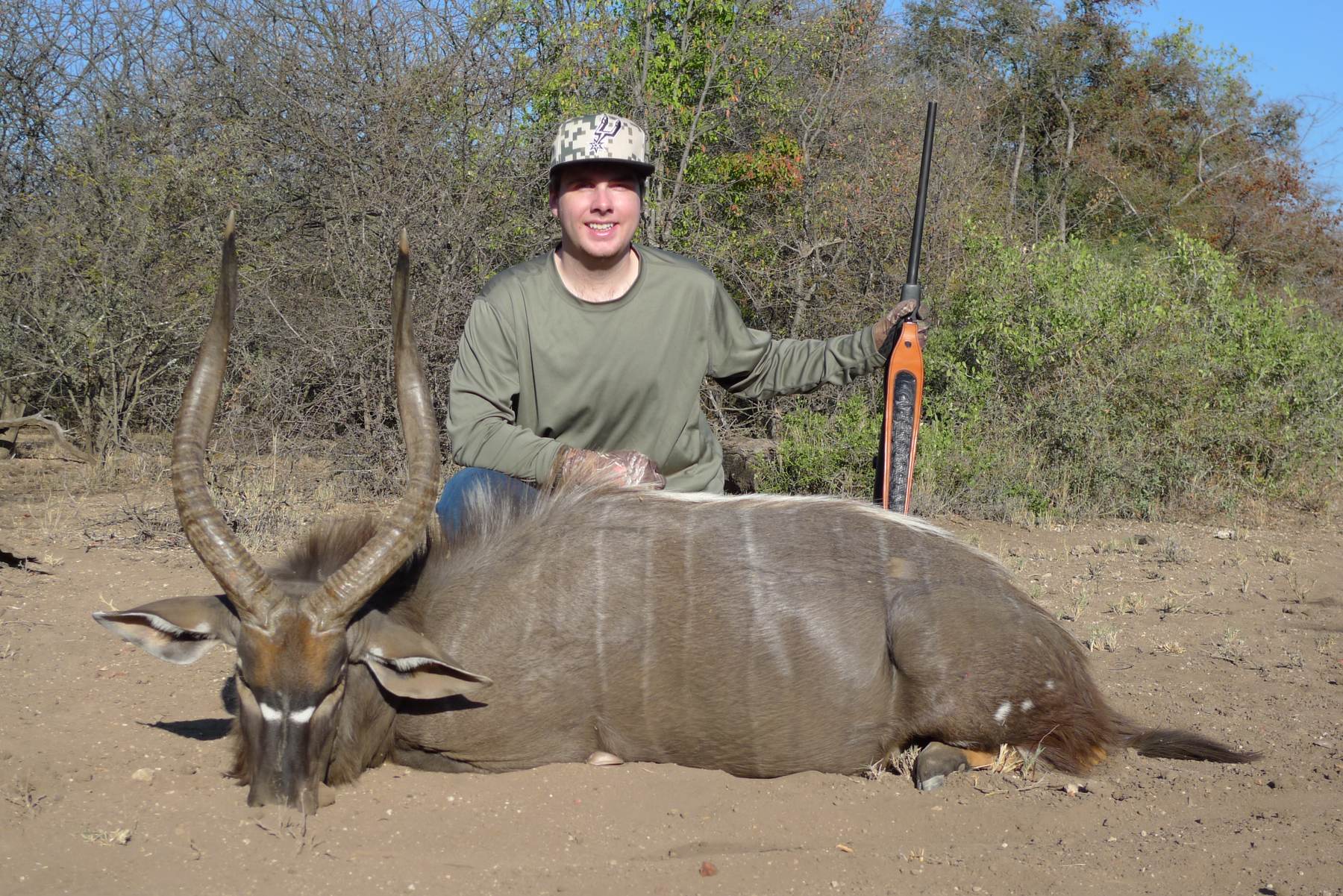
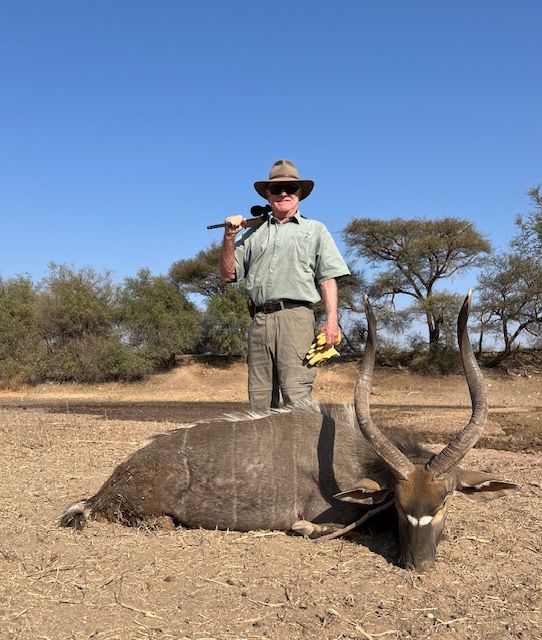
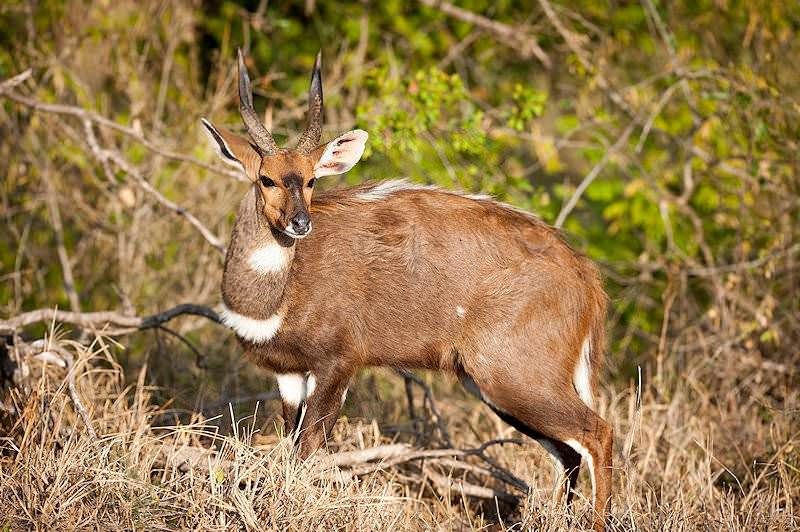
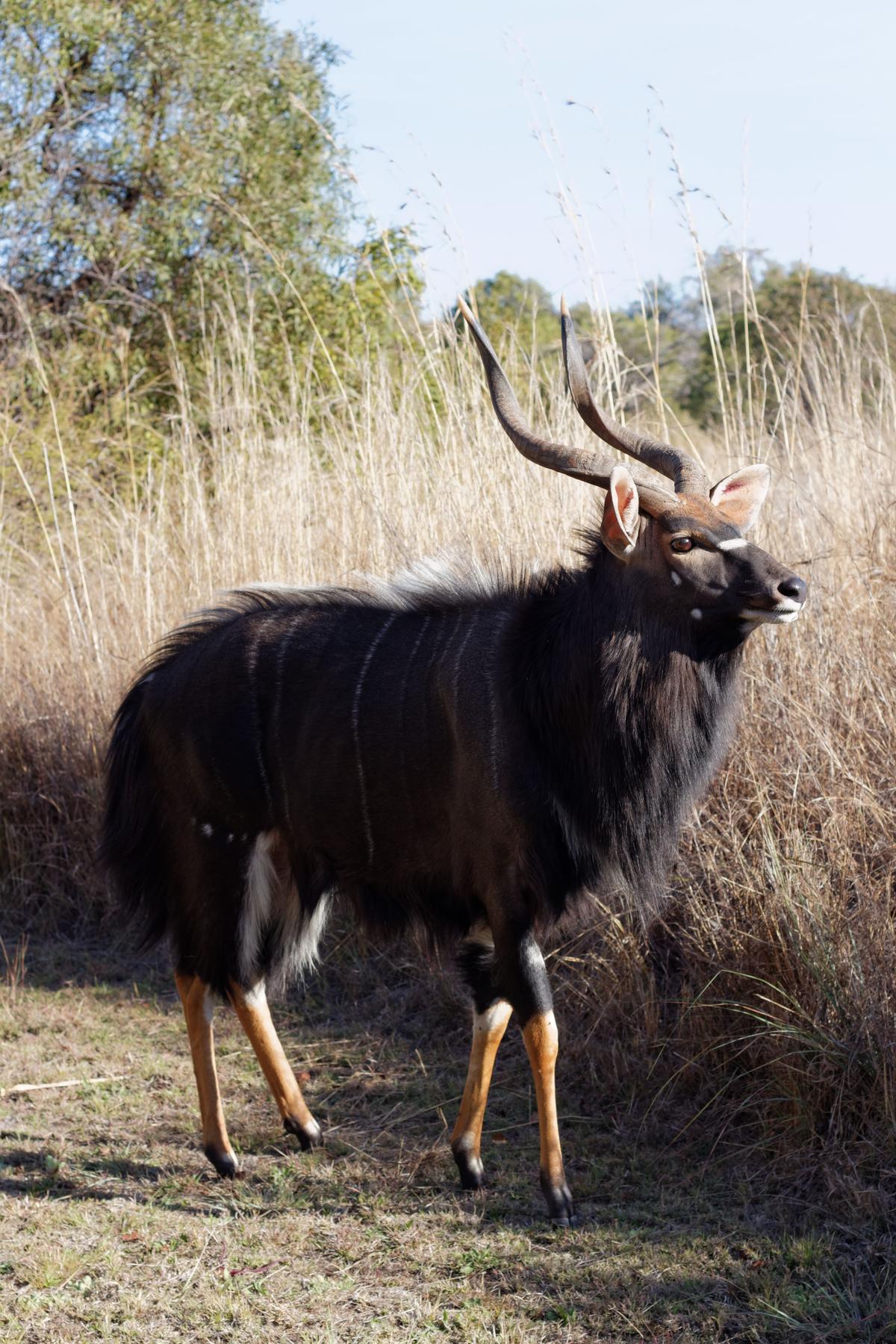
Nyala are the most strikingly dimorphic antelope in Africa. Cows are a bright chestnut-red with clean white stripes and carry no horns at all. Bulls, by the time they mature, are a dark slate grey, heavily fringed along the belly and throat, with a white spinal crest they raise when agitated and horns that sweep up and out in a shallow lyre with pale ivory tips.
The two sexes look so different that early naturalists classified them separately.
Where we hunt them
Nyala have a limited natural range and we hunt them in two of our three countries.
South Africa — primarily Limpopo and KwaZulu-Natal, in thick riverine bush and coastal thicket. This is the most reliable nyala hunting available anywhere and it combines easily with kudu, impala, warthog and bushbuck on a plains game safari.
Mozambique — in the south and along the river systems, generally as a secondary species on a longer safari.
Judging a bull
Colour first, as with sable. Young bulls are chestnut like the cows and darken with age. A properly mature bull is dark slate grey, often almost charcoal, with faded body stripes and a heavy fringe hanging below the belly.
For the horns, look for length past the ears, a full outward sweep, and prominent creamy-white tips. Heavy bases matter. A bull with worn, blunted tips and thick bases is older than one with sharp points, even if the sharper animal tapes slightly longer.
Nyala horn tips wear down significantly with age, so an exceptionally old bull may actually measure shorter than he did at eight years old. That is a trophy worth taking.
The hunt
Nyala live in thick cover and rarely stray far from it. That defines the hunt.
Mornings are spent glassing the edges of riverine thicket, feeding areas, and open lanes where a bull might cross. When one is found, the stalk is short but tense, working through dense bush where you may only see parts of the animal at a time.
Shots are close, frequently under a hundred metres, and often through a gap. There is rarely time to build a perfect rest. This is a hunt where being comfortable shooting off sticks quickly matters more than long-range precision.
Nyala are also excellent from a blind over water in the dry months, which is how most bow hunting for them is done.
Bow hunting nyala
Nyala are one of the best bow species in Africa. They come to water reliably in the dry season, they are not enormous, and a well-placed arrow from sixty pounds of draw weight is entirely sufficient. Blinds over waterholes from August to October produce consistently.
Why hunters undervalue them
Nyala are frequently booked as an add-on and then turn out to be the animal the client talks about afterwards. They are beautiful, they live in interesting country, and hunting them properly requires patience and close-quarters discipline rather than distance shooting.
If you are building a first plains game safari in South Africa, we would put nyala on the list alongside kudu without hesitation.