Getting your trophies home
The part of a safari that happens after you have flown home, and the part outfitters are least straight about. Here is the realistic version, including the timelines.
The honest timeline: six to twelve months
From the last day of your safari to a mounted trophy on your wall is realistically six to twelve months, and sometimes longer. Anyone promising three is either cutting a corner or has not accounted for permits. Plan for it and it will not bother you.
What happens, and when
-
In camp
Field preparation
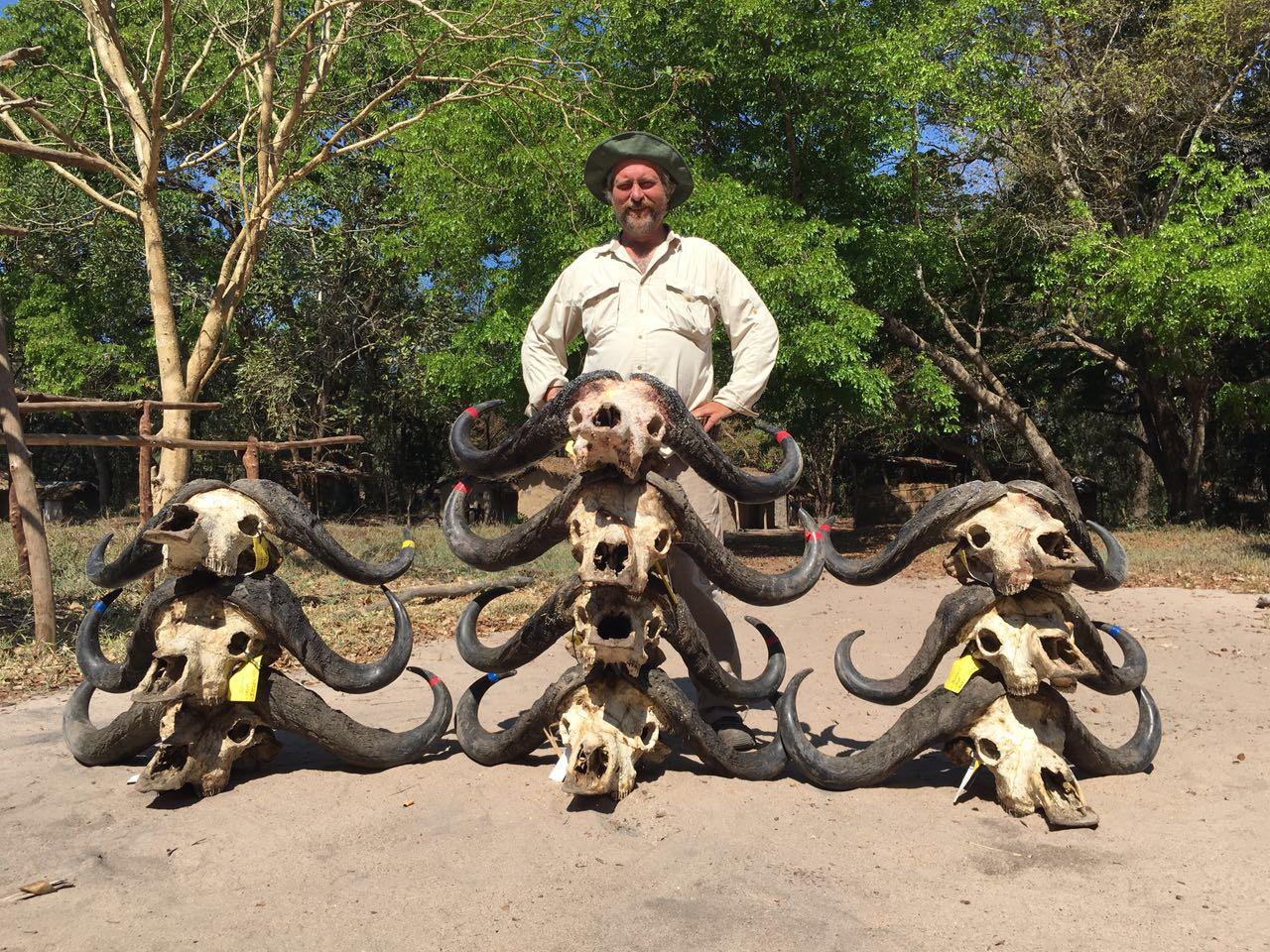
The skinners start the same day. Capes are cut correctly for whatever mount you have in mind, skins are fleshed and heavily salted, horns and skulls are cleaned. Everything is tagged with your name and the relevant permit numbers before it leaves camp. If you want a shoulder mount rather than a European skull, say so before the animal is skinned, not after.
-
2–6 weeks
Dip and pack
Your trophies go to a licensed dip-and-pack facility. Skins are chemically treated and skulls are boiled and cleaned to meet the veterinary import requirements of your country. This is a legal requirement, not an optional extra — untreated raw skins will not clear customs anywhere.
-
4–12 weeks
Permits and clearance
Export permits, veterinary certificates and, for listed species, CITES documentation. This is the stage that takes the longest and the one nobody can accelerate. Elephant and leopard paperwork routinely takes longer than everything else combined.
-
4–8 weeks
Crating and shipping
Trophies are crated and shipped by sea or air freight. Sea is considerably cheaper and considerably slower. Your shipping agent handles the manifest and gives you a tracking reference.
-
On arrival
Customs and your agent
A customs broker in your own country clears the shipment and forwards it to your taxidermist or to you. You will need to appoint one — we can recommend agents who handle hunting trophies routinely and know the paperwork.
-
4–9 months
Taxidermy
Whether you use an African studio or your own taxidermist at home, mounting takes months. A good taxidermist with a queue is worth waiting for; one who can start tomorrow usually tells you something.
African or local taxidermist?
Our honest recommendation is to use your own taxidermist rather than an African studio — you can see previous work in person, discuss the pose face to face, and hold someone accountable locally if anything goes wrong. That said, there is no universally right answer here, and we have no financial interest in your choice either way.
African studios
Generally cheaper, and the studios work on these species every day of the year. Shipping a finished mount costs more in volume than shipping a dipped skin, which offsets some of the saving. The real drawback is that you are committing to work you cannot inspect until it arrives.
Your own taxidermist
Costs more in freight because raw dipped-and-packed material is bulky, but you can see previous work, discuss the pose in person, and hold someone accountable locally. Most clients who have done both end up preferring this.
Either way, decide before your safari ends. It determines how the cape is cut.
Decide the mount before the skinning
This catches people out. A shoulder mount needs a longer cape than a pedestal mount, and a full-body mount needs the whole skin taken differently again. Once an animal has been caped short, you cannot add skin back.
Have a rough idea of what you want before you travel, and tell your professional hunter on the day. The common options:
- European mount — cleaned skull and horns only. Cheapest, ships smallest, and looks excellent for spiral-horned species.
- Shoulder mount — the standard. Needs a full cape taken well back behind the shoulder.
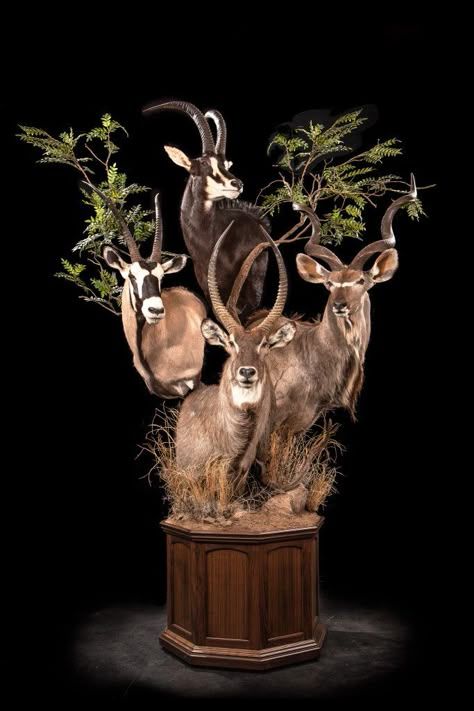
- Pedestal mount — freestanding, more dramatic, more expensive.
- Full body — for the animal of a lifetime. Expensive to mount and expensive to ship.
- Flat skin — common for zebra and the cats.
What you cannot bring home
- Meat. Never exportable. It goes to camp staff and the surrounding community, and on a buffalo or elephant that is a serious amount of protein for people who need it.
- Raw untreated skins. Everything must be dipped and packed to veterinary standard first.
- Species your own country bans. Elephant and lion import rules have changed repeatedly. Check your national position before you book.
Costs
Dip and pack, crating, freight, customs clearance and taxidermy are all separate from your safari cost and are paid to the relevant providers rather than to us. We will give you realistic estimates when you book so it is in your budget from the start, and we will introduce you to the agents we use. More cost questions in the FAQ.
Questions about a specific trophy?
Import rules differ by species and by country, and they change. Ask us before you book a CITES-listed animal rather than after you have taken one.