The grey ghost
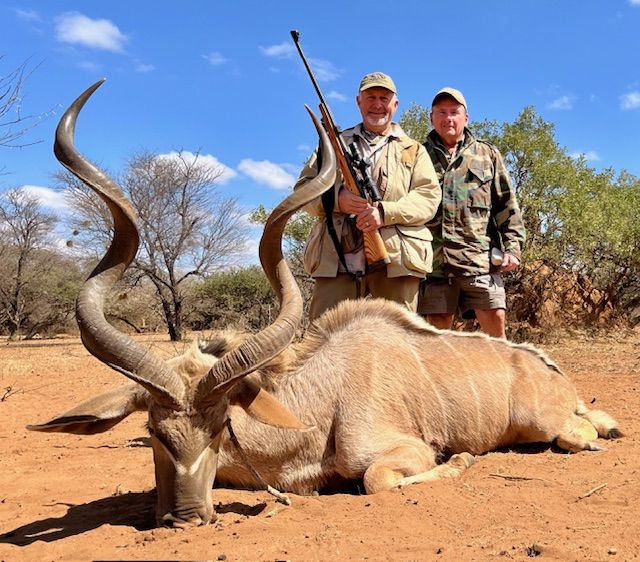
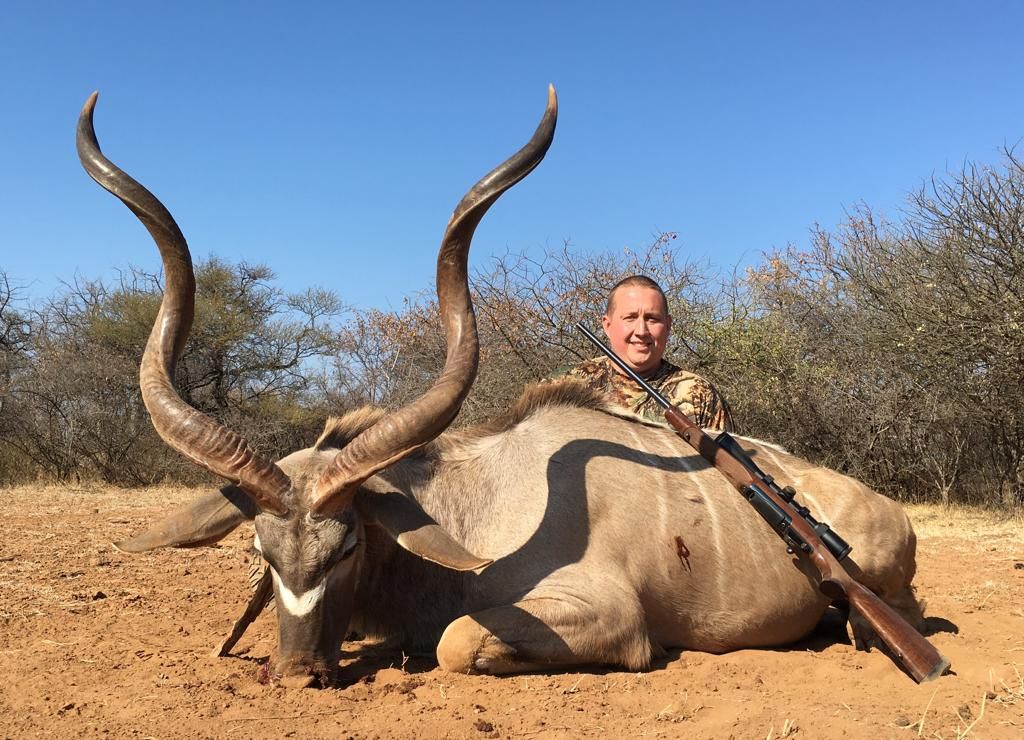
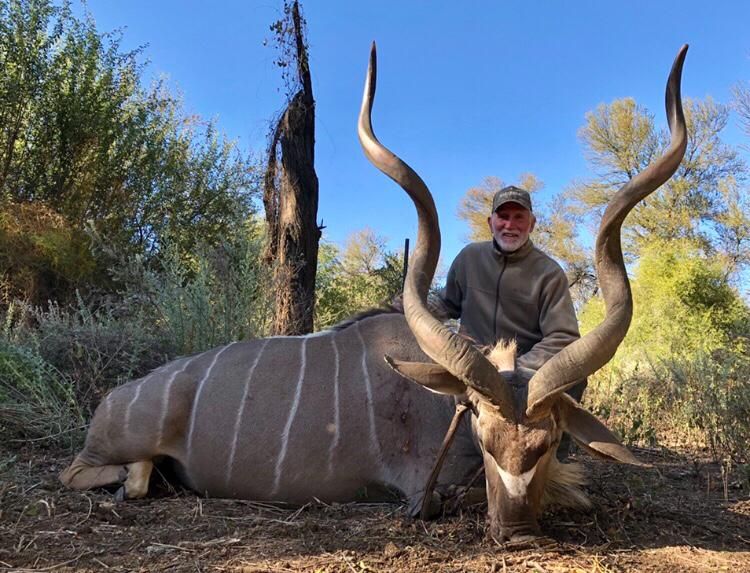
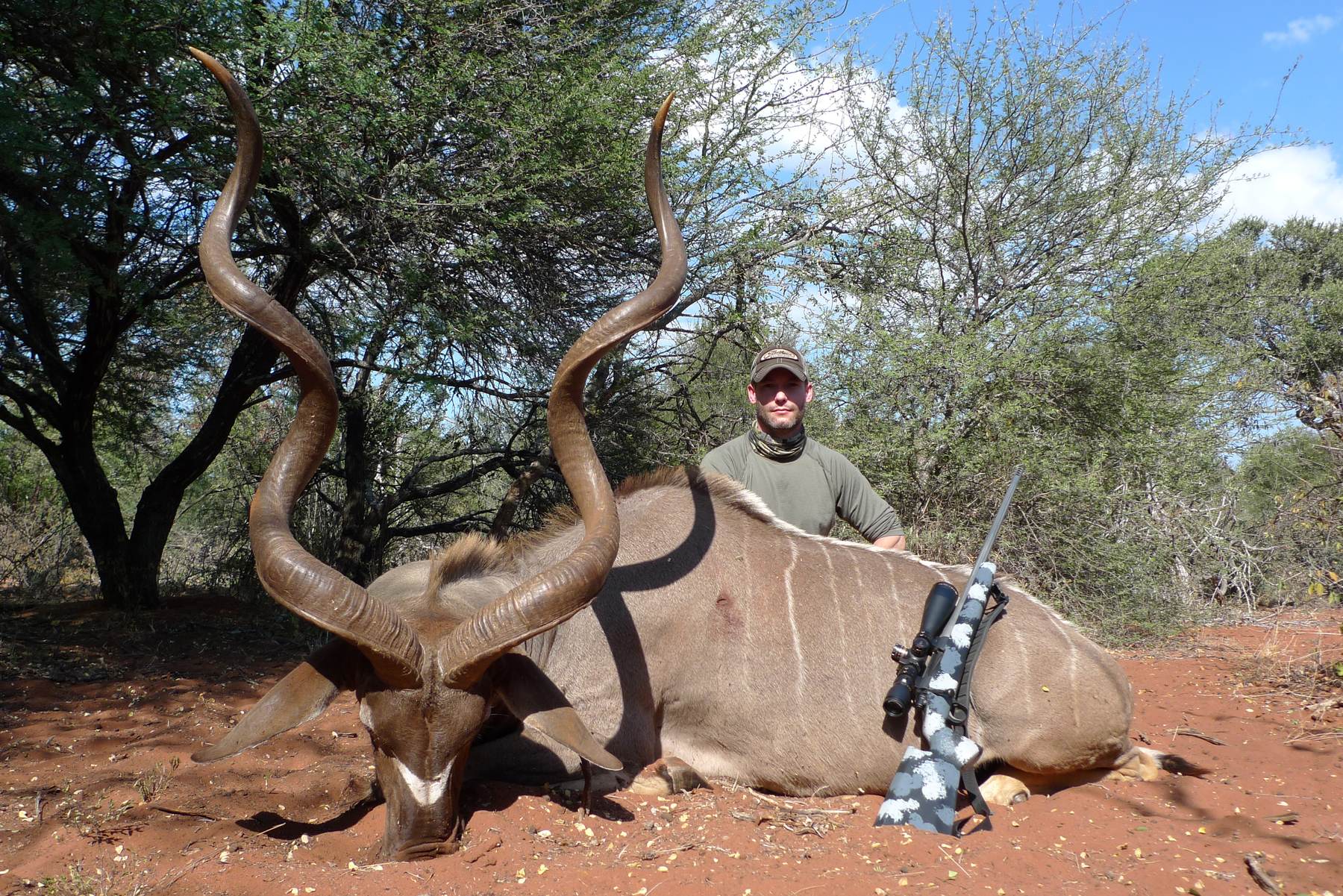
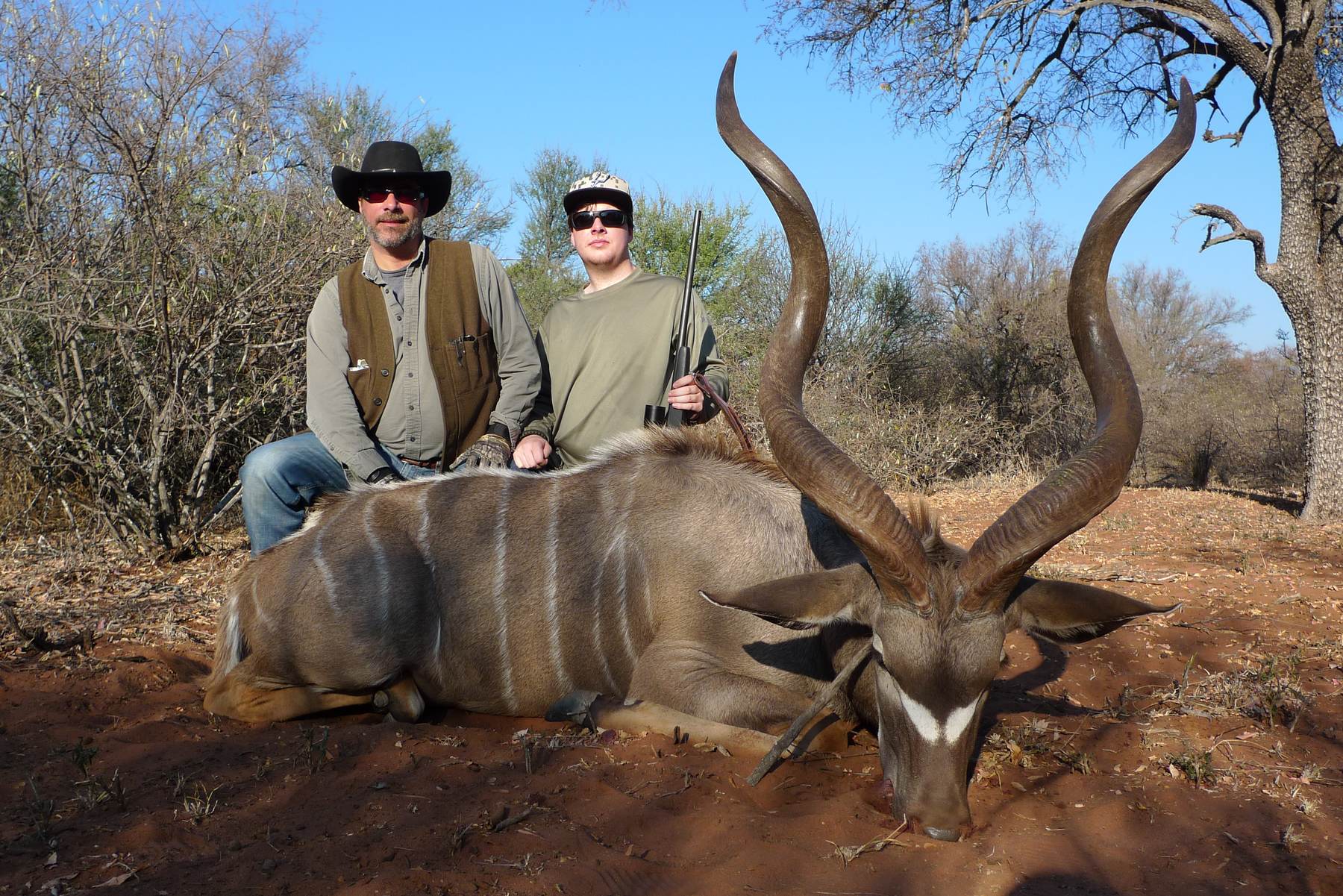
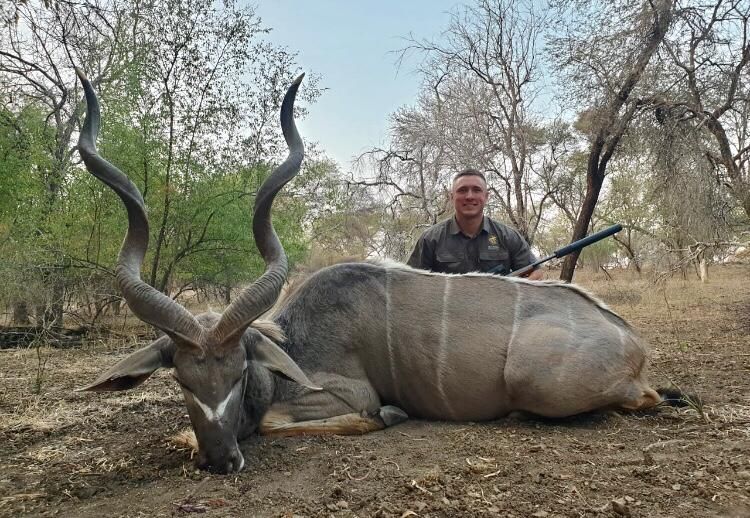
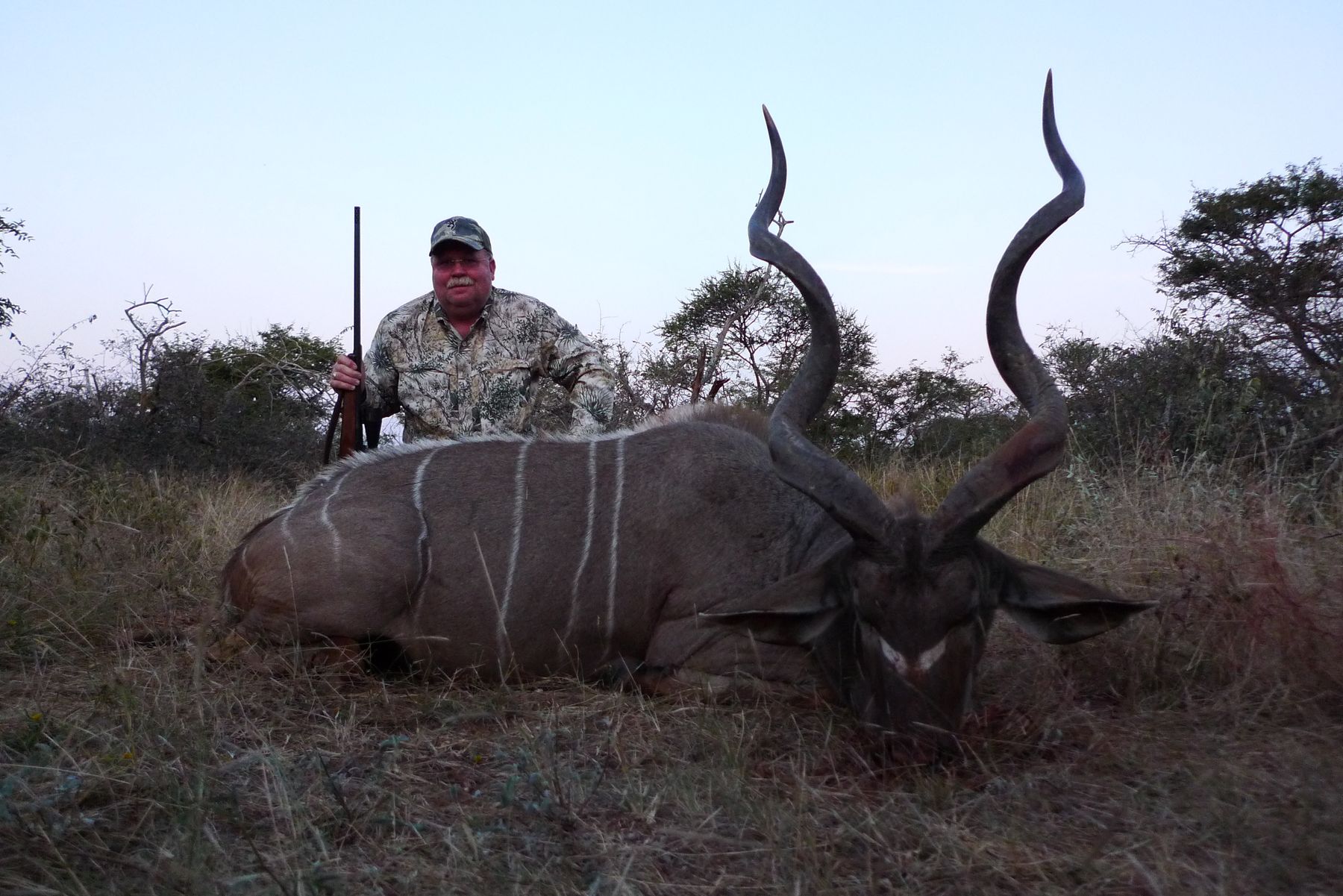
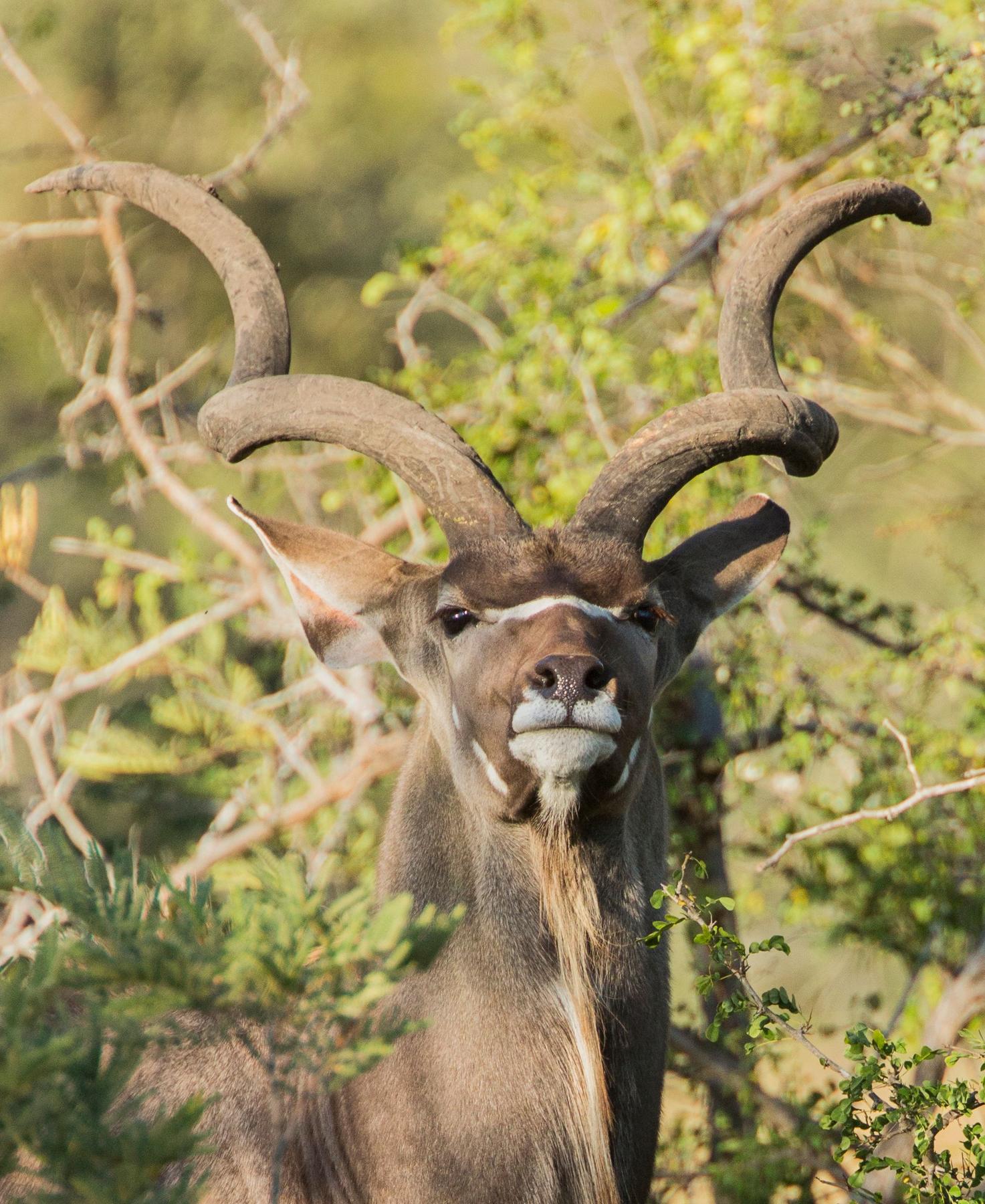
Kudu have a reputation for vanishing, and it is entirely deserved. A 300-kilogram bull with horns as long as a man is tall can stand behind a single thorn bush and cease to exist. The vertical white stripes break up his outline against vertical stems, and he freezes rather than runs. Hunters have walked past mature bulls at fifteen metres.
They are also, quietly, the animal most first-time Africa hunters remember most clearly. Buffalo are the story you tell. Kudu are the trophy that ends up over the fireplace.
Where we hunt them
Kudu are widely distributed and we take them across our hunting ground.
South Africa is the most reliable and most accessible kudu hunting we offer. The Limpopo property holds excellent bulls, and kudu combine easily with a broader plains game list on a seven to ten-day safari.
Zimbabwe holds good bulls on the ground we hunt in the north-west, usually taken alongside an elephant or cat hunt rather than on their own.
Mozambique produces kudu with real character on the Delta concession, taken on genuinely unfenced ground alongside a buffalo hunt.
Judging a bull
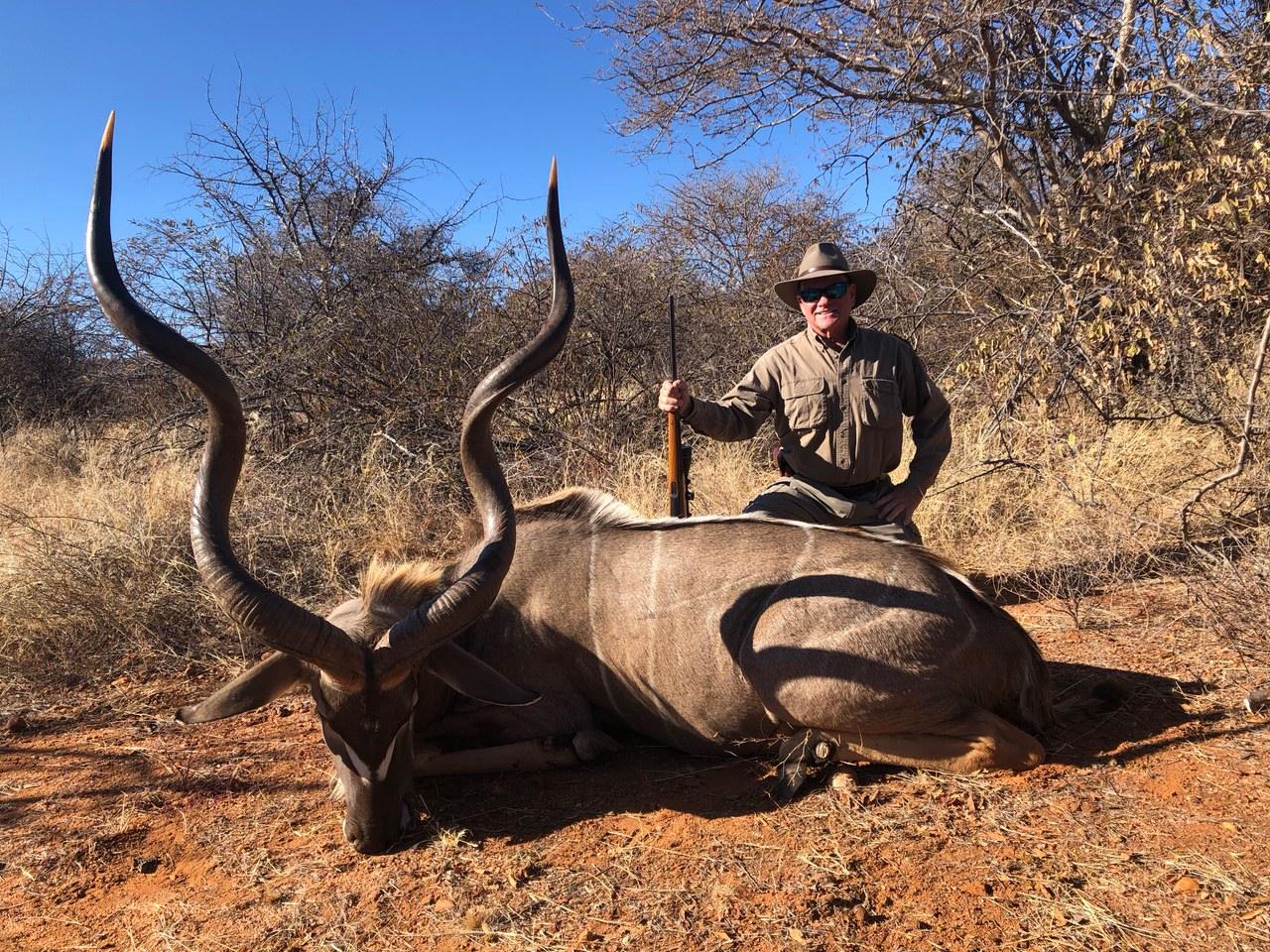
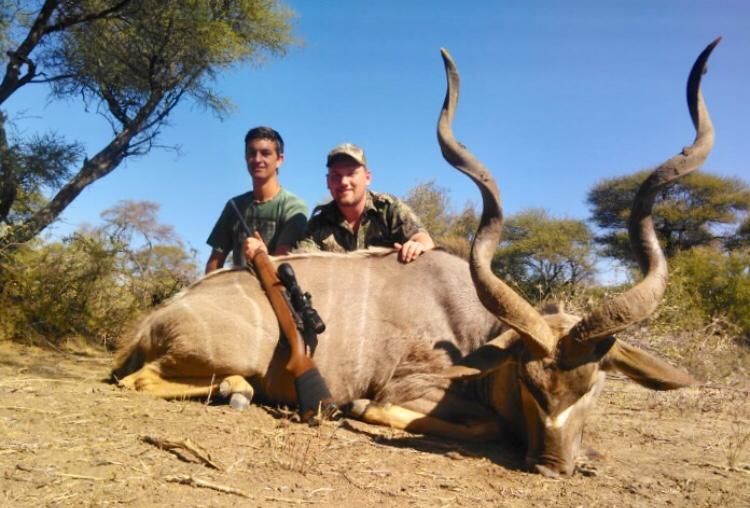
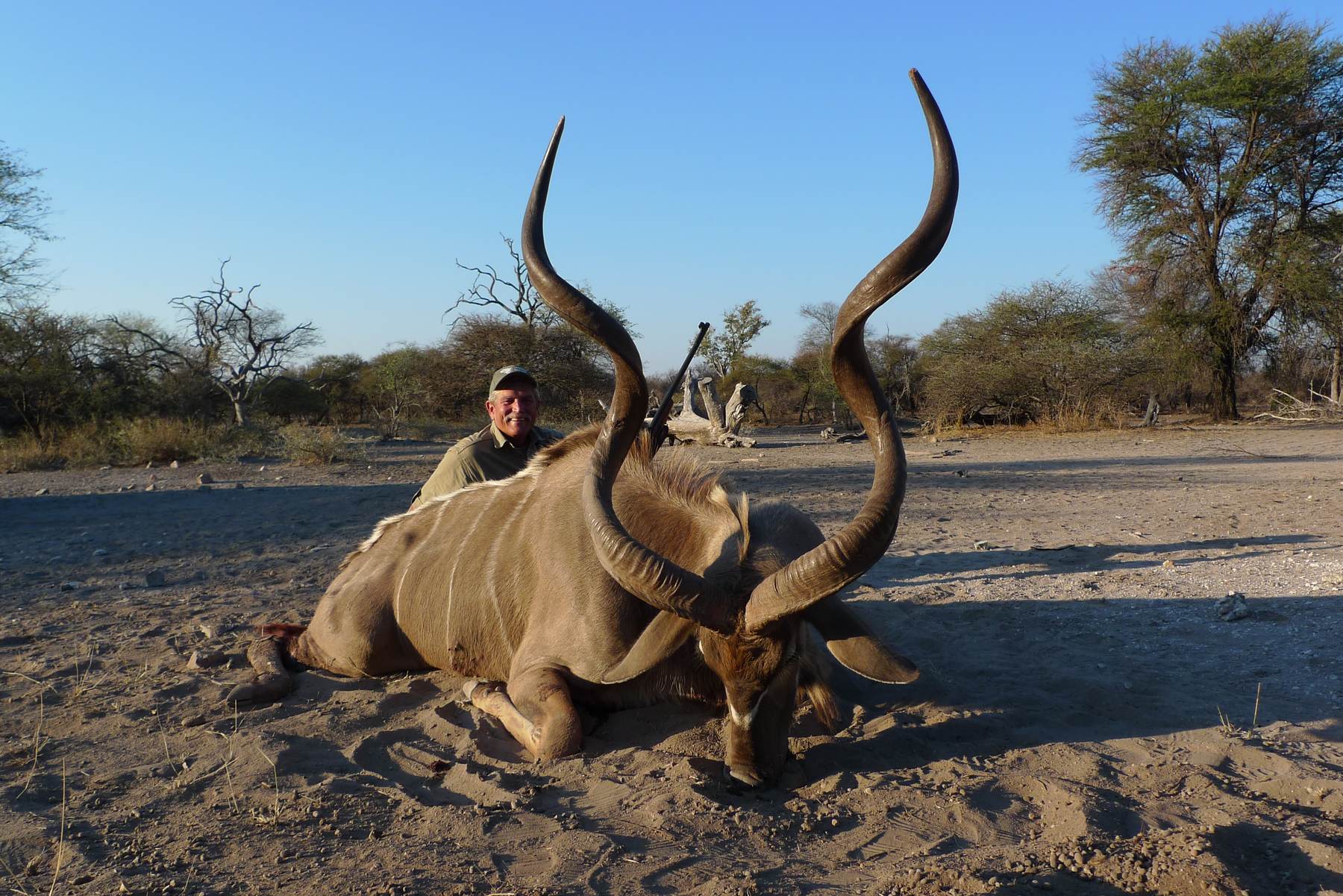
Measurement follows the spiral of the horn, not the straight line, which is why a kudu that looks enormous in a photograph might tape 49 inches and one that looks modest might go 55.
Look at three things. First, the depth and tightness of the curls: a mature bull shows two and a half full turns. Second, the tips: worn, pale ivory tips indicate age, while dark sharp tips suggest a younger animal. Third, the mass through the base and the first curl.
An old bull also carries himself differently. Heavy dewlap, dark grey-brown coat, thick neck through the rut. Younger bulls are lighter in colour and run in bachelor groups.
The hunt
Kudu hunting is glassing and walking. You work the edges of thick cover in the first two hours after dawn and the last two before dark, when bulls move to feed. Between those windows they lie up in shade and are essentially invisible.
The rut, in May and June, changes everything. Bulls that spend eleven months of the year being ghosts start moving in daylight, following cows, and occasionally making mistakes. It is the best time to hunt them and our calendar reflects that.
Shots are typically 100 to 200 metres, offhand or off sticks, frequently through gaps in bush. A clean broadside shot behind the shoulder is what you want. Kudu are not especially hard to kill but they are large, and a poorly placed shot on an animal that immediately disappears into thick cover is a long, difficult afternoon.
Bow hunting kudu
Kudu are one of the best bow species in Africa and we run bow hunts for them on the Limpopo property. Most bow hunting is done from blinds over water in the dry months, when animals must drink daily. Sixty pounds of draw weight is a practical minimum. Book for August to October, when heat concentrates game on water.
Combining kudu with other species
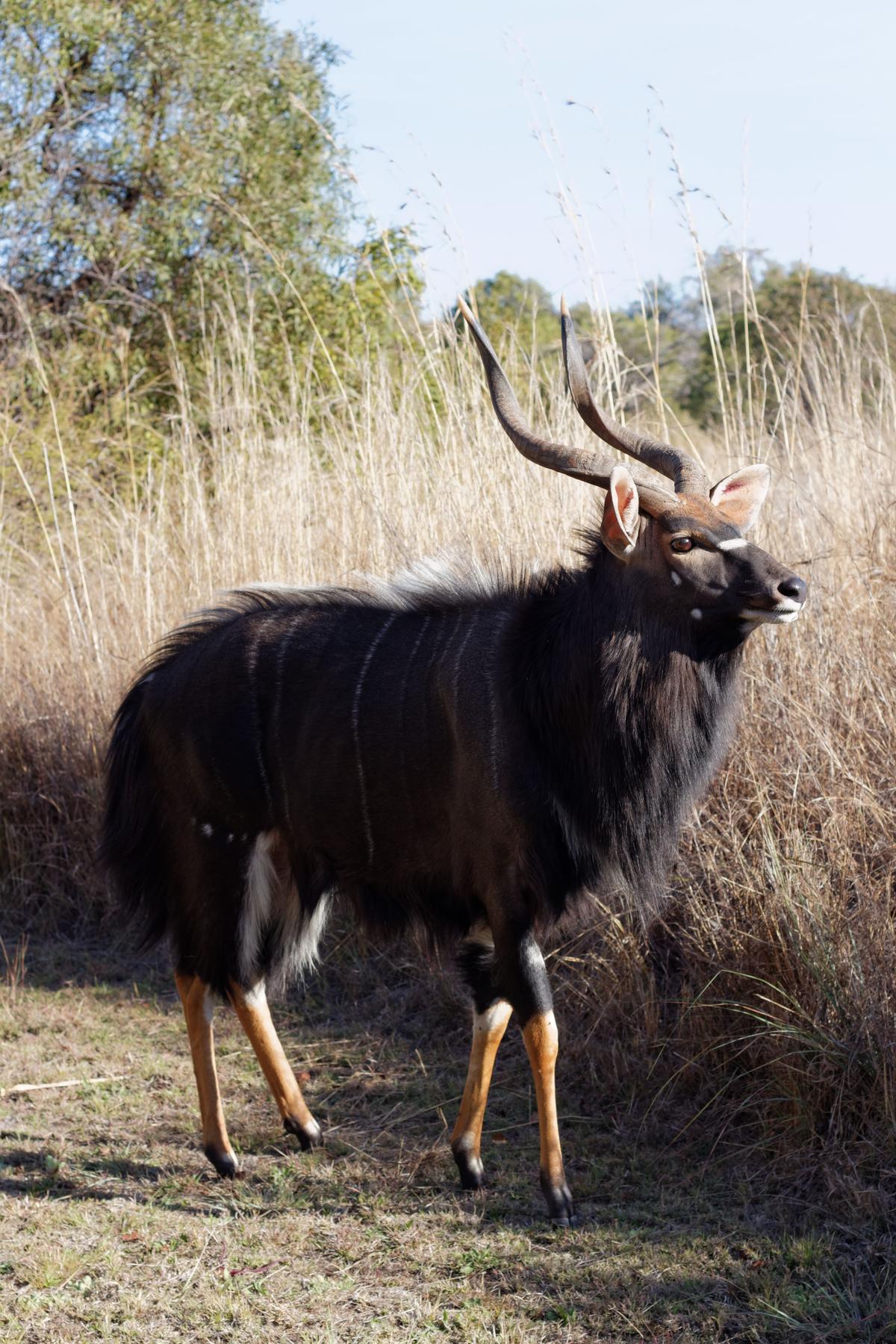
Very few clients travel to Africa for kudu alone. A kudu hunt sits naturally inside a plains game safari alongside nyala, gemsbok, blue wildebeest, impala and warthog, or as the plains game leg of a longer trip built around buffalo in Mozambique or elephant in Zimbabwe.