The animals
A group rather than a species, and the group varies with where you are standing.
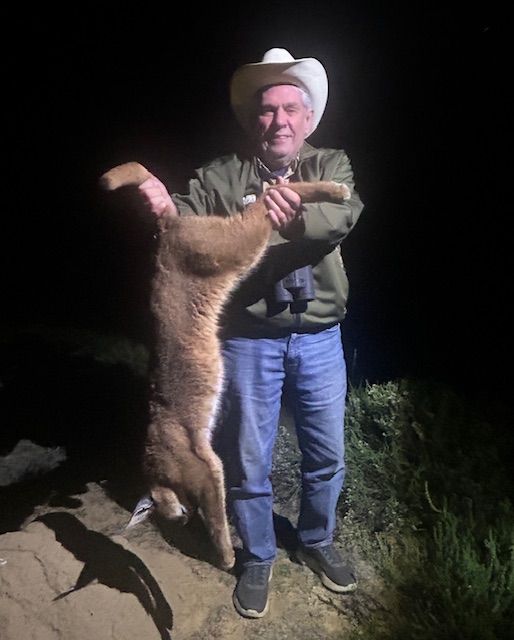
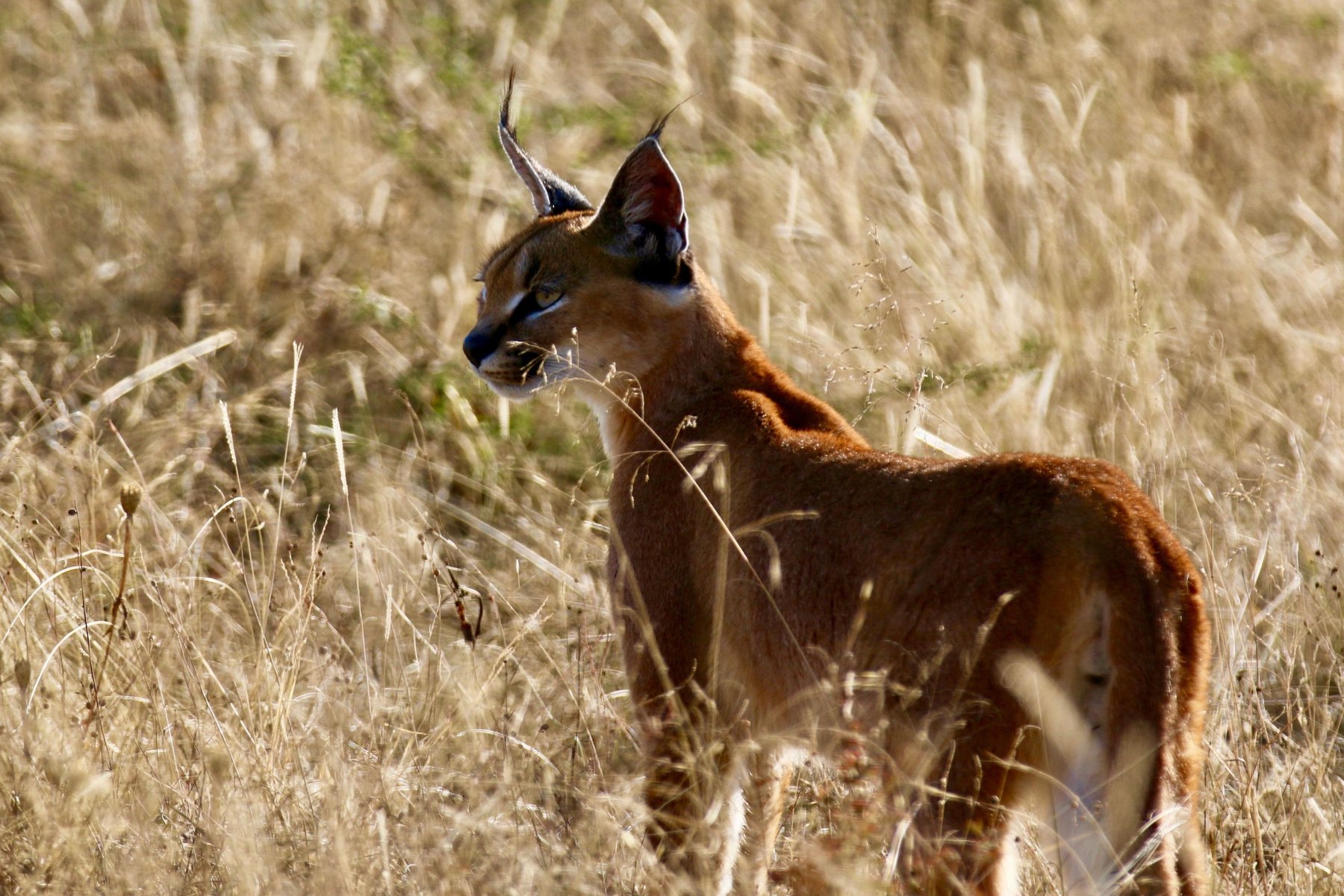
Caracal — the rooikat. A heavy, short-tailed cat with black ear tufts, roughly the size of a spaniel and capable of taking an adult impala. Hunted hard on farmland because of what they do to sheep. Genuinely difficult to see and the best trophy of this group by some margin.
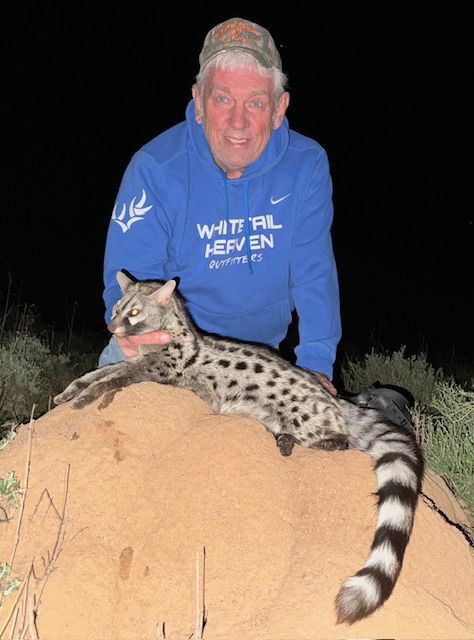
African civet — low, heavily built, boldly blotched, and almost entirely nocturnal. Usually seen on a road at night or on a trail camera at a leopard bait.
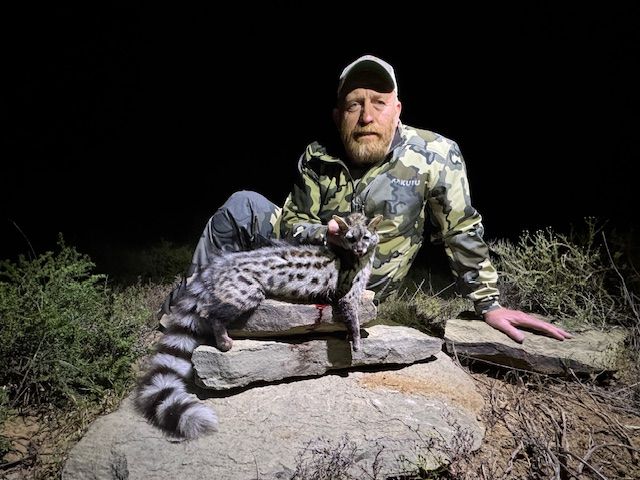
Genet — small, spotted, long-tailed and cat-like, though not a cat. Both the large-spotted and small-spotted genet are here. They climb well and are often around camp after dark.
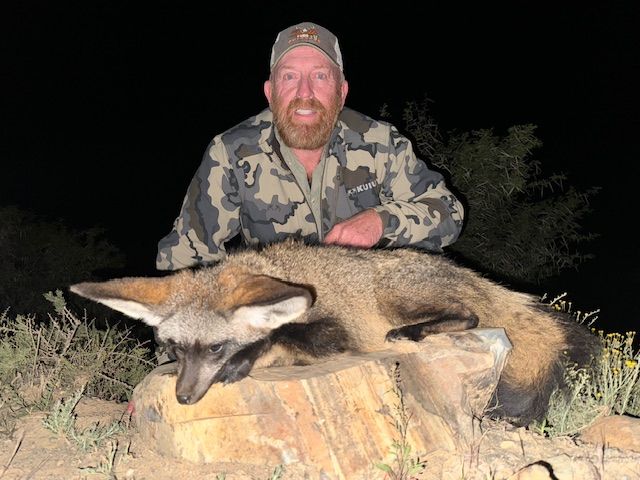
Bat-eared fox — small, sandy, with ears out of all proportion to the animal. Insect eaters, active at dawn and dusk, usually in pairs. Harmless and oddly engaging, which puts some hunters off them entirely.
Black-backed jackal — hunted as a problem animal everywhere and the one you are most likely to call in.
How the hunt runs
Three ways, and all of them are side-hunts rather than the reason you came.
Calling. A distress call — a hare, a bird, a dying lamb — played or blown on a cold still night. Jackal come first and fastest, caracal come late or not at all. You sit with a lamp and someone sweeping it slowly; the shot comes quickly when it comes.
Lamping. Driving quietly at night with a spotlight. This is how most civet and genet are taken, and it is the most productive method on a short safari.
Chance. Caracal and genet turn up at leopard baits, on the road at dusk, and occasionally in camp. If you want one, say so at the start of the safari and carry something suitable in the vehicle.
Rifle and pelt damage
This is the one group where the rifle is chosen to protect the trophy rather than to kill it.
A .22 Hornet, .222 or .223 with a light frangible bullet does very little exit damage. A .243 works but is more than you need. A shotgun with number 2 or BB shot is better than anything for a moving animal inside thirty metres, which is most lamping shots.
Avoid your plains game rifle. A .30-06 through a genet leaves very little for the taxidermist to work with.
Practicalities
None of these carry a quota on our South African ground and most carry no trophy fee or a nominal one. Tell us before the safari if you want one so the right rifle is in the vehicle and the skinners are expecting it.
Pelts need to be handled quickly and salted properly. If you want a full mount, say so before the shot — the position the animal is found in affects what the taxidermist can do with it.
Import rules differ by country and some of these are CITES-listed. Check your own position before booking. See our firearms and CITES notice.