You are about to wire a deposit to a company eight thousand miles away, in a country whose consumer protections you do not know, for a product you cannot inspect. Most people do less due diligence on this than on a second-hand car.
It usually works out, because most African outfitters are decent operators who live on repeat clients and referrals. But the failures are expensive and unfixable once you are in camp, so here is how to check.
First: are you talking to the outfitter or an agent?
This is the single most useful question and almost nobody asks it.
A booking agent sells hunts run by other people. Some are excellent, know the operators personally, have hunted the ground themselves, and add real value by matching you to the right outfit. Others have never seen the concession and are forwarding your deposit for a commission.
An outfitter holds the hunting rights, employs the professional hunters, and is on the ground.
Neither is wrong. But you should know which you are dealing with, because it changes who is accountable when something goes sideways. Ask directly: do you operate this concession yourselves, or are you booking me with someone else? A good agent answers that cleanly and tells you who the operator is. Evasiveness is the answer.
While you are at it: ask whether the person who replies to your email will be anywhere near your hunt.
The questions worth asking
About the ground
- How big is the property or concession, in hectares or acres? A number, not “very large”.
- Is it fenced, and what kind of fence? Perimeter only, internal camps, or nothing.
- Do you own it, lease it, or hold a concession on it?
- Were the animals born there? When was anything last released onto that ground?
Those last two matter more than anything else on the page, and we have written about why in free-range vs game farm hunting.
About the hunt
- How many hunters are in camp at once, and is the PH shared?
- How many days, and how are travel days counted?
- What are realistic success rates on the species I want — not best-ever, typical?
- Is hunting on foot, or from a vehicle?
- Who is my professional hunter, and can I speak to him before I book?
About the money
- An itemised trophy fee list in writing, for the species I actually want.
- What the daily rate covers, line by line.
- The wounding policy.
- Deposit terms, and what happens if I have to cancel.
- Is a charter flight required, and what does it cost?
About afterwards
- Which dip-and-pack facility do you use?
- Who handles export permits?
- Can you give me a realistic timeline to trophies arriving home?
An outfitter who says six to twelve months is being straight with you. One who says three months either has not counted the permits or is telling you what you want to hear. Our trophy shipping page walks through where the time actually goes.
References, and how to use them properly
Every outfitter will give you references. They will all be happy clients, because nobody hands out the number of someone who had a bad trip.
Use them anyway, but ask better questions:
- What went wrong, and how did they handle it? Something always goes wrong — a vehicle, weather, a wounded animal, a flight. How it was handled is the whole signal.
- How long did your trophies take, and did anything go missing?
- Were there costs you were not expecting?
- Would you hunt with them again, and have you?
A reference who has been back twice is worth ten who went once.
Then go and look at the hunting forums. Search the outfit’s name. You are not looking for complaints — every operator with enough volume has one — you are looking for patterns, and for how the outfitter responded in public.
What should actually worry you
Pressure. Real outfitters have limited quota and limited dates, and will tell you so. They do not need to create urgency.
A quote far below everything else. Concession fees, quota and wages cost what they cost. Someone at half the market rate is economising somewhere.
Vagueness about trophy fees. The daily rate is the small half of the bill. If the fees are not itemised in writing before you commit, you do not have a quote.
Guaranteed success on everything. Hunting does not work like that. Very high success rates on every species suggest managed density rather than hunting.
No written contract. There should be a document setting out dates, rates, species, what is included and cancellation terms.
Reluctance to put you in touch with past clients, or with your PH.
Captive-bred lion. Walk away. It is also worth asking the question directly, because the vocabulary used to describe it is deliberately slippery.
The things that matter less than people think
A glossy website. Some of the best operators in Africa have terrible websites. Some of the worst have superb ones.
Luxury camps. Pleasant, and almost unrelated to the quality of the hunting. You will be out of camp from before first light until dark.
Association membership. Useful, not decisive. Membership of PHASA, ZPHGA or similar means someone met a standard. It does not mean much about the specific hunt you are buying.
Record-book animals in the gallery. Shows what the ground has produced at its best. Ask about typical instead.
Where we sit
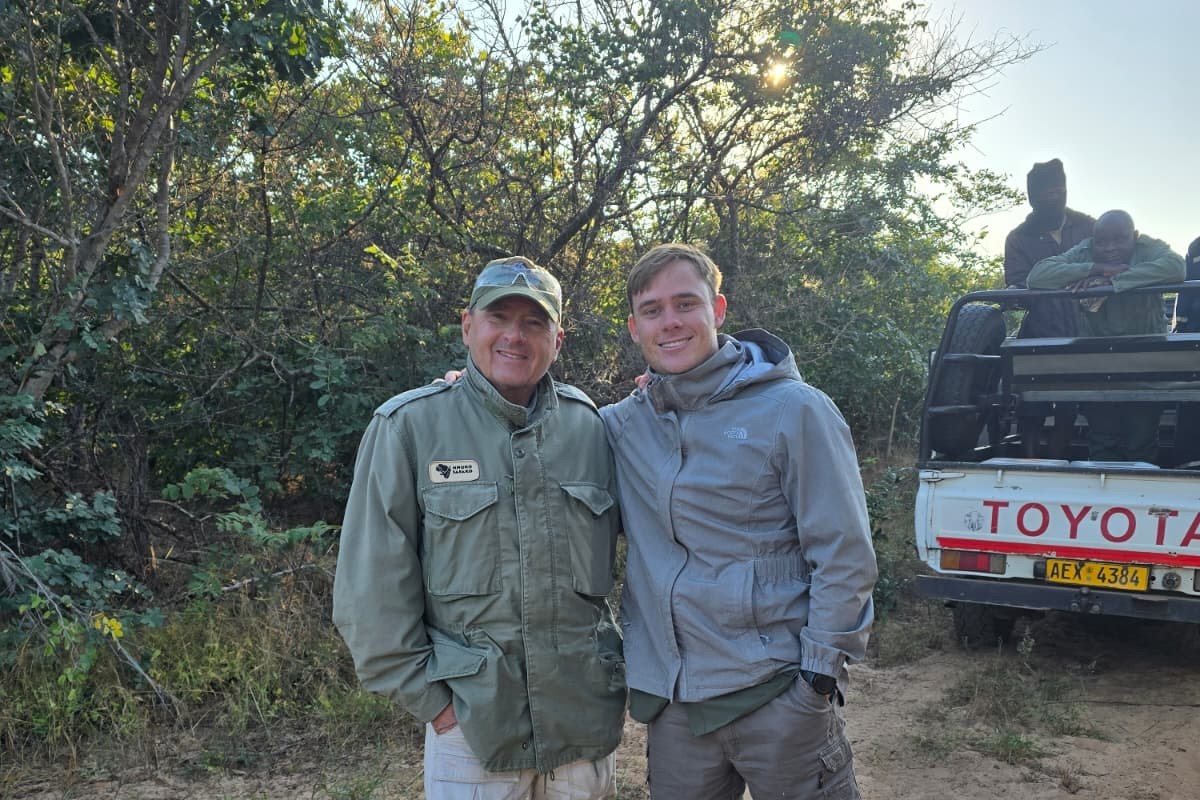
We have been doing this since 1990, we hold the hunting rights on our own ground in all three countries, and the person who answers your email is part of the outfit, not a reseller.
We would rather tell you a hunt is wrong for you than sell it. We point first-time buffalo hunters at our South African ground rather than the Zambezi Delta, and we tell people plainly when their dates do not suit what they have asked for. That costs us bookings occasionally and it is still the right way to run it.
Ask us every question on this page. If the answers do not satisfy you, ask them of somebody else — the questions are what matter, not who ends up answering them.
Start an enquiry, or read about us first.