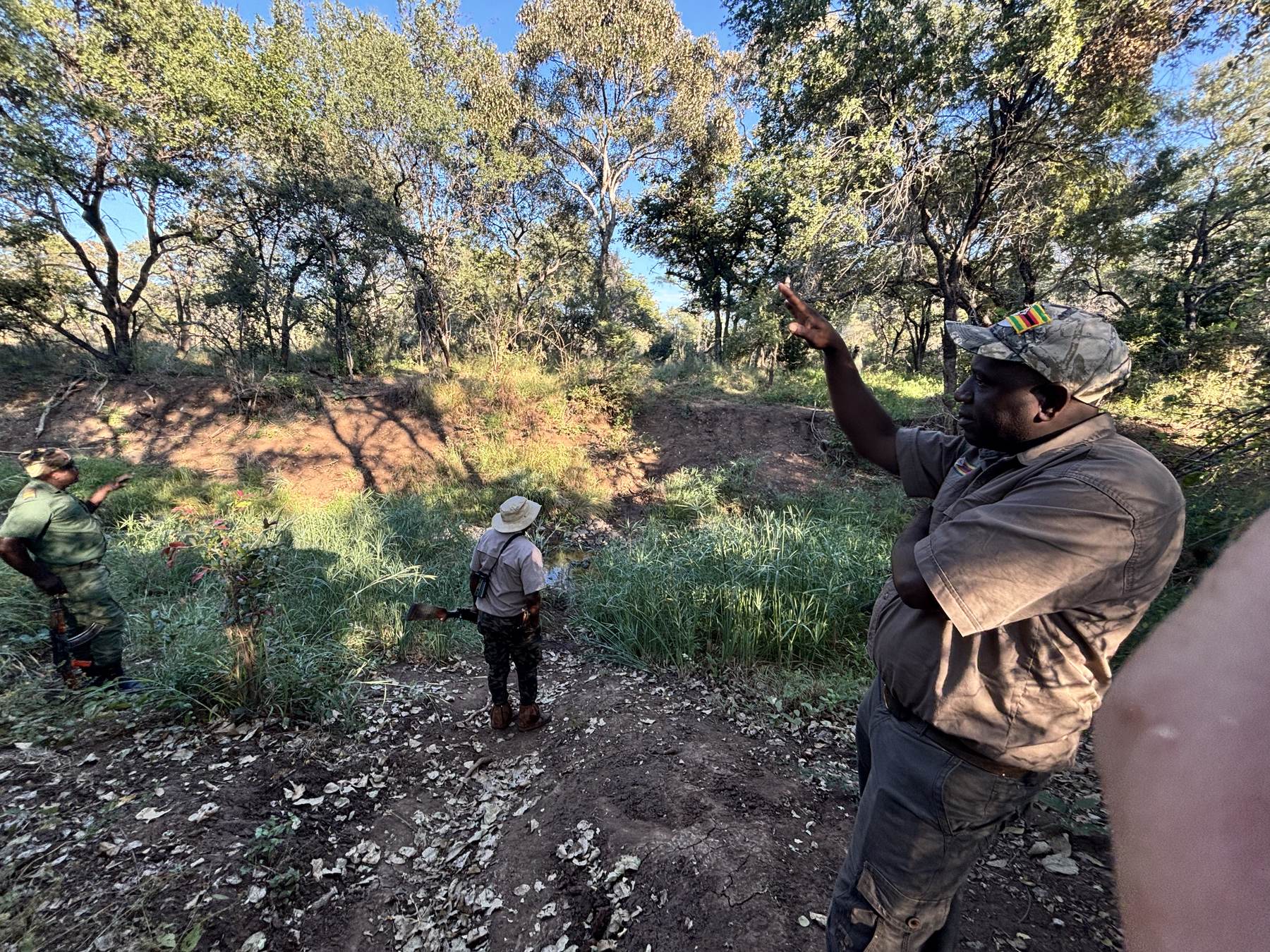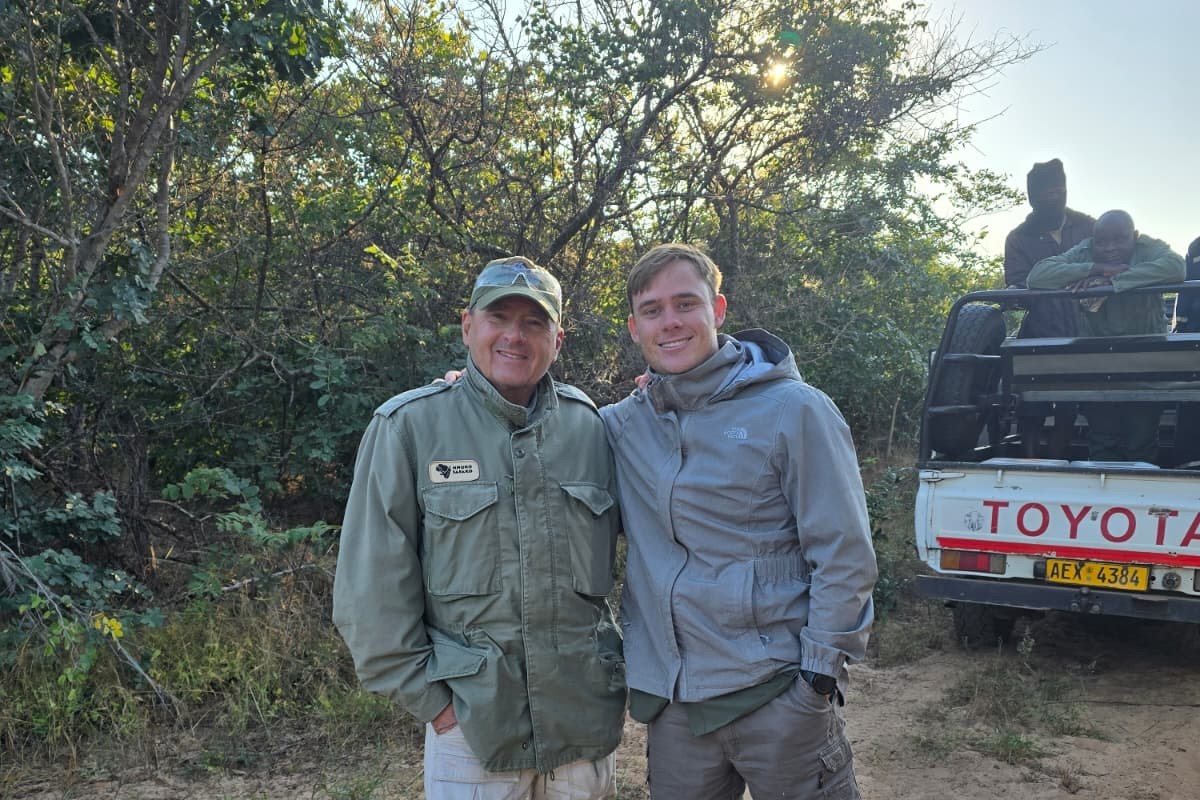
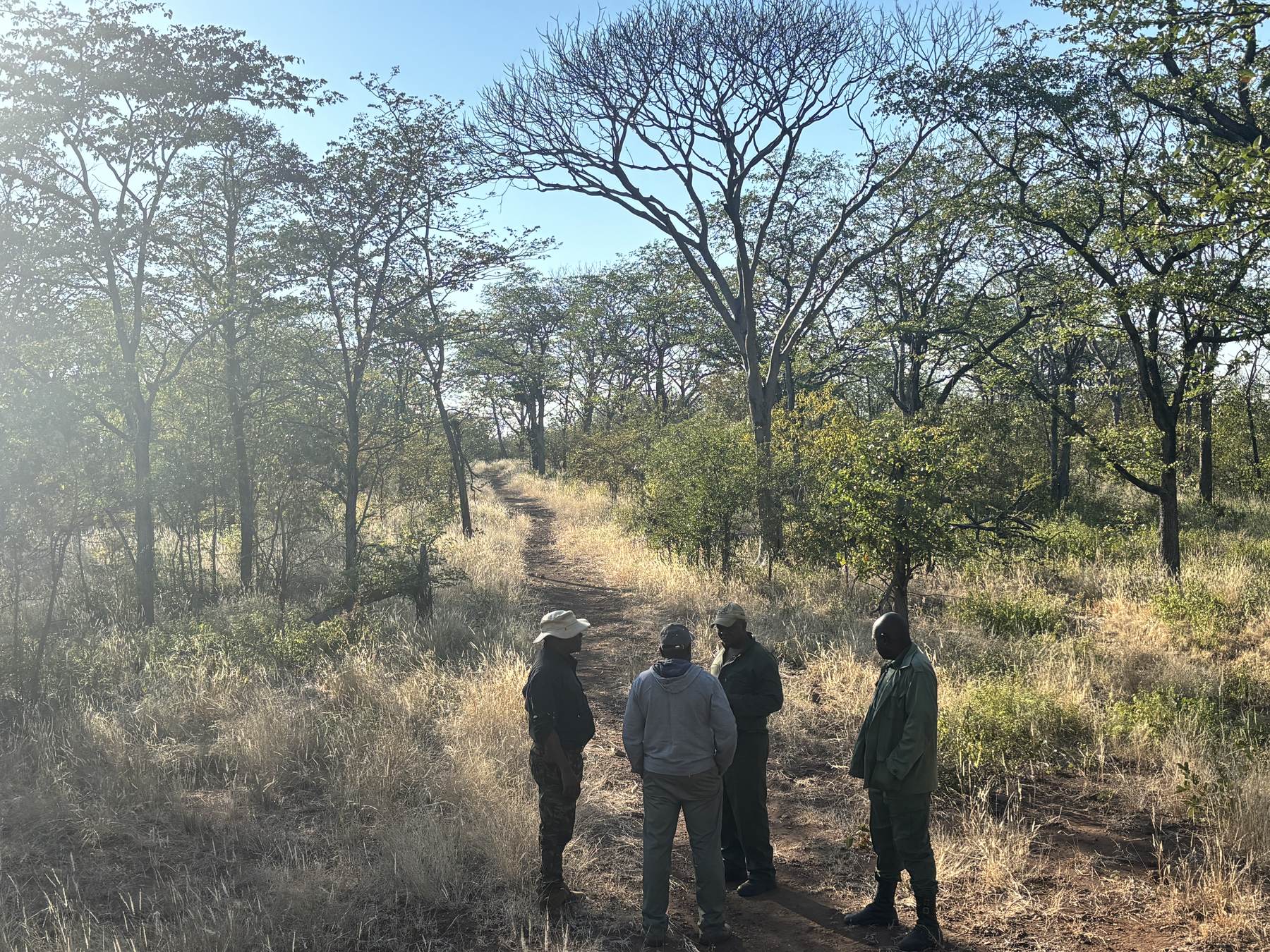
None of these are about marksmanship. The people who struggle on a first African safari are rarely bad shots — they are good shots who prepared for the wrong thing.
Here is what we watch happen, roughly in order of how much damage it does.
1. New boots
The one that actually ends hunts. More safaris are ruined by blisters than by bad shooting, and it is not close.
You will walk further than you expect, on ground that is harder and hotter than you are used to, for seven to ten days without a rest day. Boots that are fine for a weekend at home will take the skin off your heels by day three, and once that has happened there is nothing anyone can do about it.
Walk at least eighty kilometres in the boots you intend to hunt in before you get on the plane. Not ten. Eighty. And bring a second pair.
2. Never having shot off sticks
Almost every shot you take in Africa will be standing, off shooting sticks, at somewhere between sixty and two hundred metres.
Almost every shot you have practised at home was from a bench.
These are not the same skill, and the bench one is close to useless here. Buy a set of sticks, practise standing, and get to where you can be steady in under five seconds — because that is frequently all the time a kudu gives you.
If you do one thing on this list, do this one.
3. Bringing too much rifle
A heavy magnum you flinch with is worse than a modest calibre you shoot well. Every time.
A .30-06 or 7mm placed correctly kills plains game cleanly and has done for a century. A .375 you have fired twenty times in your life, in a hurry, standing on sticks, after walking four kilometres, is a wounded animal waiting to happen.
Bring the rifle you shoot best. For dangerous game there are legal minimums and they are not negotiable — see what calibre for Cape buffalo — but inside that constraint the same principle holds.
4. Packing for the Africa in their head
It is winter. That is the whole point of the season.
Morning temperatures in the Limpopo bushveld get close to freezing, and you will be sitting in an open vehicle in the dark at the start of every day. People consistently bring one fleece and spend a week cold.
Equally, they overpack. Laundry is done daily in every camp. Five days of clothing covers a ten-day safari with room to spare. Our trip preparation page has the full list.
5. Bright colours and noisy fabrics
Muted — khaki, olive, brown, grey. Camouflage is fine if that is what you are comfortable in; it is not required.
What matters is that it is quiet against thorn. Modern synthetics that rustle will cost you animals, and you will not know it happened.
6. Treating the PH’s judgement as a suggestion
You are paying for local knowledge. Use it.
When your professional hunter says the bull is young, he is reading horn mass, body shape and worn teeth against several hundred animals he has seen on that exact ground. When he says do not shoot, there is a reason — an animal behind, a bad angle, a cow you have not seen in the grass.
The hunters who go home happiest are the ones who ask why afterwards rather than argue in the moment.
7. Judging trophies by the record book
Record-book animals are, by definition, exceptional. Hunting the whole safari waiting for one means passing good representative animals for seven days and going home with nothing.
Decide before you travel what you want: a mature representative animal of each species, or one exceptional animal and the acceptance that you may not get it. Both are legitimate. Choose consciously rather than discovering on day six that you have been doing the second by accident.
Ask your PH what a good one looks like on that ground, in inches, on day one.
8. Not saying what they want before the shot
Shoulder mount or European skull? Full mount? Say so before the animal is skinned, not after.
Capes are cut differently for different mounts and the cut cannot be undone. The skinners start the same day, and they will do exactly what they were told. This is a thirty-second conversation that people have four weeks too late.
9. Forgetting the costs that come after
The daily rate and the trophy fees are the part you discuss before you travel. Dip and pack, shipping, a customs broker at your end and taxidermy all arrive afterwards, and together they are not small.
None of it is optional — untreated skins clear customs nowhere. Budget for it when you book. See what a safari actually costs and trophy shipping.
10. Expecting it to be over in three months
From the last day of your safari to a mounted trophy on the wall is realistically six to twelve months. Permits are the slow part and nobody can accelerate them. Elephant and leopard paperwork routinely takes longer than everything else combined.
Anyone promising three months is either cutting a corner or has not counted.
The short version
Break in your boots. Practise standing on sticks. Bring a rifle you shoot well and a warmer jacket than you think. Listen to your PH. Say what mount you want before the shot. Budget for the part that happens after you fly home.
Do those six things and you will hunt better than most people on their first trip — and you will enjoy it considerably more.
Ask us anything before you book, or read the full trip preparation guide.