This is the question we get more than any other, usually about eight months before a client’s first buffalo hunt, and the answer people want is a single number. Here is a more useful version.
The legal floor
In both South Africa and Mozambique, where we hunt buffalo, the legal minimum is .375 — in practice, the .375 H&H Magnum or something ballistically equivalent. This is not a guideline. Turn up with a .338 and you will not be hunting buffalo.
So the real question is not whether .375 is enough. It is legal, it accounts for a great many buffalo every season, and it is the most common rifle in our camps. The question is whether you should bring more.
What actually kills buffalo
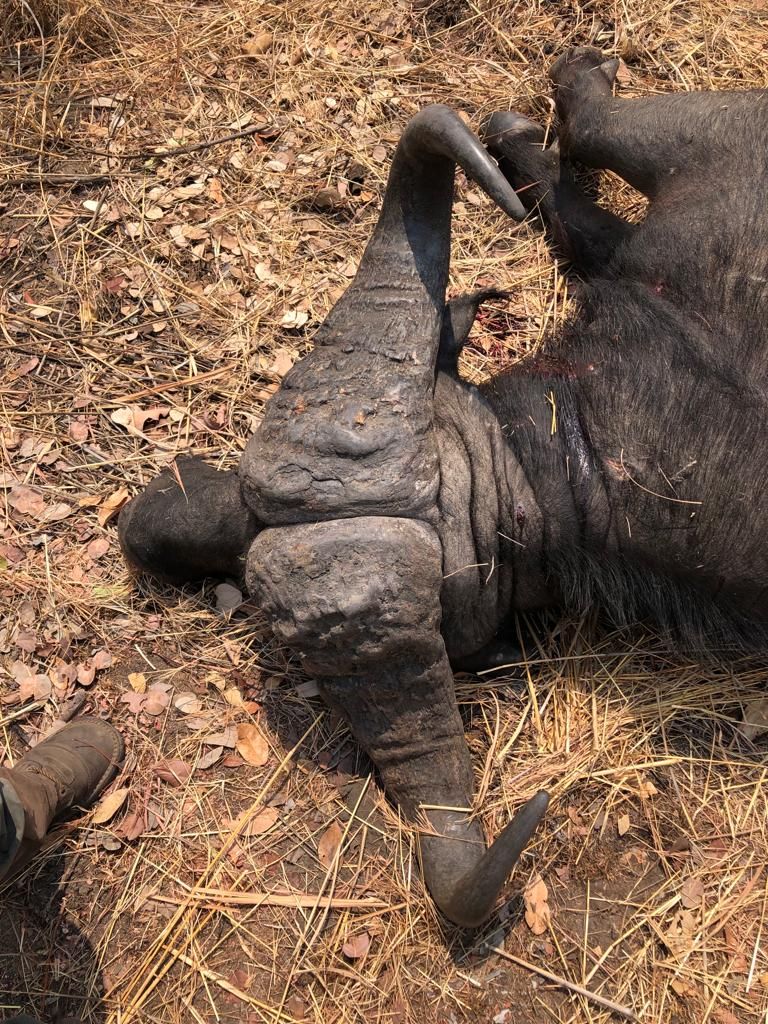
Buffalo are not hard to kill in the sense of requiring enormous energy. They are hard to kill in the sense of being extraordinarily reluctant to acknowledge that they have been. A heart-shot bull can cover eighty metres, and at the end of it he is not lying down feeling sorry for himself. He is standing in the shade of a thicket, facing back along his own tracks, waiting for whatever hit him.
What that means practically is that penetration and bullet construction matter more than raw velocity or calibre size. You need a bullet that goes through heavy shoulder bone in a straight line and keeps going. A fast, frangible bullet from a bigger case is worse than a heavy, well-constructed bullet from a smaller one.
The three sensible answers
.375 H&H Magnum. The classic and, for most hunters, the right choice. Manageable recoil, ammunition available everywhere in Africa, flat enough to also take plains game on the same safari, and it has been killing buffalo for a hundred years. If you are bringing one rifle for a mixed-bag hunt, this is it.
.416 Rigby or .416 Remington. A genuine step up in bullet weight and frontal area without going into punishing recoil territory. Our professional hunters carry .416s more often than anything else, which tells you something. If buffalo is the point of the trip and you shoot heavy rifles comfortably, this is arguably the sweet spot.
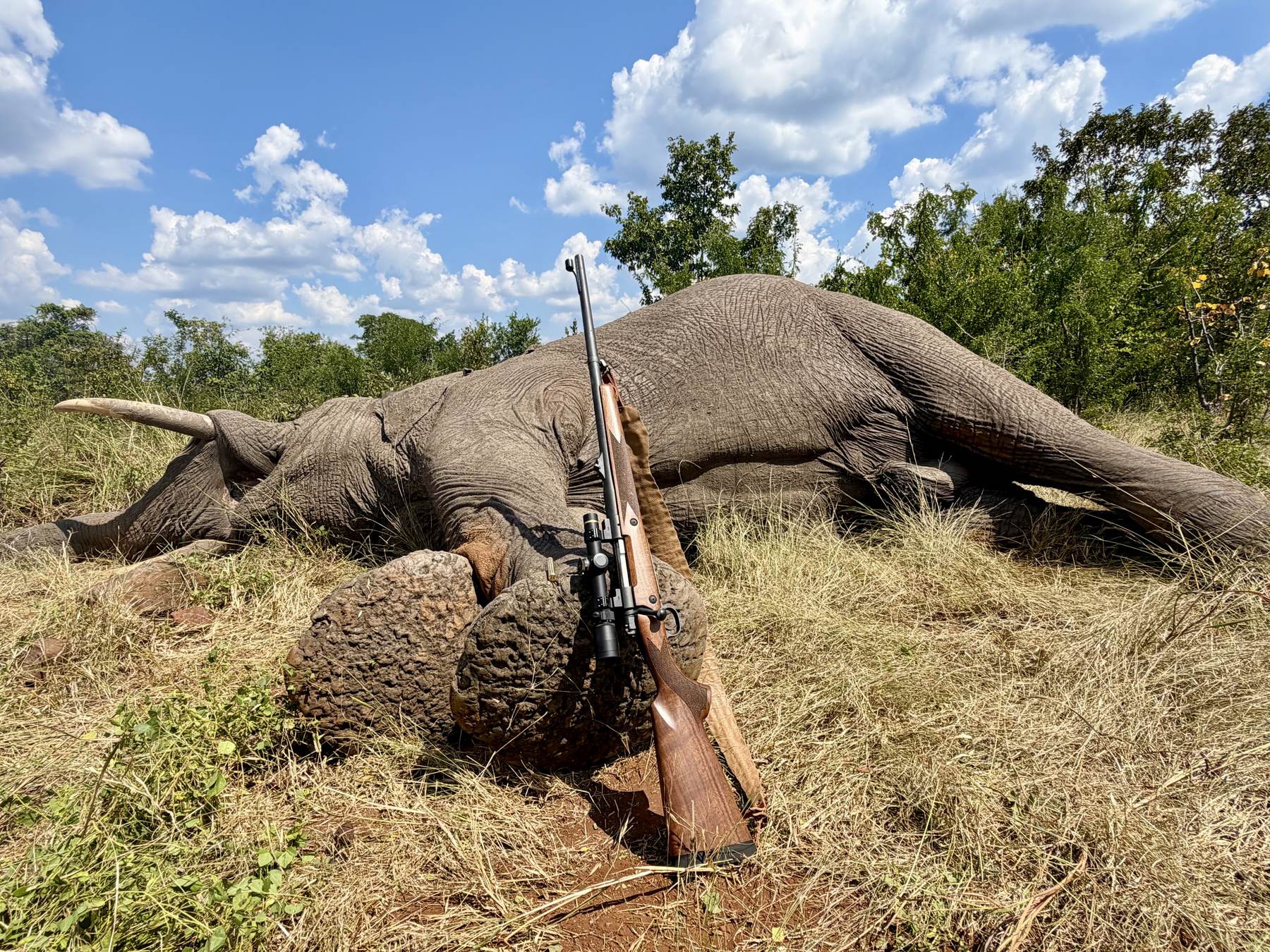
.458 Lott. More than you need for buffalo and exactly right for elephant. If you are hunting both on one safari and want a single heavy rifle, this makes sense. As a buffalo-only choice, most people would be better served by a .416 they can shoot faster.
The rifle you can actually shoot
Here is the part that matters more than any of the above. Every season we watch someone arrive with a .458 they bought three months ago, flinch badly on the range on day one, and shoot noticeably worse for the rest of the safari than they would have with the .375 sitting at home.
A well-placed .375 beats a poorly-placed .458 every time, in every scenario, without exception. If a rifle makes you flinch, it is the wrong rifle regardless of what the ballistics table says.
Be honest with yourself about this before you buy anything. If you can put three rounds into a paper plate at sixty metres, standing, off sticks, without developing a flinch — that is your rifle.
Bullets
Load premium bonded or monolithic softs for the first shot. Swift A-Frame, Barnes TSX, North Fork, Woodleigh Weldcore — any of these will do what is asked. The first shot goes into the shoulder, breaking bone, and you want it to reach the far side.
Then carry solids for everything after. Follow-up shots on a departing or charging buffalo are frequently taken at bad angles through heavy muscle and bone, and a solid drives through where a soft will not.
Bring sixty rounds. You will not use them, but ammunition is not available in camp.
Practise the way you will shoot
Almost every buffalo shot is taken standing, off shooting sticks, at between twenty and eighty metres, often in a hurry and often at an animal that is partially obscured. Bench accuracy at two hundred metres tells you nothing useful about whether you are ready.
Buy shooting sticks. Practise getting steady on them in under five seconds. Practise working the bolt without taking the rifle off your shoulder. Practise from a kneeling position, because sometimes the grass makes that the only option.
The last thing worth saying is that your professional hunter is not there to shoot your buffalo. He is there to get you into position, tell you which animal, and back you up if it goes wrong. The shot is yours, and the preparation for it happens at home over the six months before you fly.
Have a look at our Cape buffalo page for where and when we hunt them, or ask us directly if you want to talk through a specific rifle.