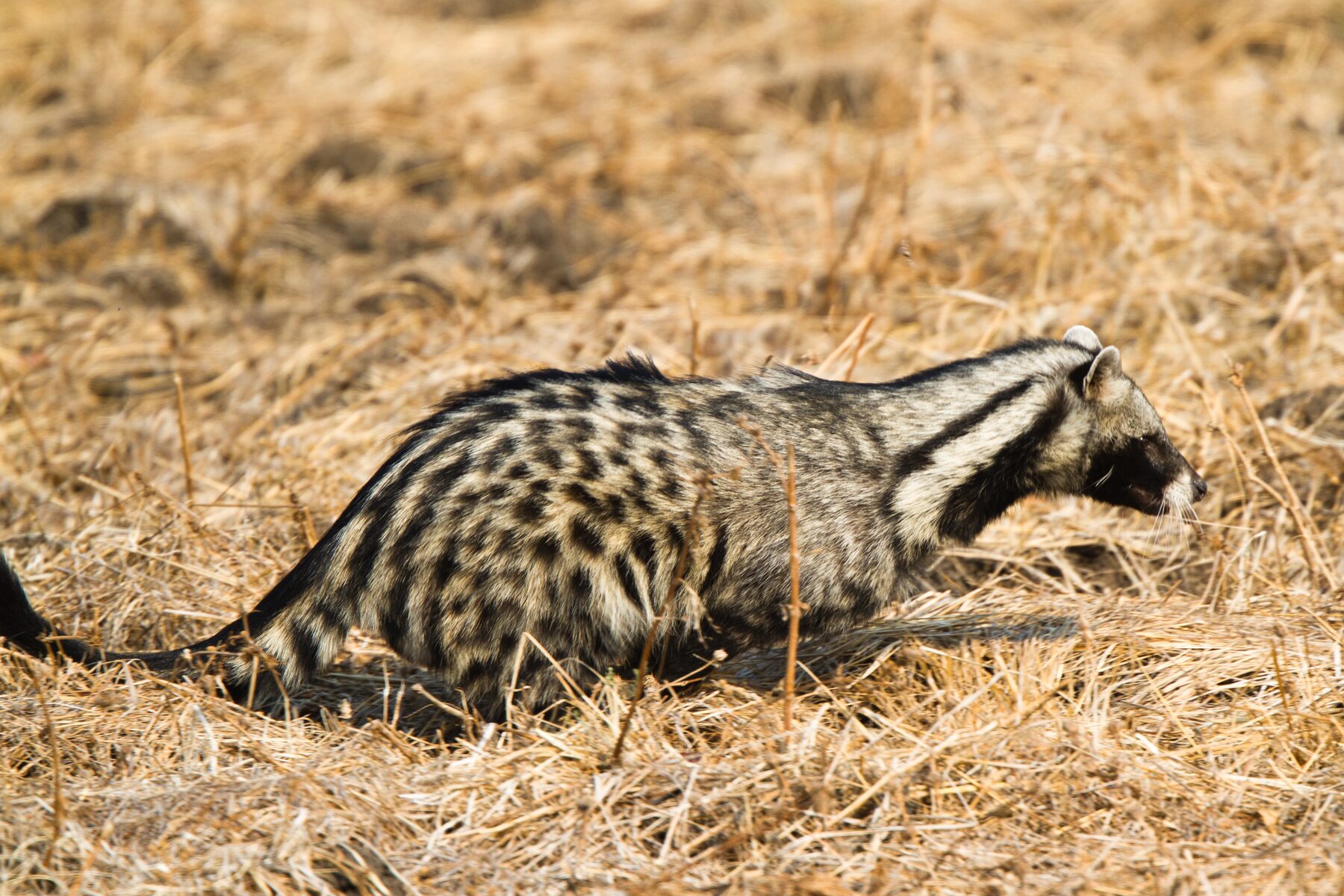
The animal
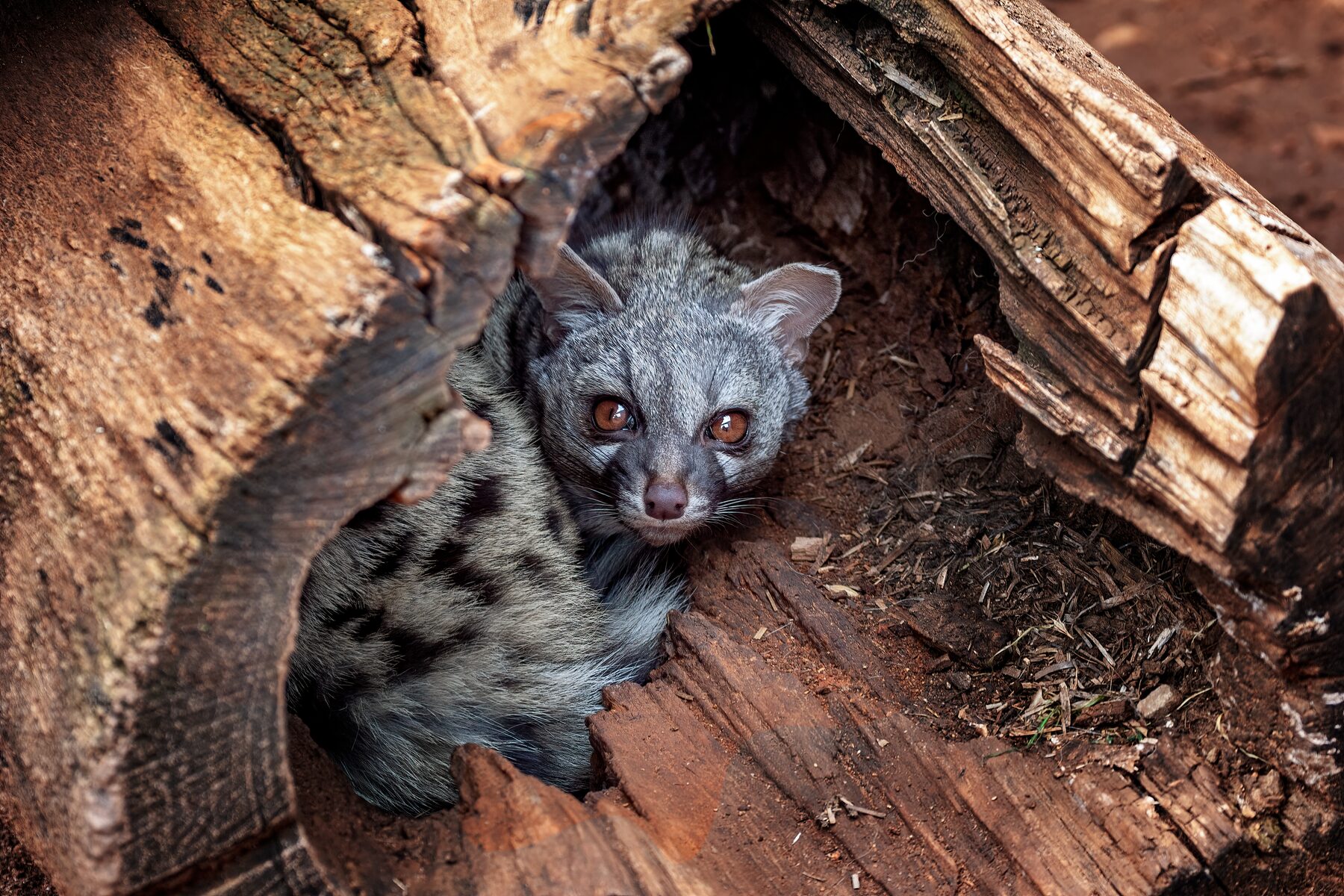
People call it a civet cat and it is not a cat either. The African civet is the largest viverrid in Africa — ten to twenty kilograms, low and heavily built, somewhere between a badger and a very large genet in proportions.
Three things identify it immediately, and all three separate it from the genet it gets confused with. The coat is blotched rather than spotted, in heavy irregular black over grey. The face carries a bold black-and-white mask across the eyes. And there is a crest of long hair down the spine which the animal raises when it is alarmed, making it look half again its real size.
They are omnivores and not fussy about it — fruit, insects, carrion, small mammals, snakes, and anything left out at a camp. They are almost entirely nocturnal, they follow the same paths night after night, and they are rarely seen in daylight by anybody.
The scent glands are the reason you may have heard of the animal. Civetone was harvested commercially for the perfume trade for centuries, and the practice has largely, though not entirely, been replaced by synthetics.
How the hunt runs
Lamping, mostly, and the leopard bait.
Driving quietly at night with a spotlight is how most civet are taken. They are creatures of habit on known paths, so your professional hunter will usually have an idea of where one is working before you go out.
The other reliable place to see one is at a leopard bait. Civet come to carrion readily and turn up on trail cameras at baits constantly. Whether you shoot one while a cat hunt is running is your professional hunter’s call and nobody else’s — a shot at a civet can cost you the leopard.
Calling does not work well on them.
Rifle and pelt damage
The same rule as the rest of this group: the rifle protects the trophy.
A .22 Hornet, .222 or .223 with a light frangible bullet. A shotgun with number 2 or BB shot inside thirty metres is better on a moving animal. Civet are heavier than genet and will take a little more killing, but not enough to justify reaching for your plains game rifle.
Practicalities
No quota on our South African ground and either no trophy fee or a nominal one. Say before the safari if you want one so the right rifle is carried.
Civet make unusually good full mounts — the crest and the mask give a taxidermist something to work with that most small predators do not. Decide before the shot, and get the animal to salt quickly.
Import rules differ by country. Check your own position before booking. See our firearms and CITES notice.