The animal
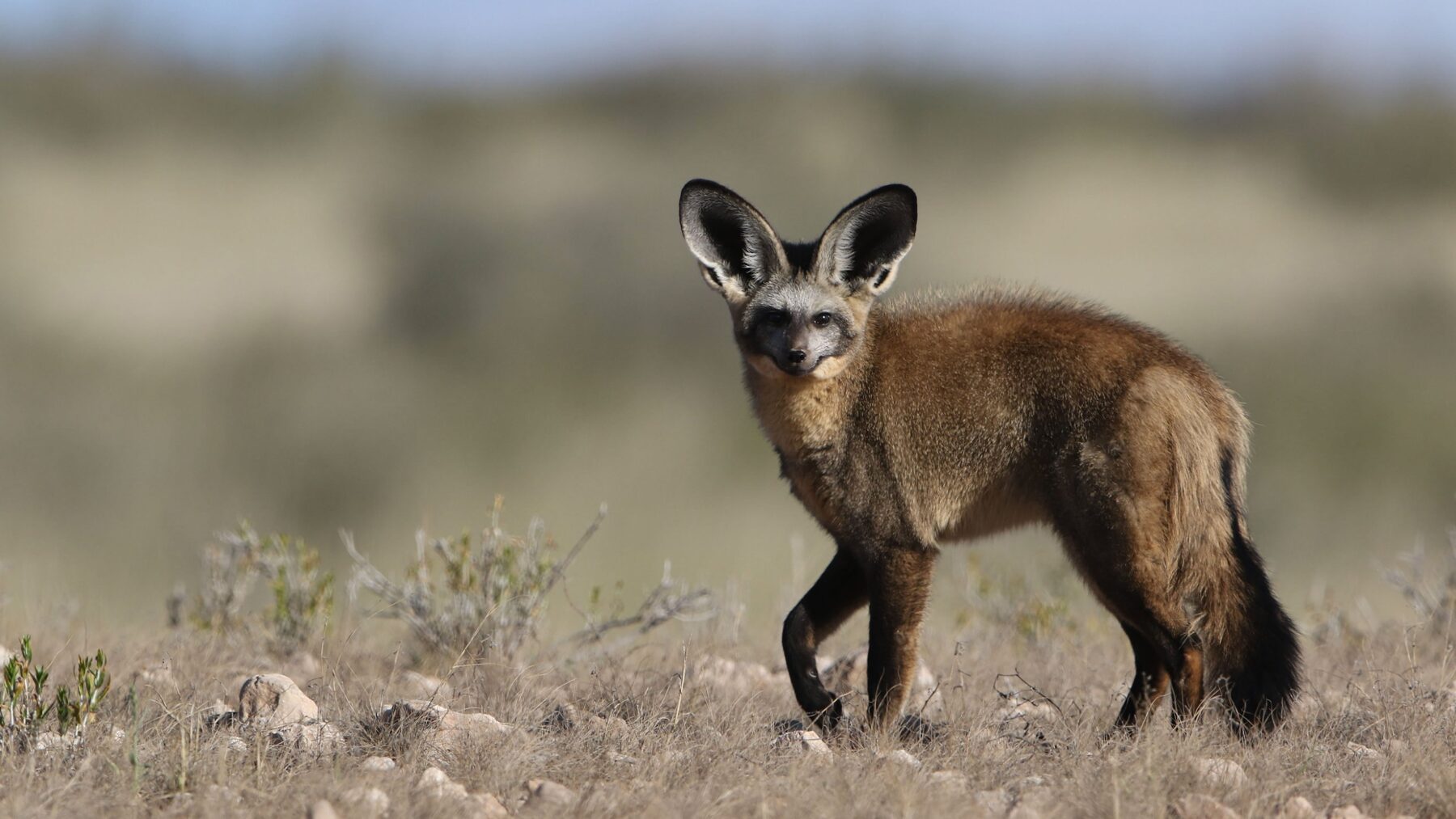
A four-kilogram canid with ears a third the length of its body, and both facts are connected.
Bat-eared fox eat insects — overwhelmingly harvester termites, which make up the bulk of the diet. They find them by walking slowly with the head low, listening through the ground, and digging where the sound is. The ears are a listening device and the teeth are built for the job too: they carry more molars than any other wild canid, small and sharp, for crushing chitin.
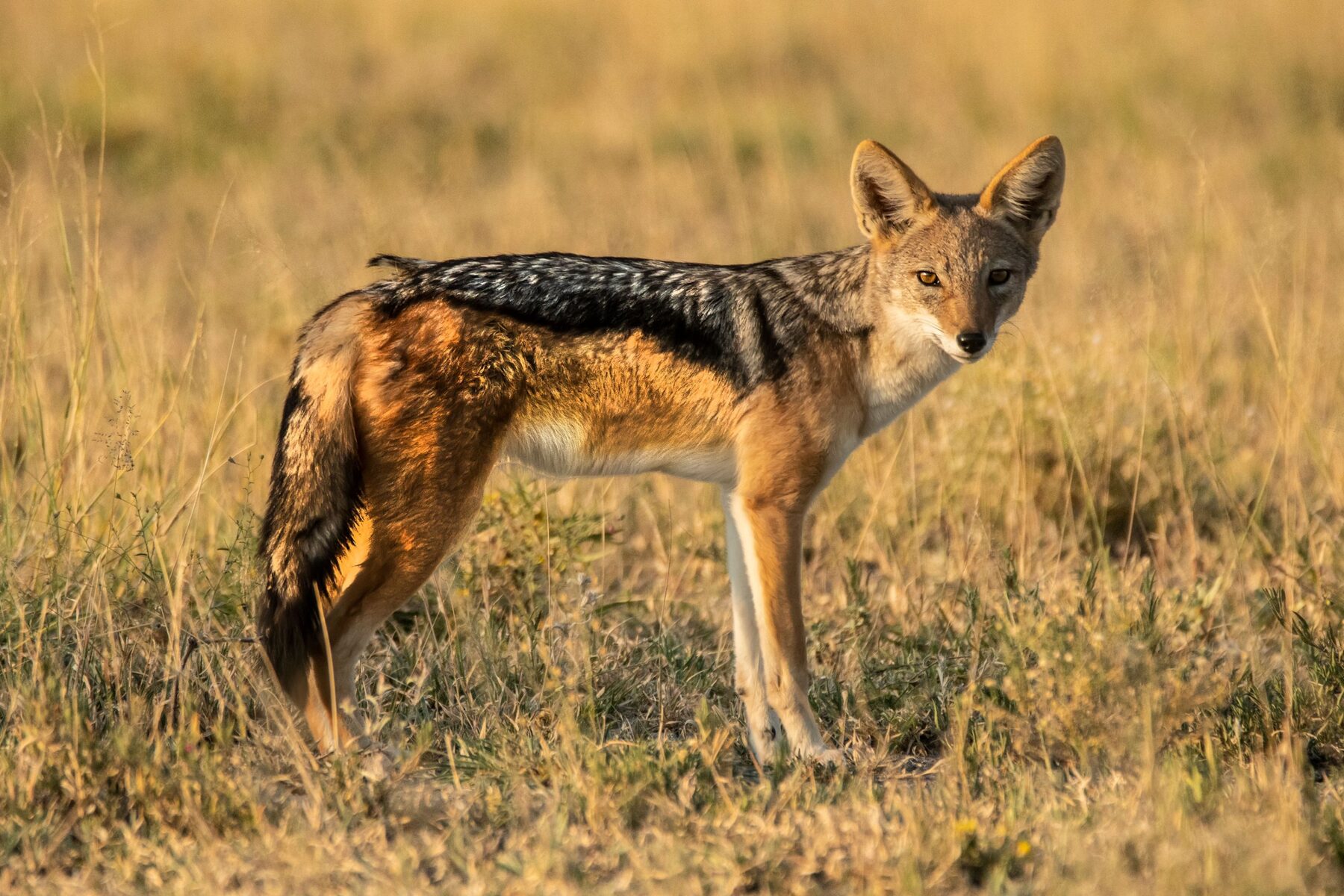
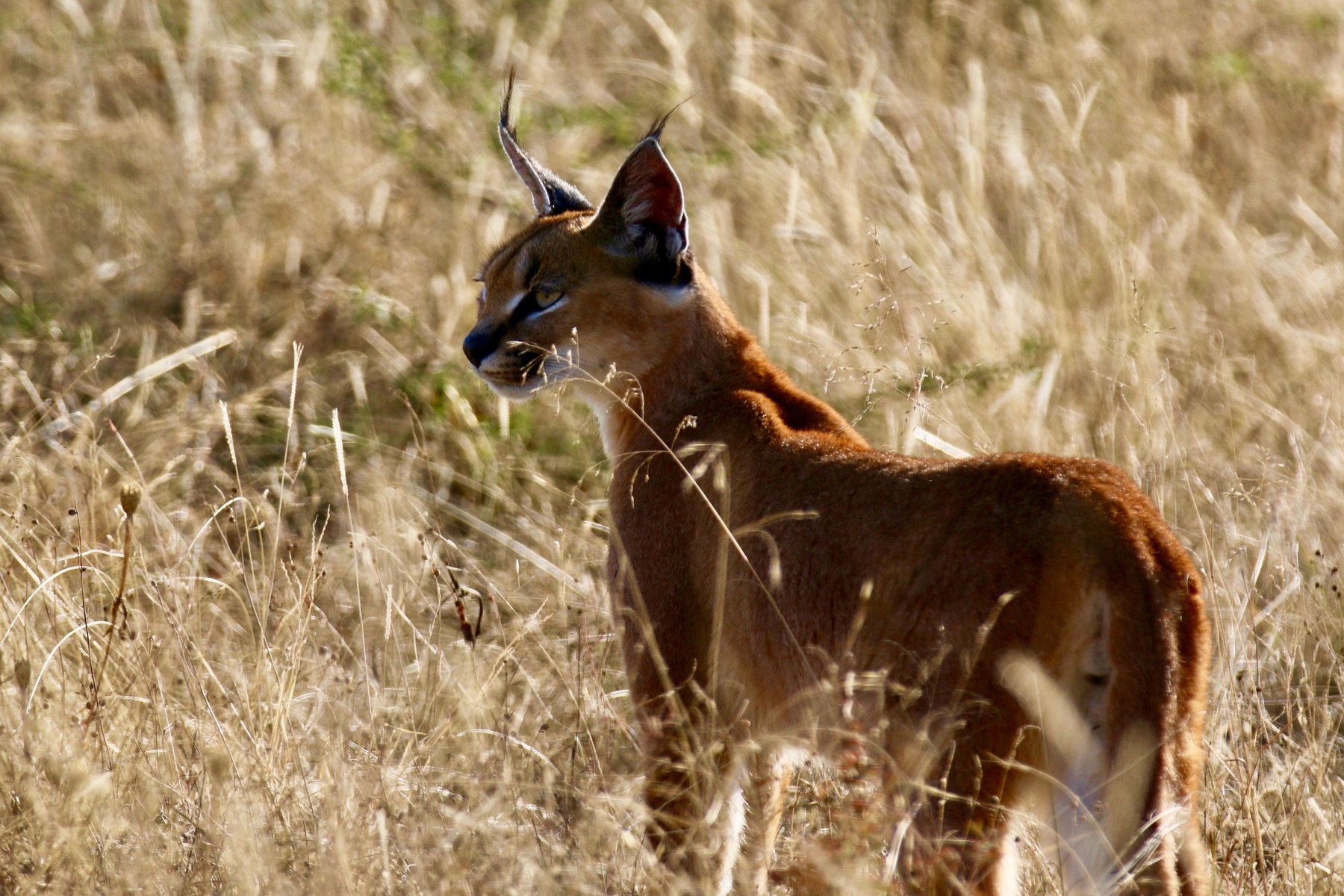
Because they are insectivores they do not compete with the farmer and they do not kill lambs, which separates them from jackal and caracal entirely. They are not persecuted on farmland and they are not hunted as problem animals.
They live in pairs or small family groups, they are active at dawn and dusk in the cool months and almost entirely nocturnal in the heat, and they are tied to open short-grass country rather than thick bush.
On deciding whether to take one
Worth saying plainly, because it comes up on safari more than any other animal here.
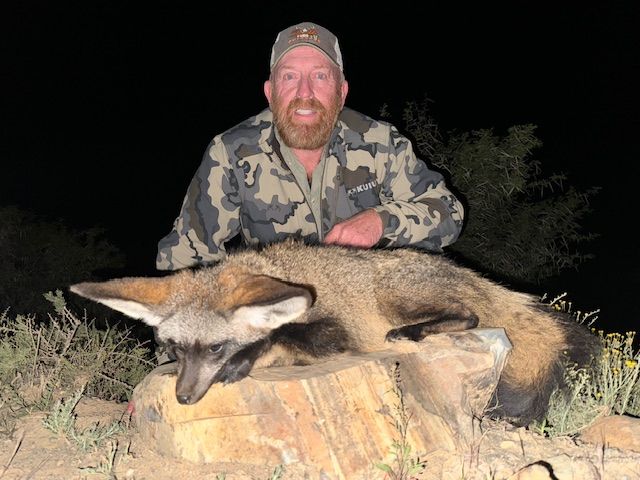
Some hunters look at a bat-eared fox and want the pelt — it is a genuinely striking small mount and a prime winter coat is beautiful. Others look at a harmless insect eater sitting in a pair at a den and decide they would rather not, and go back to the vehicle.
Both are reasonable. Nobody on our team will push you either way or make a thing of it afterwards.
How the hunt runs
Opportunistically, in the open, at either end of the day.
Bat-eared fox are easier to see than anything else in this group because they use open ground and they are out in daylight when it is cool. Most are taken on the walk back from a morning hunt or on an evening drive.
The approach is a straightforward stalk. They are not especially wary and the shot is usually clean. Of all the small predators, this is the one least likely to beat you.
Rifle and pelt damage
A .22 Hornet, .222 or .223 with a light frangible bullet. These are small animals and the pelt is the trophy.
A .243 is more than enough. Your plains game rifle is far too much.
Practicalities
No quota on our South African ground and either no trophy fee or a nominal one. Mention it before the safari so the right rifle is in the vehicle.
Pelts need salting quickly. Decide before the shot if you want a full mount — they make good ones, and the ears need to be handled properly from the start.
Import rules differ by country. Check your own position before booking. See our firearms and CITES notice.