Small and genuinely dangerous
There is an old saying among professional hunters that a wounded bushbuck is more dangerous than a wounded leopard, and while that is an exaggeration, it is not much of one.
A wounded bushbuck ram does not run. He goes twenty metres into the thickest cover available, turns around, and waits, and when you come in after him he comes at your legs with horns that are short, sharp and angled forward for exactly that purpose. Several professional hunters have been killed this way and a great many more have been badly injured.
Take the shot you are certain of. That is the whole safety brief.
The animal
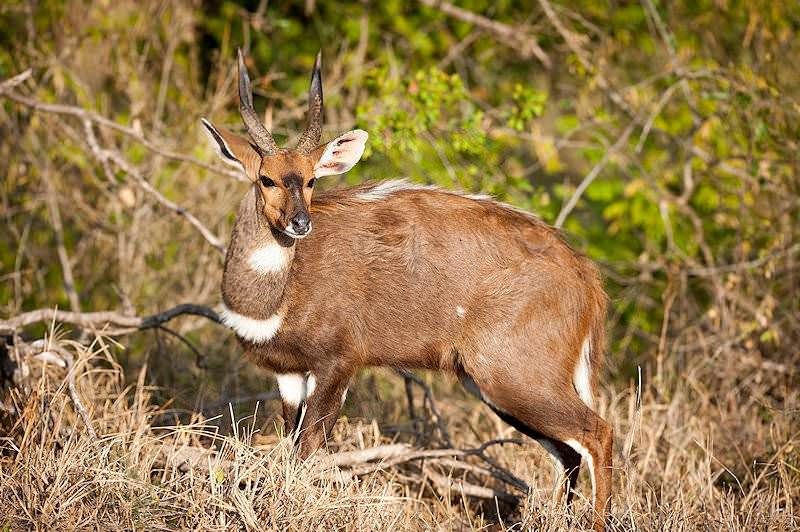
Bushbuck are the smallest of the spiral-horned antelope and the only one that is genuinely solitary. They live in dense riverine bush, coastal thicket and forest edge, hold small territories, and rarely stray more than a few hundred metres from cover.
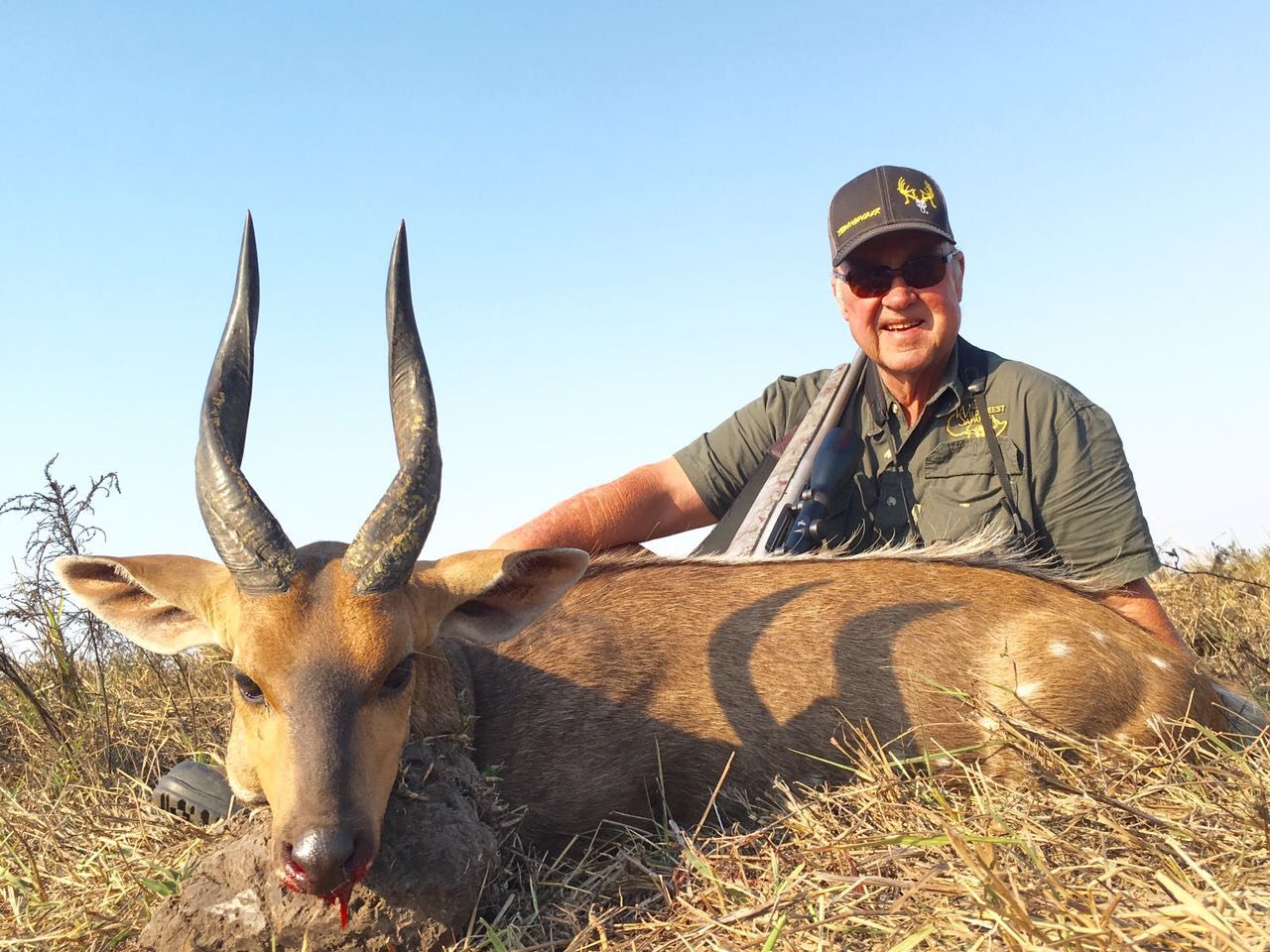
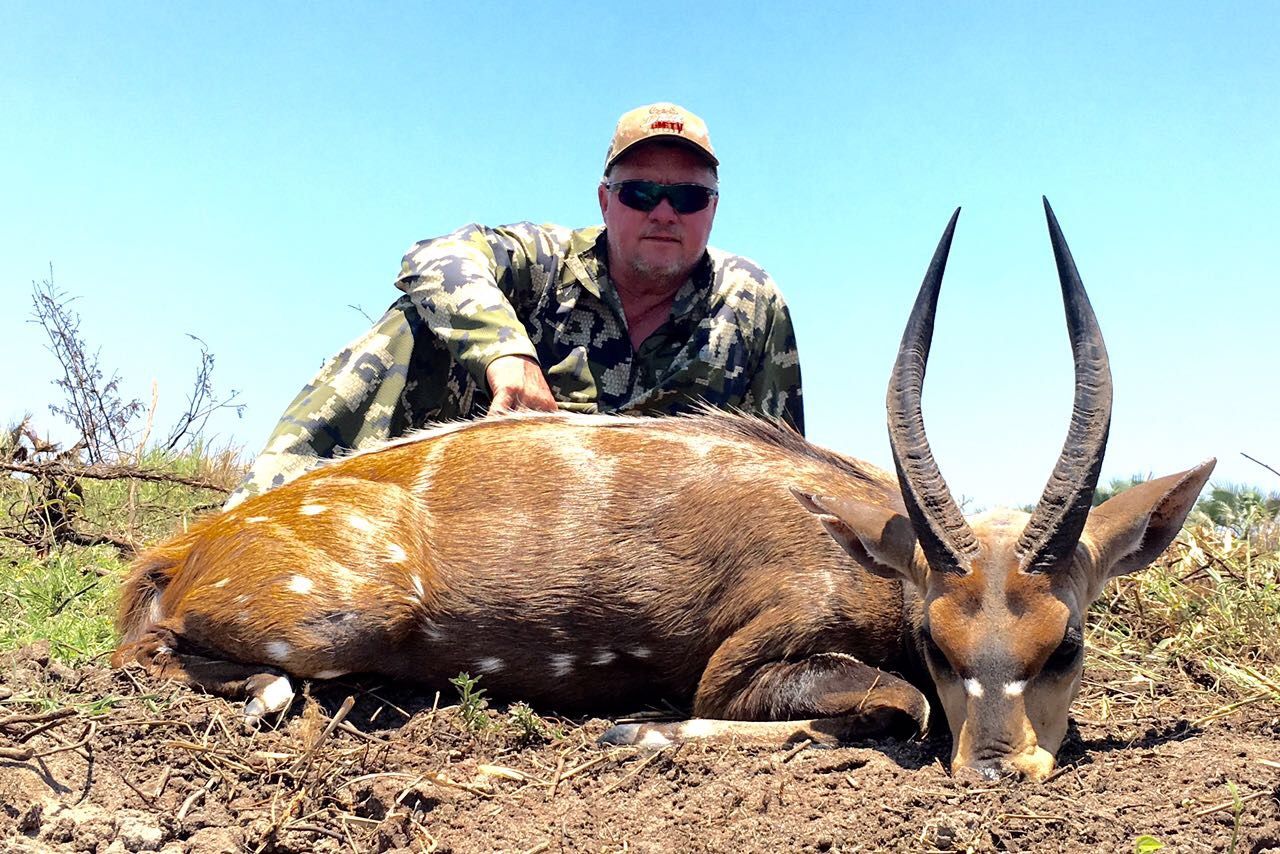
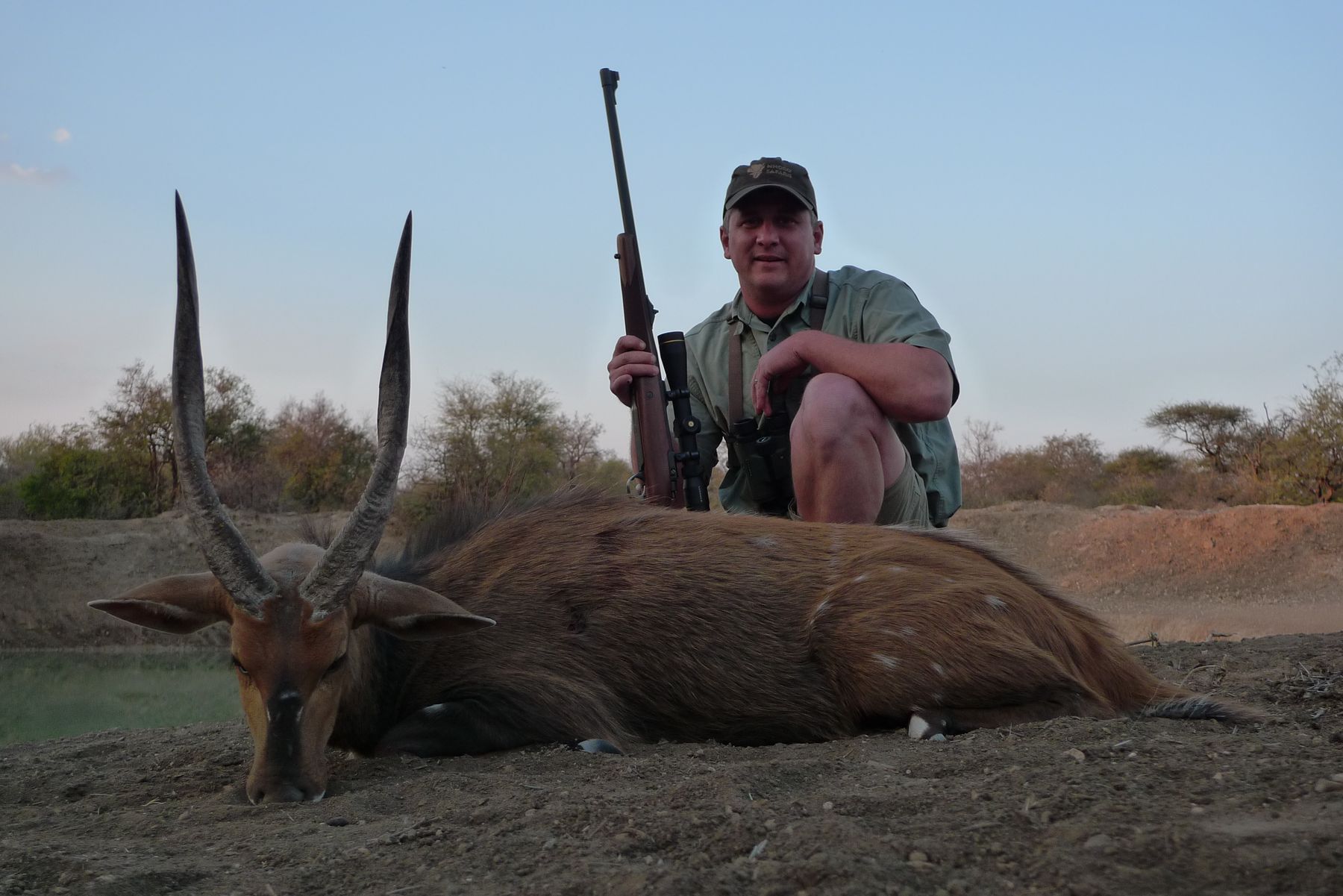
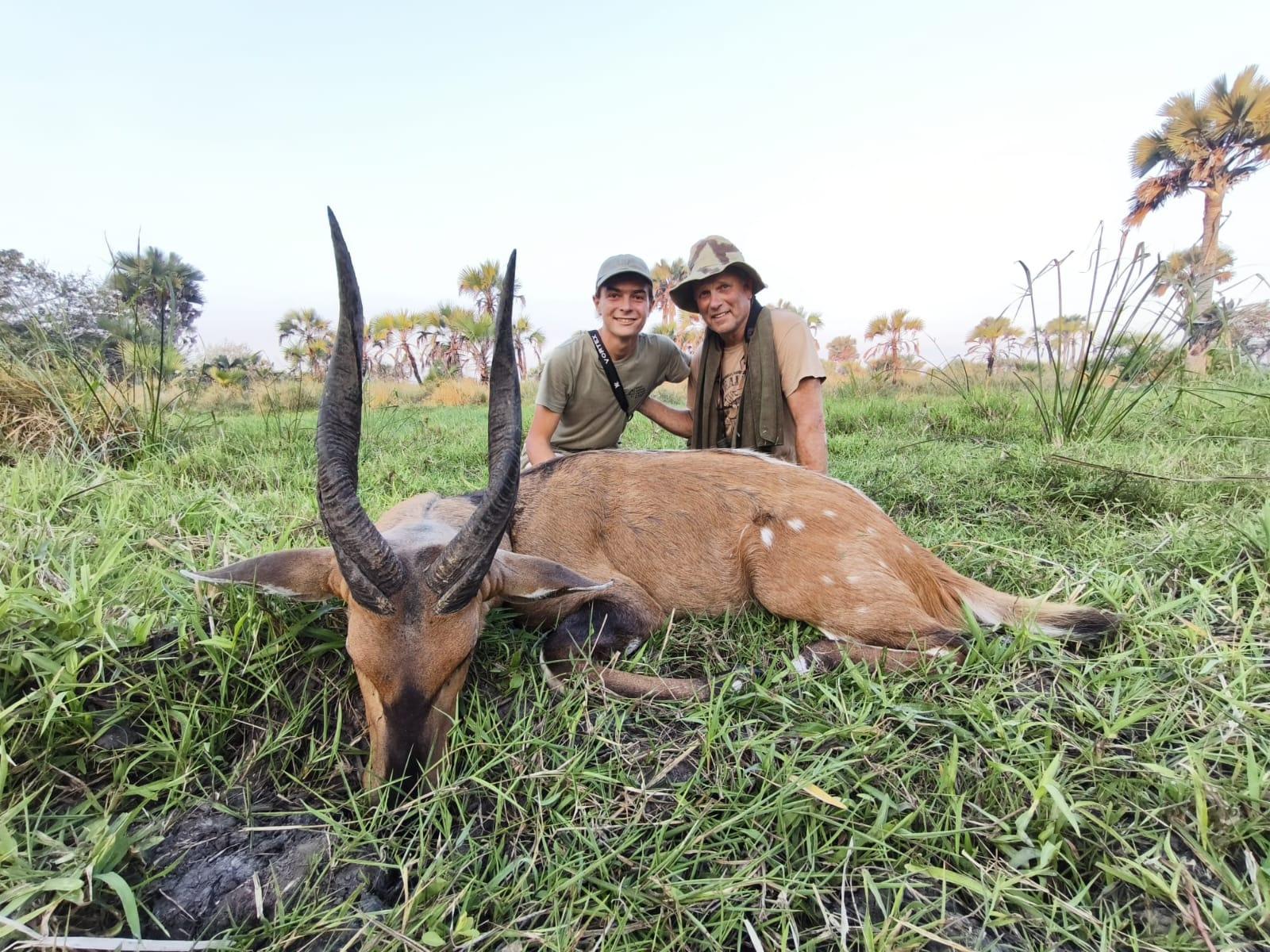
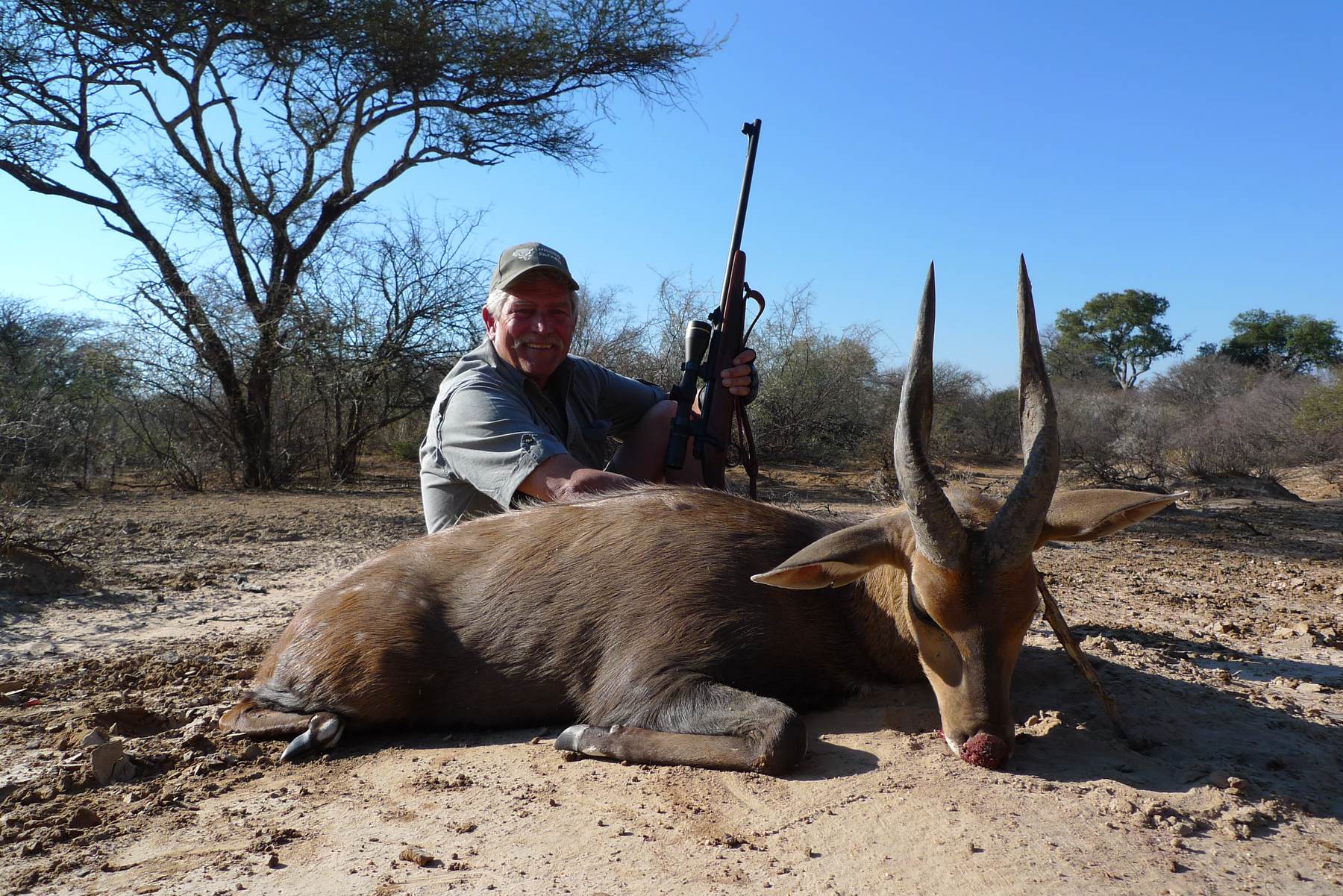
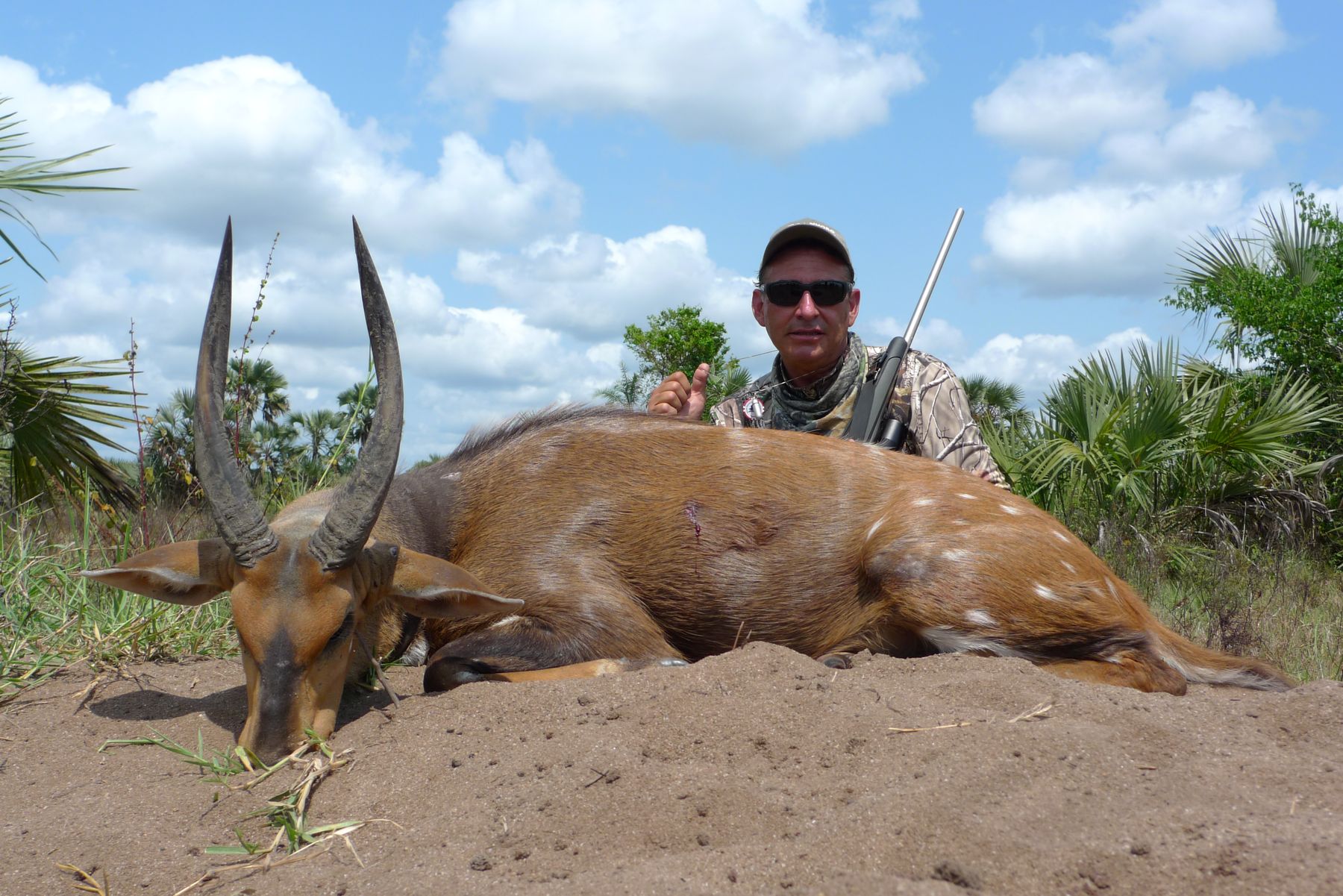
Rams are dark — chocolate to near-black in old animals — with white spots and stripes on the flanks, a white throat patch and white socks. Ewes are a bright chestnut-red and carry no horns.
Judging a ram
Length is 14 to 16 inches on a good mature animal. What matters as much is mass and keeling — a mature ram carries thick horns with a pronounced ridge spiralling up the length, and pale worn ivory tips.
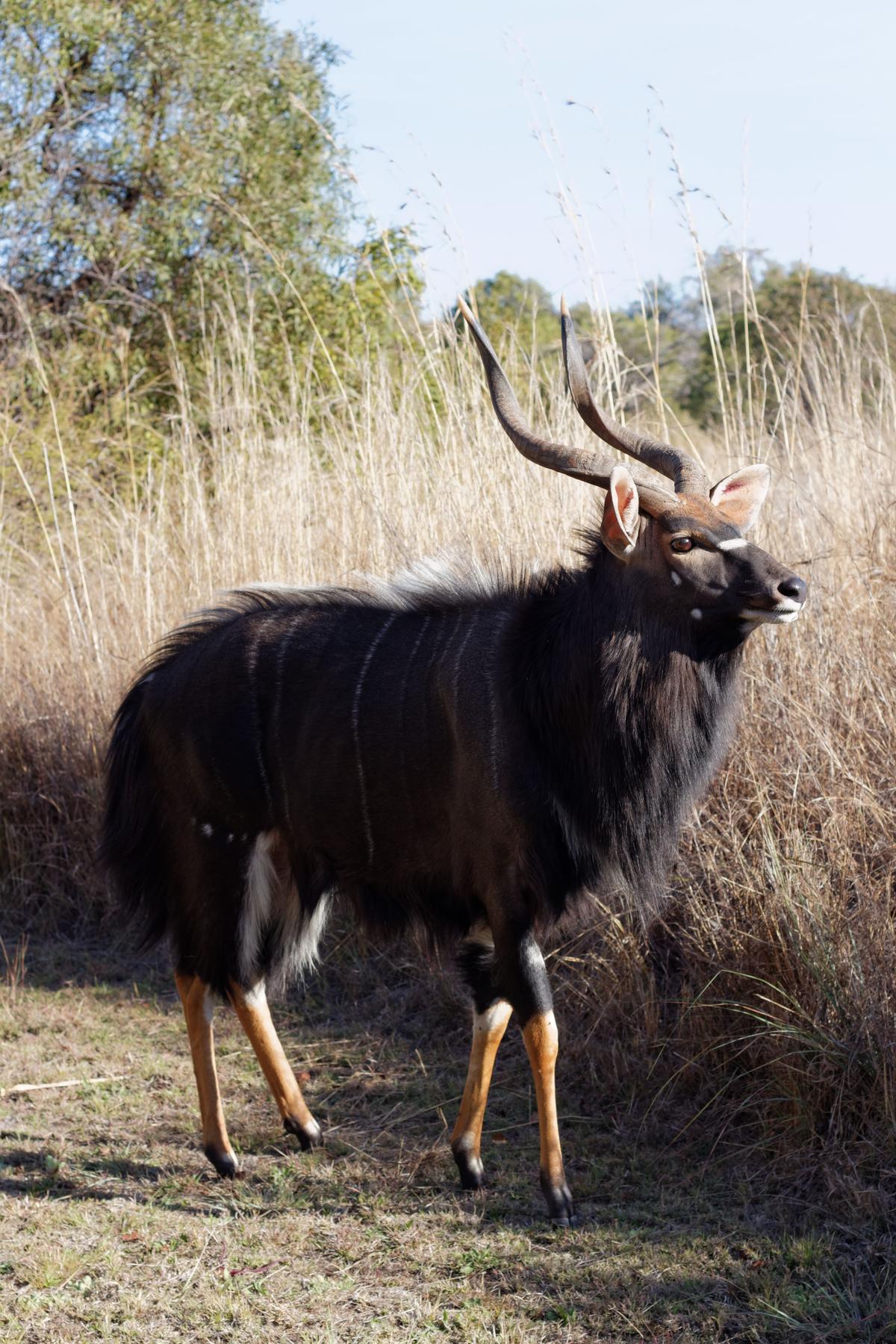
Coat colour is the reliable age indicator, as with nyala and sable. Young rams are reddish; old rams are dark, sometimes almost black, with the flank markings faded.
Several regional forms are hunted across our concessions — Limpopo, Chobe, Cape and East African bushbuck among them — and they differ in size and colour. They are recorded separately, which matters to collectors.
The hunt
This is close-quarters hunting in bad light. Bushbuck are largely nocturnal and are only reliably visible in the first hour after dawn and the last hour before dark, feeding at the edge of cover before disappearing back into it.
You glass the edges of riverine thicket at those two hours, and when a ram steps out you have a short window. Stalks are short and tense, often through cover where you can see fifteen metres. Shots are typically 40 to 100 metres, frequently through a gap, often offhand or on quickly-deployed sticks.
Set your scope on low magnification and leave it there. A four-power view of the whole animal is worth considerably more than a twelve-power view of a piece of it.
Rifle
A .243 through .30-06 with premium bullets. They are small — 40 to 70 kilograms — and do not need much rifle. Take the shoulder and break bone, precisely so you do not have to follow one into a thicket.
Bow hunting
Possible and challenging. Blinds over water and along established trails through riverine cover work in the dry months. The follow-up problem applies just as strongly with a bow, so shot discipline matters even more.