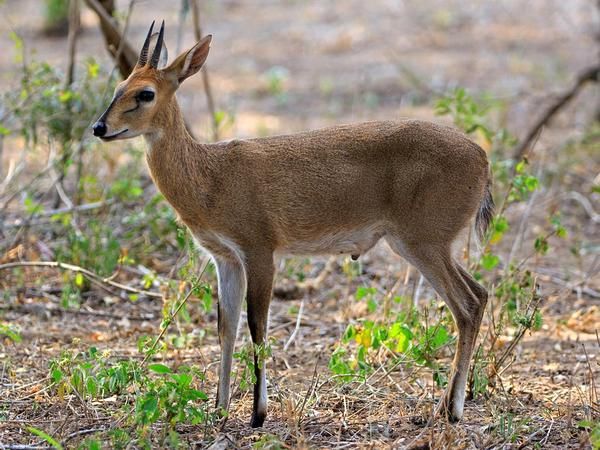
The diver
The name comes from the Afrikaans duiker, meaning diver, and it describes exactly what they do. A disturbed duiker does not run across open ground — it dives headlong into the nearest thick cover and disappears, running low and fast with its head down through bush that looks impenetrable.
That single behaviour defines the hunt. You almost never get a considered, unhurried shot at a duiker. You get a brief window while one stands at the edge of cover, and then it is gone.
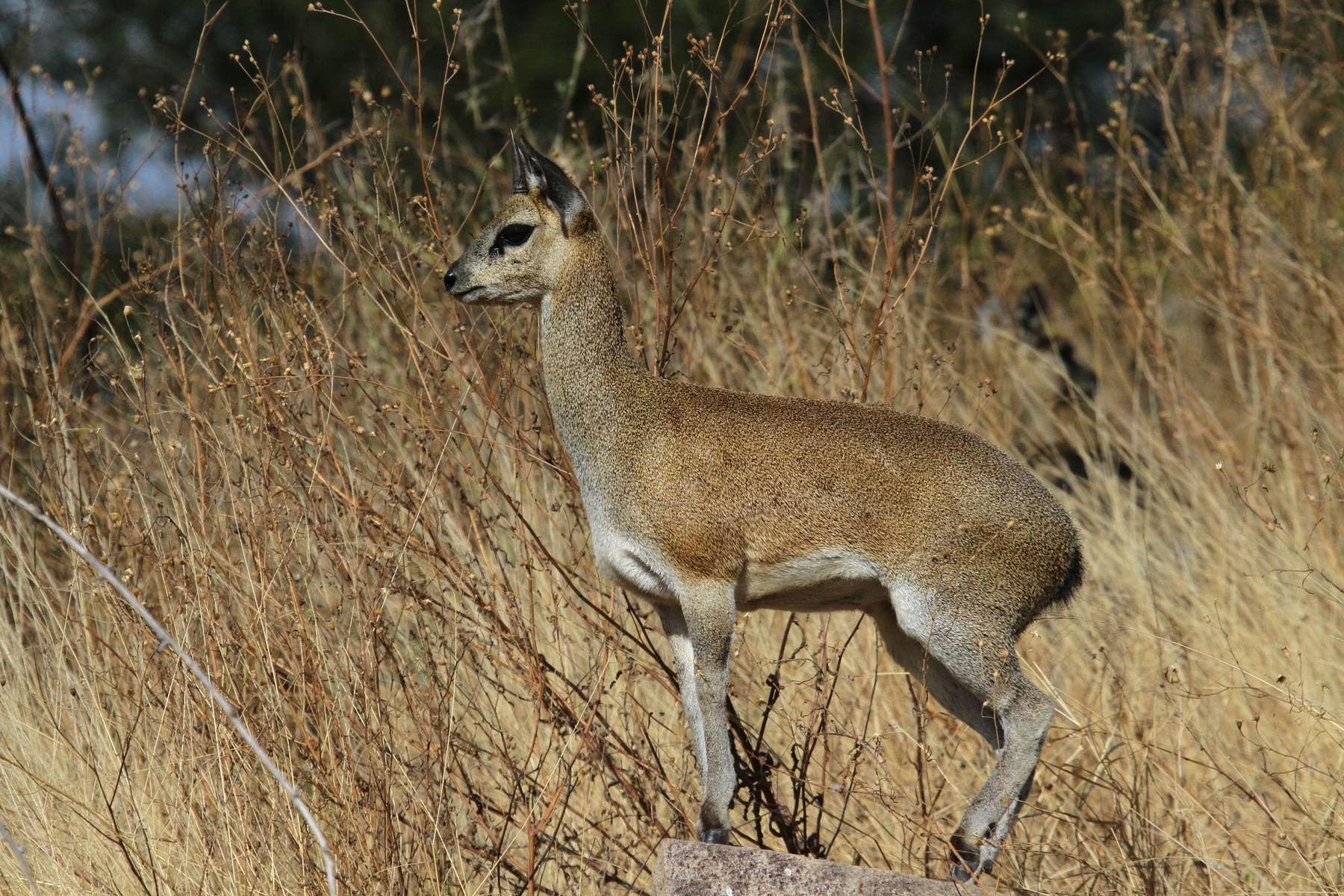
Common grey duiker are the most widely distributed antelope in Africa, found from the Cape to the Sahel, in almost every habitat that offers cover. They are also the only duiker species that is primarily a browser of open woodland rather than a forest animal, which is why they turn up on ordinary bushveld safaris.
Judging a ram
Slightly trickier than the other small antelope because some ewes carry short horns, particularly in southern populations. Rams are heavier through the neck and shoulders and carry noticeably thicker, longer horns.
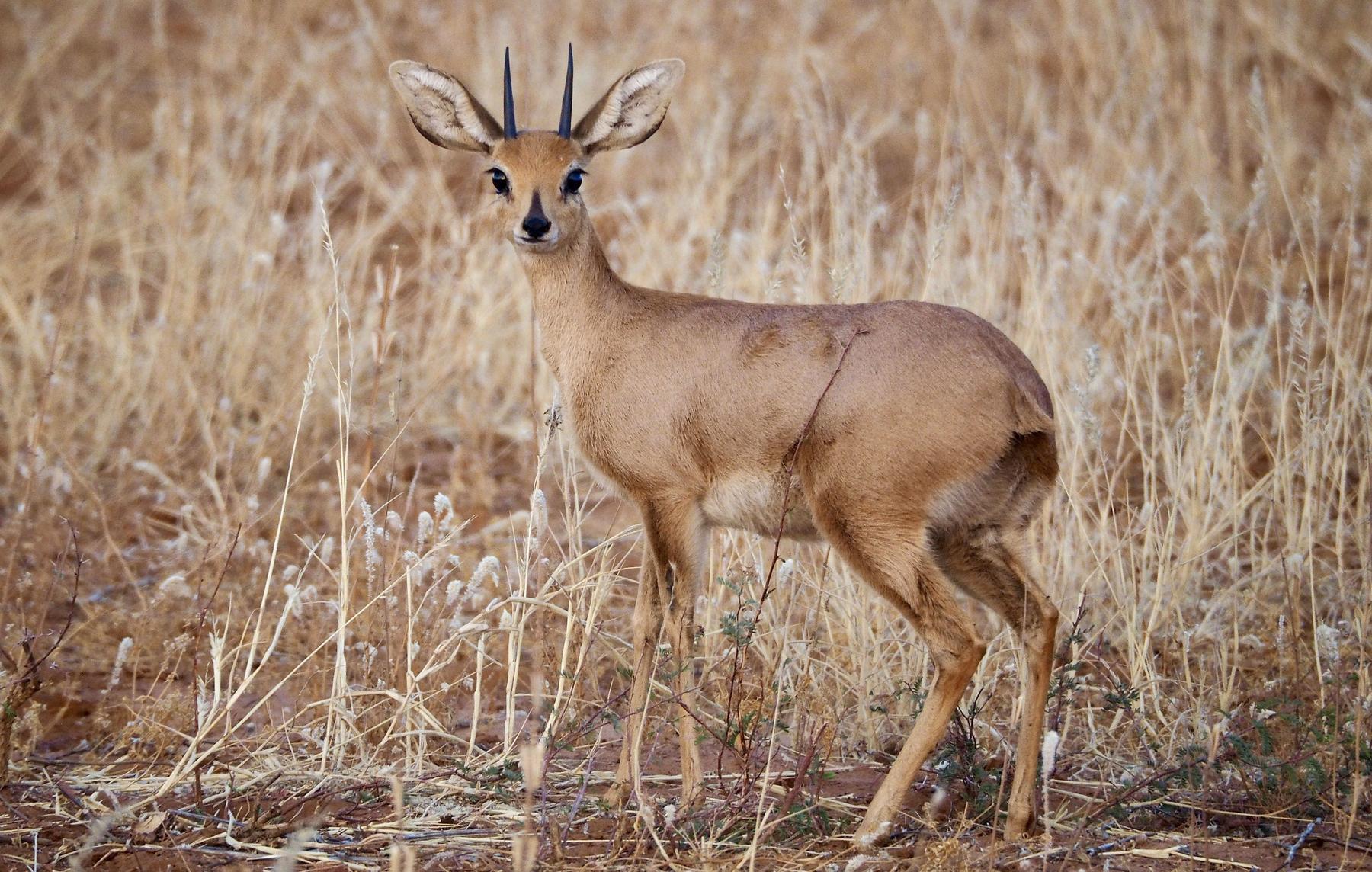
The horns are straight spikes angled back from the head rather than vertical, with pronounced ridging at the base. A mature ram measures four to four and three-quarter inches, and past five is exceptional.
Duiker also carry a distinctive black facial blaze running down the nose and a tuft of hair between the horns, which is more pronounced on rams.
One of the Tiny Ten
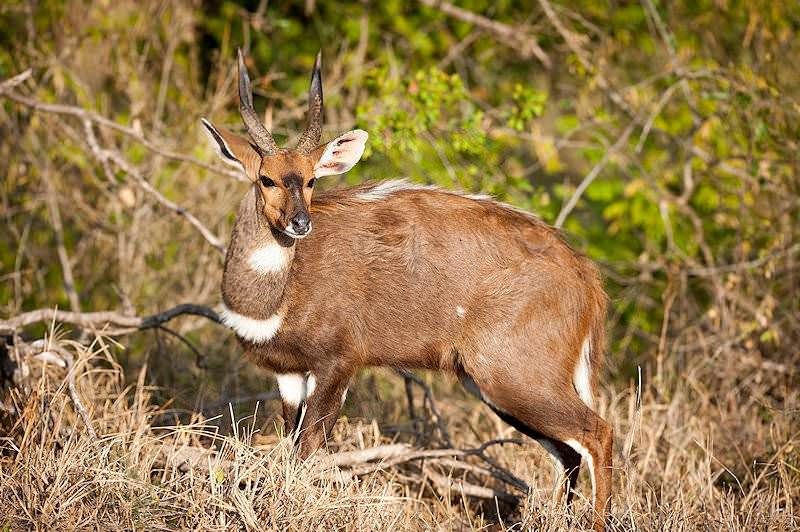
Grey duiker are one of the Tiny Ten and, along with steenbuck, among the more attainable members of the group. Several other duiker species — red, blue and Natal duiker among them — are hunted in parts of our range and are recorded separately. Ask us if a specific one is on your list.
The hunt
Walking and glassing the edges of thick cover at first and last light, which is when duiker feed in the open. Between those windows they lie up in shade and are effectively unhuntable.
Shots are close — often 40 to 100 metres — and frequently taken quickly through a gap in vegetation at an animal that has already decided to leave. Set your scope on low magnification. A four-power view of the whole animal beats a twelve-power view of a piece of bush.
A .223 or .243 is right. Duiker weigh 15 to 20 kilograms and heavy calibres destroy a great deal of a small animal.
In heavily hunted areas duiker become almost entirely nocturnal, which is worth knowing when a concession that should hold plenty seems to have none.
Trophy handling
Usually taken as a full mount or a European skull. Thin-skinned and easily damaged, so our skinners take care with the cape.
Bow hunting
Genuinely difficult given how quickly they move, but blinds over water produce in the dry months. Fifty pounds upward.