Read this before anything else
This is the most heavily regulated hunt on our entire species list, and that is not incidental — it is the point. We are not going to present it as an ordinary plains game hunt with a bigger animal at the end of it. It works differently, it is priced differently, and it deserves a straight explanation before anything else.
Permit before the hunt, not after
Every white rhino taken in South Africa requires an individual permit issued by the relevant provincial conservation authority before the hunt takes place — not a general licence covering a quota, but a specific permit tied to a specific animal, identified in advance. The reserve’s own ecologists and monitoring team select which bull is eligible, based on age, reproductive history, and the population’s needs at that specific site.
We only hunt post-reproductive bulls — animals that have already sired offspring and passed their genetics on, and whose removal has been assessed as having no negative effect on the population. In several cases these are bulls that have become aggressive toward younger males or calves, and removing them measurably improves outcomes for the rest of the population.
DNA-sampled and microchipped
South African law requires that rhino horn be DNA-sampled and microchipped, with records held on a national database, as part of the country’s response to the poaching crisis. This happens as a matter of course on every animal, hunted or not, and it means the horn from your hunt is traceable for its entire life from the reserve to your wall. Nothing about this process happens quietly or off the books, by design.
Where the money actually goes
We are going to make this argument plainly rather than avoid it: private and community-owned reserves that generate revenue from strictly regulated rhino hunting are, by a wide margin, the reserves with the best rhino survival records in South Africa. The economics are direct rather than abstract. A single legal hunt on a managed reserve funds a meaningful share of a year’s anti-poaching patrols, equipment, and staff on that specific property — the same staff protecting every other rhino on the land, hunted or not.
Reserves that have lost the ability to generate this revenue have, in a number of documented cases, seen anti-poaching budgets collapse and poaching losses rise as a direct result. This is the sharpest version of the conservation argument we make on our conservation and ethics page, because with rhino the link between hunting revenue and a specific animal’s survival odds is about as direct as it gets anywhere in African wildlife management.
The hunt itself
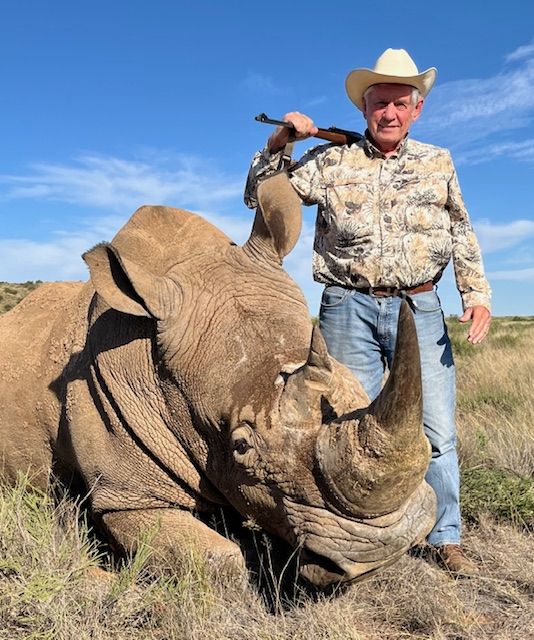
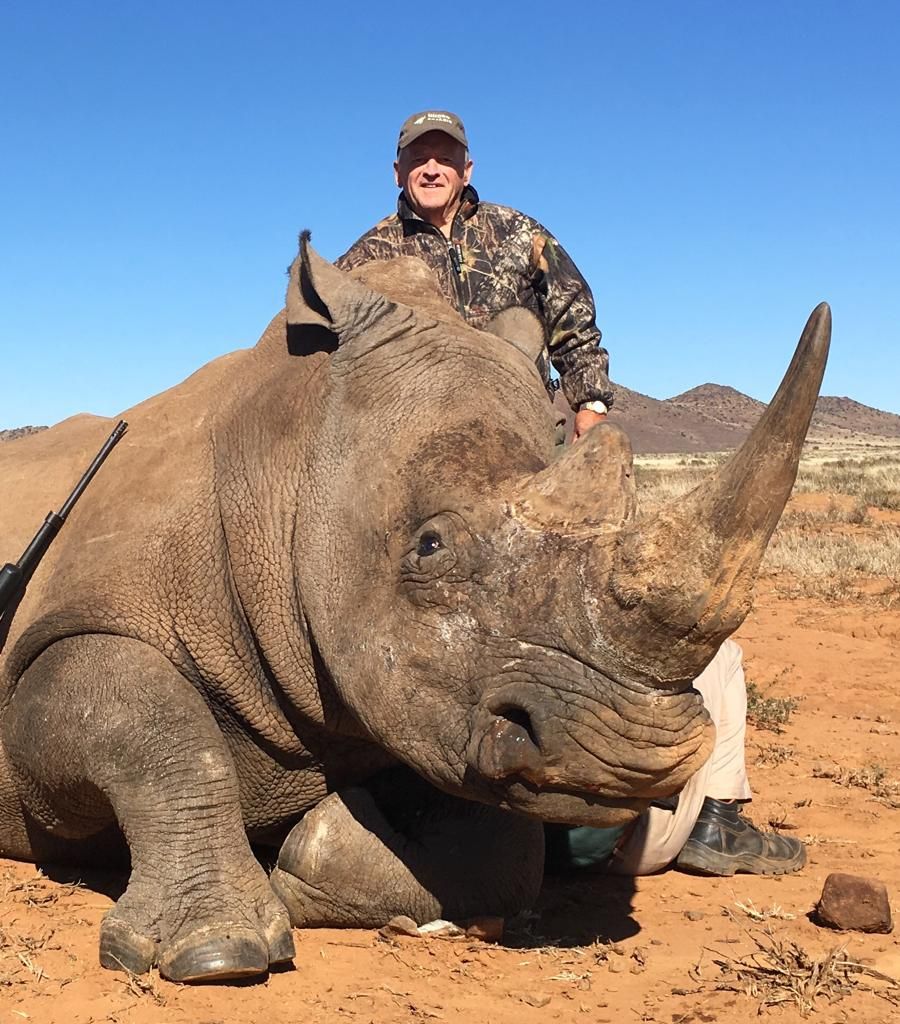
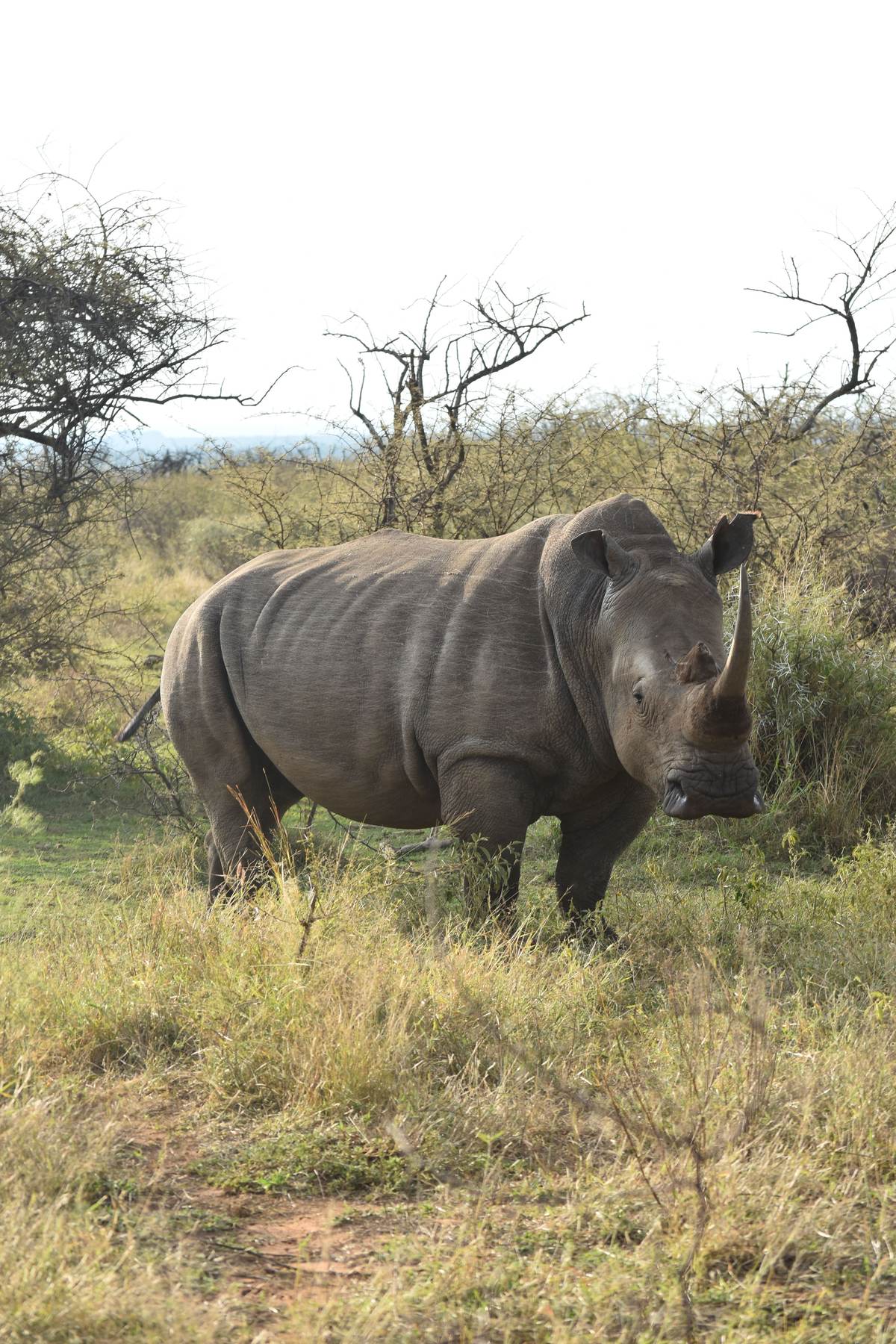
Rhino are hunted on foot, at close range, on a large managed reserve where the population is monitored daily. Rhino are not part of our standard offering — they are arranged individually, on a reserve holding a suitable bull, and the ground depends on where that bull is. This is not a long stalk through unfenced wilderness the way a Zimbabwe elephant hunt is — the reserve’s team generally knows where the eligible bull has been ranging, and the hunt itself is a careful approach to a specific, already-identified animal.
That does not make it casual. White rhino have poor eyesight but exceptional hearing and smell, and an adult bull weighing over two tonnes at close range commands real respect regardless of how calm the approach feels. The shot is precise and close, generally the heart-lung area from a quartering angle, and your professional hunter will walk you through exactly where and why before you are anywhere near the animal.
Rifle
.375 H&H is the legal minimum and a great many clients bring .416 or larger. Premium bonded softs are usually right for the angle offered; your professional hunter will confirm ammunition choice with you specifically for this hunt, since it differs in some respects from buffalo or elephant.
Before you book this one specifically
Rhino horn’s international trade status is unusual even by the standards of CITES-listed species, and import rules into your own country may be considerably more restrictive than for any other trophy on this site, regardless of South Africa’s export permit being in order. Please raise this with us before you commit to this hunt, not after — we would rather spend an hour on the phone confirming your import position now than have you take a bull you cannot bring home. See our firearms and CITES notice as a starting point, and treat that page as the minimum, not the full picture, for this particular species.