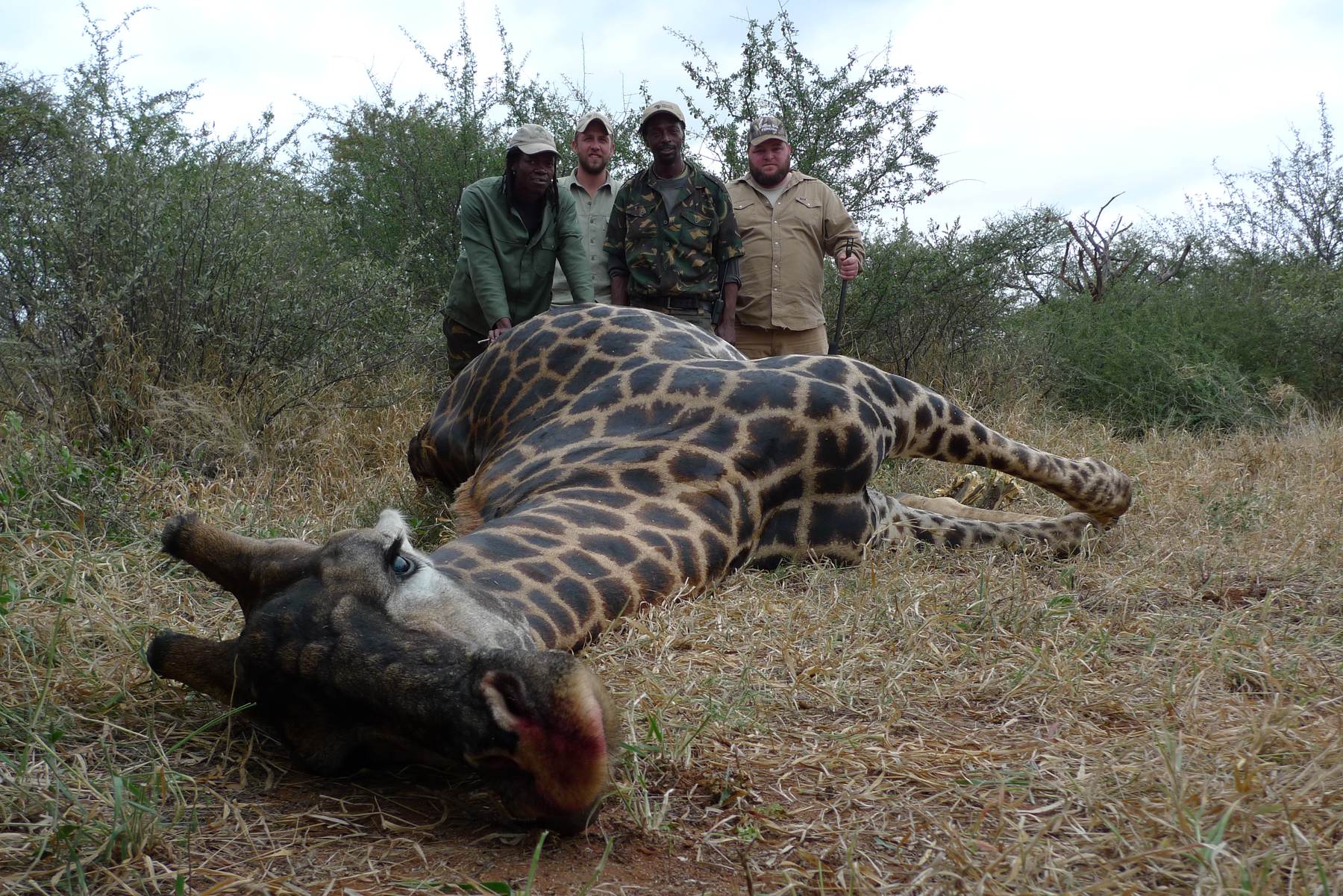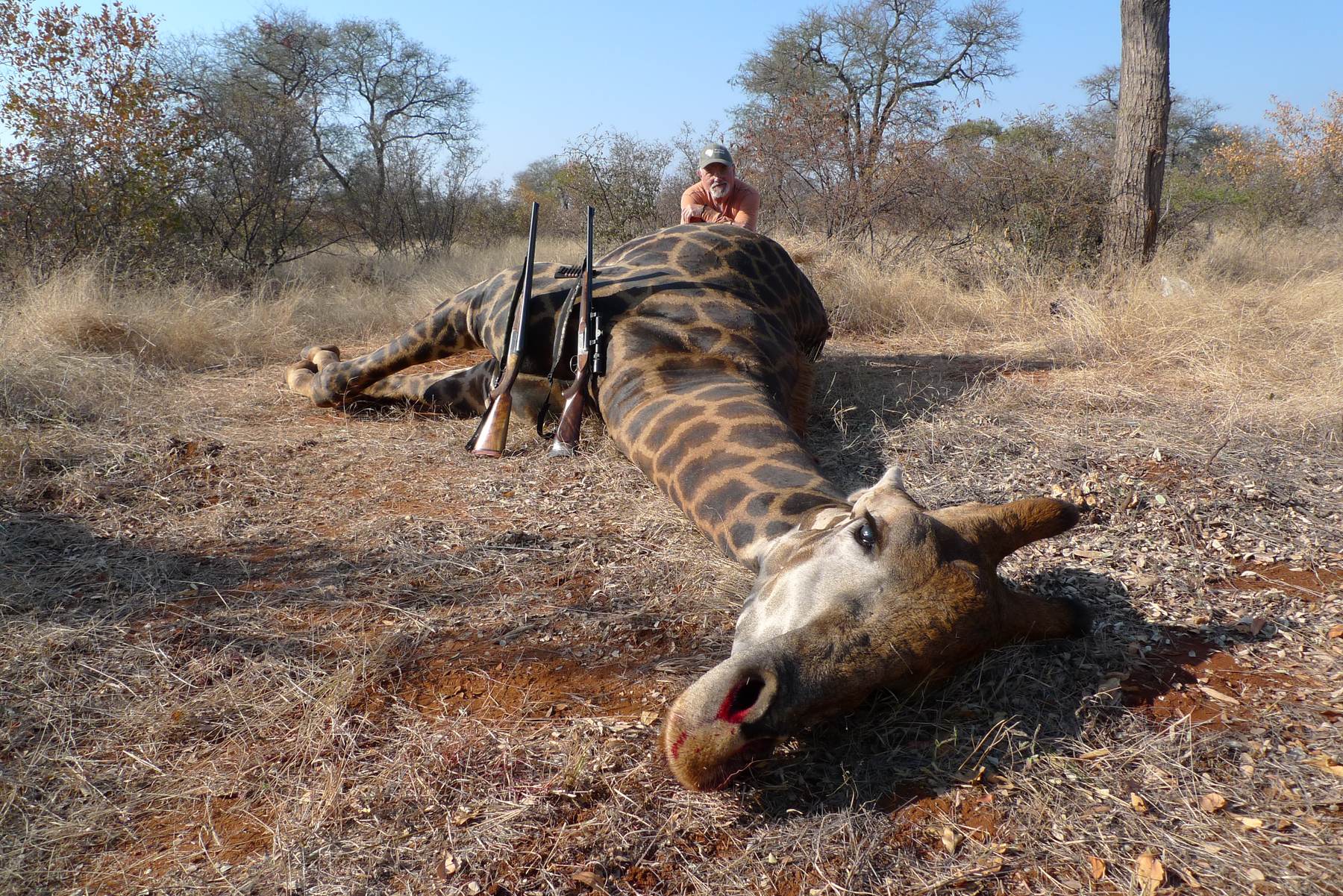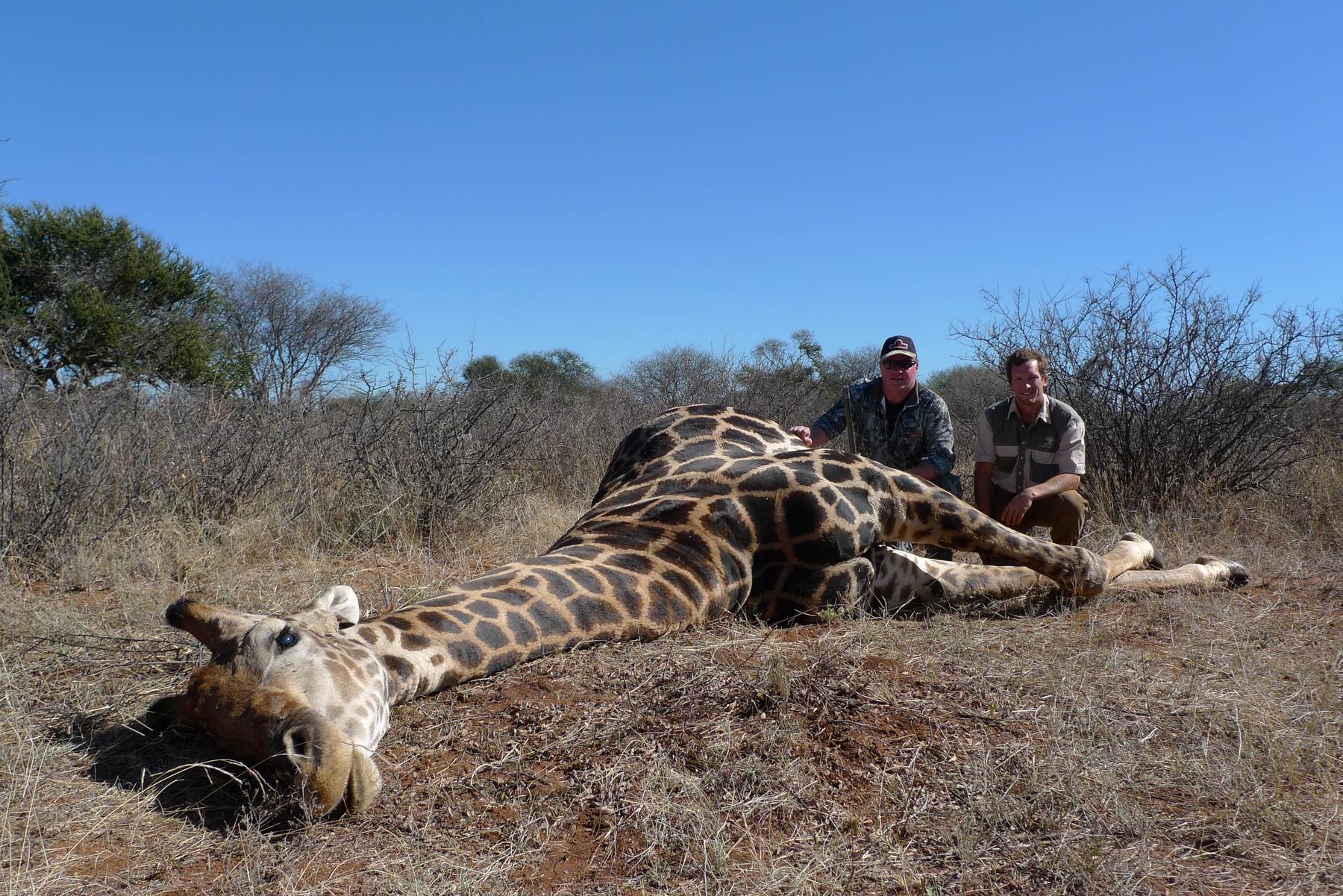
Why giraffe are hunted at all
This is the animal that most needs its context explained, so we will do that first.
Giraffe are hunted almost entirely as management animals. Old bulls past breeding age become aggressive toward younger animals, and on properties and concessions with limited browse an excess of old bulls does measurable damage to the tree layer that everything else depends on. Removing a small number is standard wildlife management.
The second reason is meat. A giraffe yields an enormous quantity of it — several hundred kilograms — and on our concessions all of it goes to camp staff and the surrounding communities. In places where protein is genuinely scarce, one giraffe matters a great deal.
We do not hunt cows or young animals.
Judging a bull
There is no horn to measure. What you are looking for is age, and old giraffe bulls are unmistakable once you know the markers.
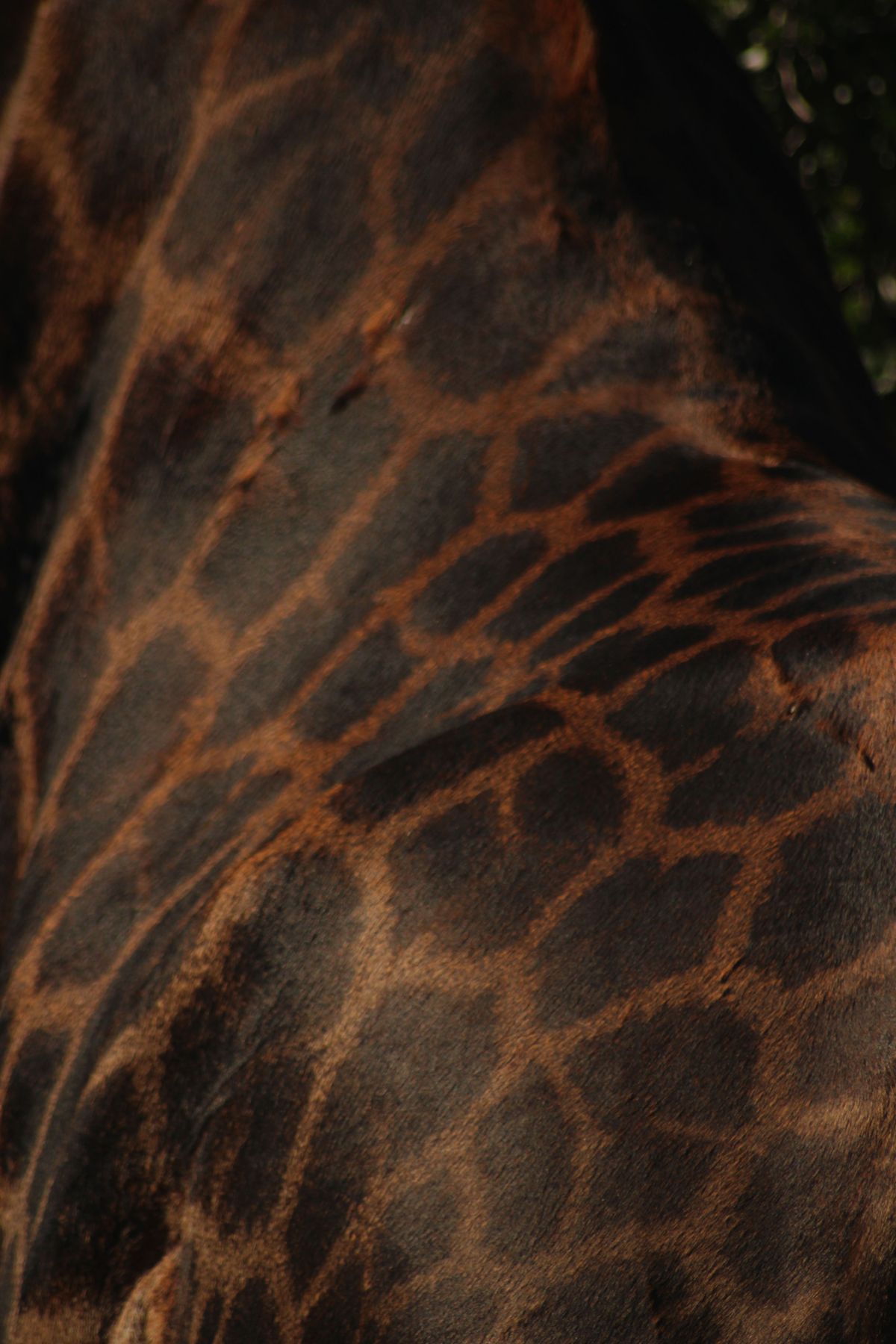
Coat colour is the clearest. Giraffe darken with age, and a genuinely old bull goes from the tan-and-cream of a young animal to a deep chocolate brown or near-black, with the pale outlines between patches almost disappearing.
The ossicones — the horn-like structures on the head — wear bald on top from decades of neck-fighting, and old bulls develop additional bony growths across the skull that give the head a lumpy, misshapen profile. He will also be noticeably taller and heavier than everything around him, and frequently alone rather than in a group.
Shot placement
This is where a giraffe hunt gets serious. They are enormous, heavily boned, and a poorly placed shot produces a wounded animal that can travel a very long way.
Two options. The shoulder shot into the heart-lung area, which on a giraffe sits considerably lower and further forward than most hunters expect — roughly a third of the way up the body, tight behind the front leg. Or the brain shot, taken from side-on, which drops the animal immediately but demands precision on a small target held four metres off the ground.
Your professional hunter will talk you through both on the day and will tell you which is on. Use a .375 minimum with premium bullets or solids. Do not attempt this with a plains game rifle.
Be aware that a giraffe falling is a genuinely violent event and everybody stands well clear.
The hunt
Giraffe are visible at considerable distance, which makes locating them straightforward. The hunting is spot-and-stalk in open woodland, and the approach is usually not difficult — giraffe are less wary than most plains game.
The work is in the identification and in getting into a position where the shot is clean. Shots are typically 60 to 120 metres.
The trophy
Most clients take the skin, which makes an extraordinary flat rug, or a European skull mount. A full shoulder mount is possible but requires a very large wall and a very understanding household. Shipping is expensive because of the volume. Discuss the mount before skinning — see our trophy shipping page.