The most dangerous animal in Africa
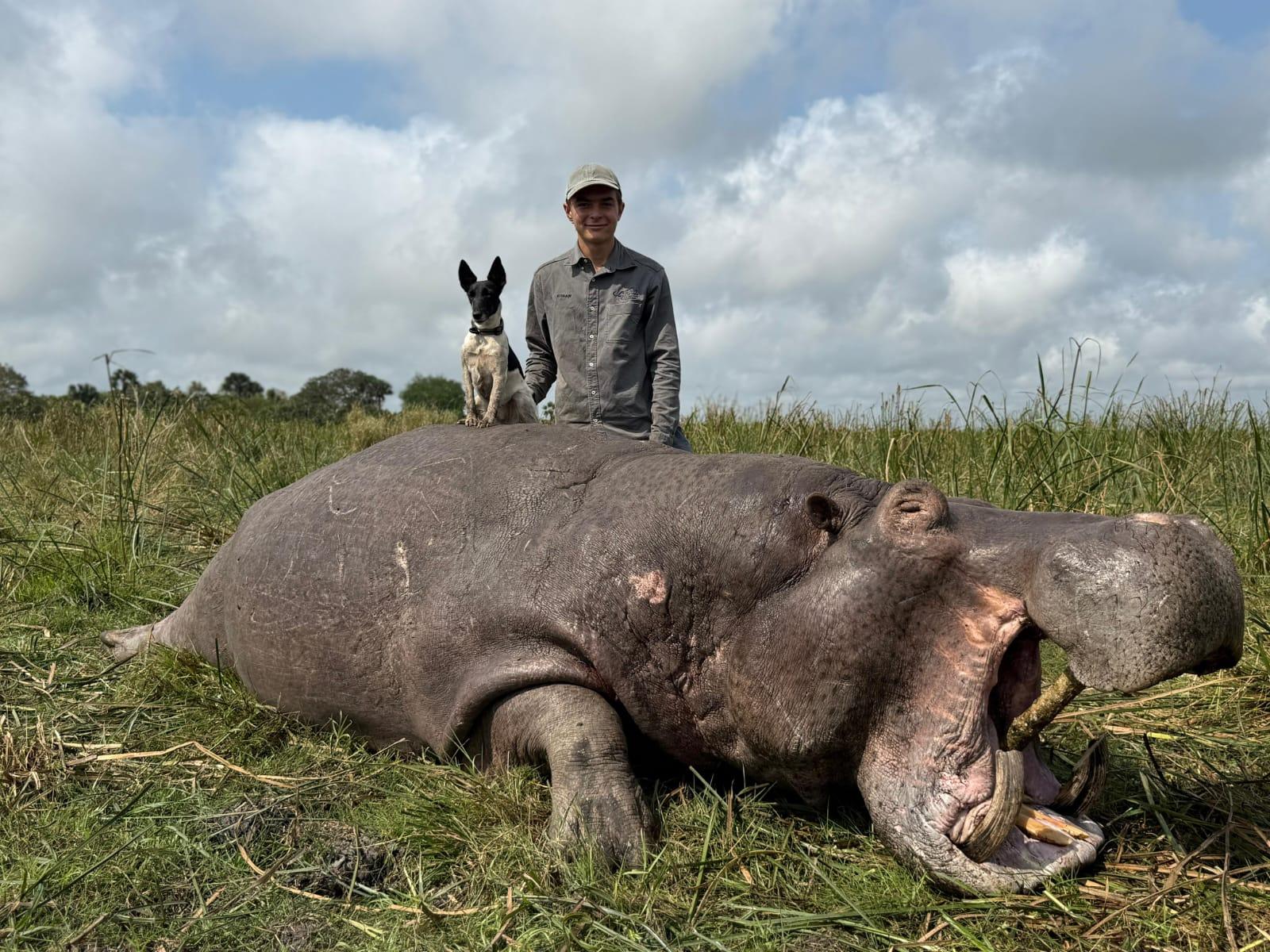
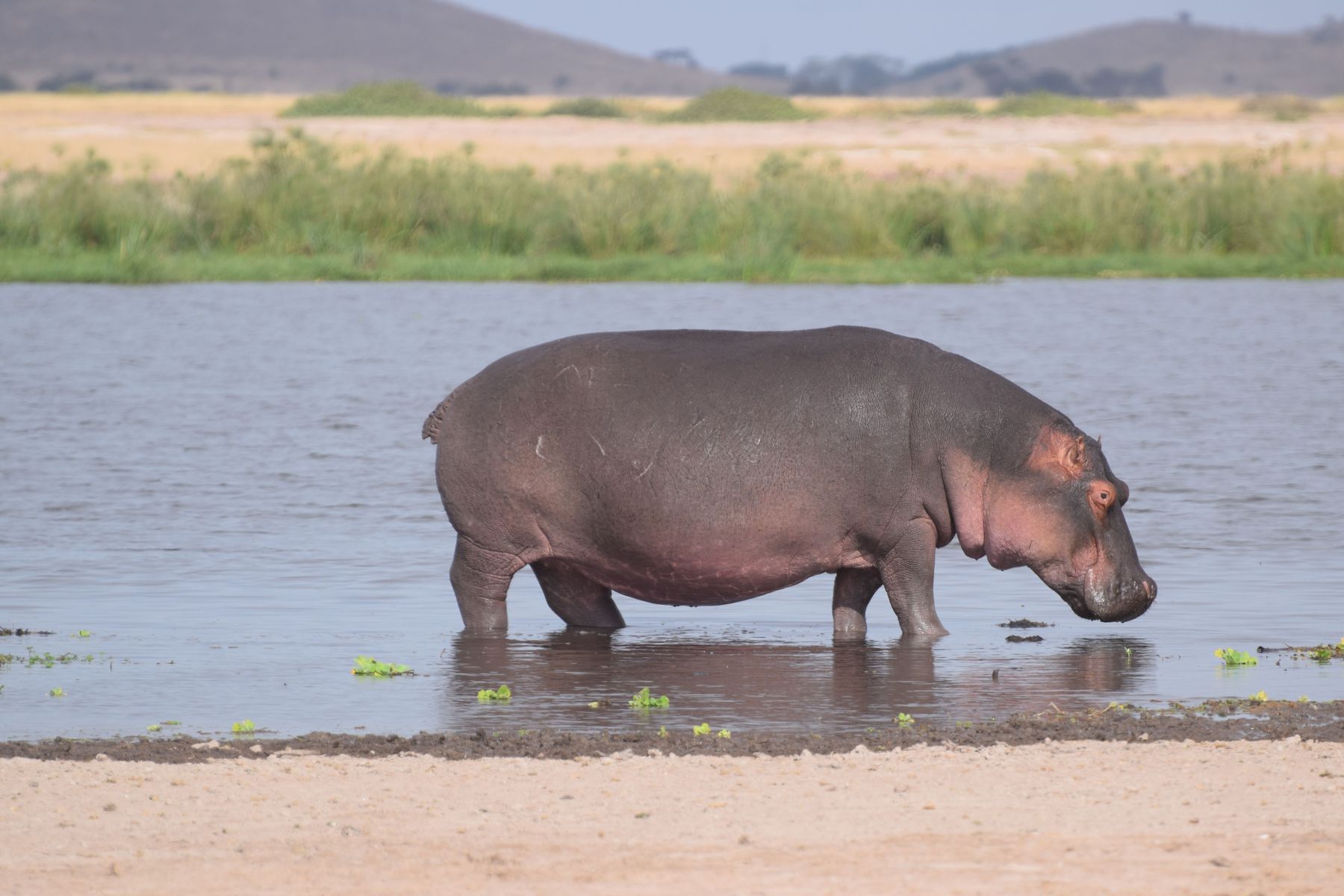
Hippo kill more people on this continent every year than lion, leopard, buffalo and elephant combined. They do it because they are territorial in water, aggressive on land at night, extraordinarily fast over short distances, and because people underestimate an animal that spends its day looking like a large boulder.
They are also frequently treated as a throwaway species on a safari species list, which they are not. A hippo hunt done properly is a genuine dangerous game hunt requiring precise shooting.
Land or water
There are two ways to hunt hippo and they are not equivalent.
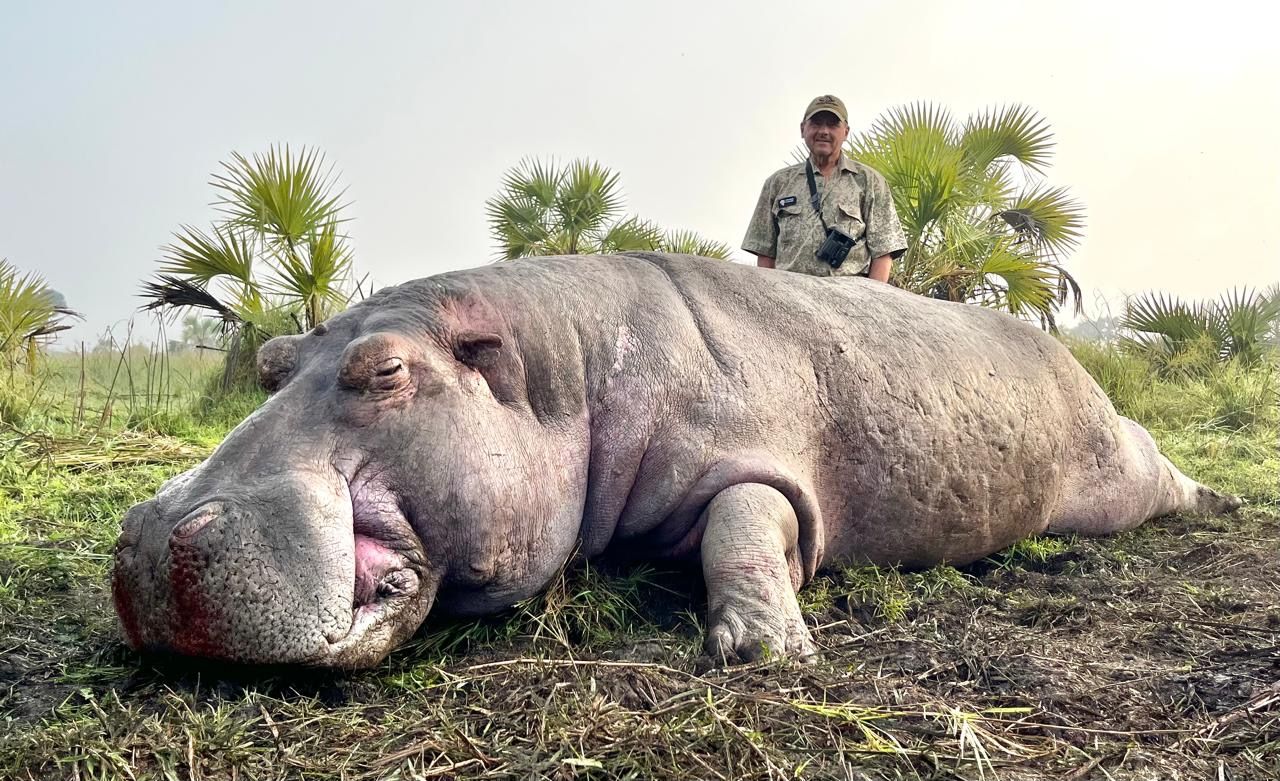
On land is the proper hunt and it is what we prefer. Hippo leave the water at night to graze, sometimes walking several kilometres along established paths, and can be intercepted at first light returning to the river or found still out feeding on an overcast morning. Stalking a bull on land is a real hunt with a real approach, and the animal can be recovered easily.
In water is the more common and less satisfying version. The bull is shot in the brain while lying in a pool, and the carcass then sinks. It resurfaces hours later once decomposition gases build, which means waiting, and it means the shot must be perfect because a marginal hit produces a wounded animal in water you cannot follow it into.
The shot
Wherever it is taken, the shot is the brain. A hippo skull is massively constructed and the brain is small relative to the head, sitting deeper than most hunters expect. The target from side-on is roughly a line from the ear canal, low, and the margin for error is a few centimetres.
Use solids. A .375 H&H is the practical and legal minimum, and .416 or larger is better. Softs are not appropriate — they will not reliably penetrate the bone structure to reach the brain.
Your professional hunter will spend time with you on a skull diagram and, if we have one in camp, on an actual skull. Take that seriously. There are few animals where shot placement is this unforgiving.
Judging a bull
An old bull is broad through the head with heavily worn, chipped tusks and a body scarred across the shoulders and flanks from decades of fighting. Cows are noticeably narrower in the head and generally unscarred.
Tusk length in a mature animal runs sixty to ninety centimetres, most of which is embedded in the jaw. What you see protruding is a fraction of the total.
Where we hunt them
We hunt hippo in the Binga area of northern Zimbabwe, on Lake Kariba, where it is frequently added to an elephant safari. The Zambezi Delta in Mozambique also holds high densities in the channels and floodplain pools.
Practicalities
Hippo is CITES-listed and requires an export permit. The trophy is generally a skull and tusks, occasionally a full flat skin, which is heavy and expensive to ship.
The meat matters enormously. A hippo is an extraordinary quantity of protein and it goes to camp staff and surrounding communities. On several of our concessions a hippo on quota is genuinely significant to the people living there.