Permit first, hunt second
Start here, because it governs everything else.
Serval are protected across much of South Africa and the provincial rules differ. Hunting one requires the correct permit, issued in advance, for a specific animal in a specific place. It cannot be arranged once you are in camp.
If you want a serval, raise it when you first contact us and we will tell you plainly whether a permit can be obtained for your dates. Often it cannot. We would rather lose the add-on than have you arrive expecting something that was never going to happen.
The animal
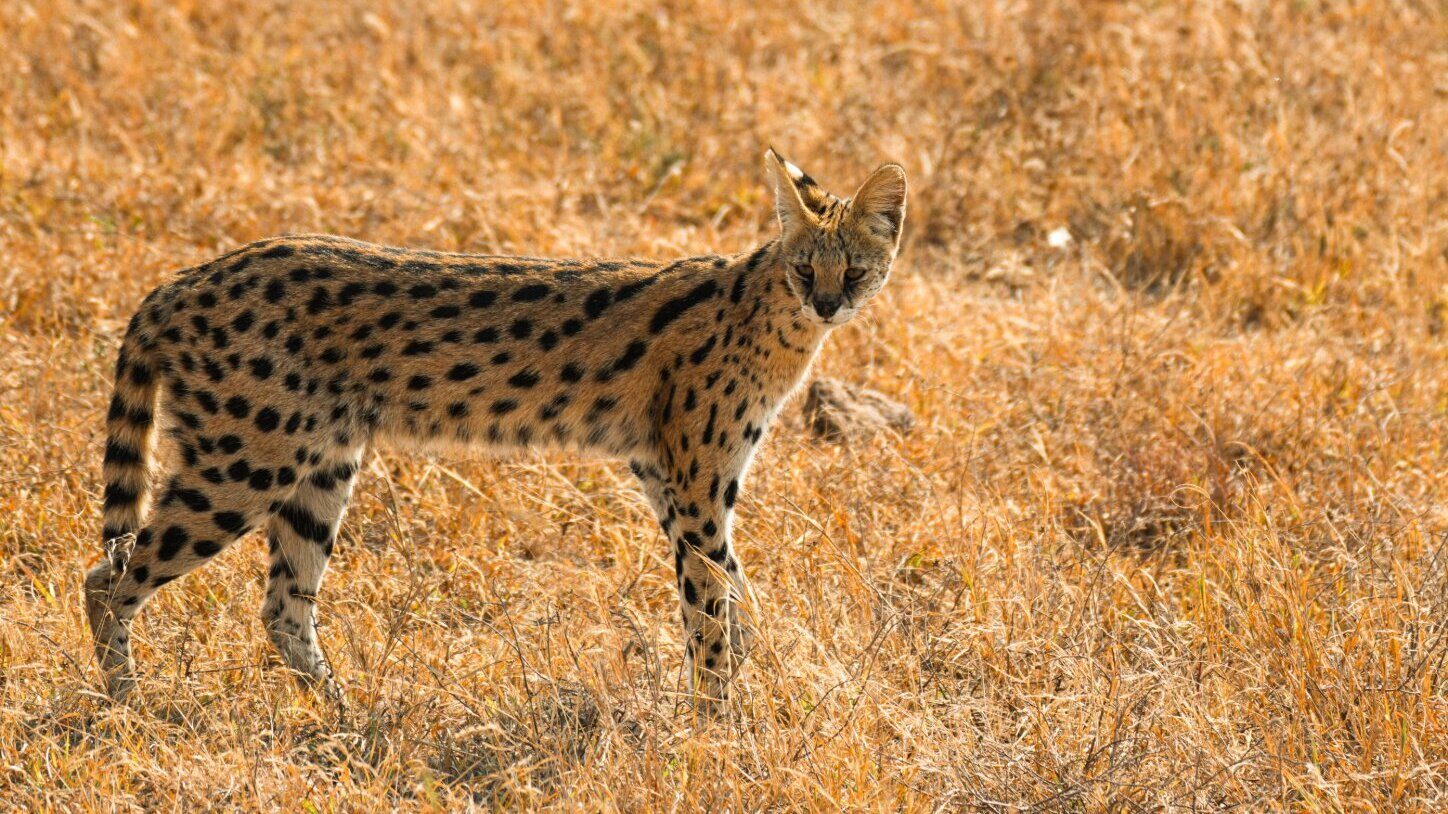
A serval looks like someone designed a cat around a pair of ears and then had to build legs long enough to carry them.
That is close to the truth. Serval hunt rodents in grass too long to see through, so they locate prey by sound alone, then launch vertically — a metre and more straight up — and come down on it with both front feet. The ears are the sensor and the legs are the delivery system. They are the most successful hunters of any African cat by strike rate, catching something on roughly half their attempts.
They weigh eight to eighteen kilograms, far less than their height suggests, and they are tied to water: wet grassland, reedbeds, vleis and drainage lines. They are not a dry bushveld animal.
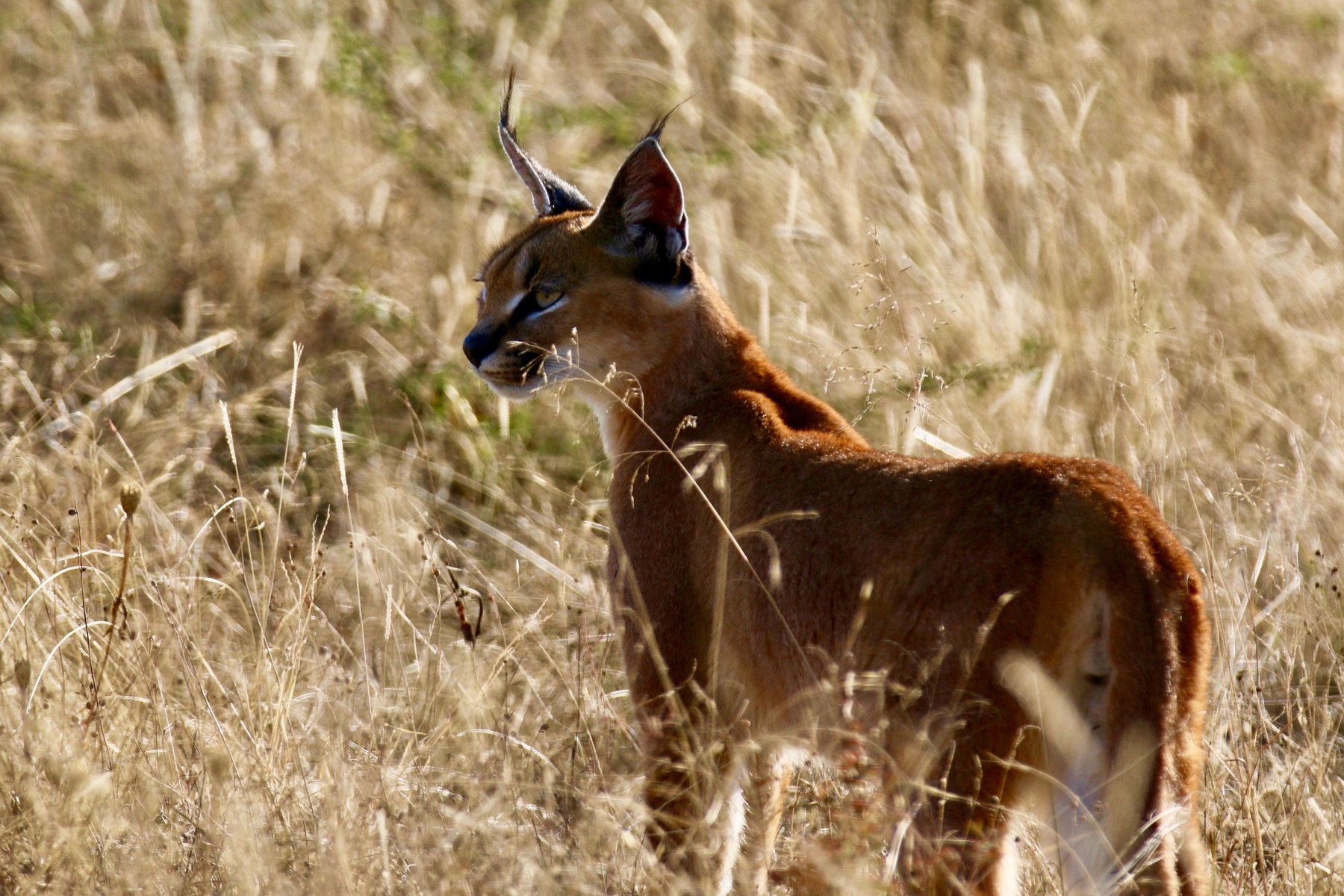
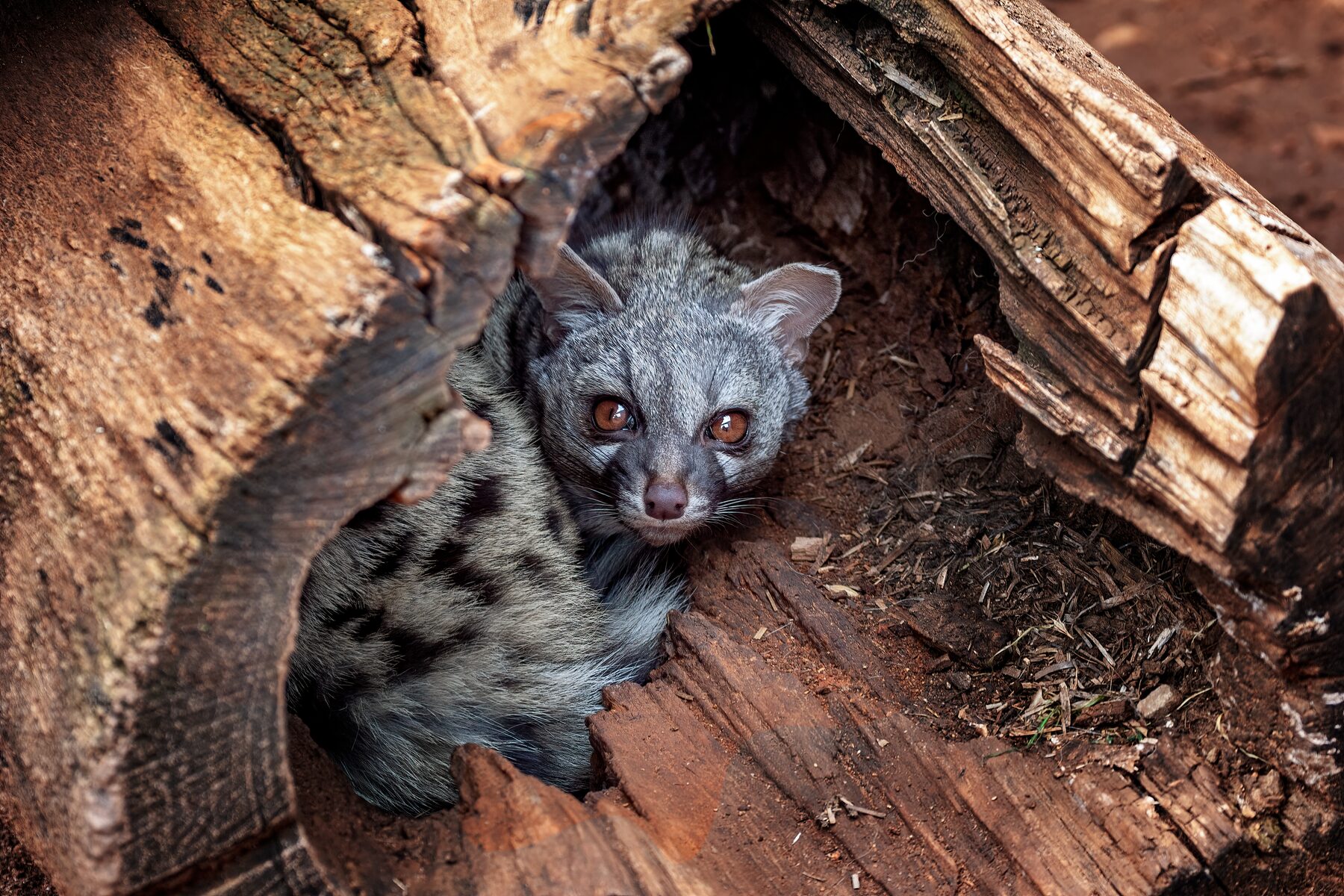
People confuse them with cheetah cubs in photographs and with genets in the field. Neither holds up close to. A serval stands high on its legs with enormous upright ears and a short tail; a genet is low, long-bodied and carries a long ringed tail.
How the hunt runs
Where a permit exists, the hunt is worked around water and grass.
Serval are most active at dawn and dusk and through the night, and they hunt the same drainage lines repeatedly. Trail cameras on those lines establish whether an animal is using the ground and when, which is what makes a short hunt viable at all.
From there it is a sit, or a careful walk along the edge of the grass in the last hour of light. Calling works less reliably than it does on caracal and jackal.
Expect this to take time and expect it to fail more often than not.
Rifle and pelt damage
As with caracal: the rifle protects the trophy rather than kills it. A .22 Hornet, .222 or .223 with a light frangible bullet. A .243 is already more than you need.
Do not bring your plains game rifle to a serval. The pelt is the entire point.
Practicalities
Permit only, arranged in advance, never guaranteed, and we will tell you honestly when it is not available.
Pelts need handling fast and salting properly. Say before the shot if you want a full mount, because the position the animal is found in affects what the taxidermist can do.
Serval are CITES-listed and import rules differ sharply by country. Check your own position before you plan on taking one home. See our firearms and CITES notice.