A conservation story worth knowing
Black wildebeest were hunted almost to extinction in the nineteenth century. By the 1890s the entire global population was down to a few hundred animals surviving on a handful of private farms in the Free State and Karoo, kept alive largely by landowners who valued them.
Today there are tens of thousands, and every one of them descends from that remnant. They exist because private landowners had a reason to keep them, which is as clean an illustration as exists of the argument we make on our conservation page.
The animal
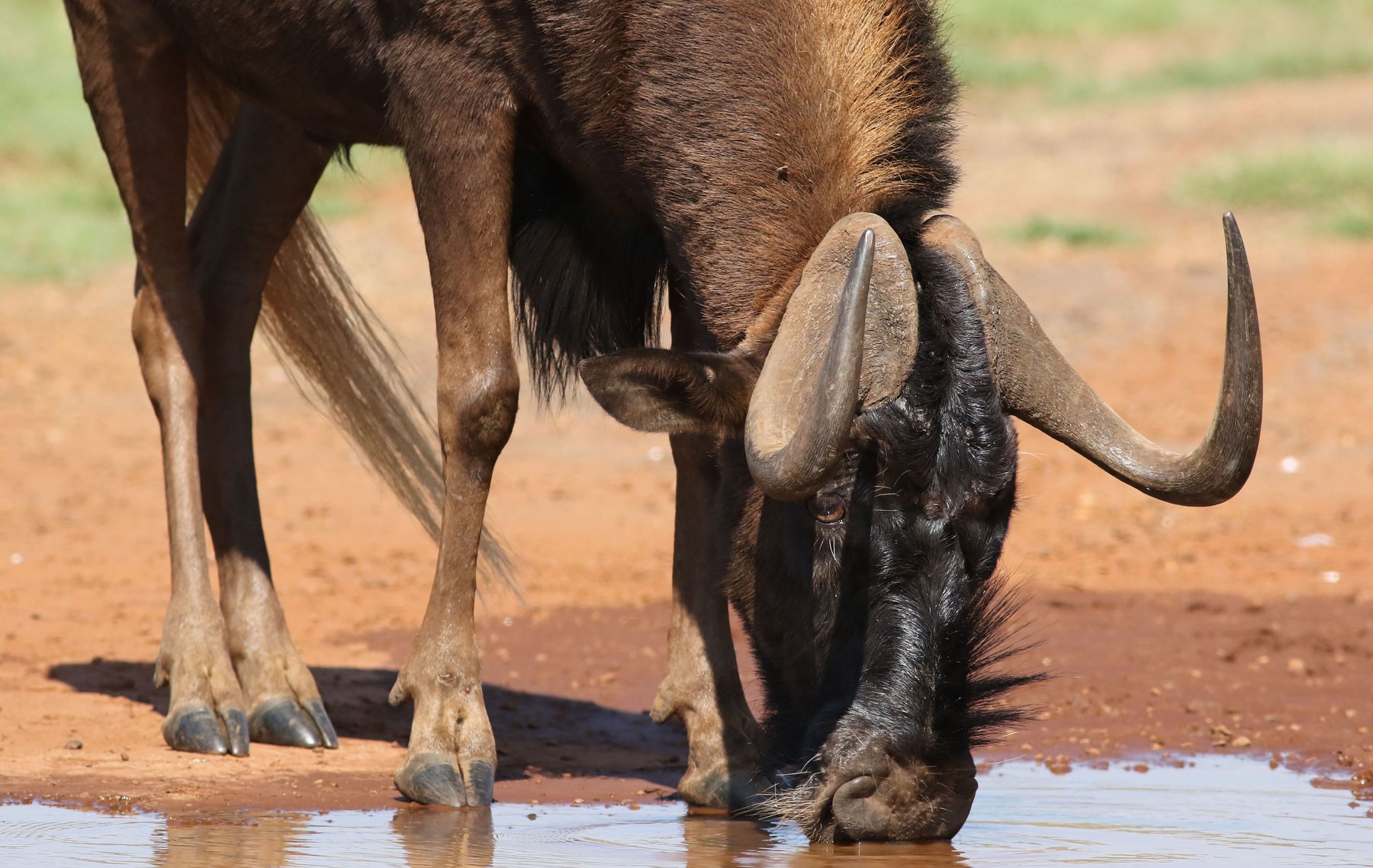
Smaller and stockier than blue wildebeest, dark chocolate-brown to black, with a distinctive cream-white tail that streams behind them at a run and a brush of upward-pointing hair across the muzzle. The horns drop down and forward from a heavy boss, then hook sharply up.
They are endemic to South Africa and are hunted nowhere else on earth, which for a good many collectors is reason enough.
Judging a bull
As with blue wildebeest, the boss decides it. A mature bull carries a heavy, fully hardened boss meeting solidly across the forehead with no hair between the bases. Young bulls show separated, softer bases and thinner horn.
Length runs shorter than blue wildebeest — 15 to 17 inches is a good mature bull and 18 is excellent. Look for the depth of the downward drop before the hook, heavy corrugation on the boss, and worn tips.
Cows carry thinner, lighter horns with much less boss development, and are noticeably smaller in the body.
Open-country hunting
This is among the least African-feeling hunting we do and it catches people out. Black wildebeest want open grassland with almost no cover at all, and we hunt them on the open ground of the Limpopo property.
You glass from a vehicle or high ground, locate a herd, and then face the problem of closing the distance across ground where you are visible from a kilometre away. Stalks use folds in the terrain, dry watercourses, occasional scrub, and a great deal of crawling.
Frequently you cannot get closer than 250 or 300 metres, which makes this the one African hunt where longer-range rifle skill genuinely matters. Bring a flat-shooting rifle you have practised with at distance, and a rangefinder is genuinely useful rather than optional.
Black wildebeest also have a habit that helps: when disturbed they run in a wide arc and then stop to look back, often circling to a position not much further than where they started.
The cold
Highveld and karoo winter mornings drop below freezing regularly. Clients arriving with African heat in mind and no warm jacket have a miserable first morning. Bring a proper insulated layer, gloves and a beanie.
On a species list
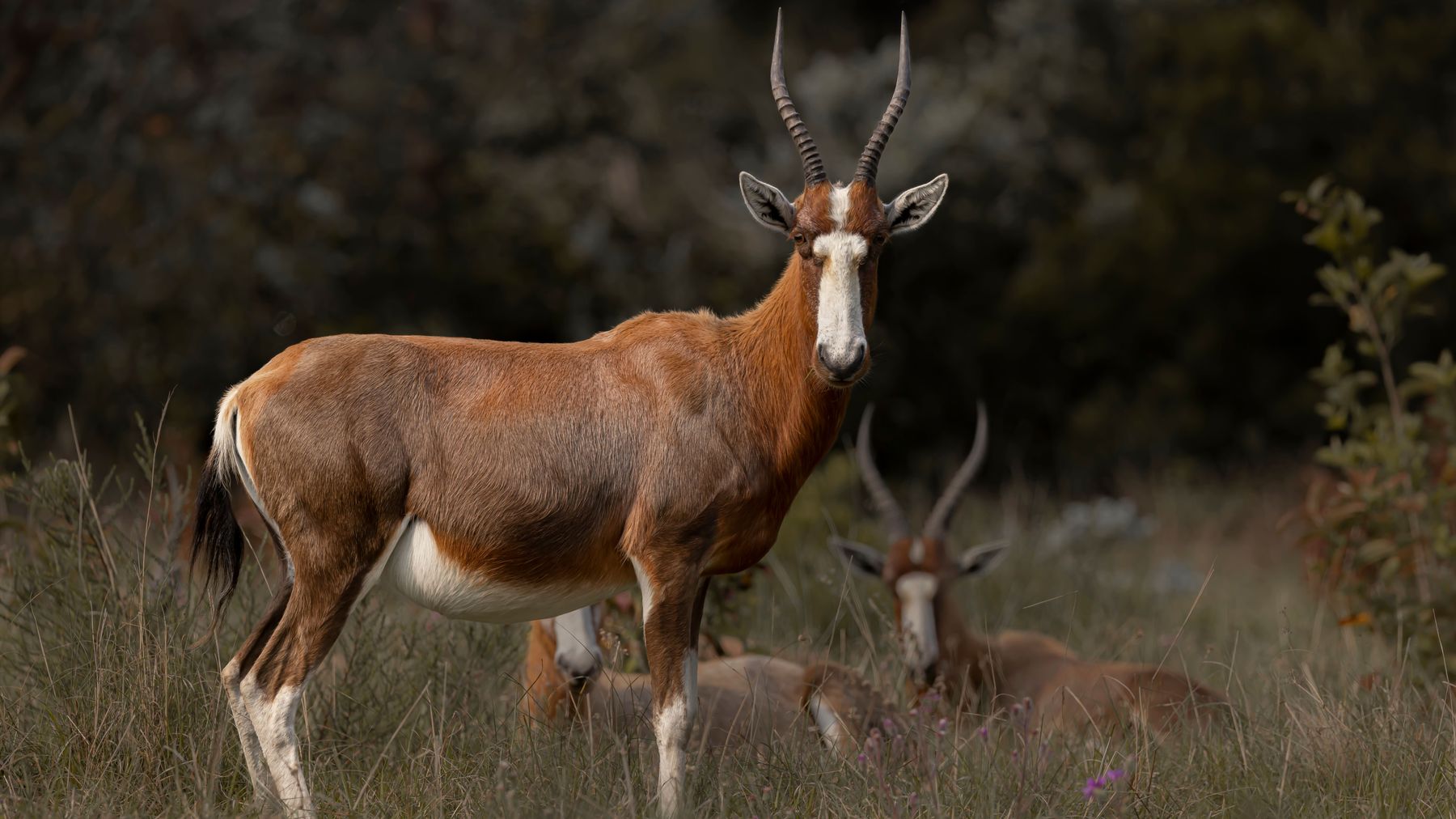
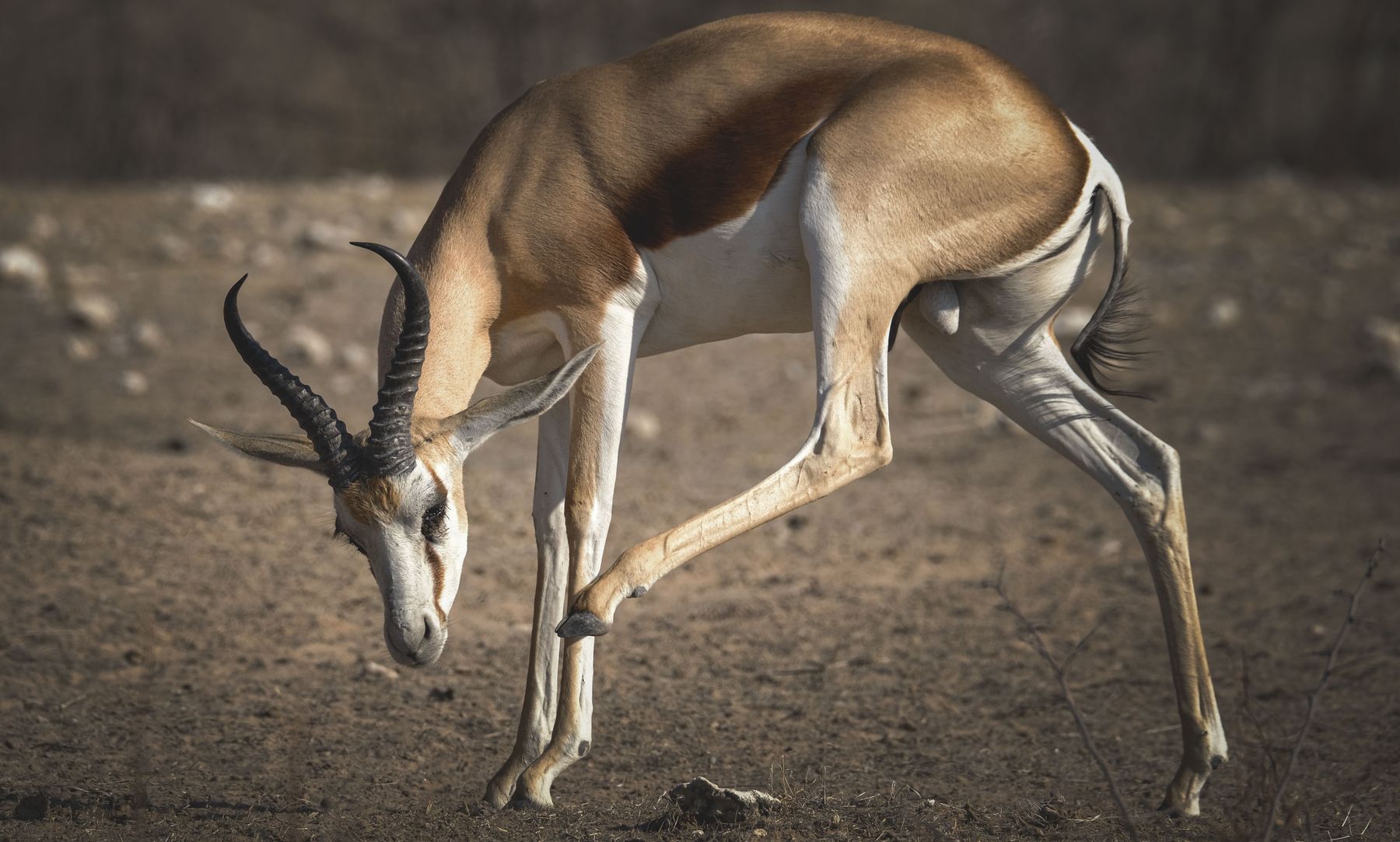
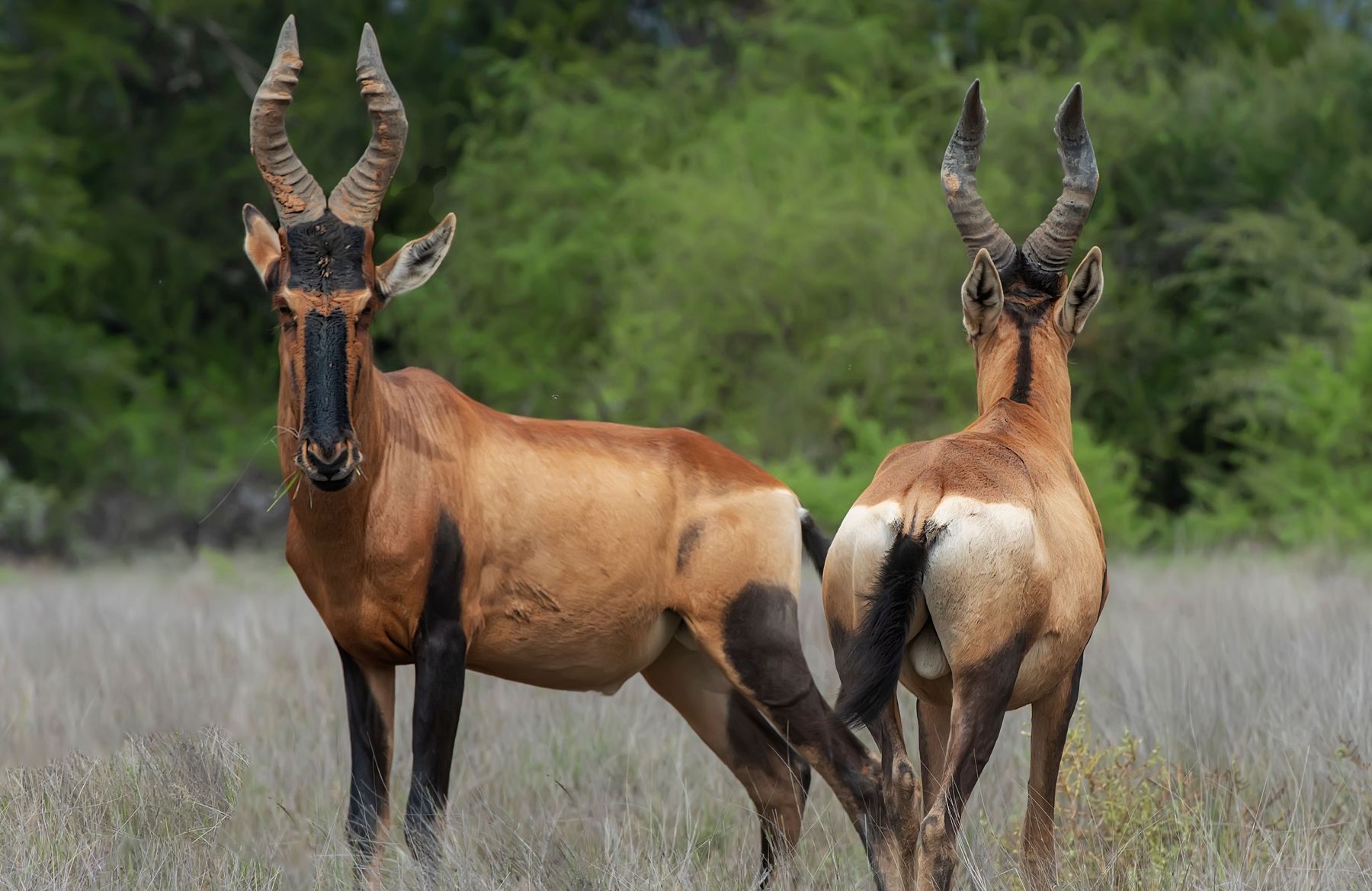
Black wildebeest sit naturally with blesbok, springbok and red hartebeest on an open-country safari, which is a completely different trip from bushveld hunting in Limpopo. Several clients do a few days of each on one visit and enjoy the contrast.
Bow hunting
Difficult by spot-and-stalk in open country, but they come to water and blinds over waterholes work well. Fifty pounds upward.