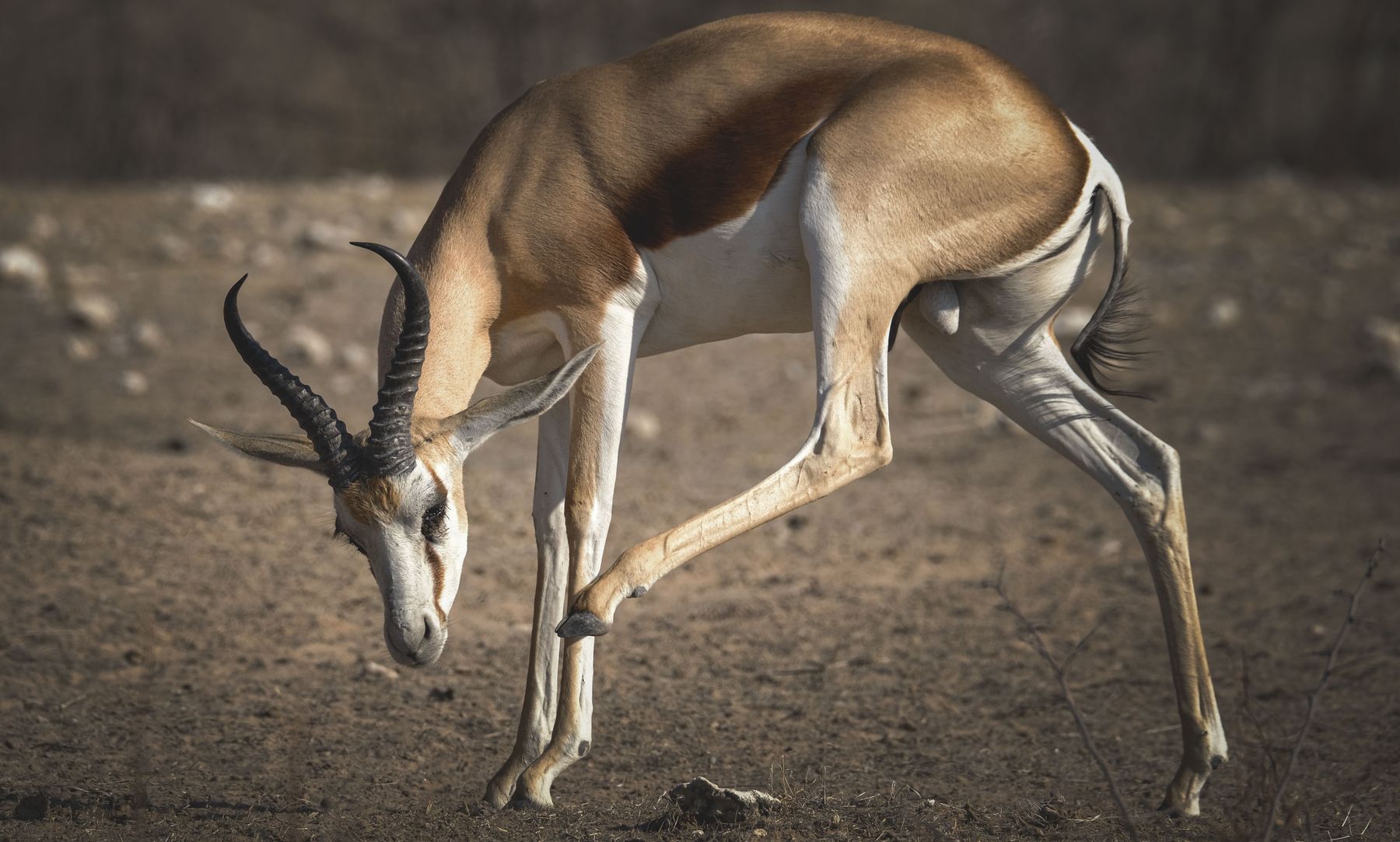
The national animal
Springbok appear on South African coins, on the national rugby jersey, and across roughly a third of the country’s dry interior. They are the smallest of the plains game we hunt regularly — a mature ram weighs around 40 kilograms — and among the most difficult to get close to.
The name comes from pronk, the stiff-legged vertical bounce they perform when alarmed, launching two metres straight up with the back arched and a fan of white hair erected along the spine. Nobody is entirely sure why they do it. Every hunter who sees it stops to watch.
Judging a ram
Both sexes carry horns and they look similar at distance, which is the main difficulty.
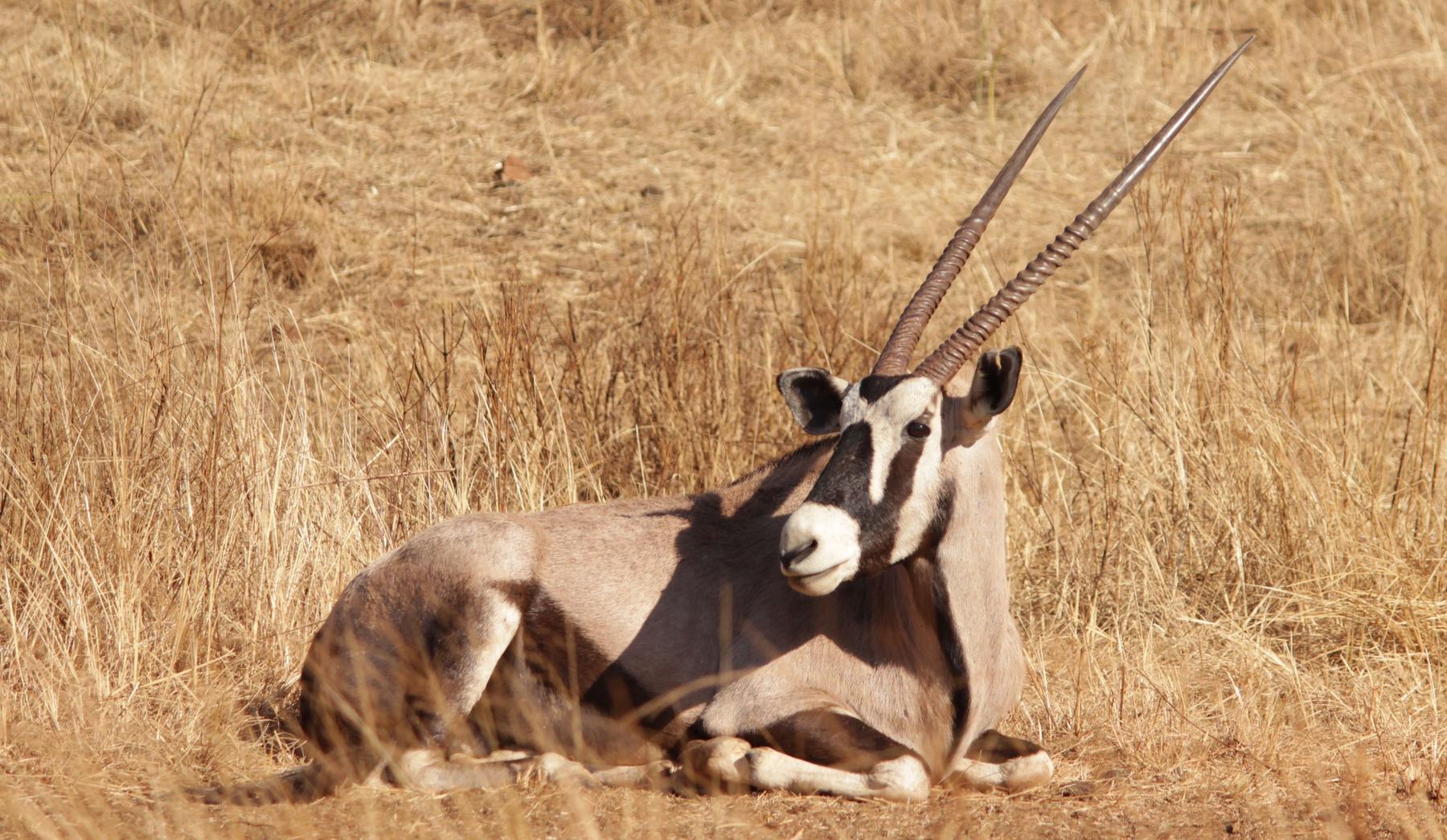
Ram horns are noticeably heavier through the base, more deeply ringed, and hook more sharply inward at the tips. Ewe horns are thinner, straighter and often nearly as long. As with gemsbok, judging on length alone puts you onto the wrong animal.
Look for mass, deep ringing carrying well up the horn, and a pronounced inward hook. A ram of 13 to 14.5 inches is a good mature animal; past 15 inches is exceptional anywhere.
Old rams also carry a darker face mask and heavier neck. In a herd they are frequently at the periphery.
Open plains, long shots
Springbok live in enormous herds on open karoo and Kalahari plains, and there is genuinely nothing to hide behind. They have exceptional eyesight, a herd has hundreds of animals watching in all directions, and the terrain gives you no help at all.
The practical consequence is that springbok are among the longest shots taken in African hunting. Two hundred to three hundred metres is normal and beyond that is not unusual. This is the one hunt on our list where a benchrest shooter has a genuine advantage over a bush stalker.
Bring a flat-shooting, accurate rifle in a modest calibre — a .222, .243 or .270 with a quality scope is ideal — and a rangefinder. Practise prone and off a pack at distance, because that is how these shots get taken.
Stalks use dry watercourses, low ridges and a great deal of crawling. When a herd runs, it runs a very long way.
Colour variants
Several colour forms — black, white and copper springbok — are bred on some South African properties. They are the same species and are hunted the same way. We hunt the common form by preference and will always tell you plainly which is on offer.
The meat
Springbok is widely regarded as the finest venison in South Africa, and springbok loin is a genuine delicacy. Traditionally it is also the source of the best biltong in the country.
On a species list
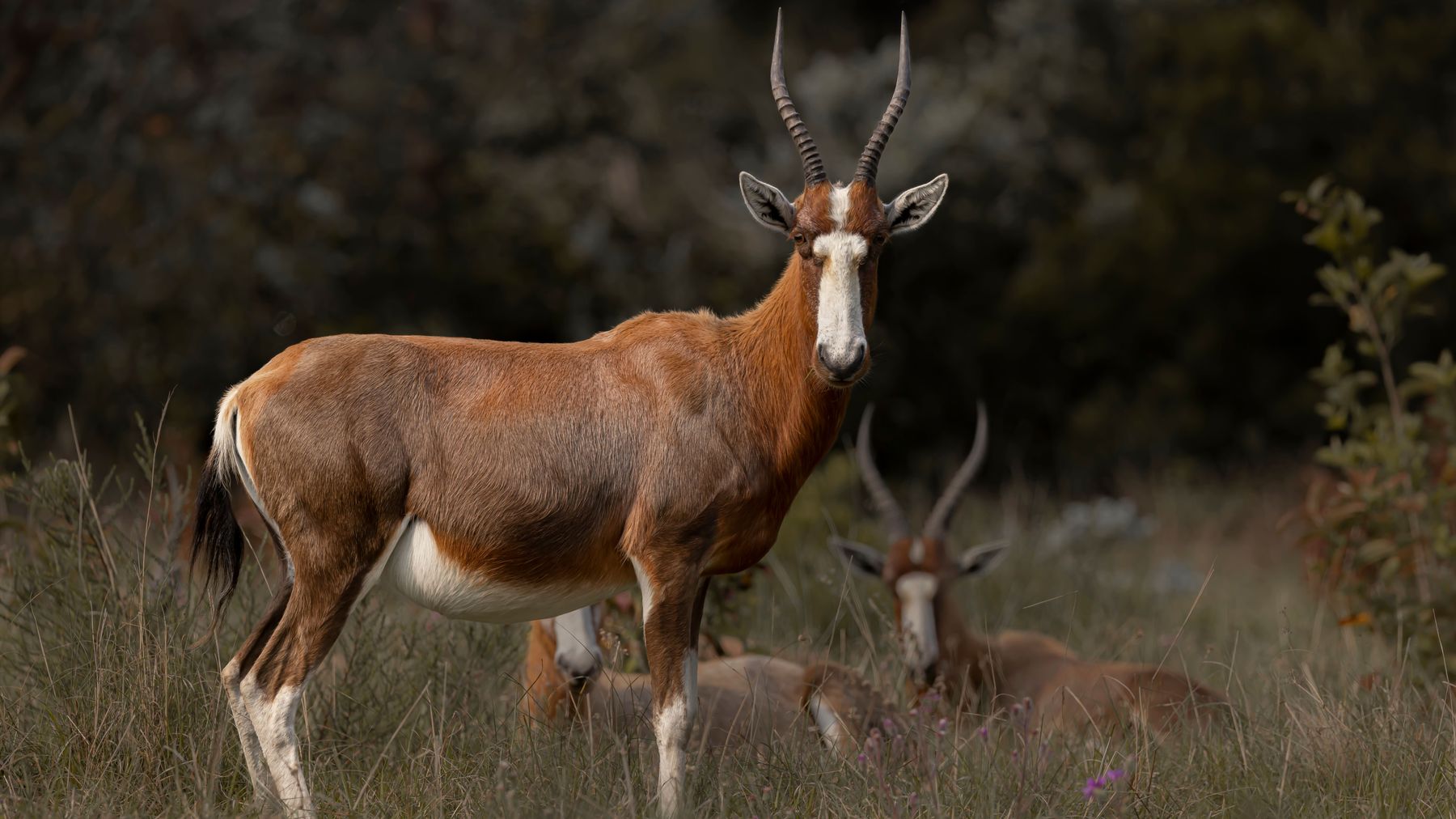
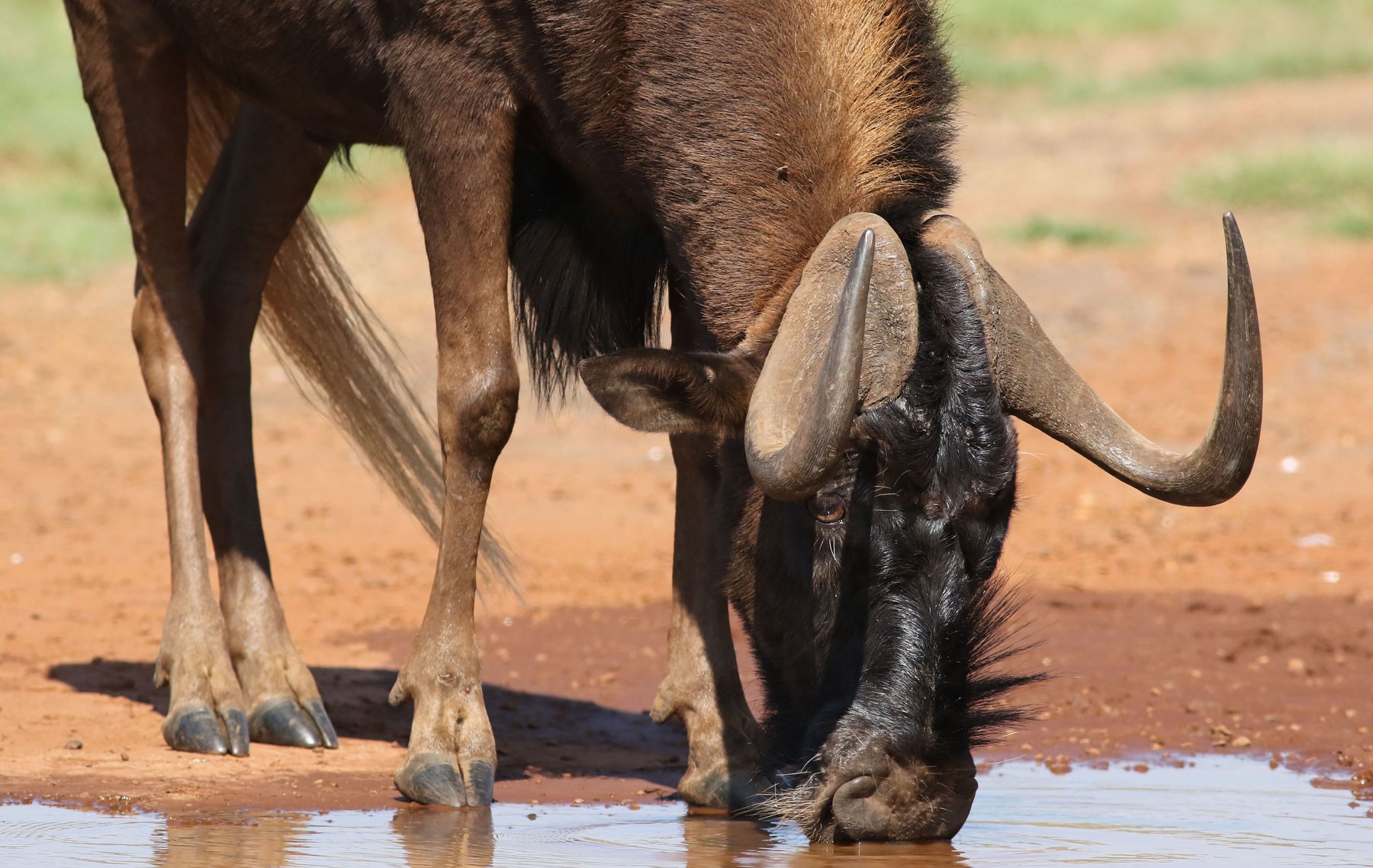
Springbok belong with blesbok, black wildebeest, red hartebeest and gemsbok on the open sections of the Limpopo property, where the cover thins out and the shots stretch. Worth building a few days around if you enjoy shooting at distance.