The animal
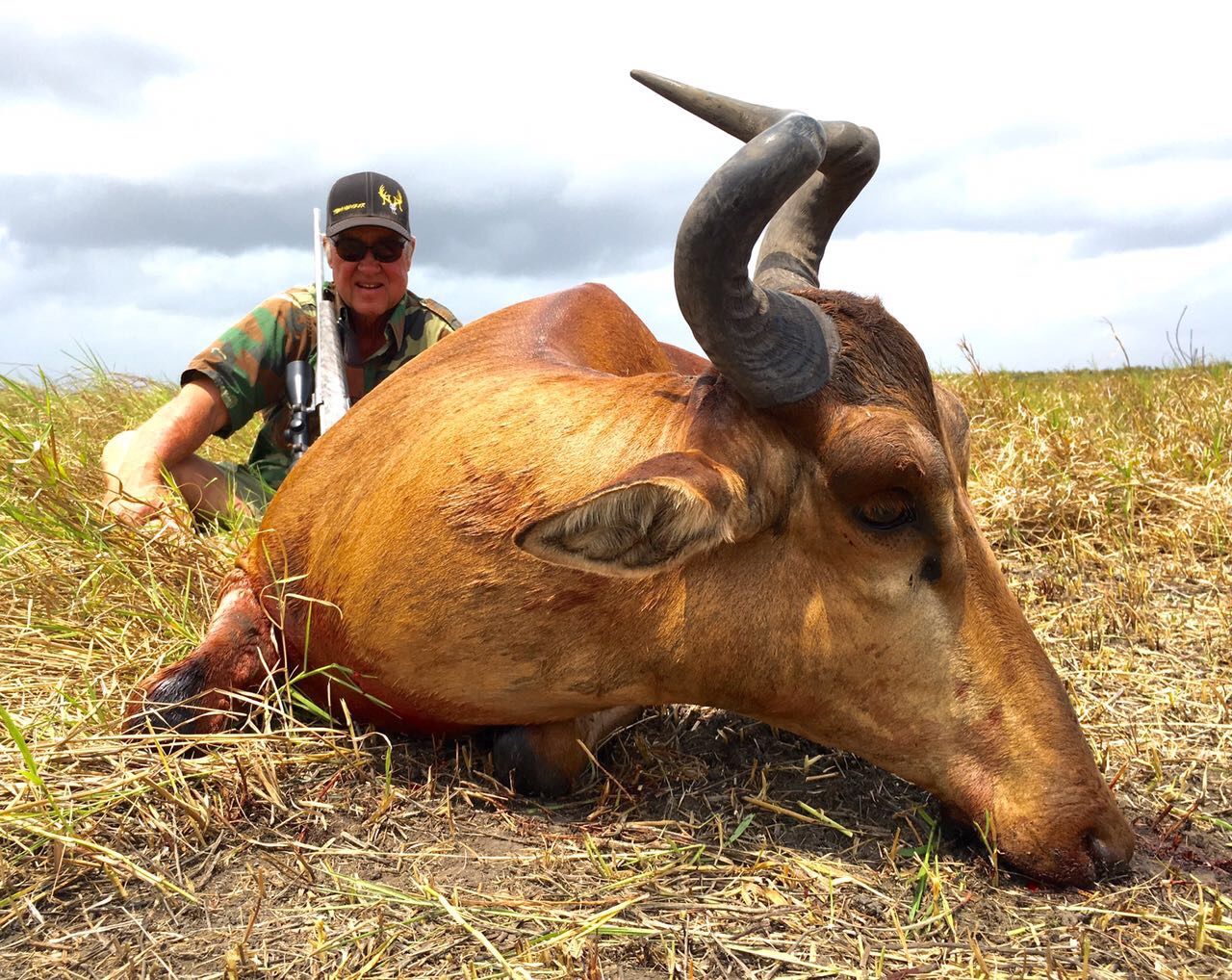
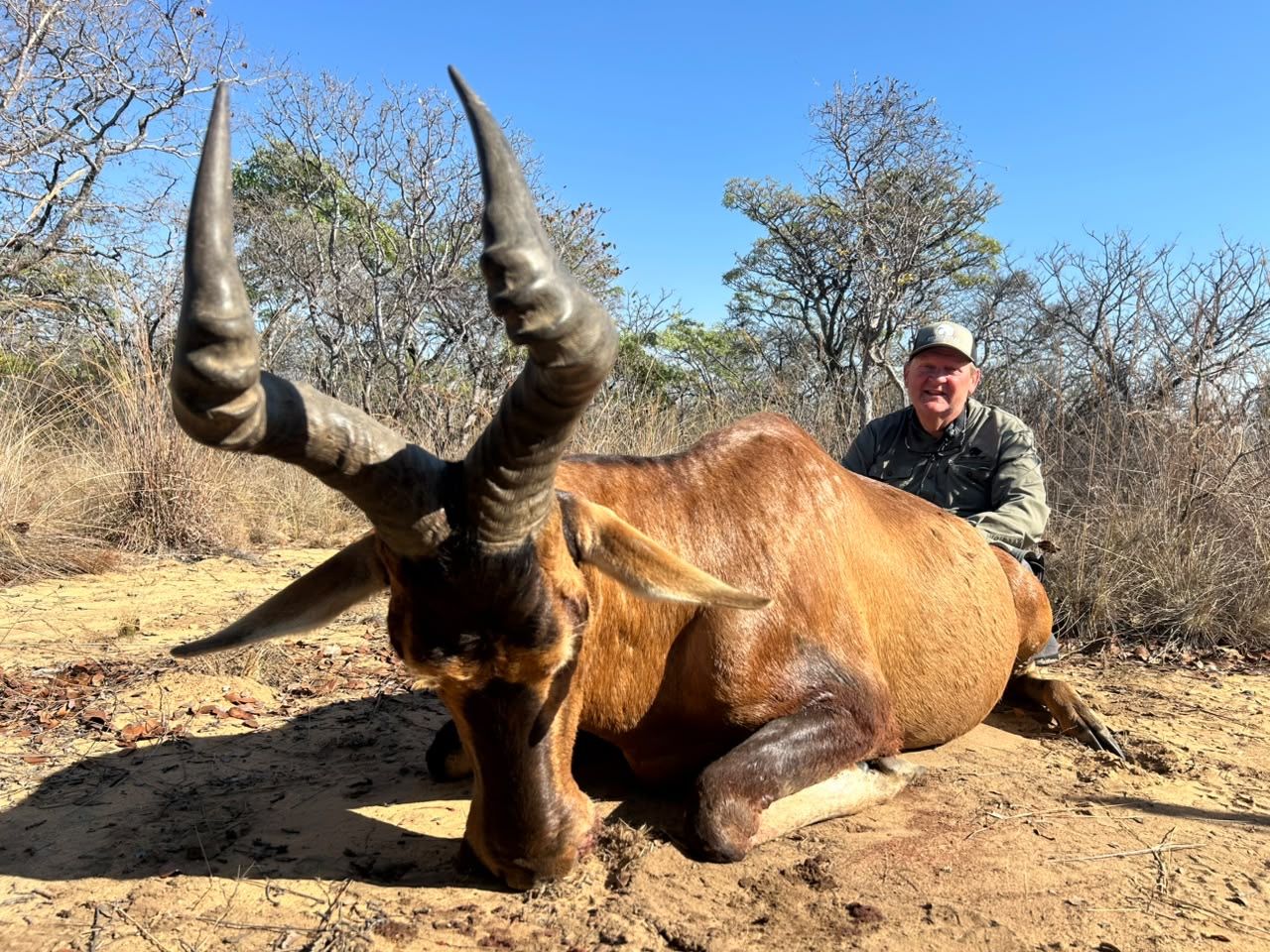
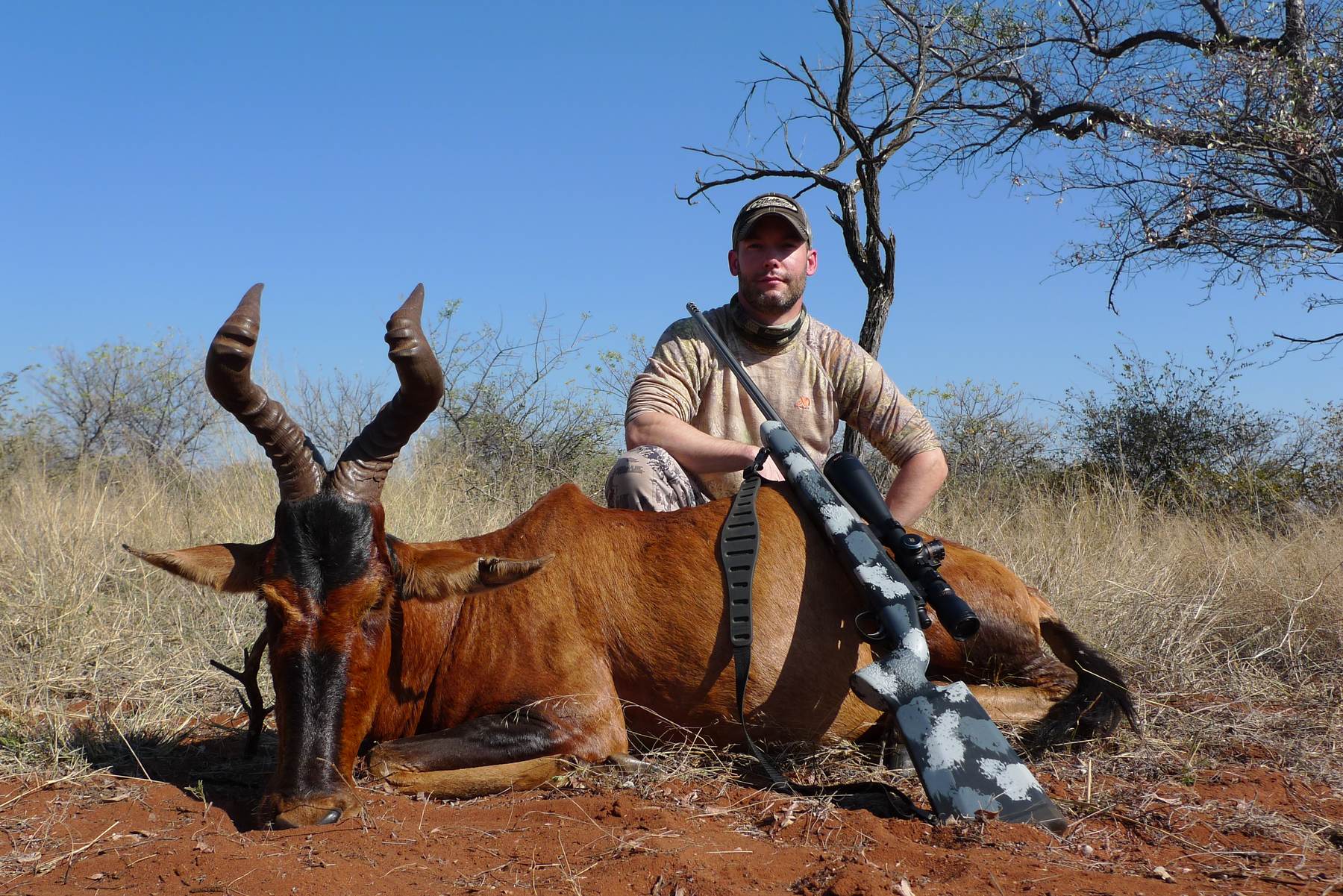
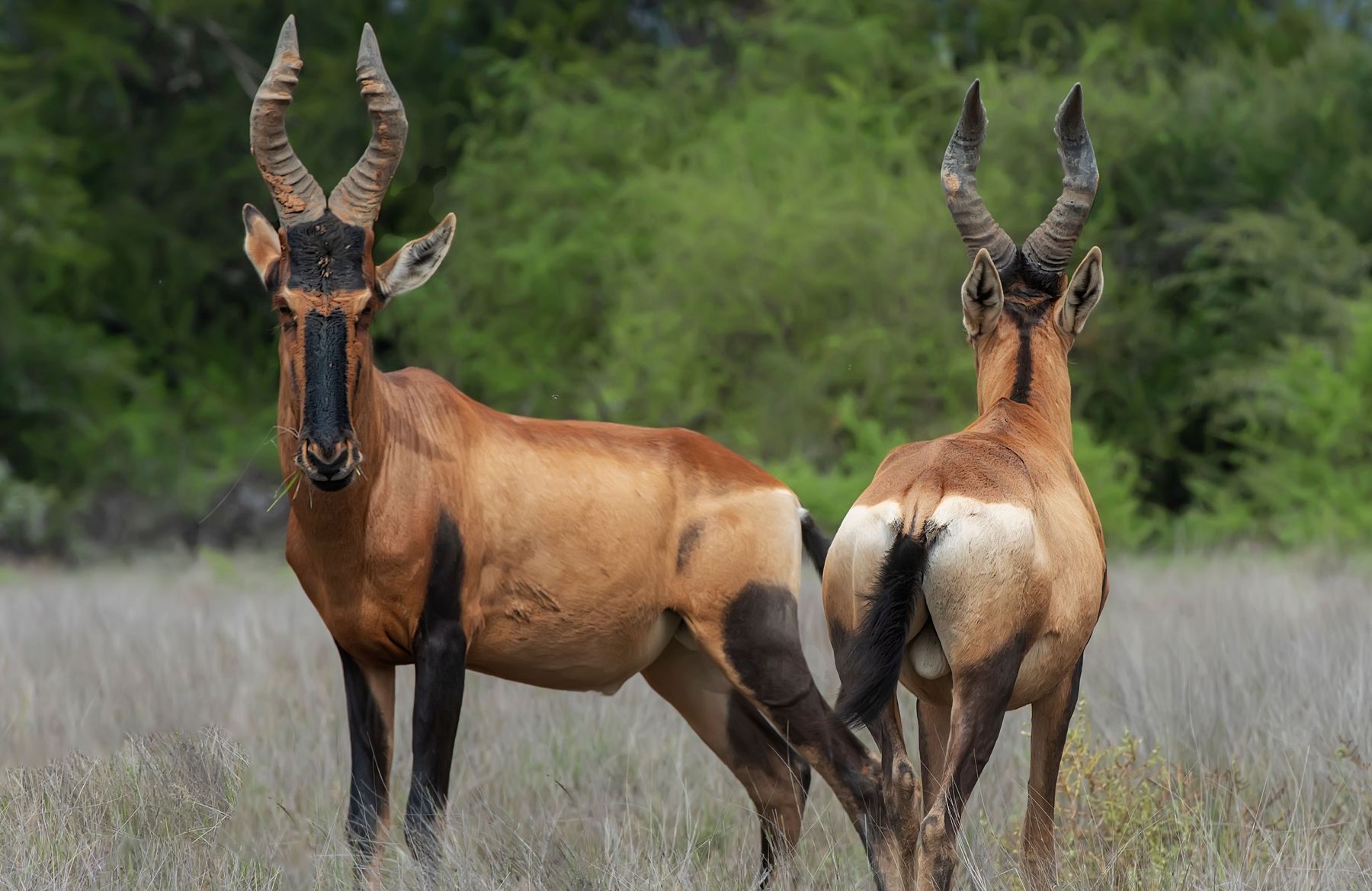
Red hartebeest are built strangely and it takes a while to get used to. Very high at the shoulder and sloping steeply to the rump, with an exceptionally long narrow face and horns that rise from a common boss, kink sharply outward, and then hook back — a shape hunters describe as a double curve or, less kindly, as a set of badly bent coat hooks.
The colouring makes up for it. A deep red-gold coat that catches low sun beautifully, with black markings on the face and legs.
They are also among the fastest antelope in Africa, capable of sustaining 55 kilometres an hour over long distances, and they have exceptional endurance. An alarmed herd does not run two hundred metres. It runs two kilometres.
Judging a bull
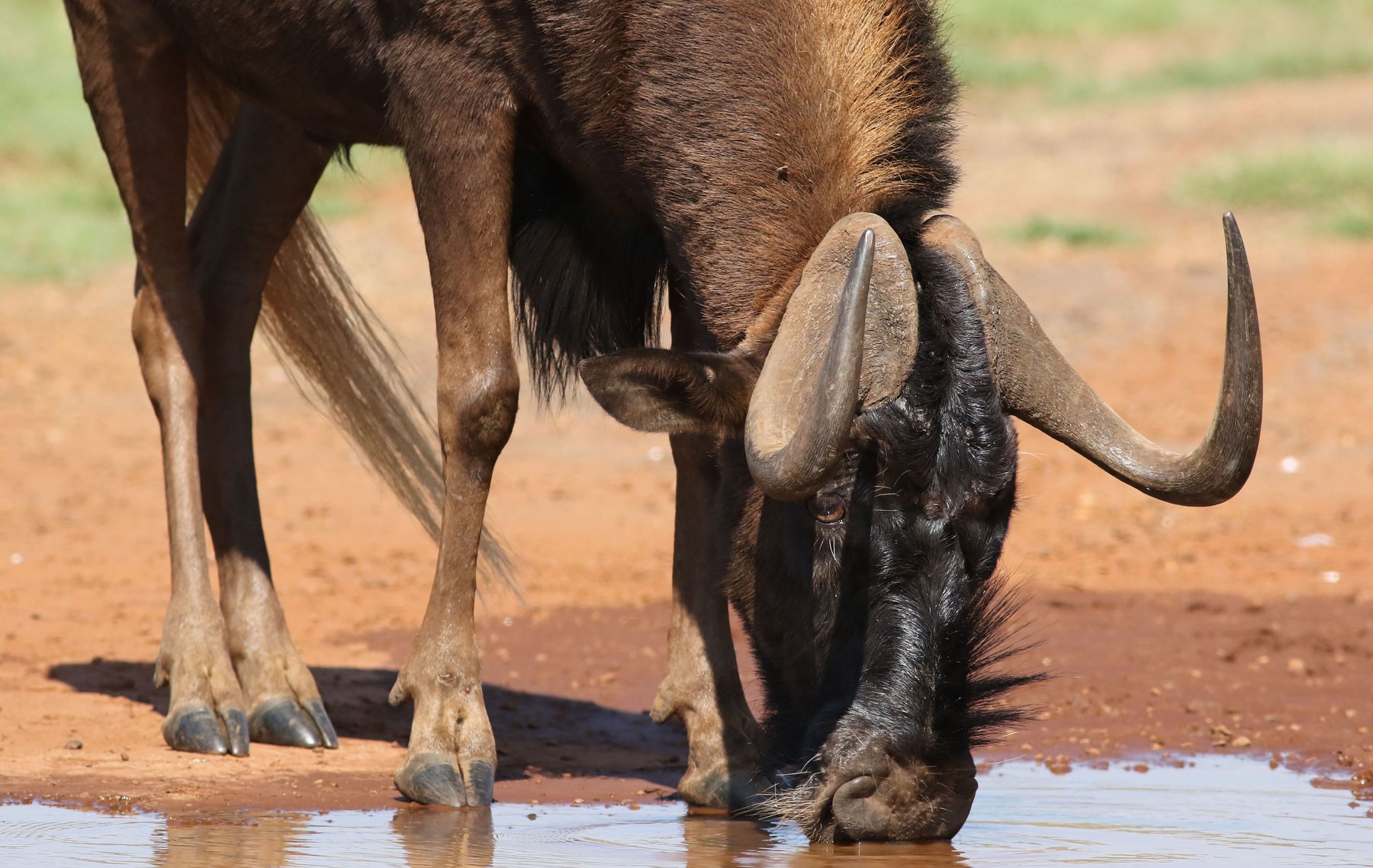
As with wildebeest, the boss decides it.
A mature bull carries a heavy, fully hardened boss where the horns meet at the base, deeply corrugated and solid across the top of the head. Young bulls show lighter, separated bases.
Cows are the trap here — they routinely carry longer, thinner horns than bulls, with much less boss development. Judging on length alone will put you onto a cow. Look for mass at the base, deep ringing carrying up the horn, and the general heaviness through the neck and shoulders that marks an old bull.
A bull of 21 to 23 inches with a solid boss is a good representative animal.
Open-country hunting
Red hartebeest favour drier open country — Kalahari sandveld, karoo and open grassland — and we hunt them on the open ground of the Limpopo property. It is spot-and-stalk across country with very little cover.
The practical difficulty is their eyesight and their tendency to post a sentinel. Herds frequently have one animal standing on higher ground watching while the rest feed, and getting past it is the whole problem. Stalks use dry riverbeds, dune folds and scrub, and shots commonly run 200 to 300 metres.
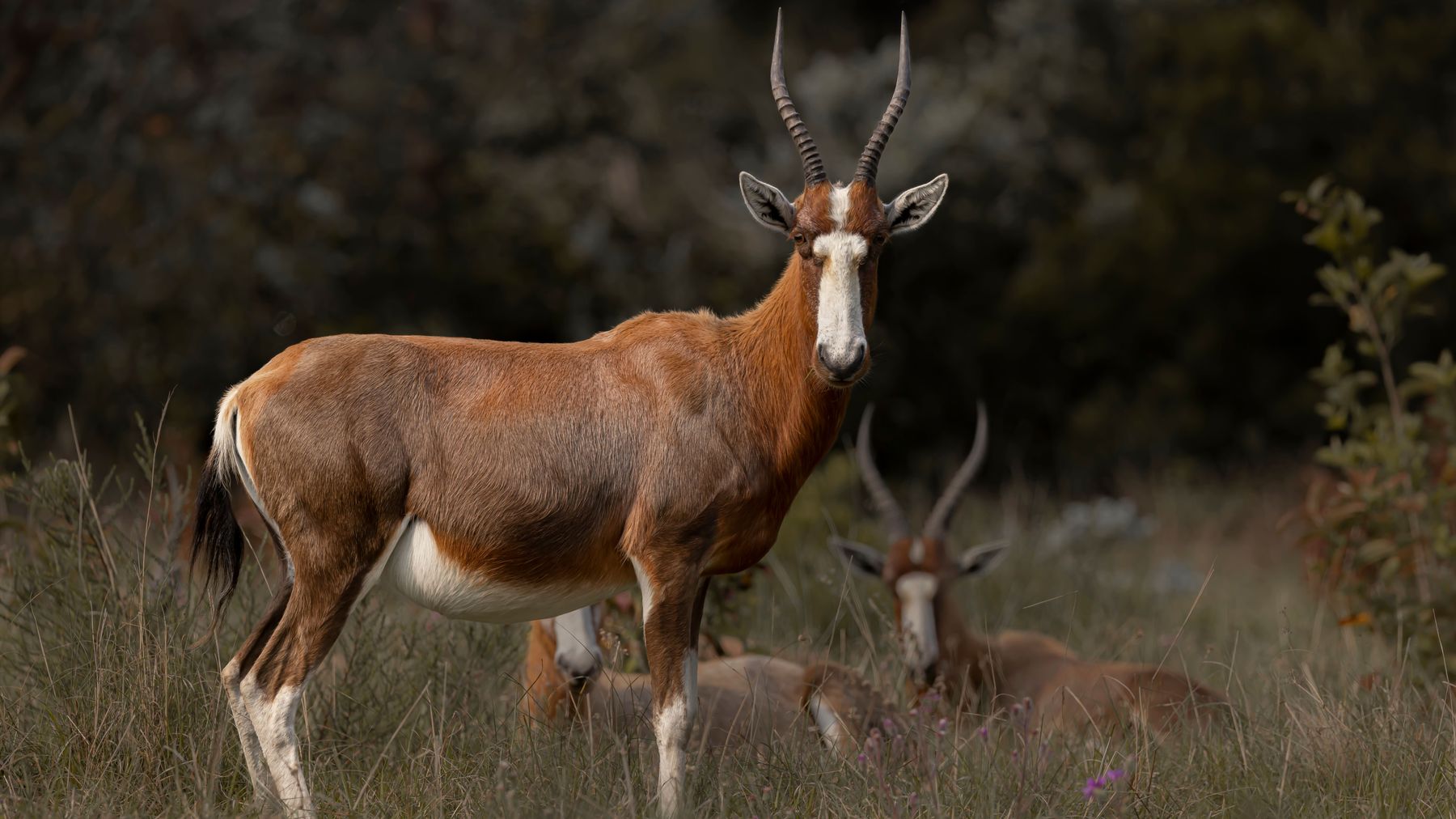
This makes red hartebeest, along with blesbok and black wildebeest, one of the animals where longer-range rifle capability genuinely matters in Africa. A flat-shooting rifle and a rangefinder earn their keep here.
They also tolerate heat far better than the hunters following them and stay active well into the morning, which extends the useful hunting day.
Rifle
A .270 or .30-06 with premium 165 to 180-grain bullets. They are deceptively tough — heavily muscled through the shoulder and stubborn — so take the shoulder and break bone rather than attempting a lung shot.
The meat
Red hartebeest is among the best eating in Africa, consistently rated at or near the top by professional hunters and camp staff alike. If you take one early in a safari you will eat well for the rest of it.
On a species list
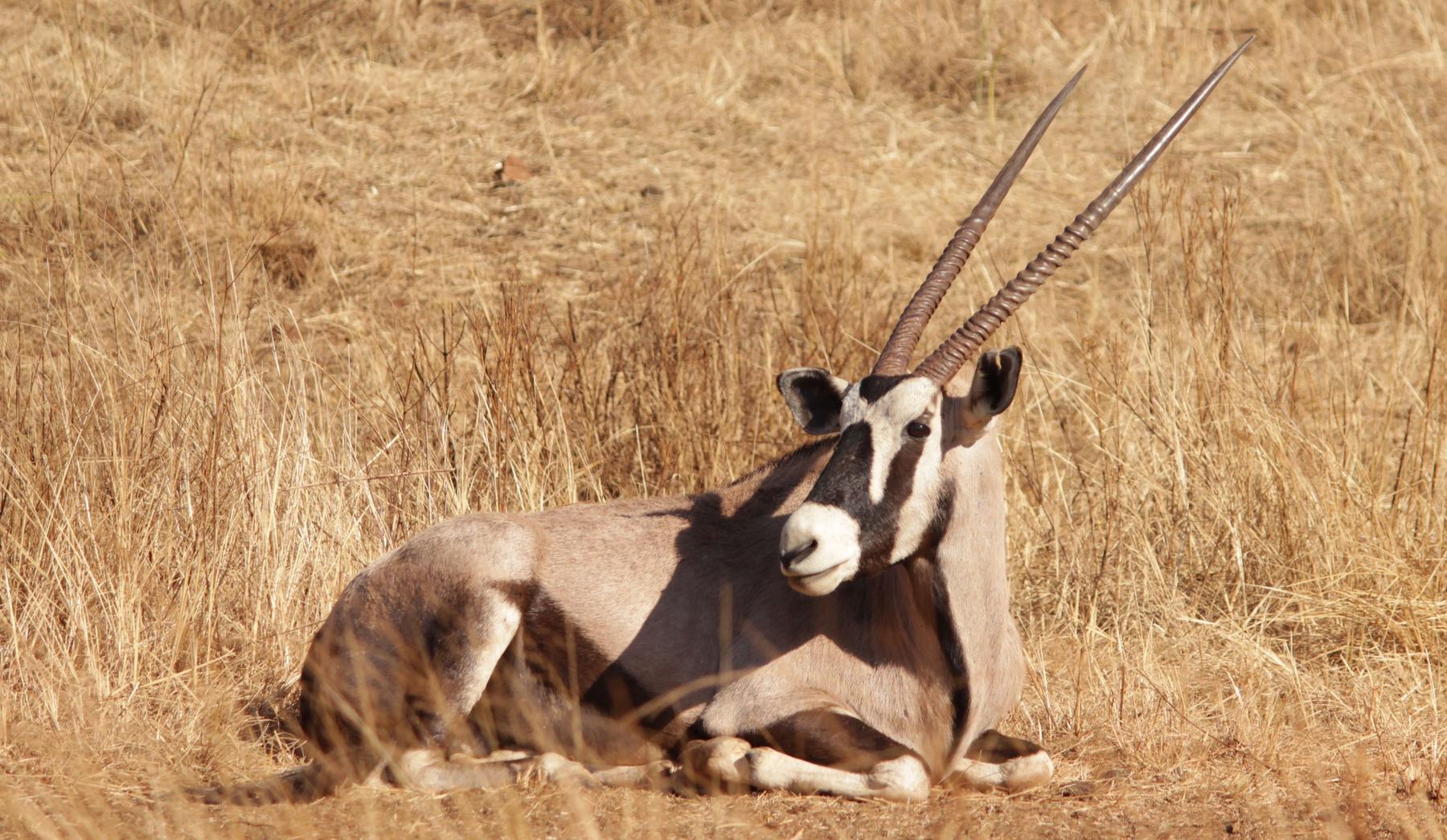
They belong on an open-country safari alongside gemsbok, springbok, blesbok and black wildebeest. That combination makes a genuinely different trip from bushveld hunting and is well worth building three or four days around.
Bow hunting
Difficult by spot-and-stalk given the terrain, but they come to water reliably in the dry months and blinds produce well. Sixty pounds upward.