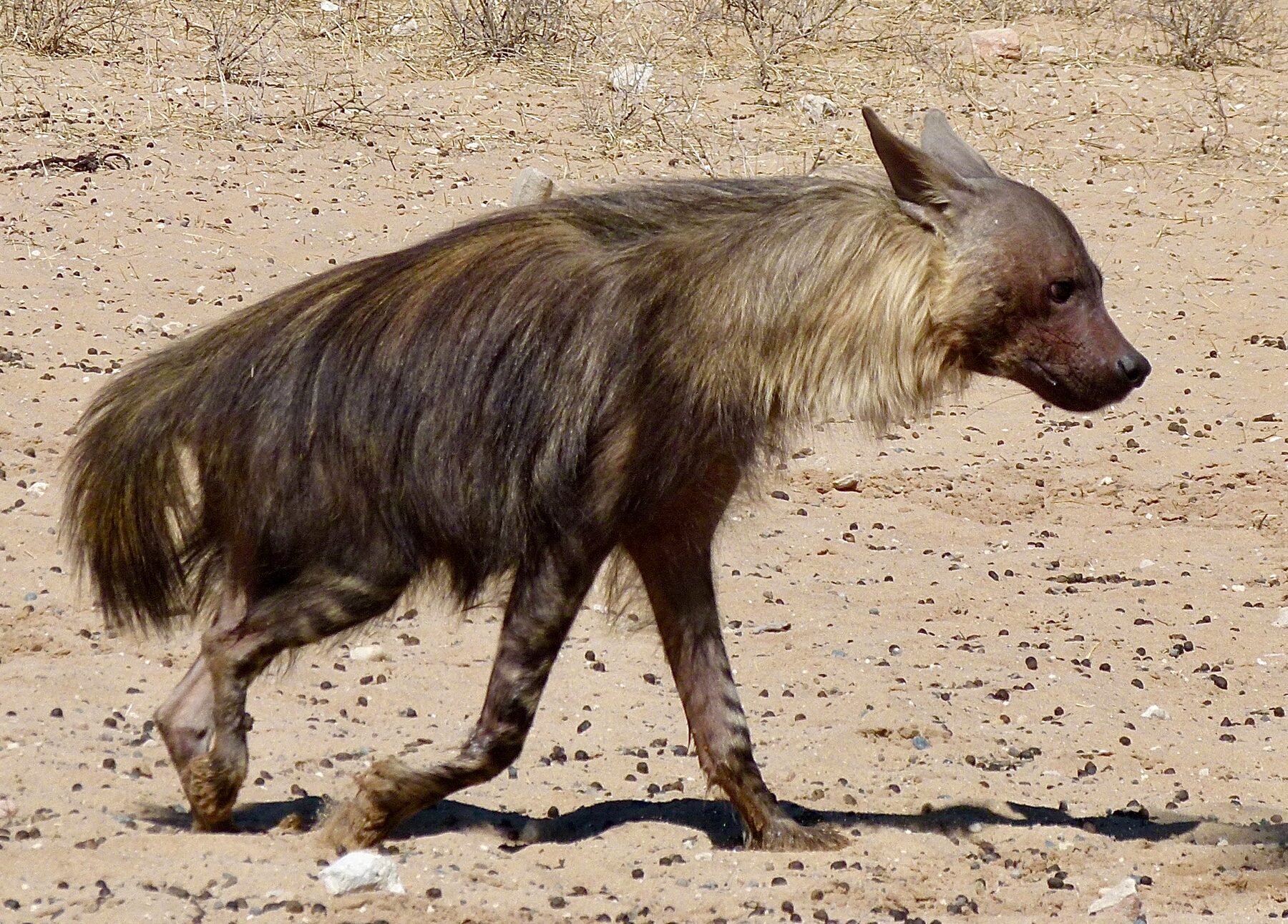
The animal
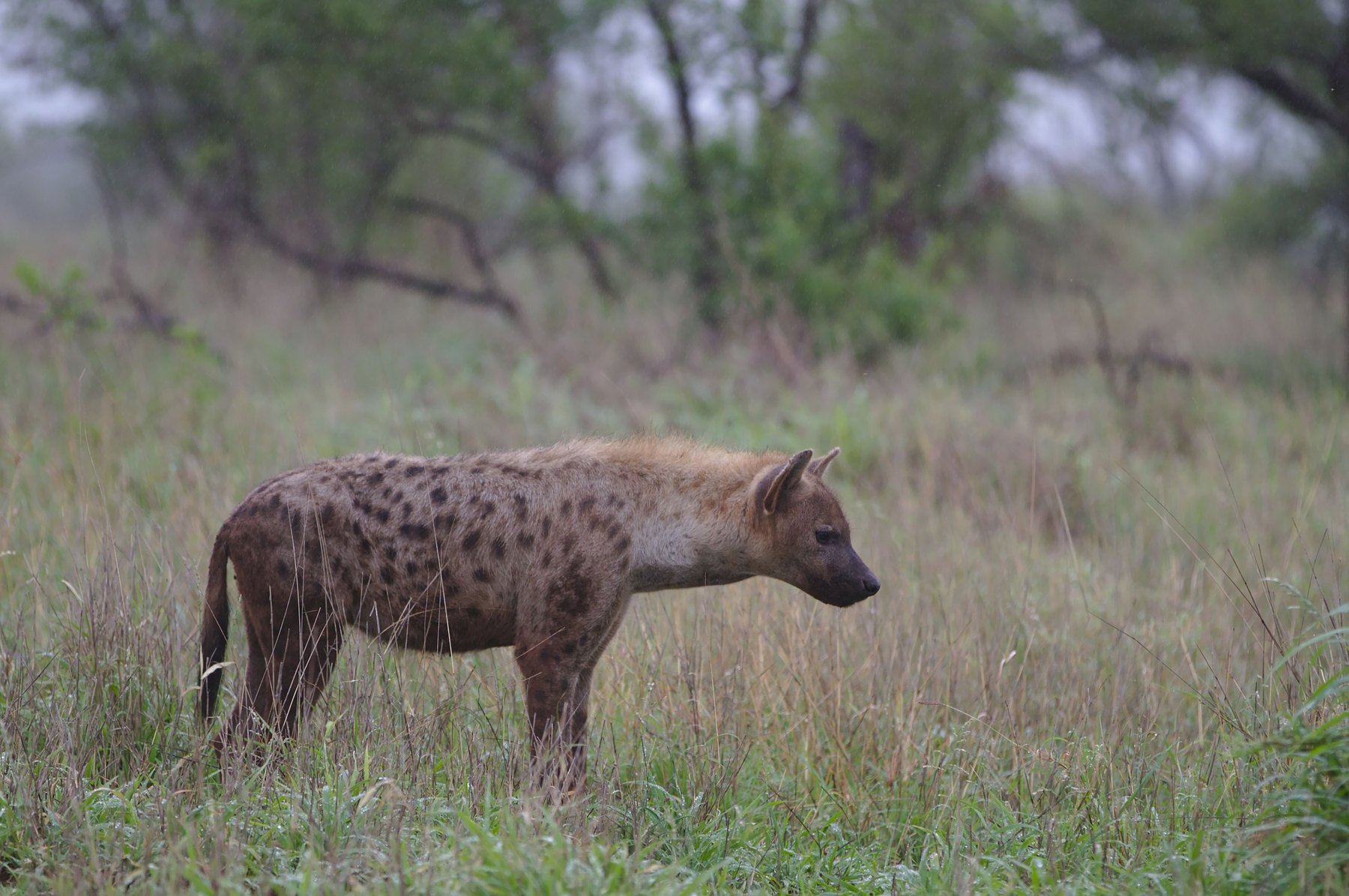
A brown hyena is not a smaller spotted hyena. It is a different animal living a different life.
Where spotted hyena run in clans and kill much of what they eat, brown hyena are solitary foragers covering enormous distances alone through the night — thirty kilometres is an ordinary night’s walk. They scavenge more than they hunt, they are nearly silent, and they are gone before first light.
They are also considerably scarcer. Brown hyena occur only in southern Africa, they are protected across much of that range, and the total population is small enough that every one taken is on a specific permit for a specific animal.
What you are hunting them for is the cape: the long shaggy mantle of dark hair running from the neck over the shoulders. On a winter animal it is extraordinary. On a summer animal it is ordinary. This is one of very few trophies in Africa where the month matters more than the animal.
Where we hunt them
Limpopo, on our South African ground.
Brown hyena cannot be added to a safari once you have arrived. Quota is allocated, limited, and often simply unavailable. Tell us before you book and we will say honestly whether a permit can be had for your dates. If it cannot, we will say that too rather than take the booking and hope.
How the hunt runs
Over bait, at night, with a great deal of sitting.
Brown hyena find bait reliably but approach it with far more caution than a spotted hyena. They circle. They come to the edge of the light and stand. They feed for ninety seconds and leave. A clean shot can take four or five nights of sitting to present itself, and some hunts do not produce one at all.
Where night hunting under artificial light is permitted, the hunt is run from a blind with a red-filtered lamp. Trail cameras on the bait tell us whether an animal is working it and roughly when, which turns an open-ended vigil into a targeted sit.
The alternative — walking them up in daylight — effectively does not happen. Plan on the blind.
Rifle and shot placement
A .30-06 through .375 with a premium expanding bullet. Ranges are short and the rifle matters far less than the glass on top of it.
Practise mounting the rifle and finding your reticle in near-darkness before the first sit. The opportunity is frequently three or four seconds long and there is no second one. Take the shoulder; a brown hyena is a tough animal for its size and a gut-shot one will be gone into the night and not recovered.
Practicalities
Permit-only, arranged before you travel, and never guaranteed.
The cape is the trophy, so handling matters more here than on almost anything else you will take. Tell the skinners before the shot if you want a full mount — the position the animal falls in affects what a taxidermist can do with it. Hyena spoil faster than anything else we handle and the hide needs to reach salt quickly.
Import rules differ by country and brown hyena are CITES-listed. Check your own position before booking. See our firearms and CITES notice.