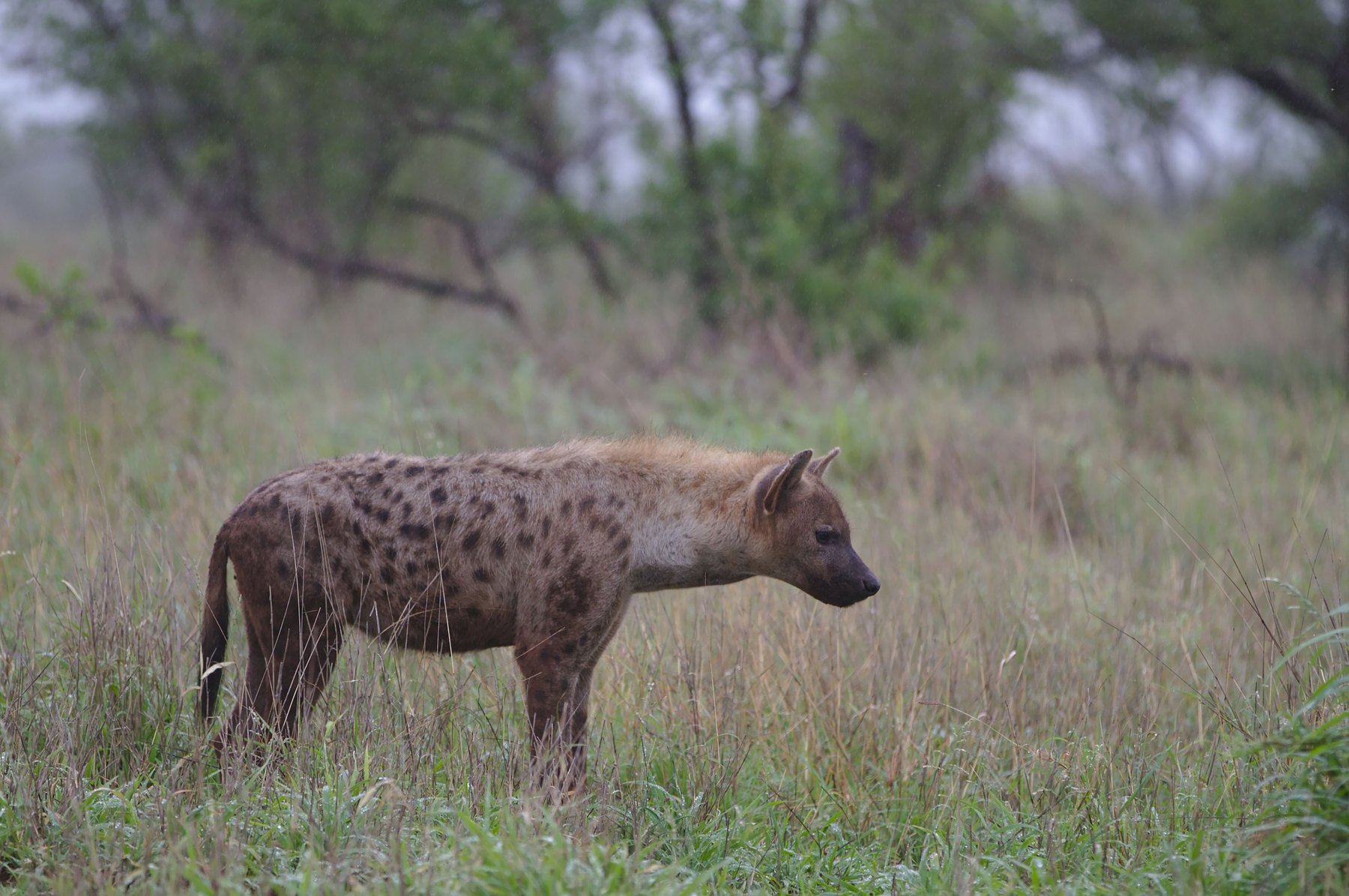
The animal
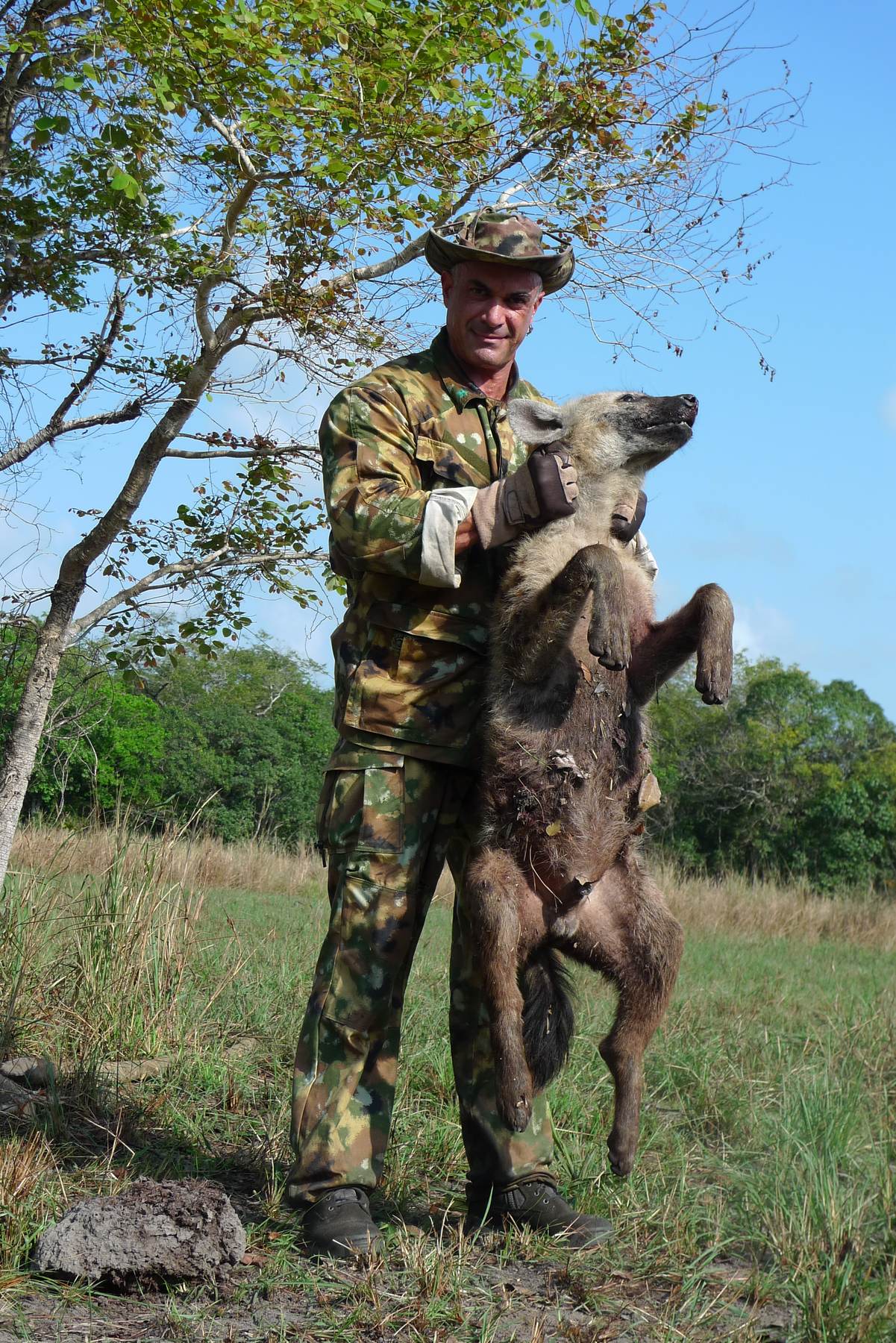
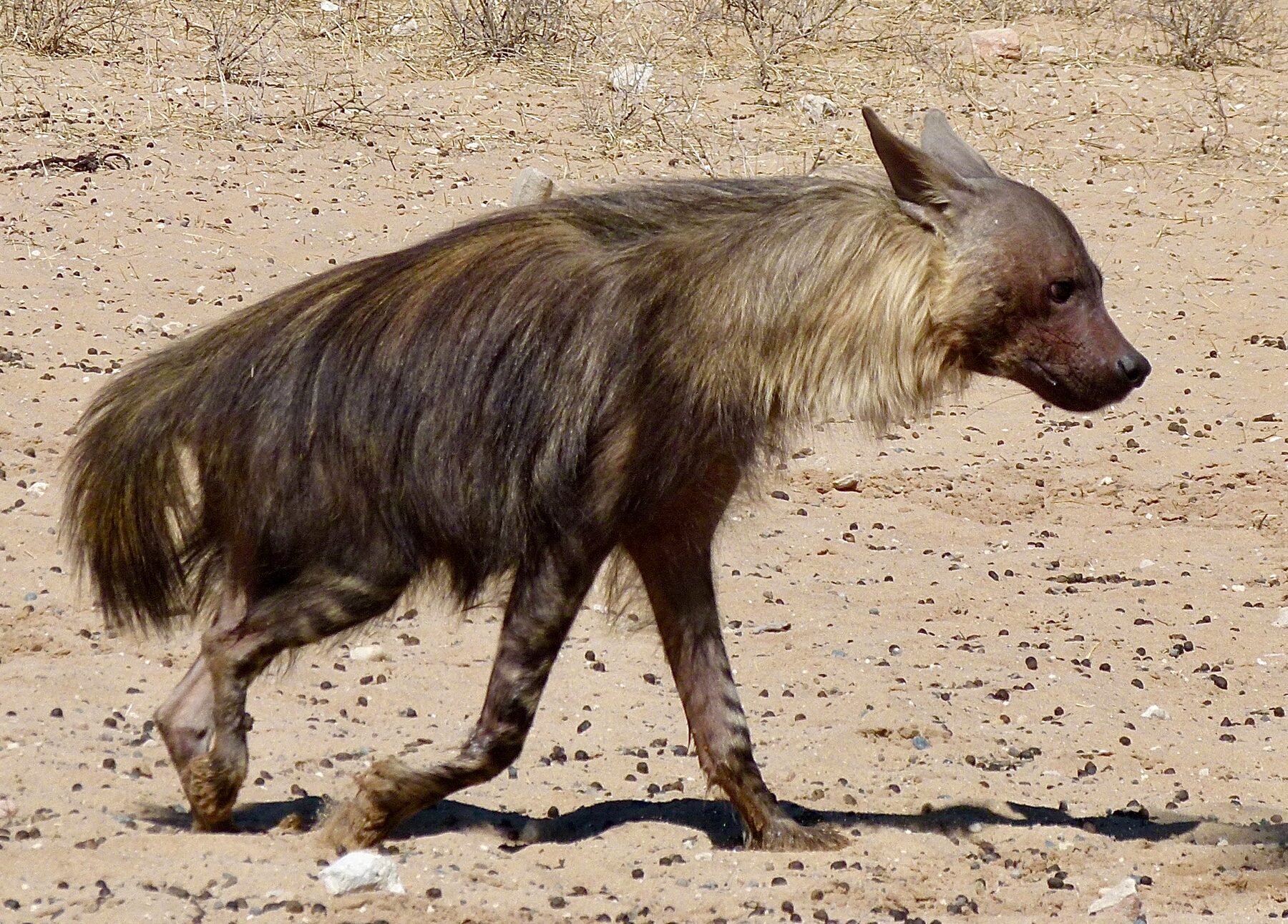
Forget the cartoon. Spotted hyena are not cowardly scavengers trailing the lions — they are pack predators that kill a great deal of what they eat, and in much of Africa lions scavenge from them at least as often as the reverse.
They are built around a jaw. The skull is enormous relative to the body, the neck and forequarters are heavily muscled to drive it, and the bite goes through buffalo femur to get at the marrow. A big animal weighs eighty kilograms.
Clans are matriarchal and females outsize males, which catches out hunters who assume the biggest animal at the bait must be a male. It usually is not. Both are taken and the female is often the better trophy.
Where we hunt them
Zimbabwe, on the same ground as our elephant and leopard hunting.
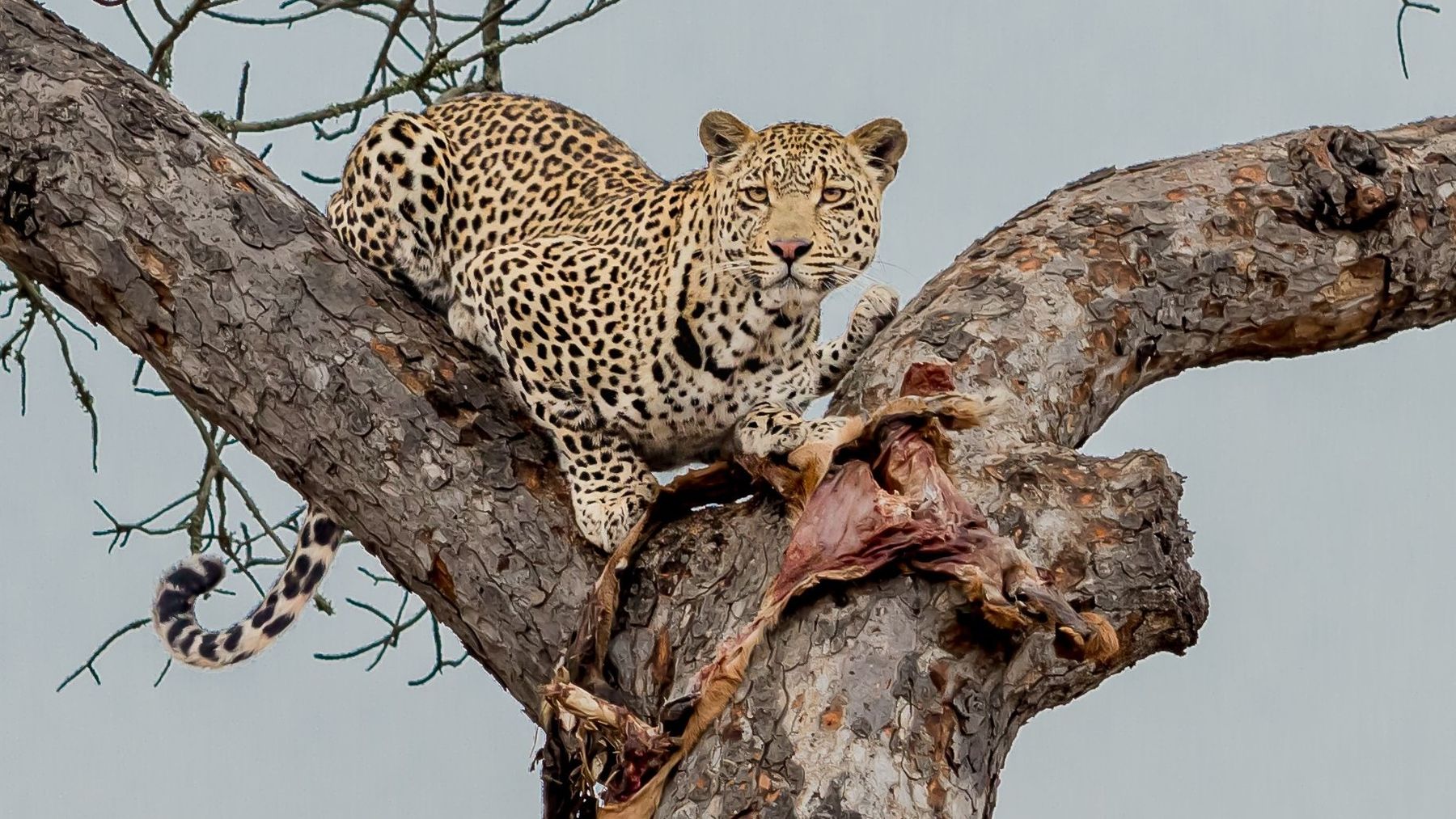
In practice spotted hyena are almost always a second animal taken while another hunt is running. You are sitting a leopard bait on night four and the hyena arrives instead — which, if your professional hunter nods, is the moment the hunt becomes a hyena hunt.
They are on quota. We will tell you what is available for your dates rather than letting you assume.
How the hunt runs
Over bait, in the dark, and they make it harder than you expect.
Hyena find a bait faster than anything in Africa, often the same night it goes up. That is the easy part and it fools people into thinking the hunt is straightforward. It is not. They feed almost exclusively after dark, they arrive without a sound, and they will circle a blind for twenty minutes before committing to the carcass.
Where night hunting under lamp is legal and the concession permits it, the hunt runs from a blind with a red-filtered light and a long, still sit. The discipline required is the same as on leopard: no movement, no noise, no shifting your weight on the chair at the wrong moment.
The alternative is a bait placed near a known den and hunted at first light before the clan moves off. It takes longer and works less often.
Rifle and shot placement
The cat rifle — .30-06 through .375, premium expanding bullet, shots between twenty and sixty metres.
Glass matters more than calibre here. Practise finding your reticle in poor light before the first sit, because the window is short and a hyena that catches movement does not come back that night.
Take the shoulder. They are tough, they are low-slung, and a poorly hit hyena covers ground fast in thick cover at night, which is not a follow-up anyone enjoys.
Practicalities
On quota in Zimbabwe and not guaranteed.
They make striking full mounts, but the hide must get to salt quickly — hyena spoil faster than any other animal we handle, and a hide left overnight in warm weather is a lost trophy.
Import rules differ by country. Check your own position before booking. See our firearms and CITES notice.