The biggest antelope in the world
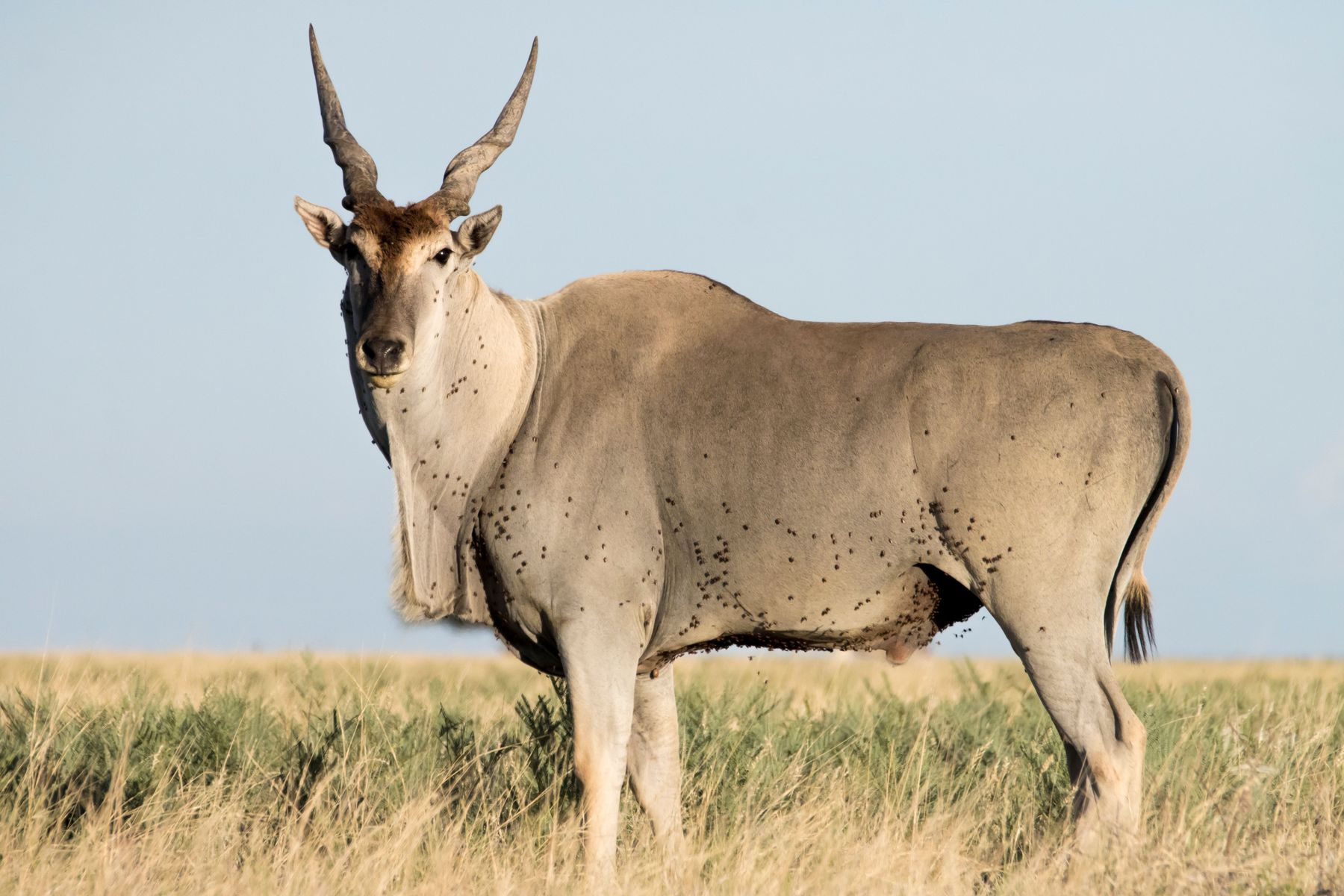
A mature eland bull stands over 1.7 metres at the shoulder and can weigh 900 kilograms, which makes him heavier than most Cape buffalo. He is also, improbably, capable of clearing a two-metre fence from a standing start.
Eland are nomadic in a way that no other antelope is. A herd may cover thirty kilometres in a day, feeding as it moves, and it does not hold territory. That single fact defines how they are hunted.
Judging a bull
Eland are one of the few African species where horn length misleads badly. Cows carry longer, thinner horns than bulls, and a hunter judging on length alone will shoot a cow.
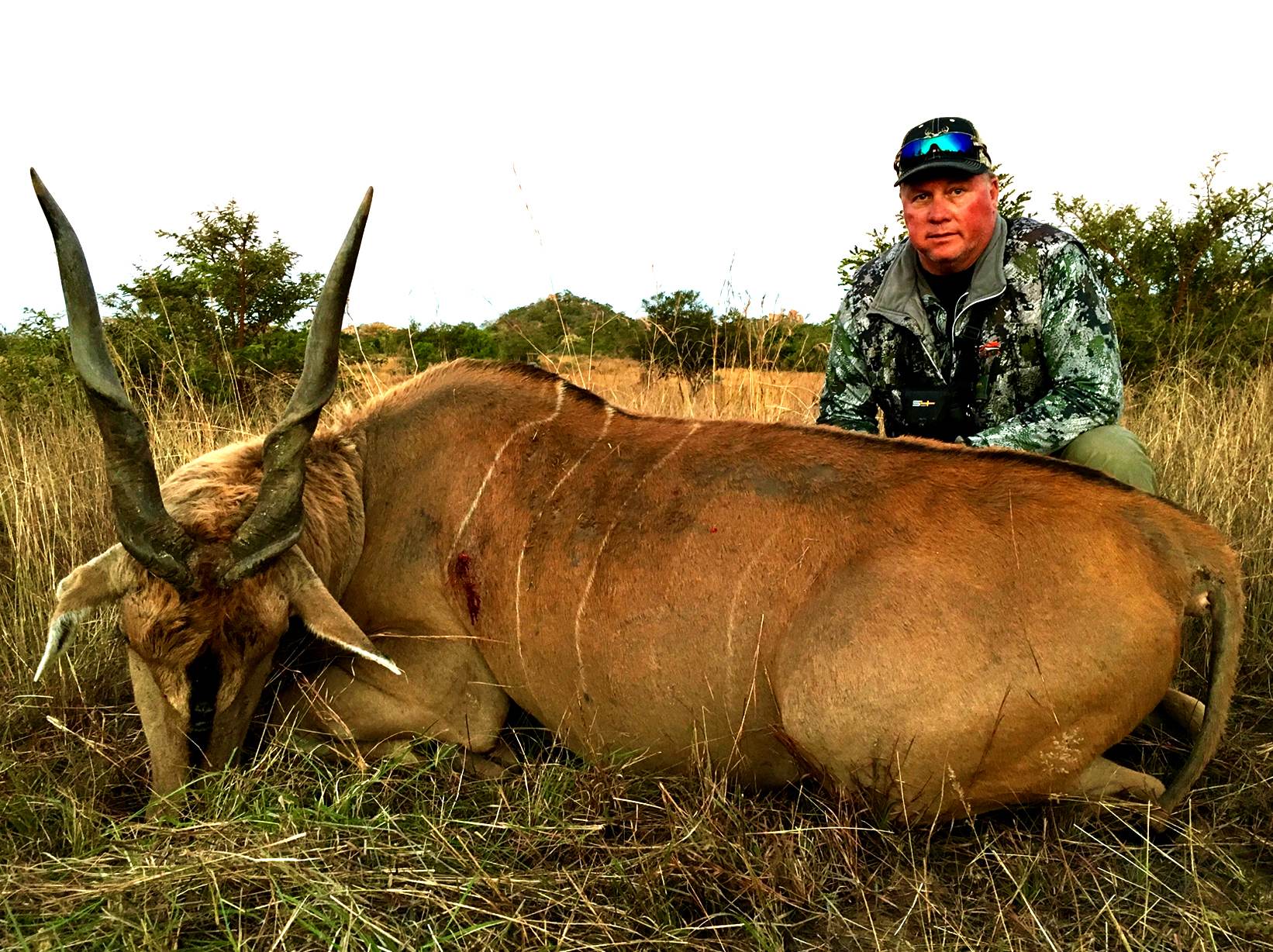
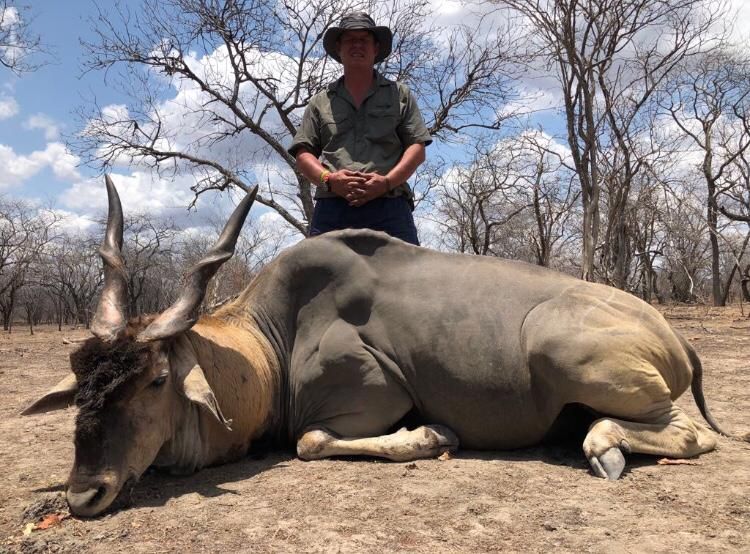
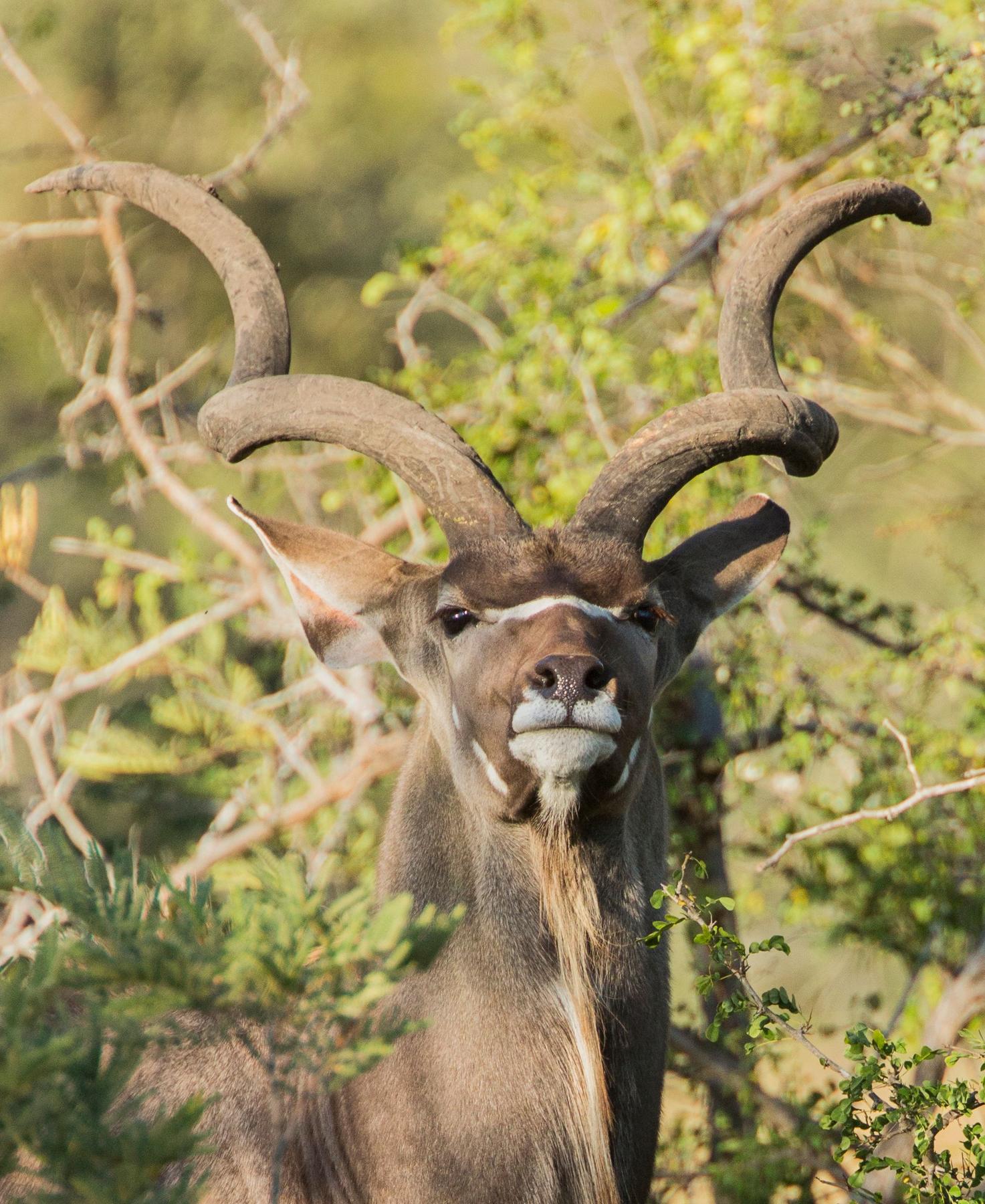
What you want is an old bull, and old bulls are unmistakable once you know the markers. The hide goes from tan to a distinct blue-grey as the hair thins over the neck and shoulders — hunters call them blue bulls, and that colour alone is a reliable age indicator. He carries a heavy dewlap swinging under the throat, and a dense mat of dark hair on the forehead that thickens with age. The horns are shorter than a cow’s but massively thicker at the base, with deep spiralling that wears smooth toward the tips.
A 36-inch blue bull with heavy bases is a far better trophy than a 40-inch cow, and any professional hunter will steer you accordingly.
Cape and Livingstone
Two forms are hunted across our concessions. Cape eland, found in South Africa, are plainer and generally larger-bodied. Livingstone eland, from Mozambique, carry faint white body stripes and a darker saddle. Both are hunted the same way and both are recorded separately in the record books, which matters to some clients and not to others.
The hunt
Eland hunting is tracking, and the tracks are large and easy to follow. The difficulty is that the herd is always moving and always ahead of you.
You cut a fresh track at first light and follow. And follow. A herd feeding at walking pace will still cover ground faster than a hunting party working the wind, which means catching up frequently takes six or seven hours. The bull is usually at the back or off to one side of the herd, which helps.
Where it gets hard is the last part. Eland are surprisingly wary for their size and a herd that catches your wind will simply leave, at a trot, for the next ten kilometres. Then you start again tomorrow.
Rifle
Do not under-gun an eland. A .300 magnum with premium 200-grain bullets is a sensible minimum and a .338 or .375 is better. They are enormously heavy-boned through the shoulder and they absorb a marginal shot without dropping.
Take the broadside shoulder shot and break bone. A lung-shot eland can travel a very long way, and following one at the end of a day that already involved fifteen kilometres of tracking is nobody’s idea of a good evening.
Bow hunting
Eland can be bow hunted from blinds over water in the dry season, and it is genuinely challenging — you need seventy pounds of draw weight minimum and heavy arrows to reach the vitals through that much animal. August to October, when heat forces daily drinking, is the window.