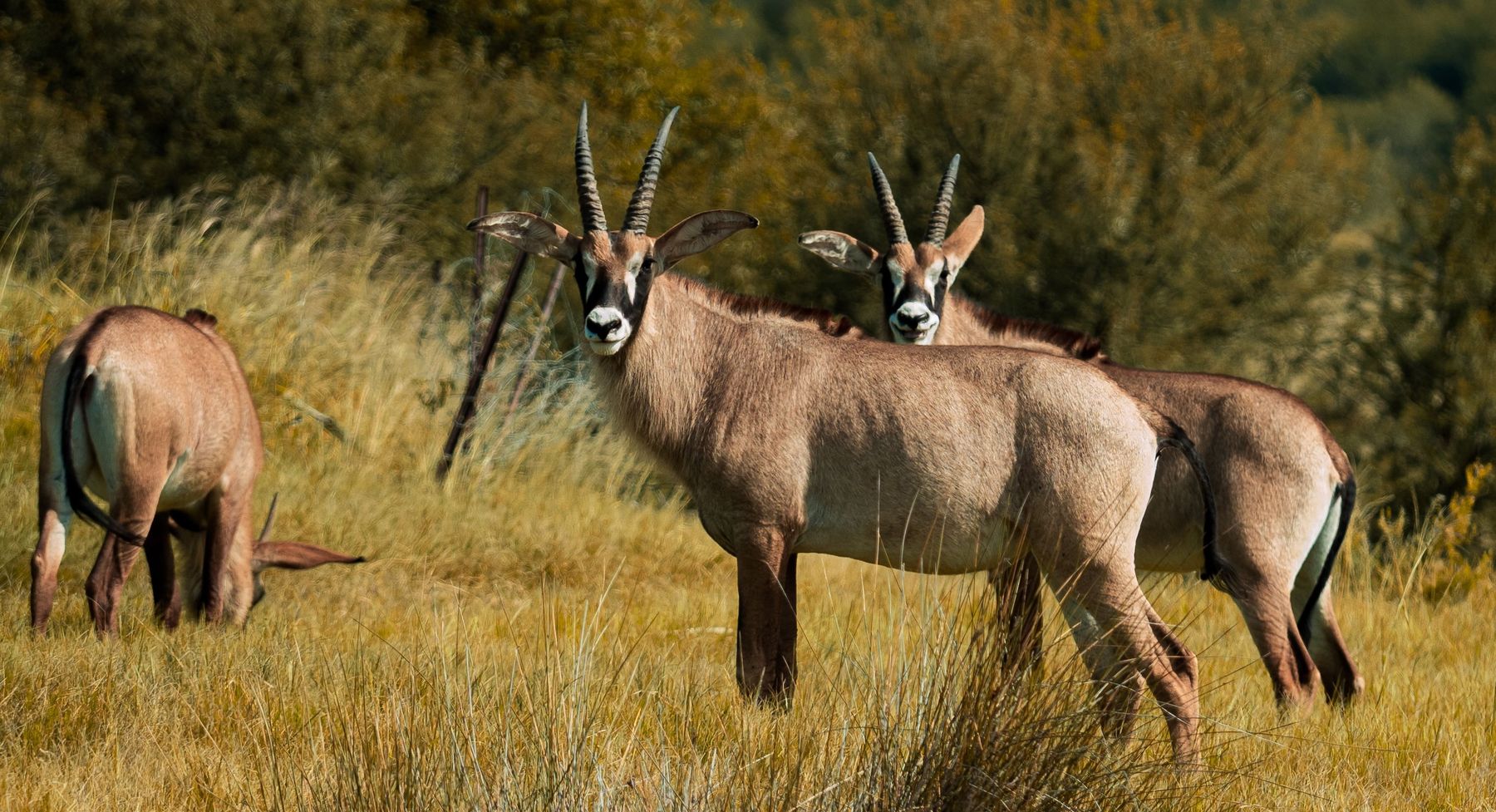
The rarest of the big antelope
Roan are the second-largest antelope in Africa after eland, and across most of their former range they have declined badly. Populations are fragmented, quota is small wherever they are hunted, and the trophy fee reflects that. For a good many hunters, a roan is the animal they hunt last, after everything else on the list has been taken.
They are worth it. A mature roan bull is a genuinely imposing animal — reddish-grey, standing 1.4 metres at the shoulder, with a stiff upright mane, absurdly long tufted ears, and a sharply defined black-and-white clown’s mask across the face.
Judging a bull
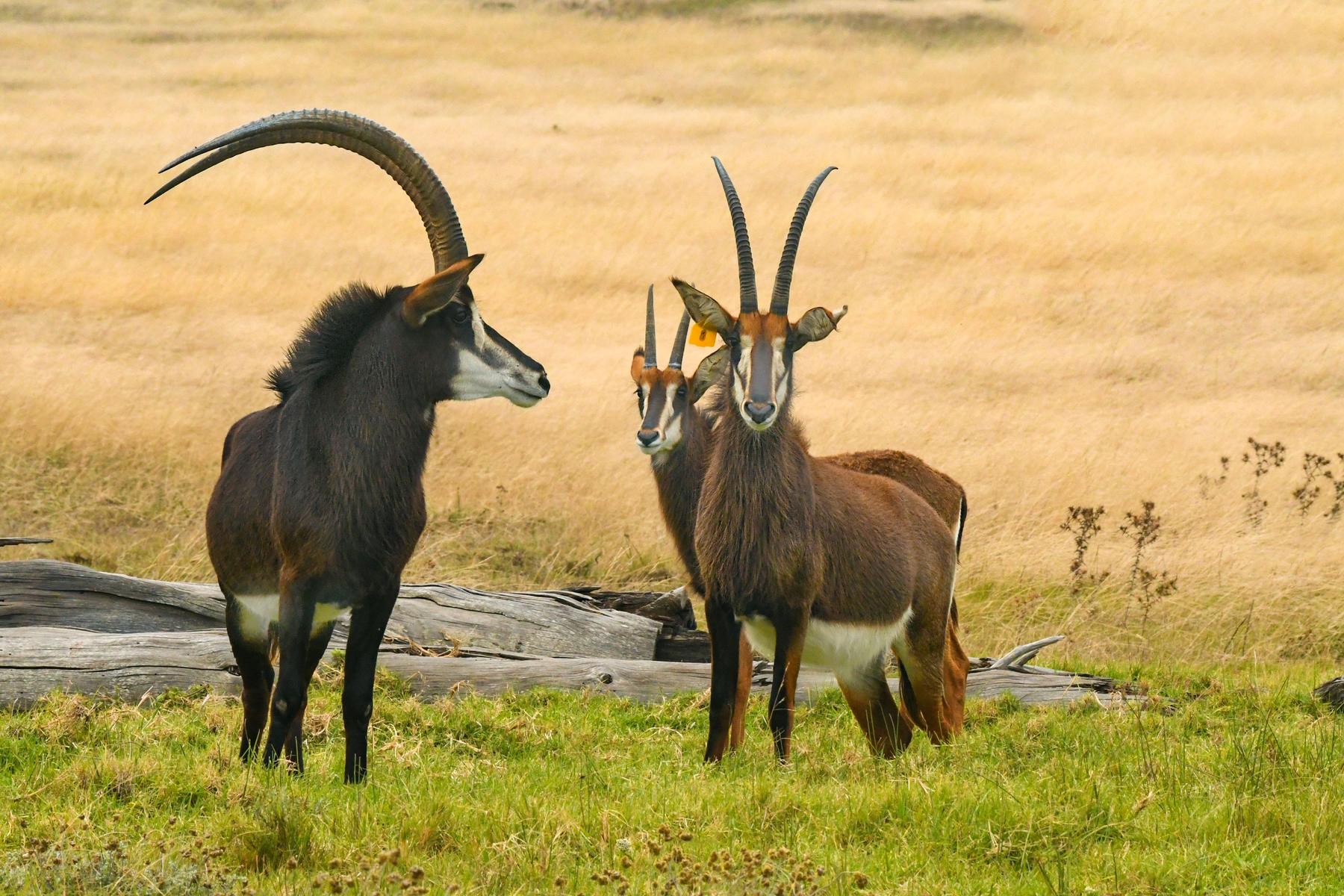
Roan horns are much shorter than sable and the two should never be judged against the same scale. A roan measuring 28 inches is an excellent animal; a sable measuring 28 inches is a young one.
Look for horns that sweep back in a strong, even curve with deep ringing carrying well up from the base, and worn smooth tips. Mass through the base matters more than the last inch of length.
Bulls are heavier through the neck and darker in the face than cows, and cows carry thinner horns. In a herd the dominant bull is usually holding position rather than feeding freely.
Temperament
Roan are aggressive. Like sable, they will fight rather than run when cornered, and a wounded roan is genuinely dangerous — they use their horns backwards over the shoulder with considerable precision. Follow-up is done carefully and from behind.
Bulls fight each other seriously enough that broken horns are common, which is part of why a matched, unbroken mature set is hard to find.
Where we hunt them
Mozambique produces our best roan, hunted in open woodland on and around the Delta concession.
South Africa has managed populations, which are more accessible and more reliably available but which we will always identify plainly as such before you book.
The hunt
Roan favour tall grass and lightly wooded grassland, and they are usually found in small herds of five to fifteen animals. The hunting is glassing and stalking, working from termite mounds and higher ground in the early morning.
The practical difficulty is grass. For much of the year it is high enough that a roan is invisible at eighty metres, and hunting becomes possible only after the annual burns have opened the country. That is a large part of why the season is what it is.
Stalks are conducted on the wind, in the open, and roan are alert. Expect to be seen, expect to back out, and expect to try again.
Rifle
A .300 magnum minimum with premium 200-grain bullets, and .338 or .375 is better. Roan carry heavy shoulder bone and a remarkable reluctance to fall over. Break the shoulder and be ready to follow up immediately.
Cost and availability
Roan sit alongside sable at the top end of plains game trophy fees, and in most of our countries quota is measured in single figures per concession per season. If roan is on your list, tell us early — this is not an animal we can add at short notice.