Built entirely for rock
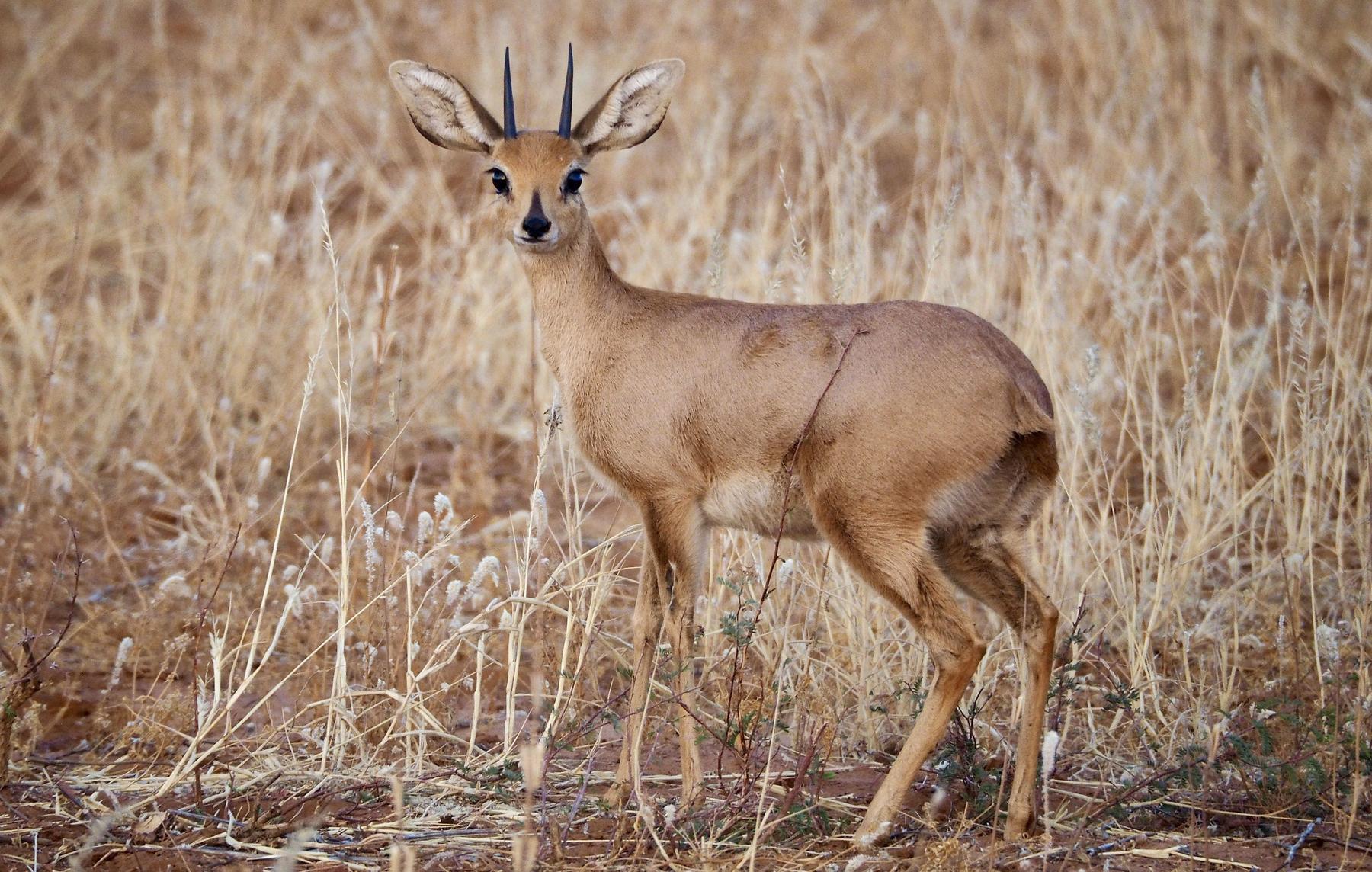
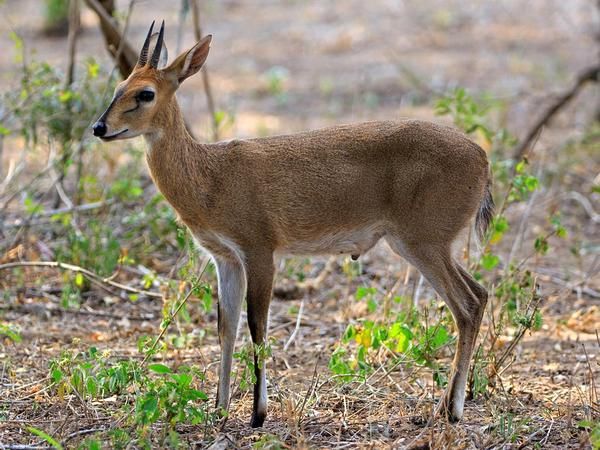
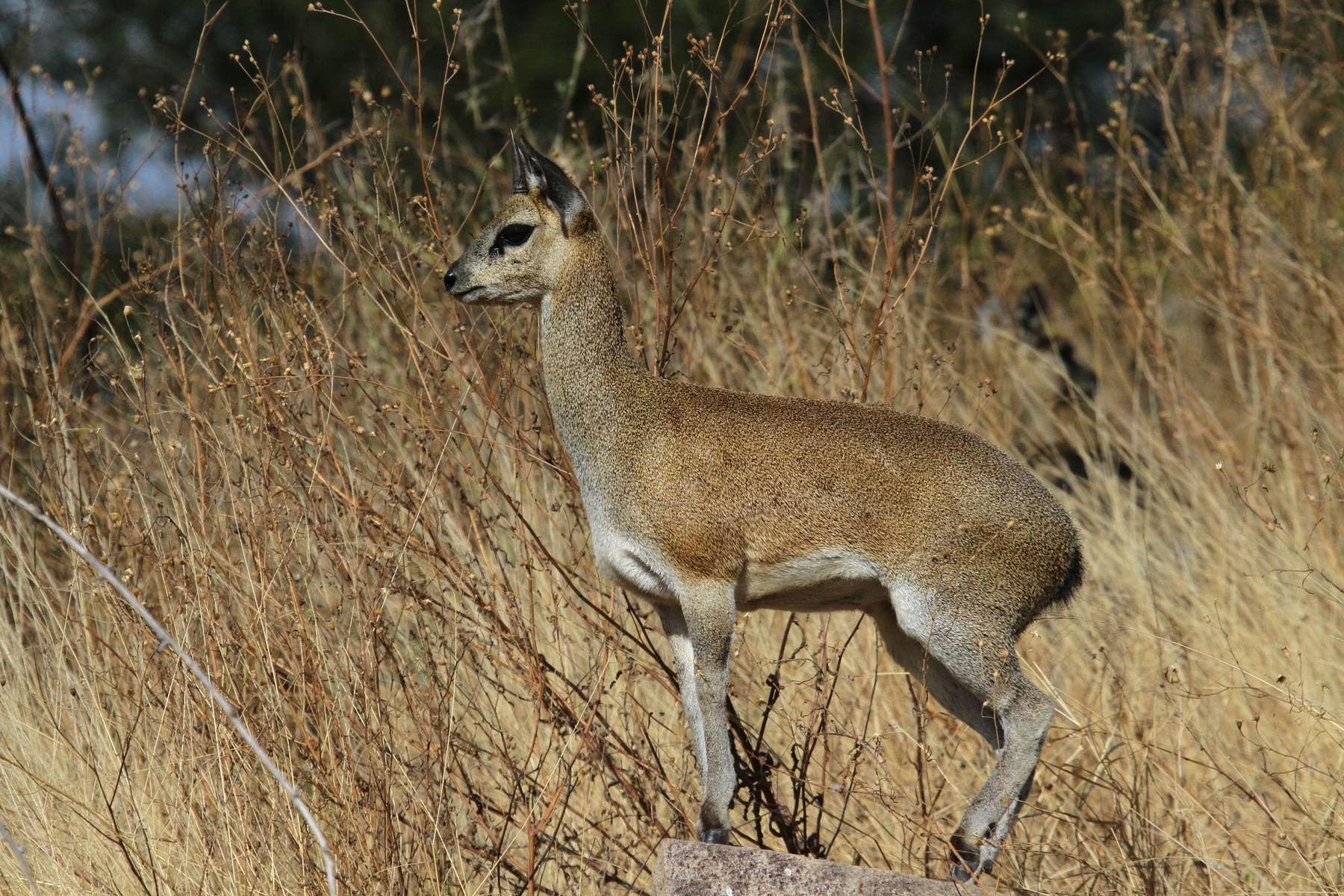
Klipspringer — Afrikaans for rock jumper — are among the strangest small antelope in Africa. They weigh around ten to fifteen kilograms and they live exclusively on rocky ground: koppies, cliff faces, boulder fields and steep escarpments.
Everything about them is adapted to it. They walk on the blunt cylindrical tips of their hooves rather than the flat, which gives them extraordinary grip on rock and lets them stand on a surface the size of a coin. Their coat is unlike any other antelope — thick, brittle, hollow-shafted hair that insulates against both heat and cold and cushions them against rock, and which comes out in handfuls if handled roughly.
They pair for life, and where you see one, the other is almost always within a few metres watching you.
One of the Tiny Ten
Klipspringer are one of the group of small antelope that collectors refer to as the Tiny Ten, and for many hunters they are the most sought after of the group. A klipspringer standing motionless on the skyline of a koppie in early light is one of the classic images of African hunting.
Judging a ram
In most of our range only rams carry horns, which makes identification simple. The horns are short, straight, sharply pointed spikes rising almost vertically from the head.
A mature ram measures four to four and three-quarter inches. Anything past five inches is exceptional anywhere on the continent. There is little else to judge — look for length, and for a clean unbroken pair.
Note that in parts of East Africa ewes are horned as well, which changes the identification problem entirely. In our concessions that is not the case.
The hunt
This is steep-country hunting and it is physically harder than the size of the animal suggests. You work rocky hillsides and koppies on foot, glassing the rock faces above you, in the early morning and late afternoon when klipspringer come out to feed and sun themselves.
They are usually spotted standing motionless on a boulder or ledge, often on the skyline, watching you approach. That habit of standing still and watching is what makes them huntable at all — but it also means they are frequently across a valley from you.
Shots run 100 to 200 metres, commonly at a steep upward or downward angle, and at a target the size of a large housecat. This is precision shooting, not power shooting. A .223 or .243 with a good scope and a solid rest off a pack or rocks is the right tool.
The other difficulty is recovery. A klipspringer shot on a cliff face may fall a very long way into broken ground, which is worth thinking about before you take an awkward angle.
Trophy handling
That brittle hollow hair sheds easily and a badly handled klipspringer makes a poor mount. Our skinners know to handle them carefully. Most clients take a full mount, which suits a small animal well, or a European skull mount.