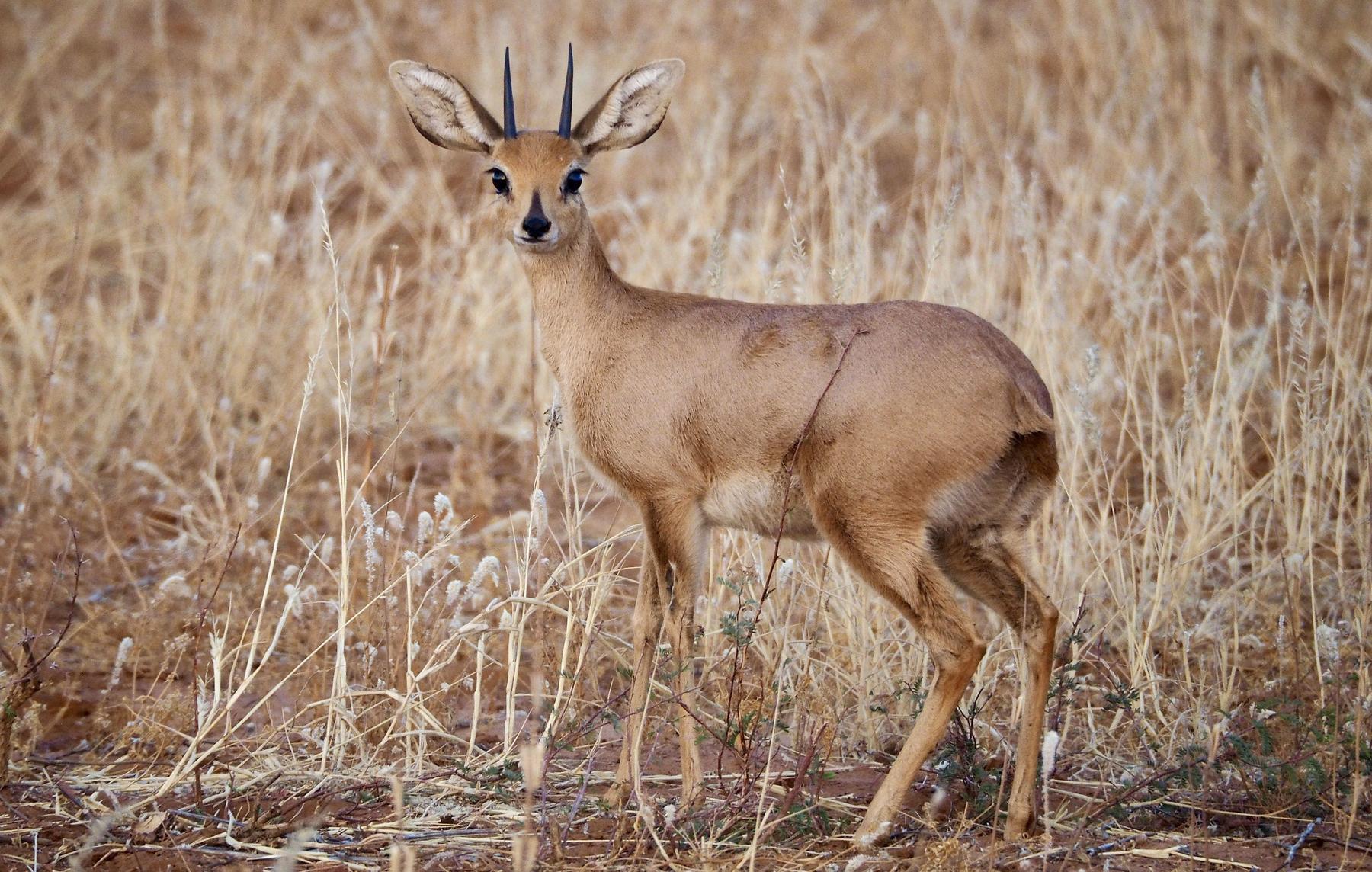
The animal
Steenbuck — sometimes spelled steenbok — are among the most frequently seen antelope on any African safari and among the least frequently taken. Almost every client sees a dozen in the first two days and then finds that getting a shot at a good ram is a different matter entirely.
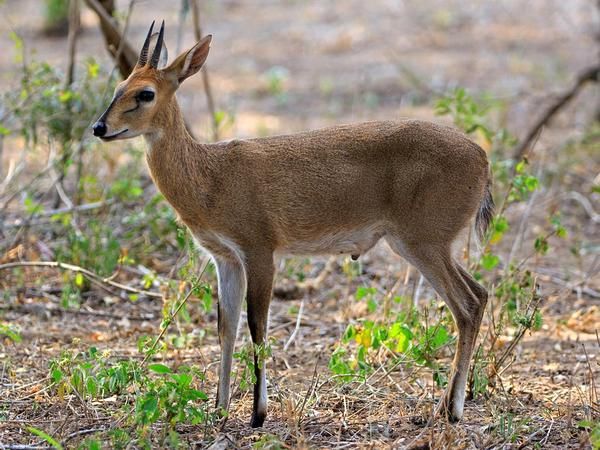
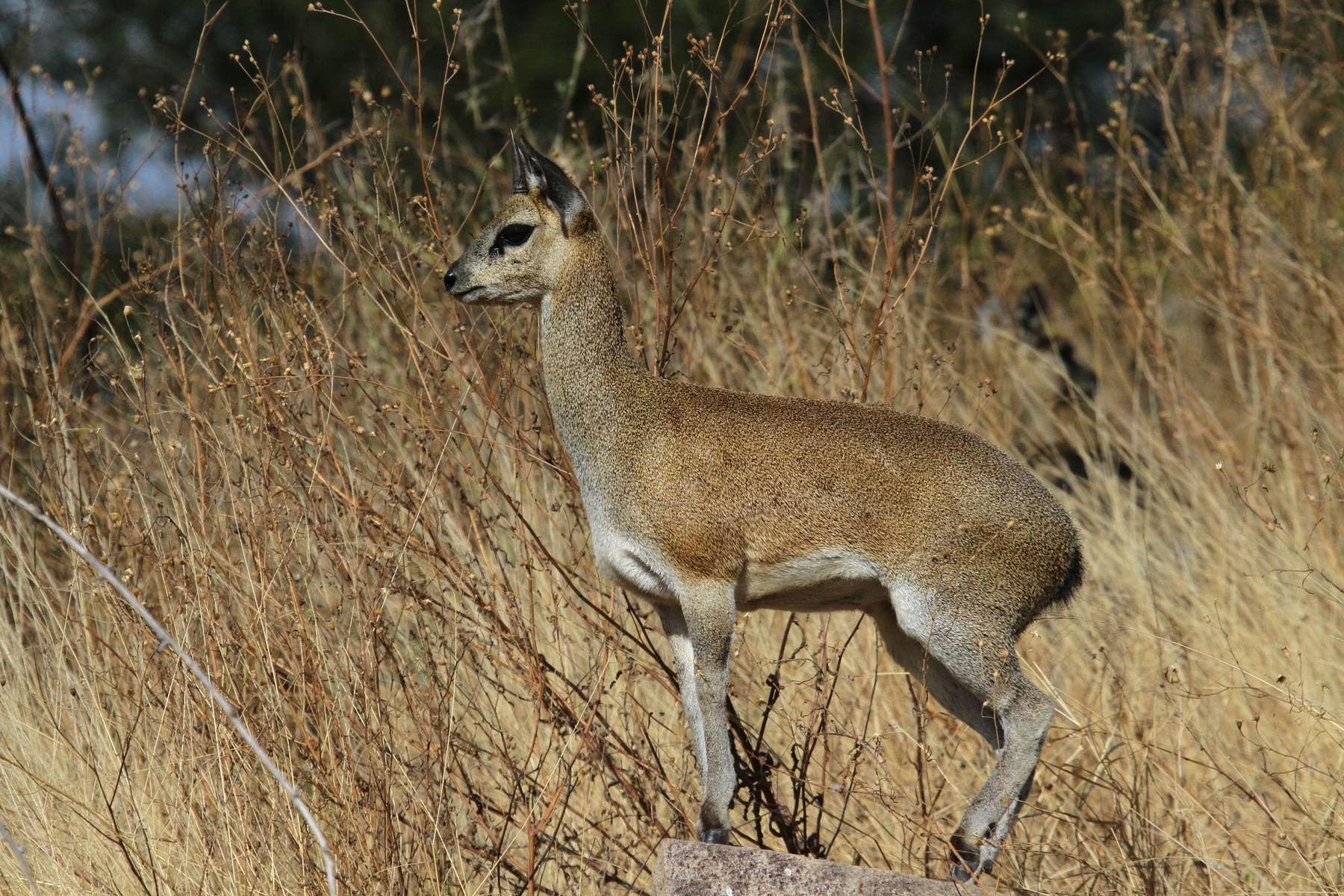
They are small, around eleven kilograms, with a bright rufous-fawn coat, a white belly, and ears that seem far too large for the head. They live alone or occasionally in pairs, in open bushveld, grassland and scrub — noticeably more open country than the duikers prefer.
Their behaviour follows a consistent pattern that defines the hunt. A steenbuck sees you first, stands absolutely still watching, holds that position while you get closer, and then at some point it decides the distance is unacceptable and it goes — a fast zigzag run of a hundred metres or so, then a stop and another look back.
One of the Tiny Ten
Steenbuck are one of the Tiny Ten, the group of small antelope that collectors work through. They are among the more accessible of the group, which makes them a good starting point for a hunter who has decided to pursue the set.
Judging a ram
Ewes carry no horns, so identification is straightforward.
The horns are short, straight, sharply pointed spikes rising vertically from the head, smooth for most of their length with slight ridging at the base. There is not much to judge beyond length and a clean unbroken pair.
A ram of four and a half to five and a quarter inches is a good mature animal. Past five and a half inches is exceptional.
The hunt
Spot-and-stalk in open bushveld, generally early morning and late afternoon. Steenbuck lie up in cover through the heat of the day and emerge to feed at the margins.
The challenge is the standing-and-watching behaviour. A steenbuck will let you approach to perhaps eighty or a hundred metres and then leave, which means the shot has to be taken from further out than you would like at a target the size of a small dog.
That makes them a precision proposition. A .223 or .243 with a good scope, taken off sticks or from a rest, at 80 to 150 metres. Heavy calibres damage a great deal of a very small animal.
They also have a habit worth knowing: a steenbuck that has run will frequently stop and look back at exactly the moment you have given up on it.
Trophy handling
Steenbuck are usually taken as a full mount, which displays them well, or as a European skull. They are thin-skinned and the cape damages easily, so the skinners handle them carefully.
Bow hunting
Possible from blinds over water and along trails, and they are small enough that shot placement is genuinely demanding. Fifty pounds upward, and light arrows.