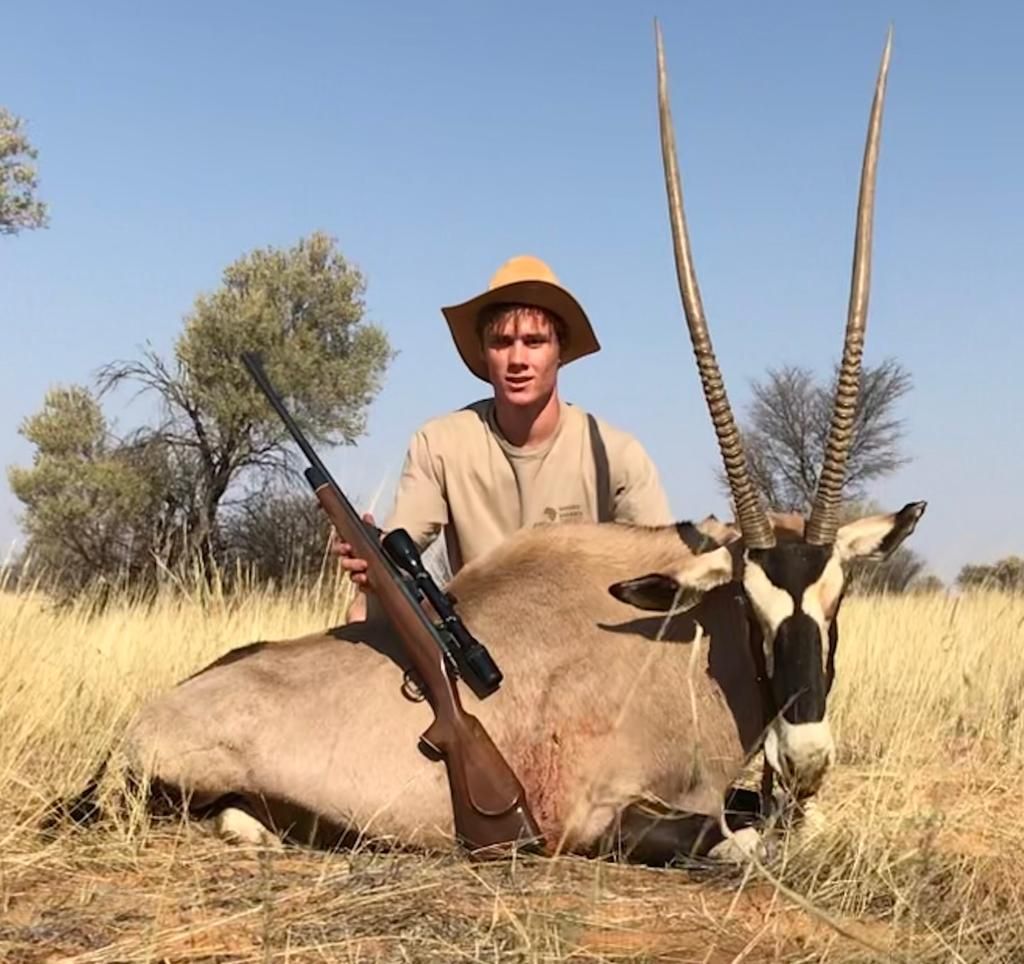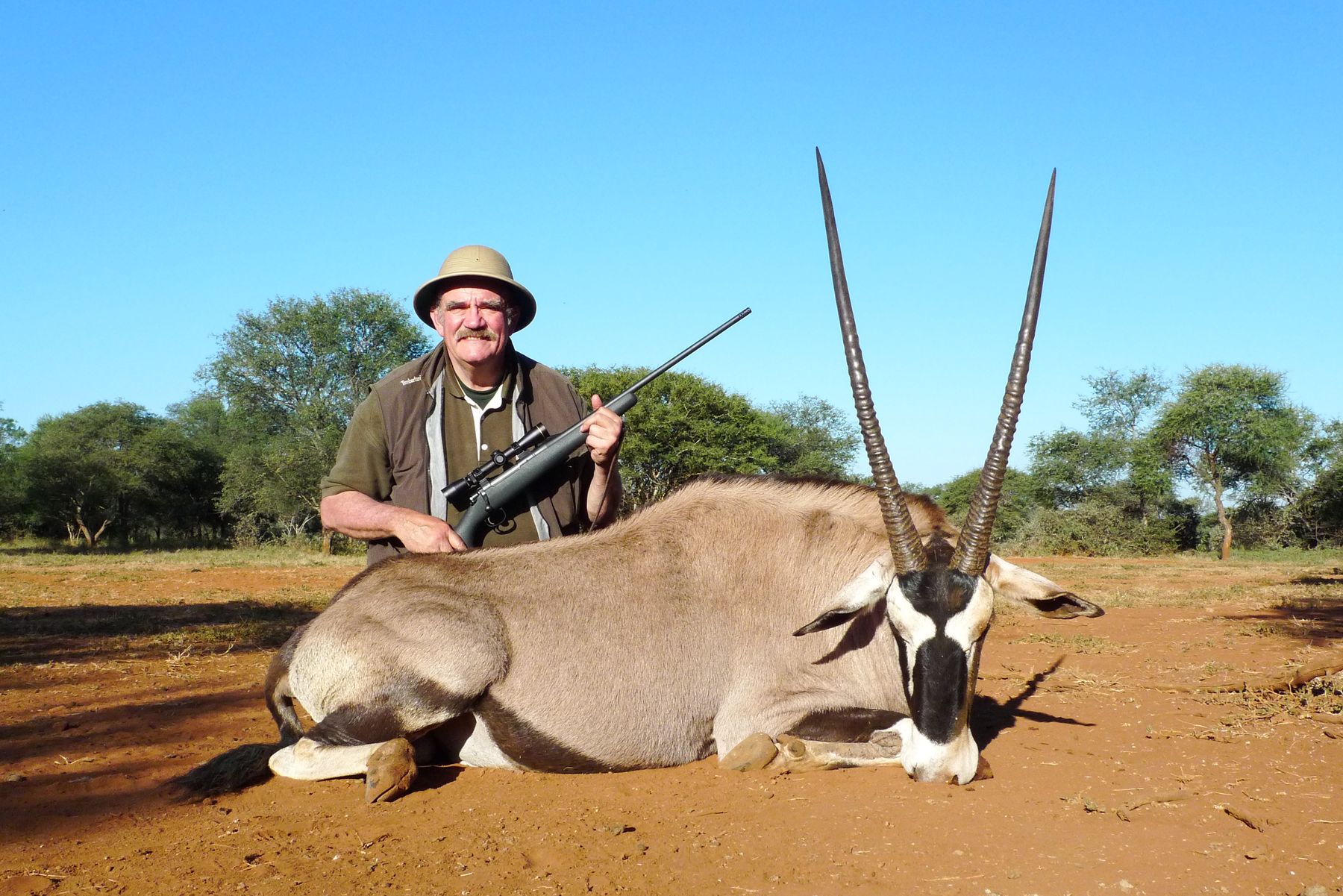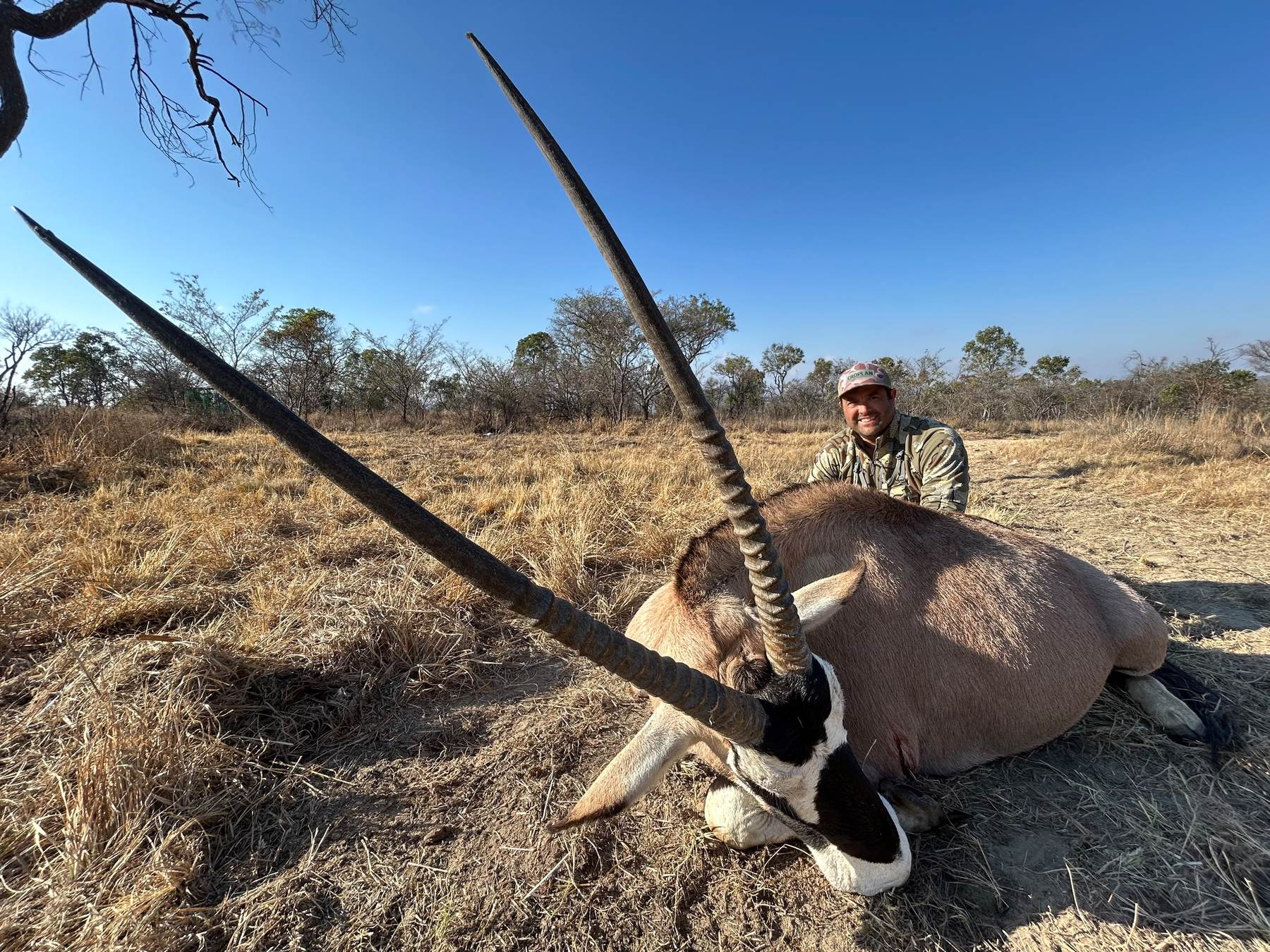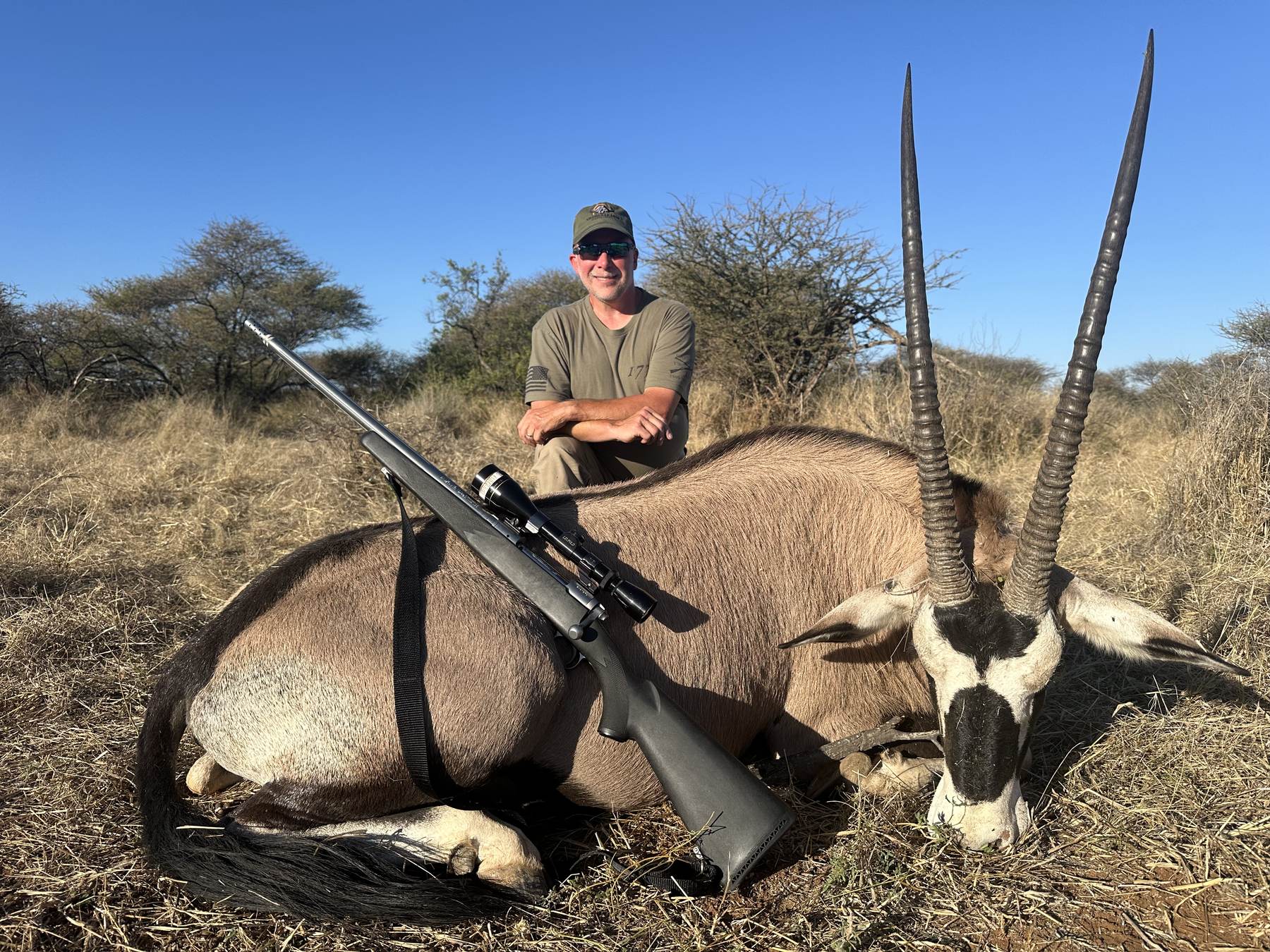
The animal
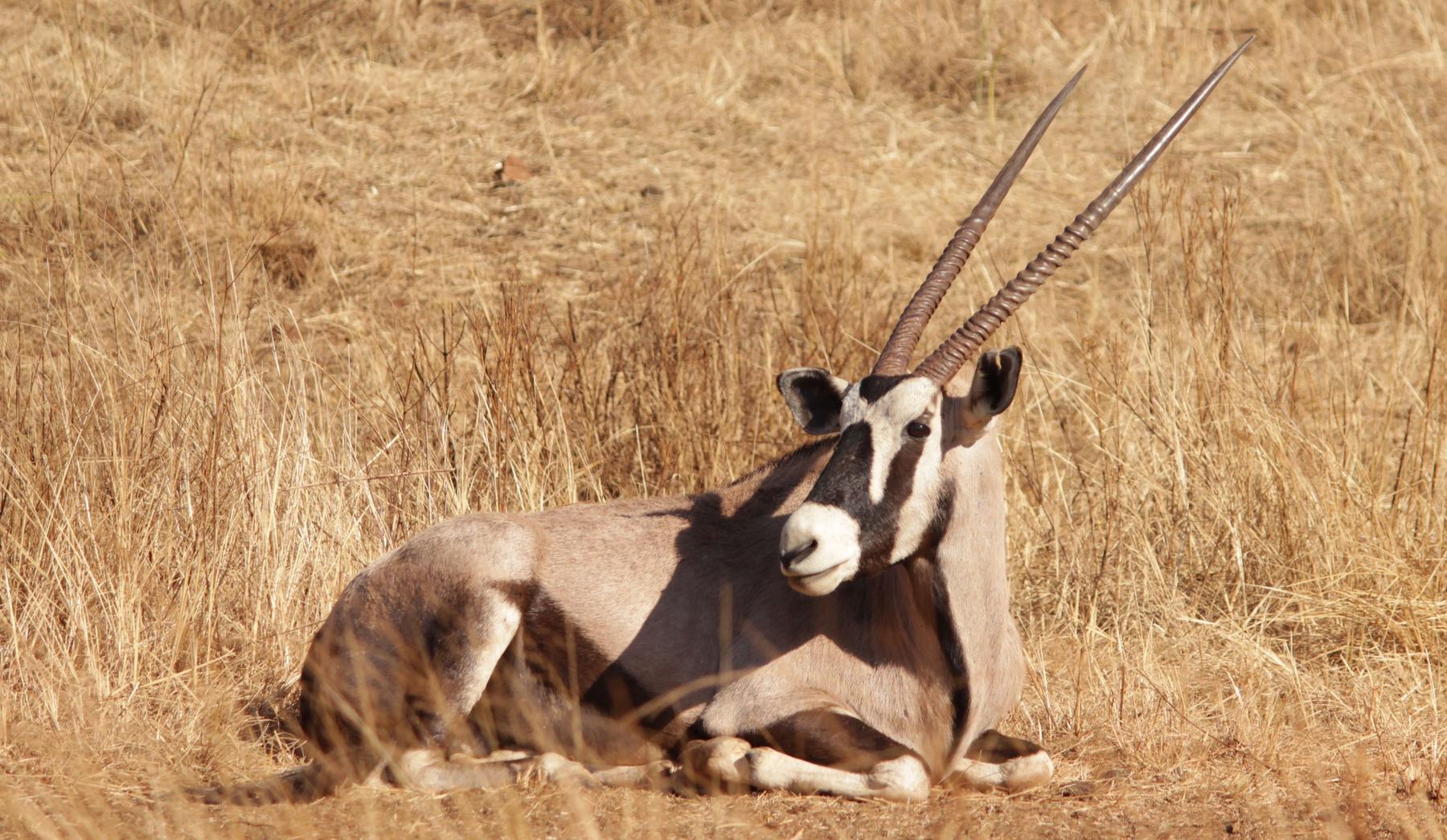
Gemsbok are built for country that kills other animals. They survive in the Kalahari on almost no free water, drawing moisture from tsamma melons and roots, and tolerating body temperatures that would be fatal to most mammals by shunting blood past the brain through a cooling network in the nose.
They are also the only antelope in Africa with a genuine reputation for killing lion. Those metre-long horns are used as spears, backwards, with real intent. A wounded gemsbok is approached from behind and with respect, and every professional hunter has a story.
Bull or cow
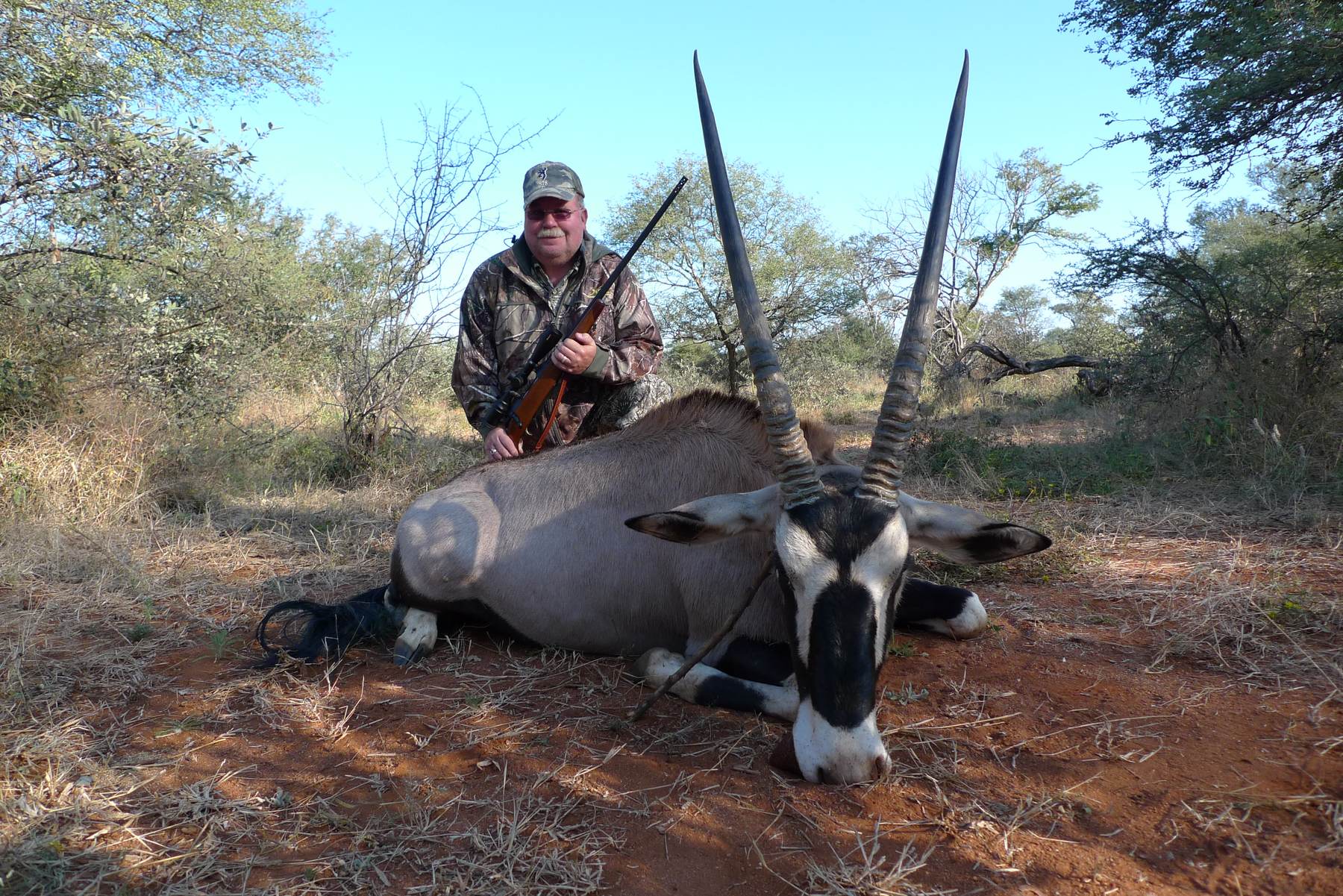
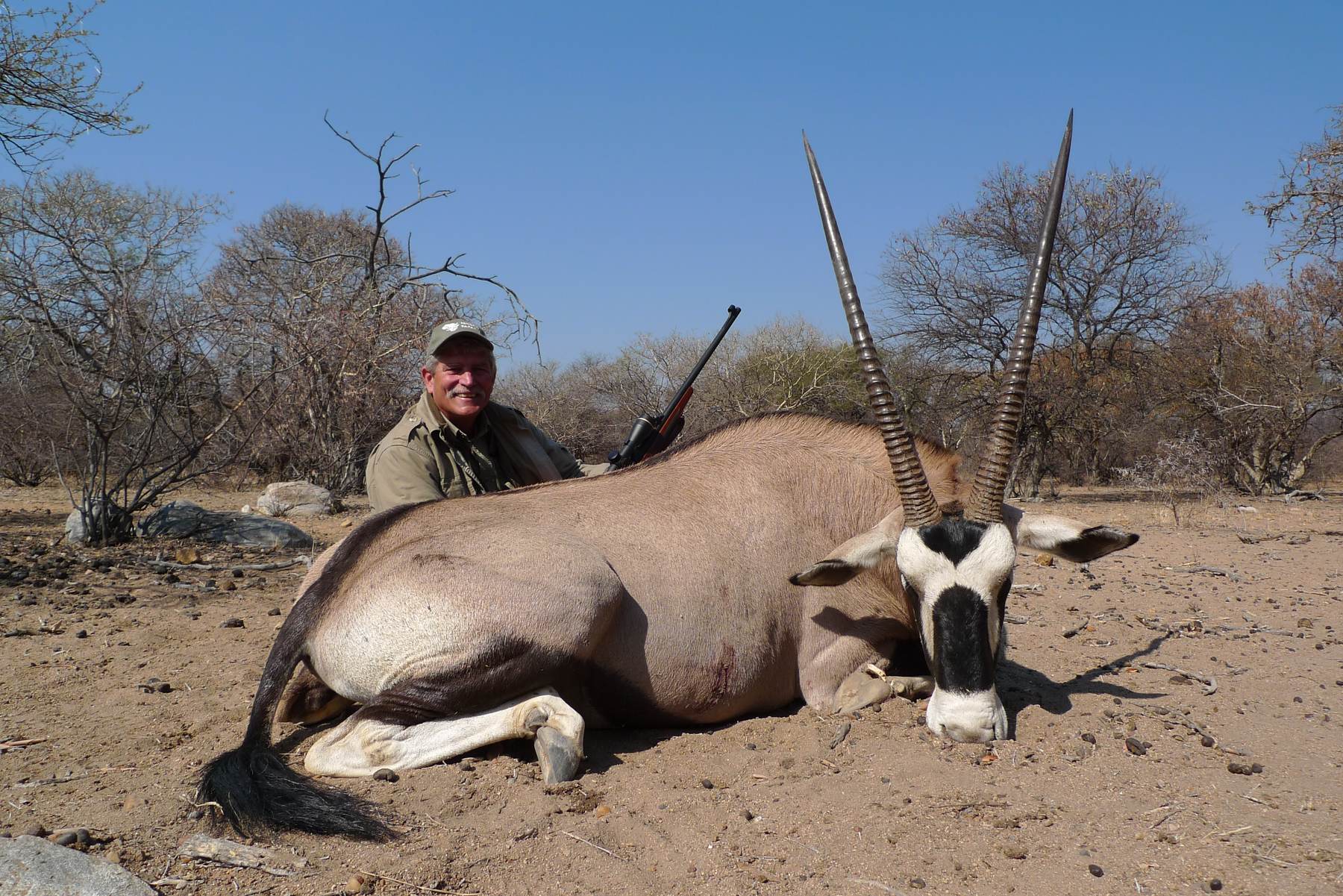
This catches more hunters out than any other African species. Gemsbok cows routinely carry longer horns than bulls — thinner, more delicate, often two or three inches longer. If you shoot the longest horns in a herd you will very likely shoot a cow.
The bull is identified by mass, not length. Heavy, thick bases with deep ringing extending well up the horn, and a horn that tapers noticeably from base to tip. Cows carry thin horns that stay near-parallel and often outlength the bulls.
Body shape helps too. Bulls are blockier through the neck and shoulders, with a squarer rump. In a herd, the bull is often standing slightly apart.
A 38-inch bull with bases you can barely close your hand around is the trophy. A 41-inch cow is not.
Where and how we hunt them
We take gemsbok in the drier open parts of our South African ground.
The hunting is open-country spot-and-stalk, which is unusual for Africa and closer to what a North American hunter will recognise. You glass from high ground or a vehicle, identify a herd, and then work out how to close on ground with very little cover.
That is the challenge. There is often nothing between you and the animal except distance and a slight fold in the terrain. Stalks are long, low and frequently end with a shot at 200 to 250 metres, which is further than most African shooting. A rifle you can shoot accurately at that range matters here more than on any other plains game species.
Gemsbok also tolerate heat far better than the hunters following them, and they remain active well into the morning when kudu and impala have long since gone into shade. The hunting day is longer as a result.
Rifle
A .270, .30-06 or .300 magnum with premium 165 to 180-grain bullets. Gemsbok are deceptively tough — dense, heavily muscled and stubborn about dying — so bullet construction matters. Take the shoulder.
Bow hunting
Excellent bow species. Gemsbok come to water in the dry months and blinds over waterholes produce consistently from August to October. Sixty-five pounds of draw weight upward. As with rifle, be careful about the follow-up.
On a species list
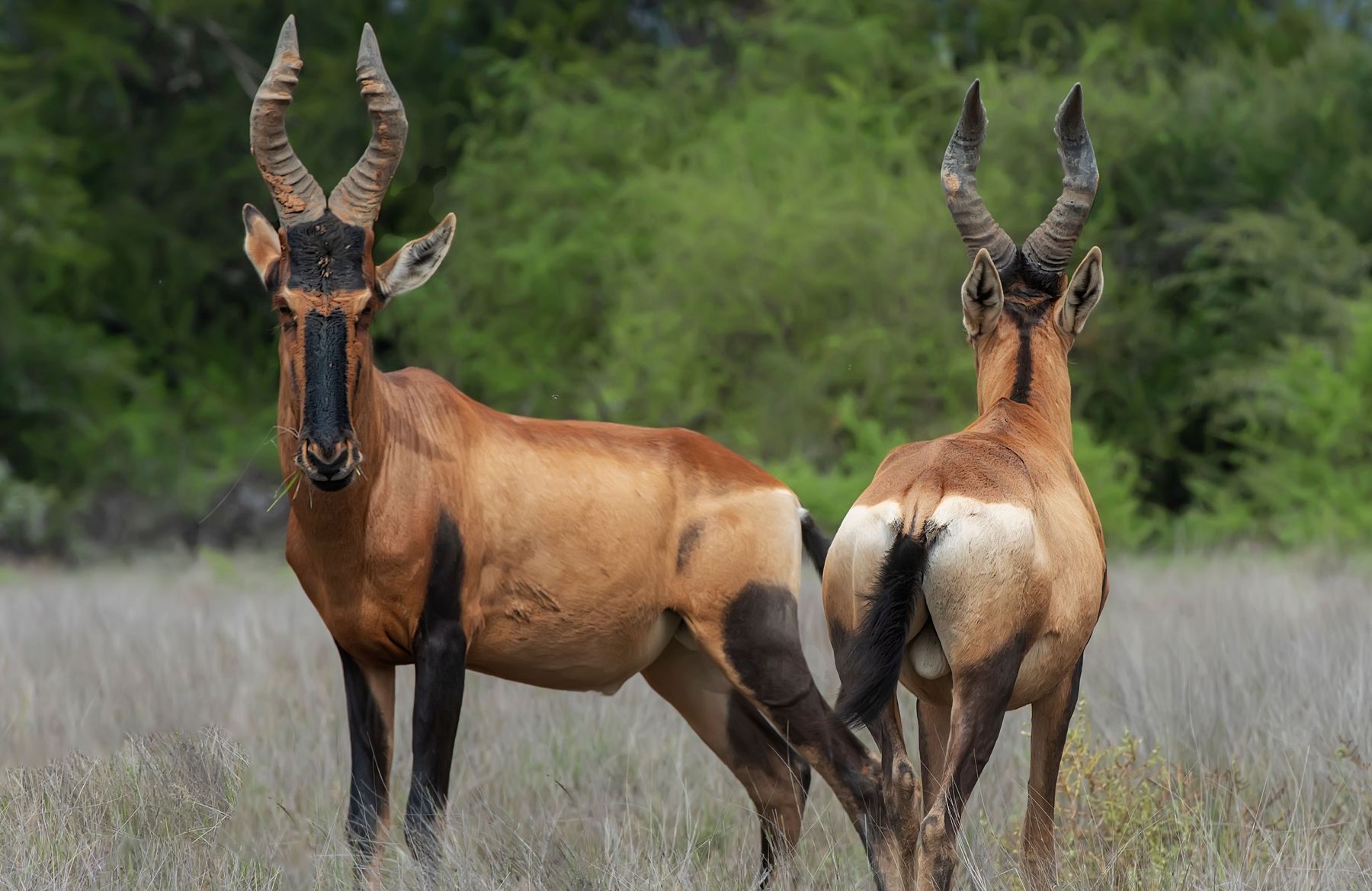
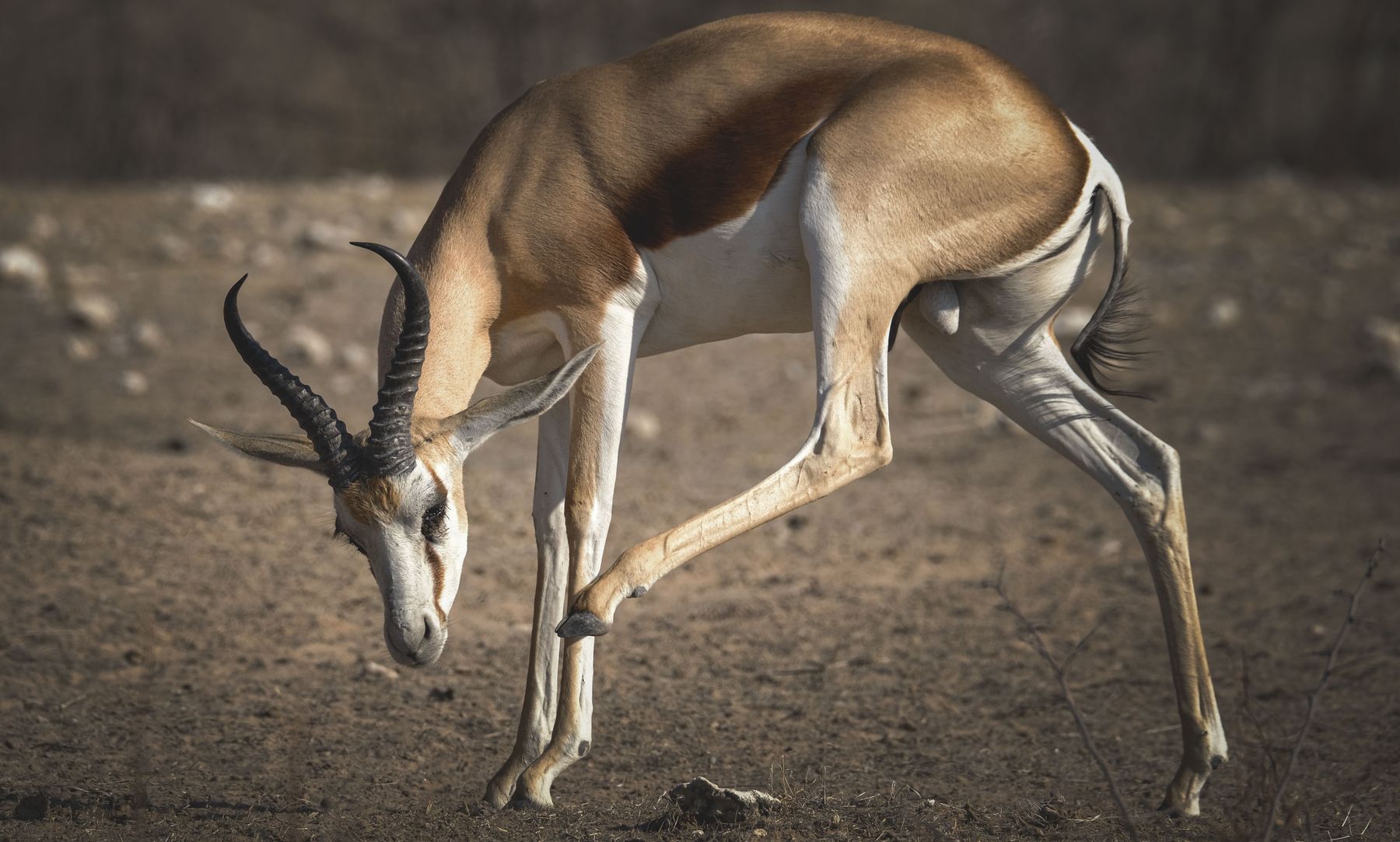
Gemsbok combine naturally with red hartebeest, springbok, blesbok and black wildebeest on a drier-country plains game safari, which is a noticeably different trip from the bushveld hunting further north. Several clients do both on one visit.