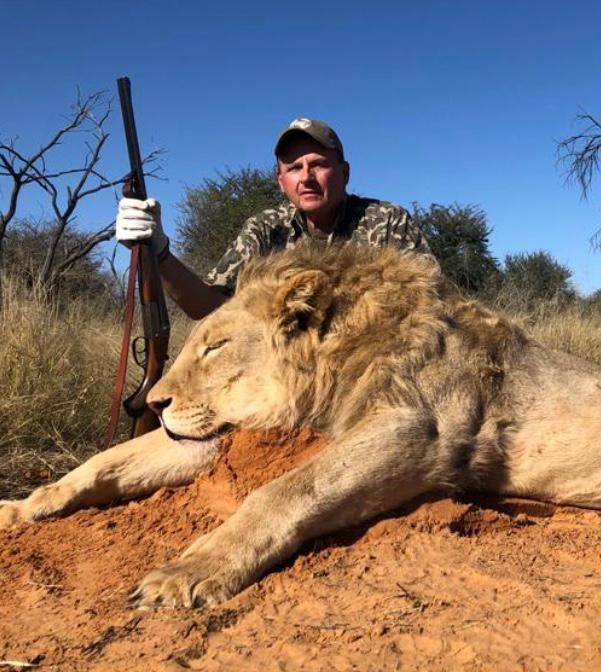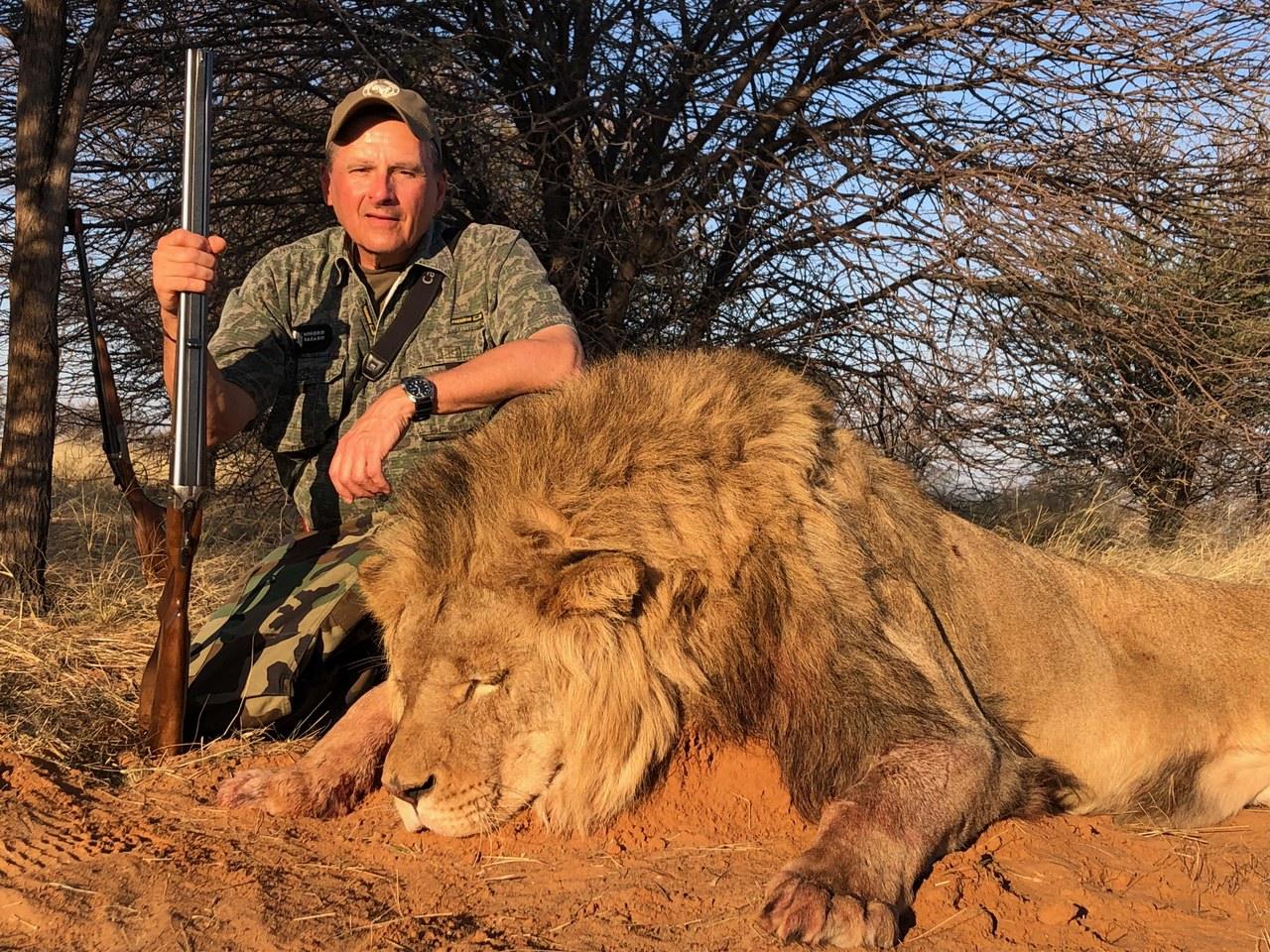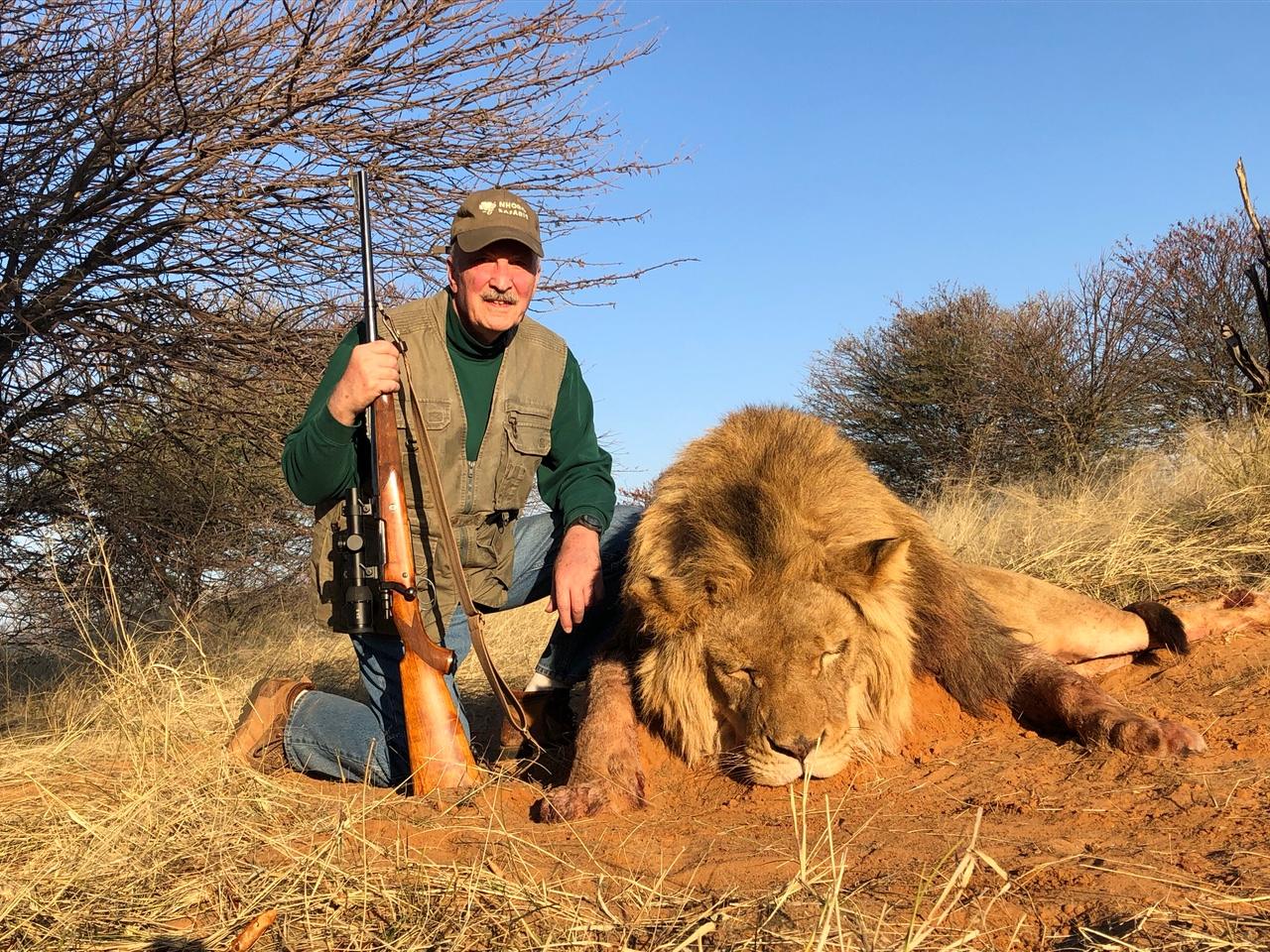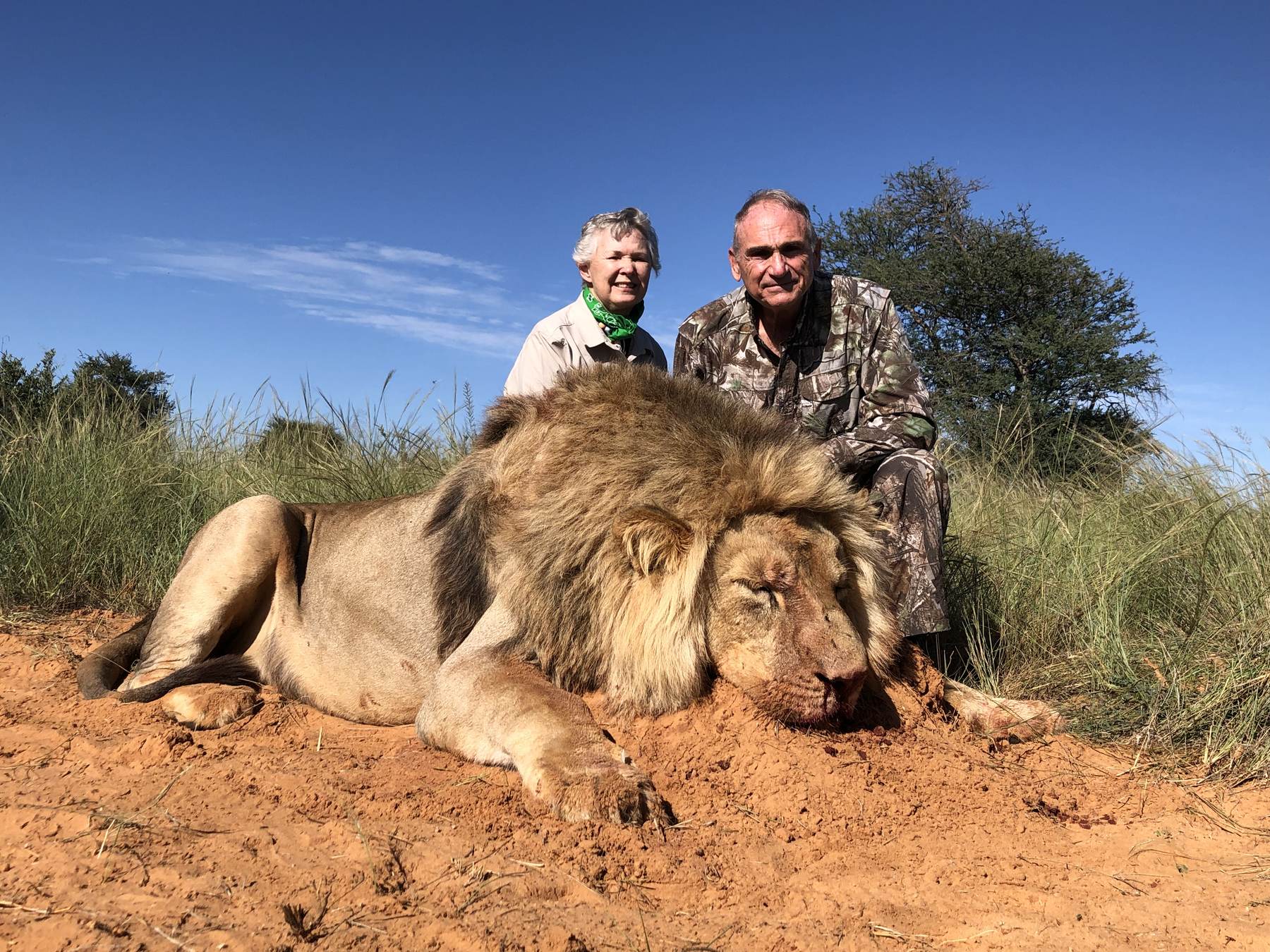
Before anything else
We do not hunt captive-bred lion. Not on request, not at any price, not under any framing. Every lion we hunt is wild-born, free-ranging, and taken on a government quota in a concession where lion have always lived. If captive-bred lion is what you are looking for, we are the wrong outfit and we will tell you so.
Age is the whole conversation
Modern lion management across Southern and East Africa is built on one principle: take only males old enough that removing them does not destabilise a pride. A male of six years or older has bred, has probably already been displaced by a younger coalition, and his removal does not trigger the infanticide that follows when a pride male in his prime is taken.
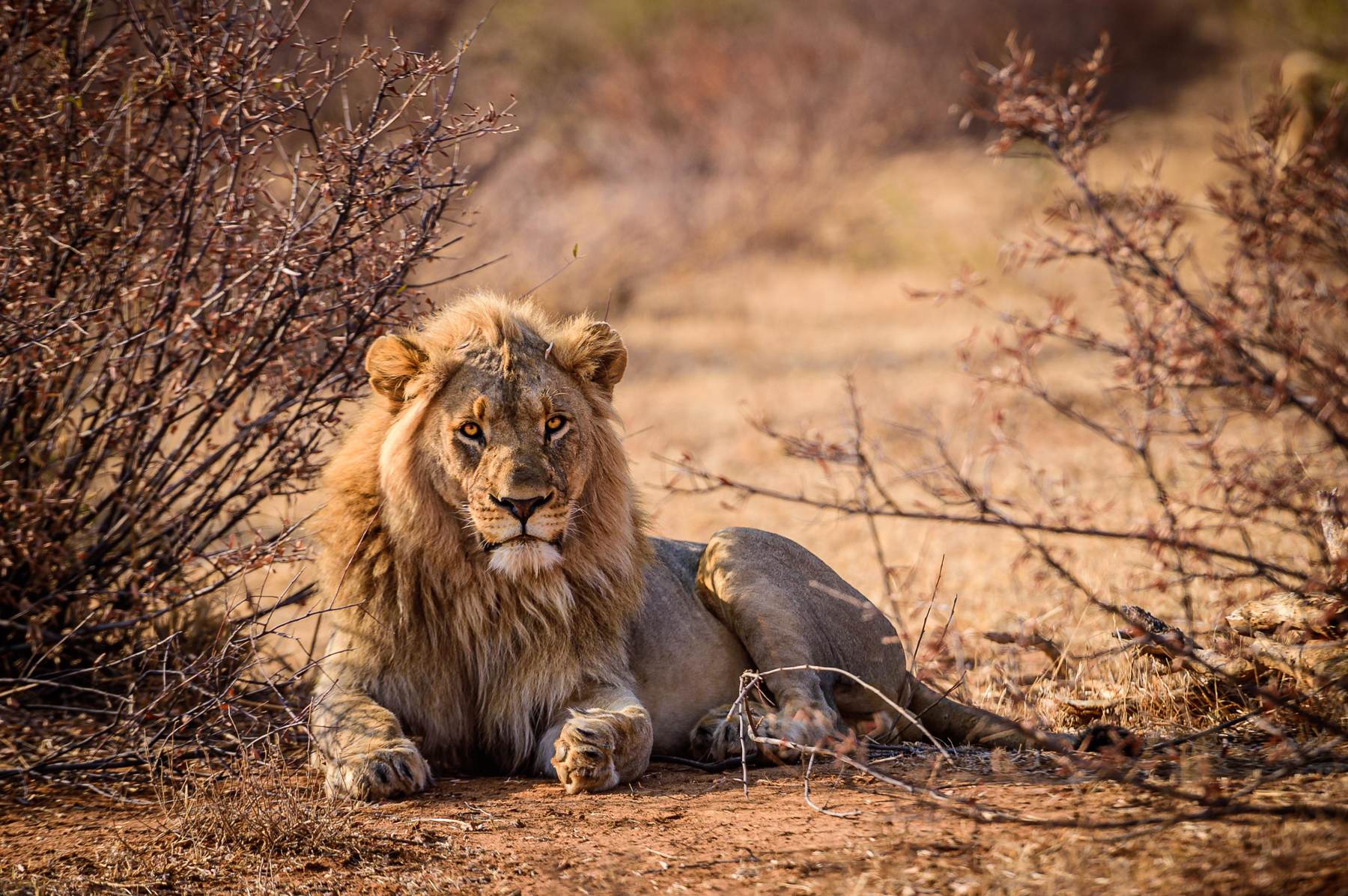
Your professional hunter judges age in the field on several markers together. Nose pigmentation is the most cited — the pink nose of a young male darkens with age and a substantially black nose suggests six years or more, though it is an indicator rather than a certainty. Tooth wear and yellowing, the depth of the facial scarring, the sag of the belly, and the overall heaviness through the shoulders all feed into the judgement.
What does not tell you age is the mane. Mane development is driven by genetics, temperature and testosterone, and a magnificent seven-year-old in cool miombo may carry far more hair than an eight-year-old in hot lowveld. Clients who arrive fixated on mane size are frequently talked out of a legal old male and into disappointment.
The hunt
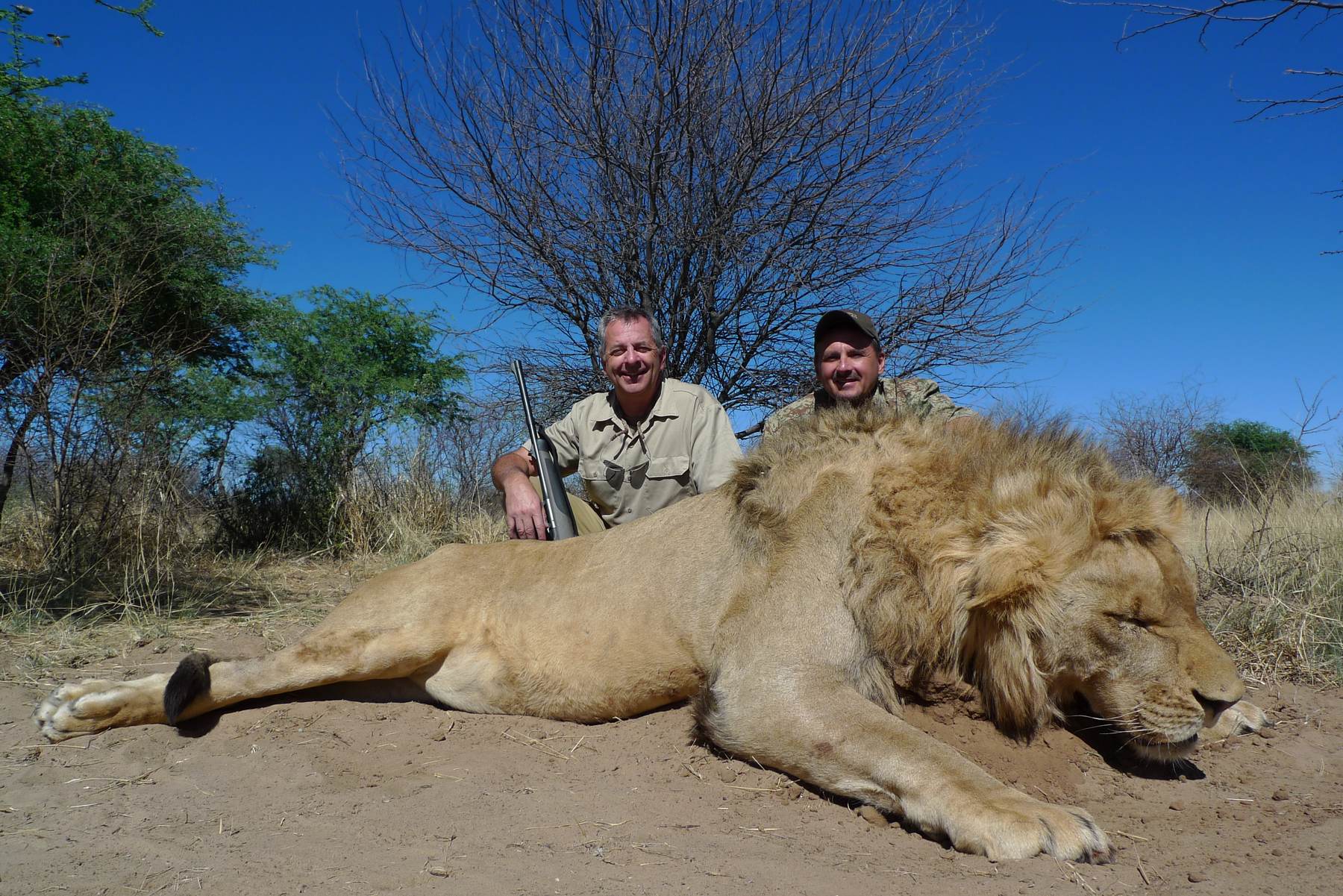
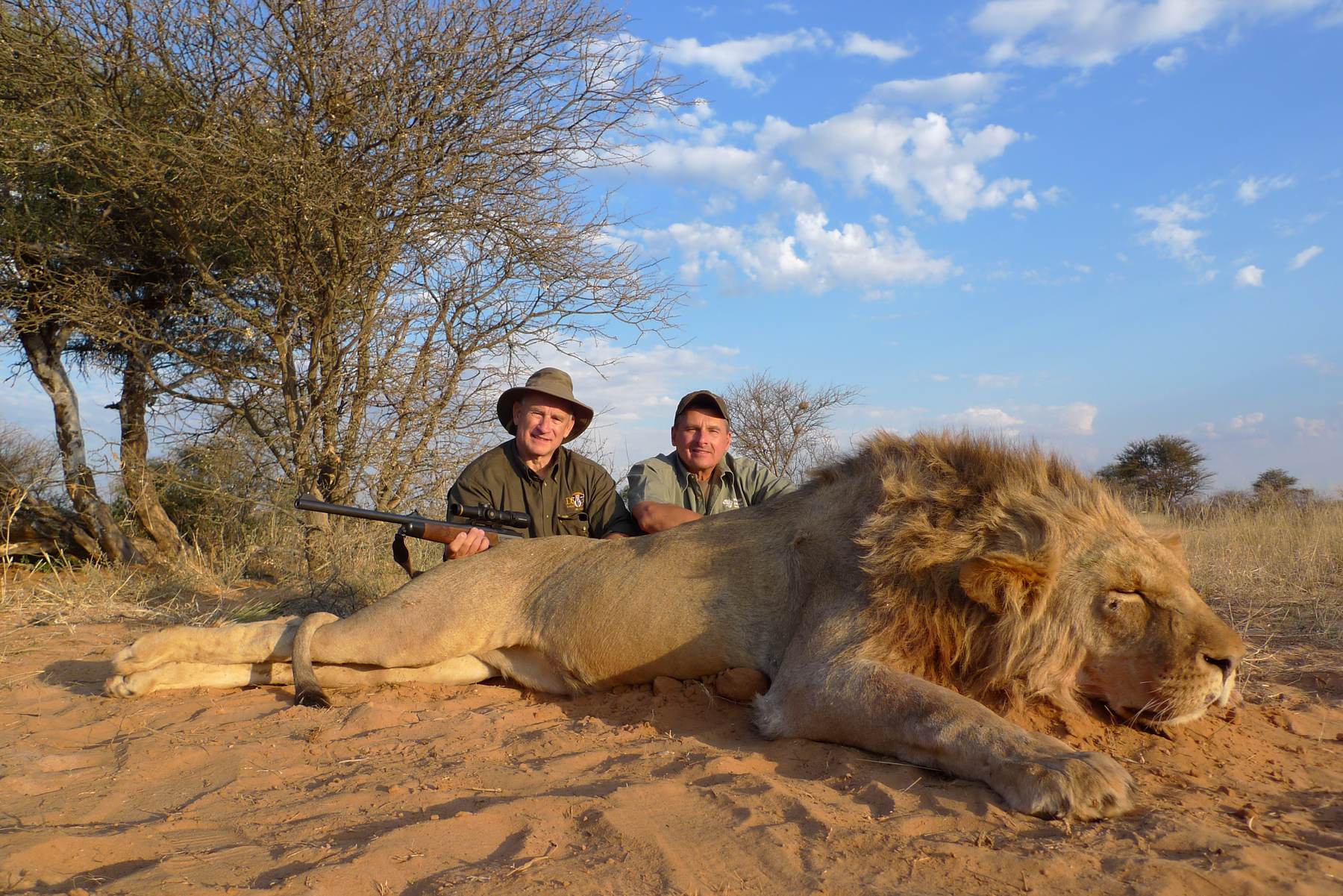
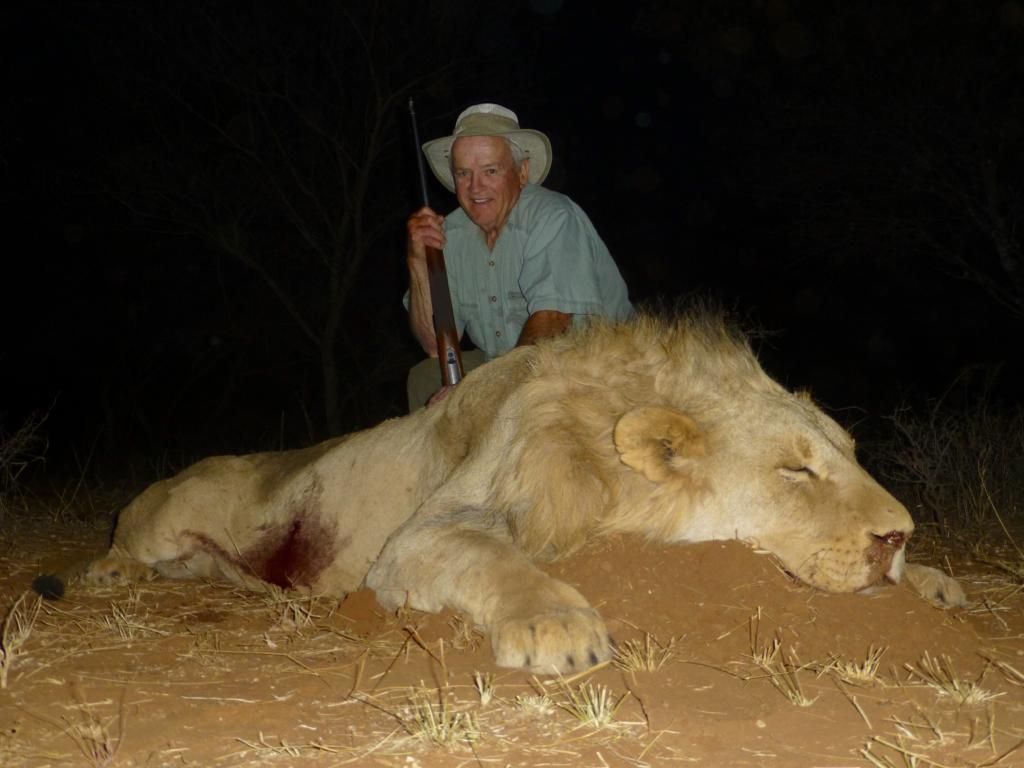
Lion are hunted over bait, and the work starts long before you see one. Baits are hung in likely areas — usually zebra, buffalo or hippo, depending on what is available on quota — and then checked daily. Tracks around a bait are read to work out what fed, how many, and critically whether a mature male is among them.
When the right cat is feeding, a blind goes up. Then you sit. Sometimes at last light, sometimes through the night, sometimes for a week of evenings in a row while a male that has been feeding at two in the morning refuses to come in before dark.
This is the least physically demanding of our dangerous game hunts and by a distance the most mentally demanding. It is hours of stillness broken by a few seconds that require complete composure.
Rifle and shot
.375 H&H is the floor and many clients bring .416. Shots from a blind are typically inside sixty metres. Use premium expanding bullets rather than solids — you want energy dumped into the chest cavity, not a clean hole through it.
Shot placement is the whole thing. A wounded lion going into long grass is the most serious situation that occurs on any African safari, and it is followed up on foot, in a line, by people who have done it before. Your job in that moment is to do exactly what you are told, immediately.
Practicalities
Our lion hunting takes place in Zimbabwe. The exact area is set by the permit — we apply, and the quota comes back allocated to a particular block, so the ground is confirmed once the permit is issued. Quota is small and allocated annually, and lion is among the most expensive hunts we offer once licence fees and a long daily rate are added together.
Lion is CITES-listed and import rules have changed substantially in several countries over the last decade. Confirm your own country’s position before you book, not after. See our firearms and CITES notice.