The animal
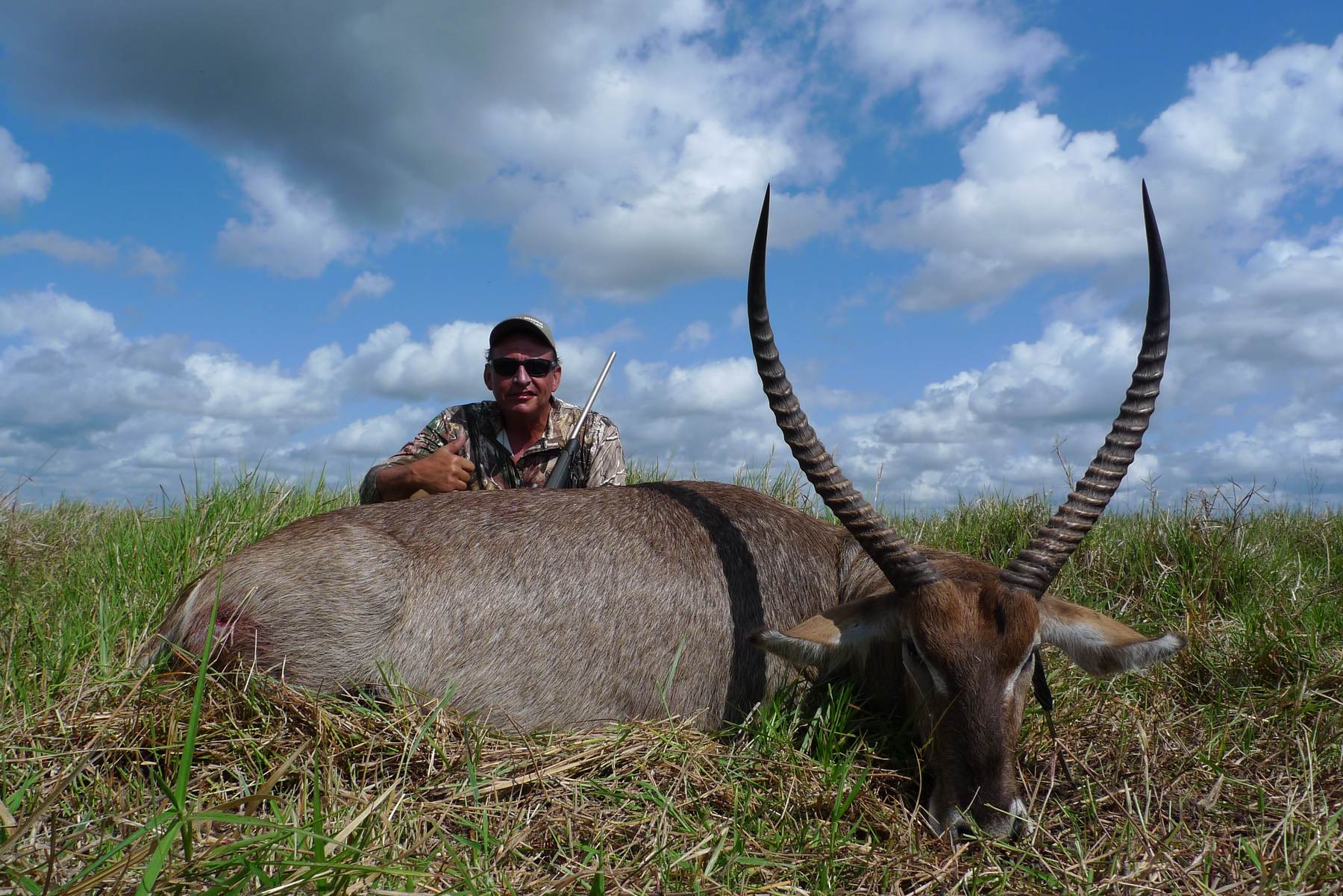
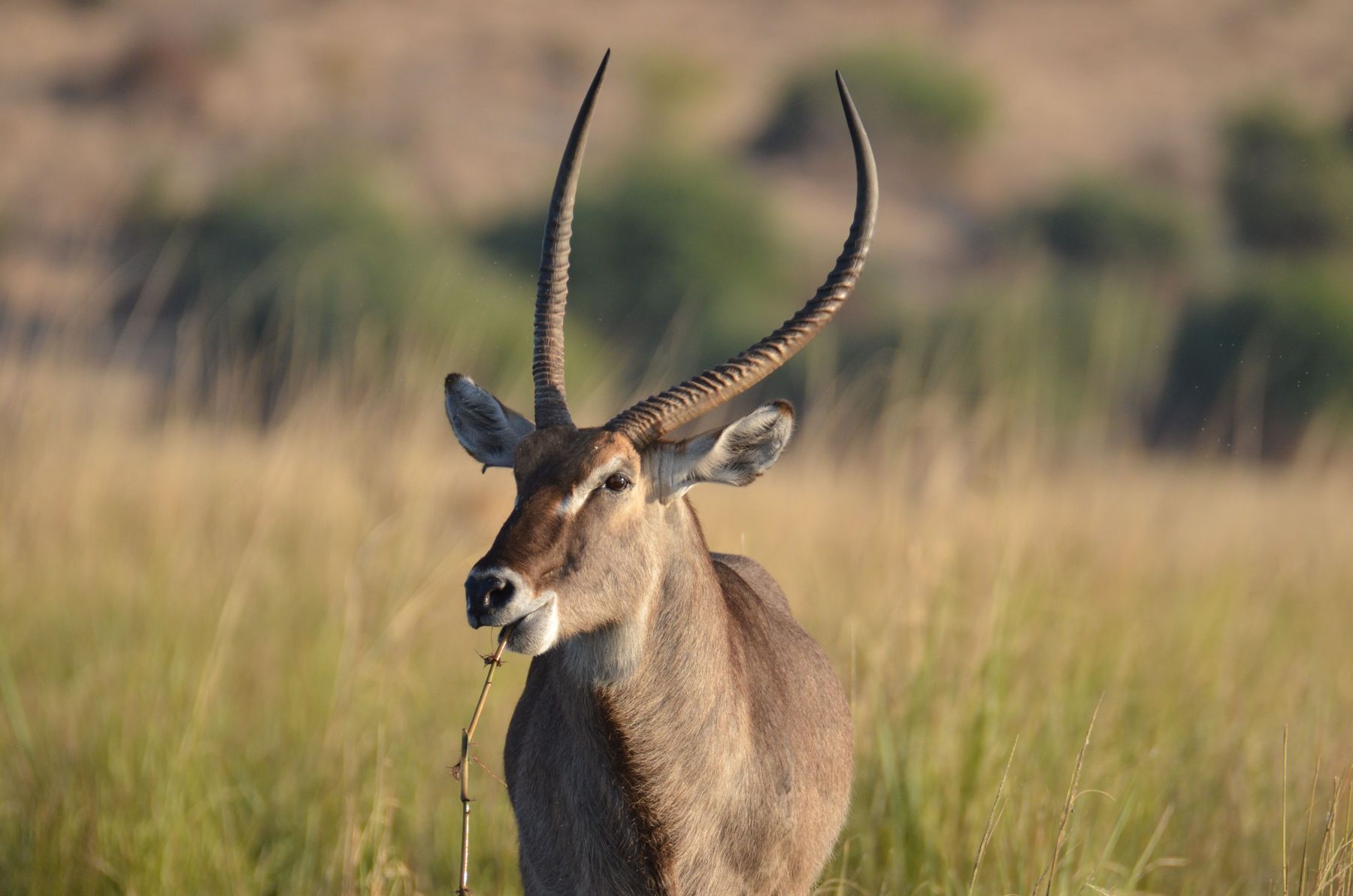
Waterbuck are impossible to mistake for anything else. Heavy-set, shaggy-coated, grey-brown, with a coarse mane along the neck and — on the common waterbuck — a white ring around the rump that looks like the animal reversed onto a freshly painted toilet seat. Hunters have been making that joke for a century and nobody has come up with a better description.
They are permanently tied to water and rarely move more than a few kilometres from it. That makes them among the easiest animals in Africa to locate and puts them on almost every plains game list.
Common and Defassa
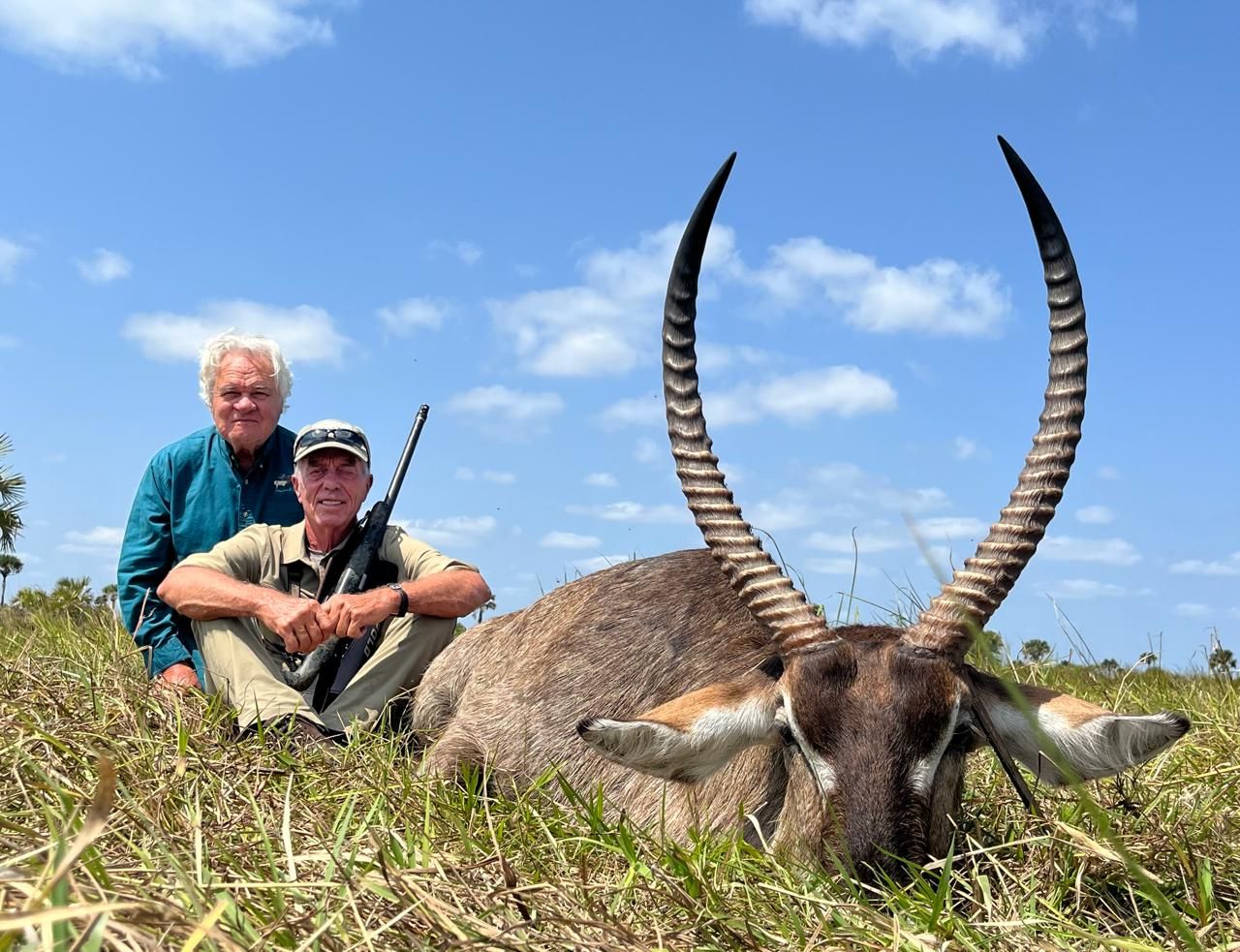
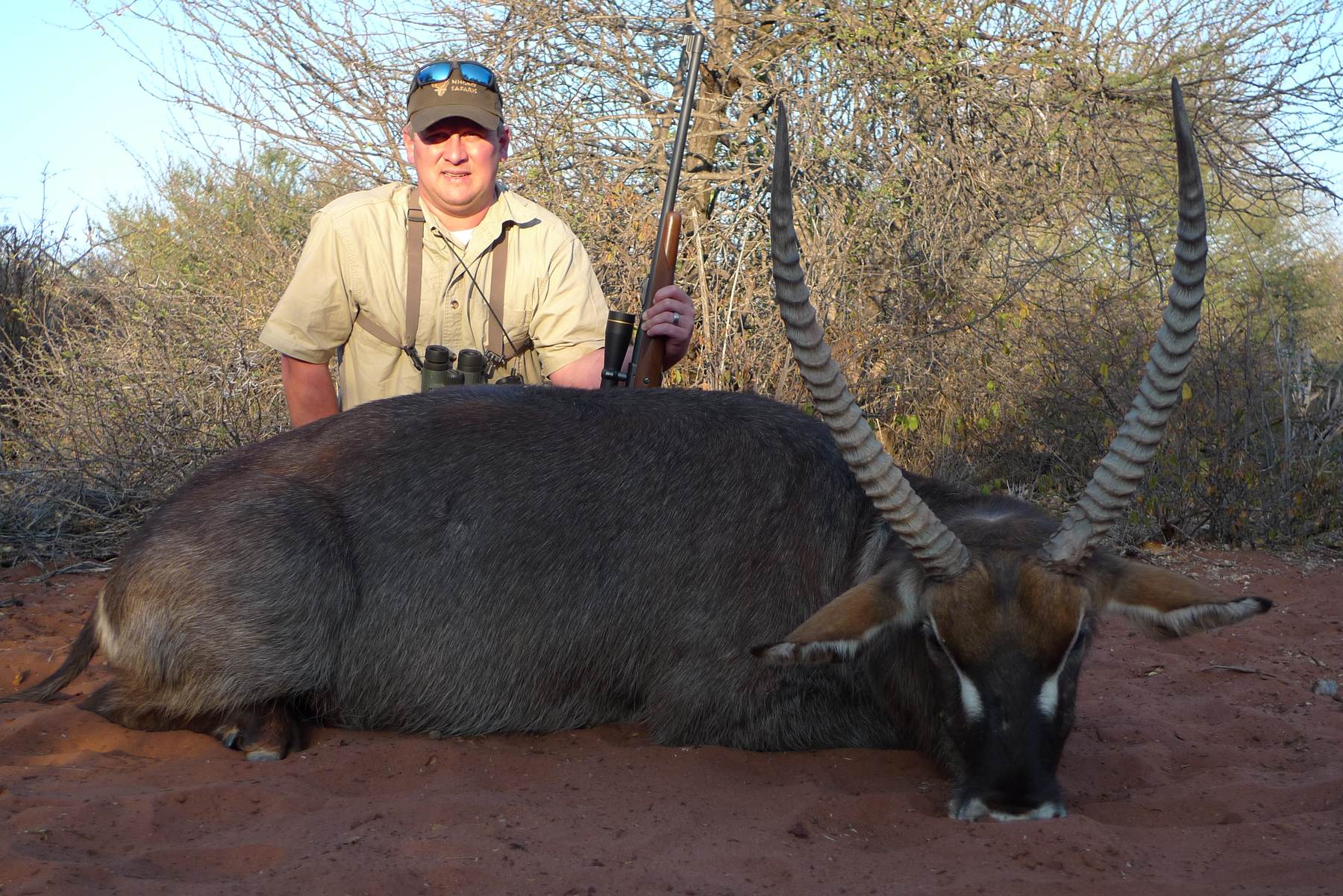
Two forms are hunted across our concessions. The common waterbuck carries the complete white ring on the rump and is what we hunt in both South Africa and Mozambique. The Delta in particular produces exceptional animals — bulls regularly go over 30 inches there, which is outstanding anywhere in Africa.
Judging a bull
Straightforward, because cows carry no horns at all. Any horned waterbuck is a bull.
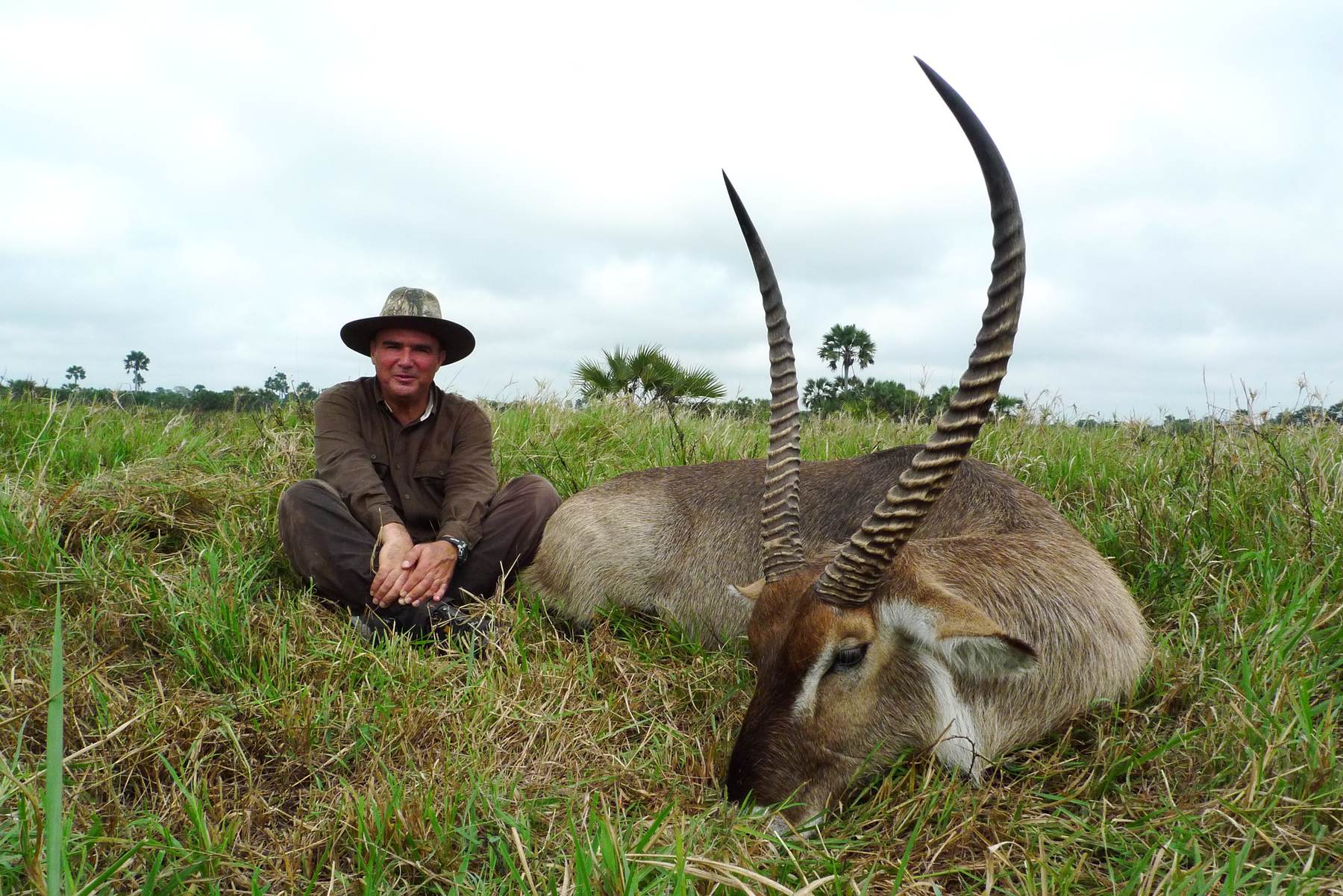
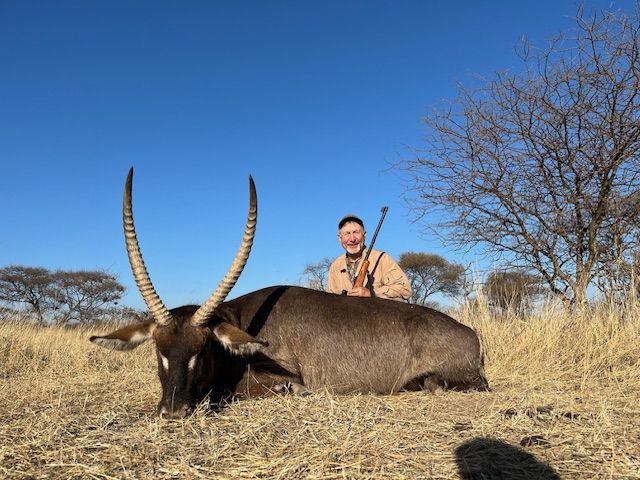
For the trophy, look for length and for the forward sweep of the tips. Waterbuck horns curve back from the head, then turn up and forward, and a mature bull shows a pronounced forward hook. Deep ringing should carry most of the way up the horn, and the bases should be heavy.
A bull of 28 to 30 inches is a good representative animal in most of our areas. Past 32 inches is genuinely exceptional. Old bulls also carry a heavier neck, a shaggier coat and often a good deal of scarring.
Notoriously hard to kill
Waterbuck have a reputation among professional hunters for absorbing punishment, and it is deserved. They are heavy, densely muscled, and remarkably willing to keep moving on a hit that would drop a kudu.
Bring a .30-06 minimum, and a .300 magnum with premium 180-grain bullets is better. Take the shoulder rather than a lung shot behind it, and break bone. Then stay on the sticks — a second shot into a departing waterbuck is often the difference between a recovery and a long afternoon in riverine bush.
The hunt
Waterbuck are found along rivers, floodplain edges, dams and permanent pans. In the dry season they concentrate along whatever water is left, which makes locating them predictable.
The hunting is glassing and stalking through riverine cover, generally in the early morning and late afternoon. Shots are usually 80 to 150 metres, frequently through gaps in vegetation. Because they are tied to water, a waterbuck is often taken while hunting something else entirely.
A note on the meat
Waterbuck meat carries a strong, musky flavour from the oily secretion in their coat, and it is generally the least popular game meat in camp. This does not affect the trophy in any way, and the meat is still used — but nobody in camp will be disappointed if you take a kudu instead the next day.
Bow hunting
Very good bow species, precisely because of the water dependence. Blinds over waterholes and river crossings produce reliably in the dry months. Sixty pounds of draw weight upward, and as with rifle, expect them to run further than you think.