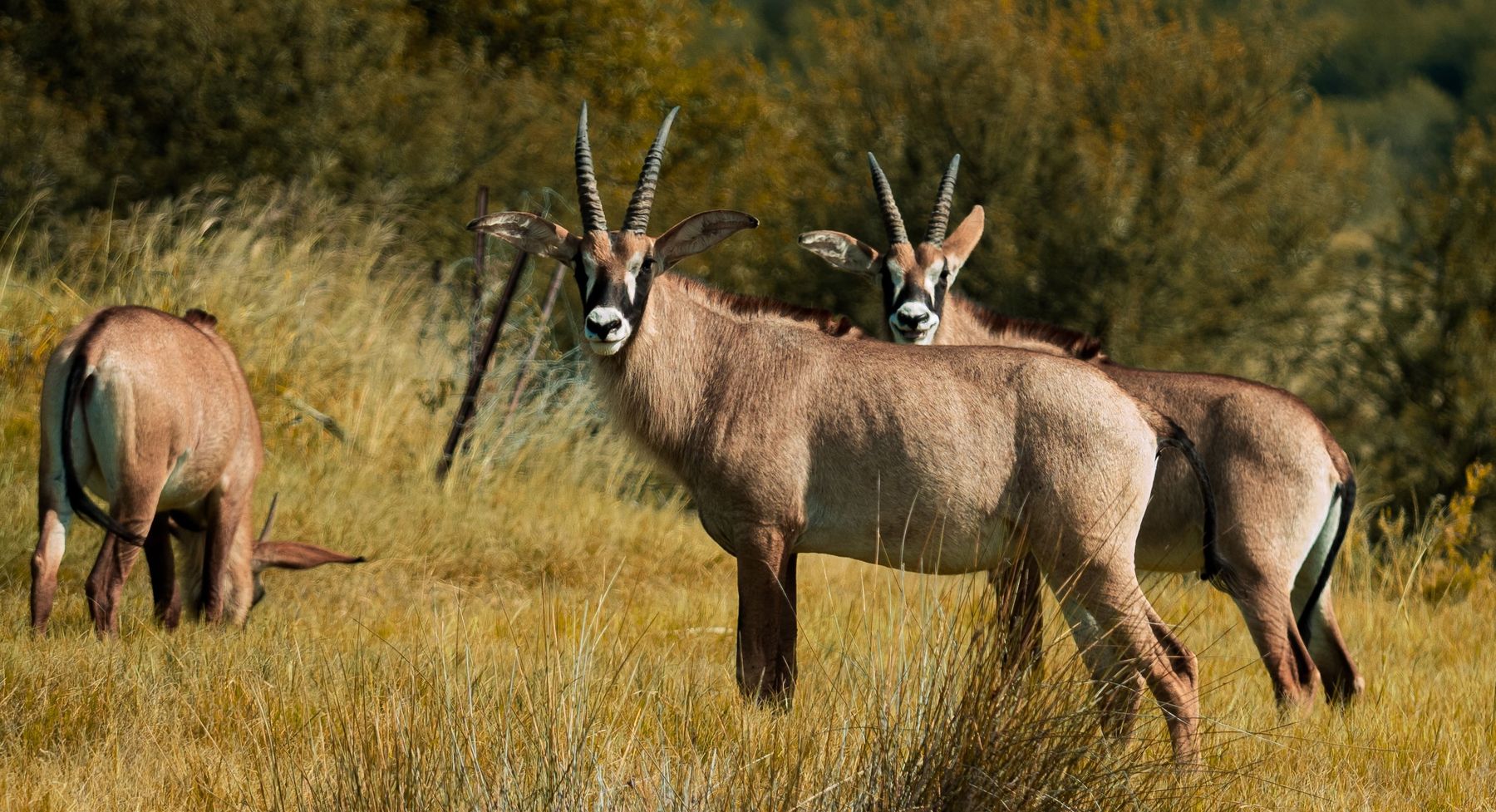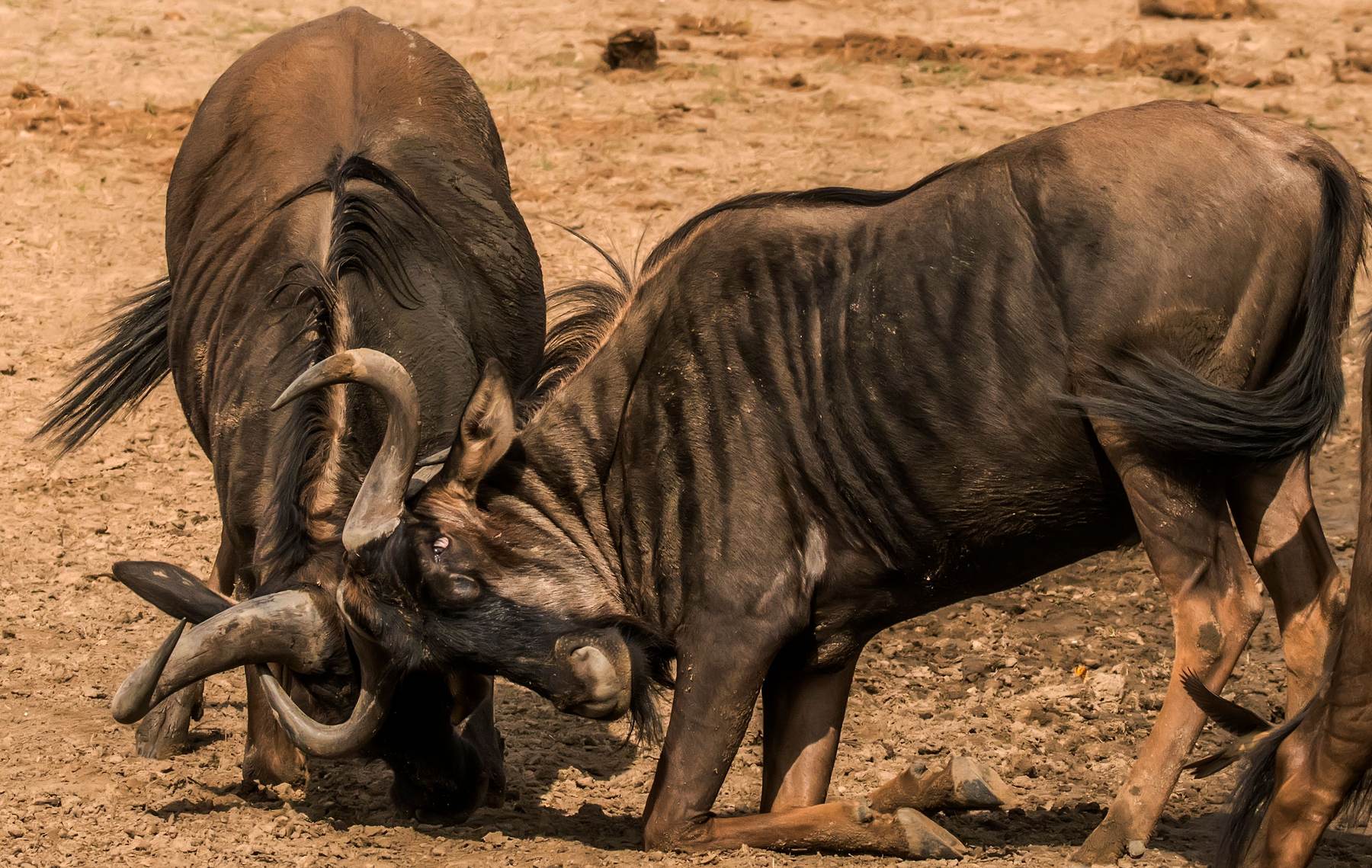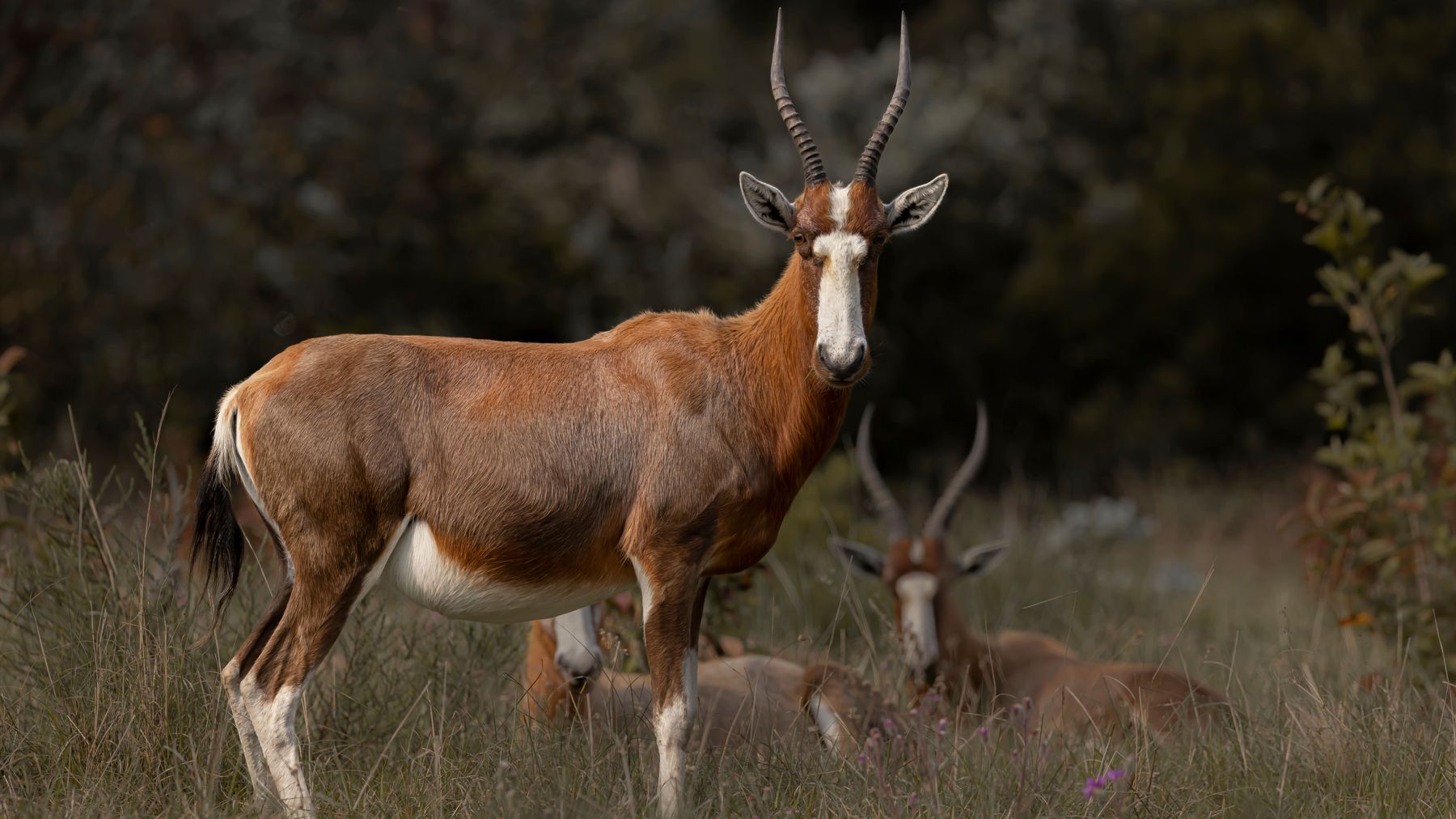
Permit first, hunt second
Start here, because it governs everything else.
Tsessebe are one of South Africa’s rarer antelope and they are protected. Hunting one takes the correct permit, issued in advance, for a named animal on named ground. It cannot be arranged once you are in camp, and no amount of goodwill at our end changes that.
If you want a tsessebe, raise it the first time you contact us. We will tell you honestly whether it can be arranged for your dates, and often the answer is no. We would far rather disappoint you in an email in February than in a hunting car in July.
The animal
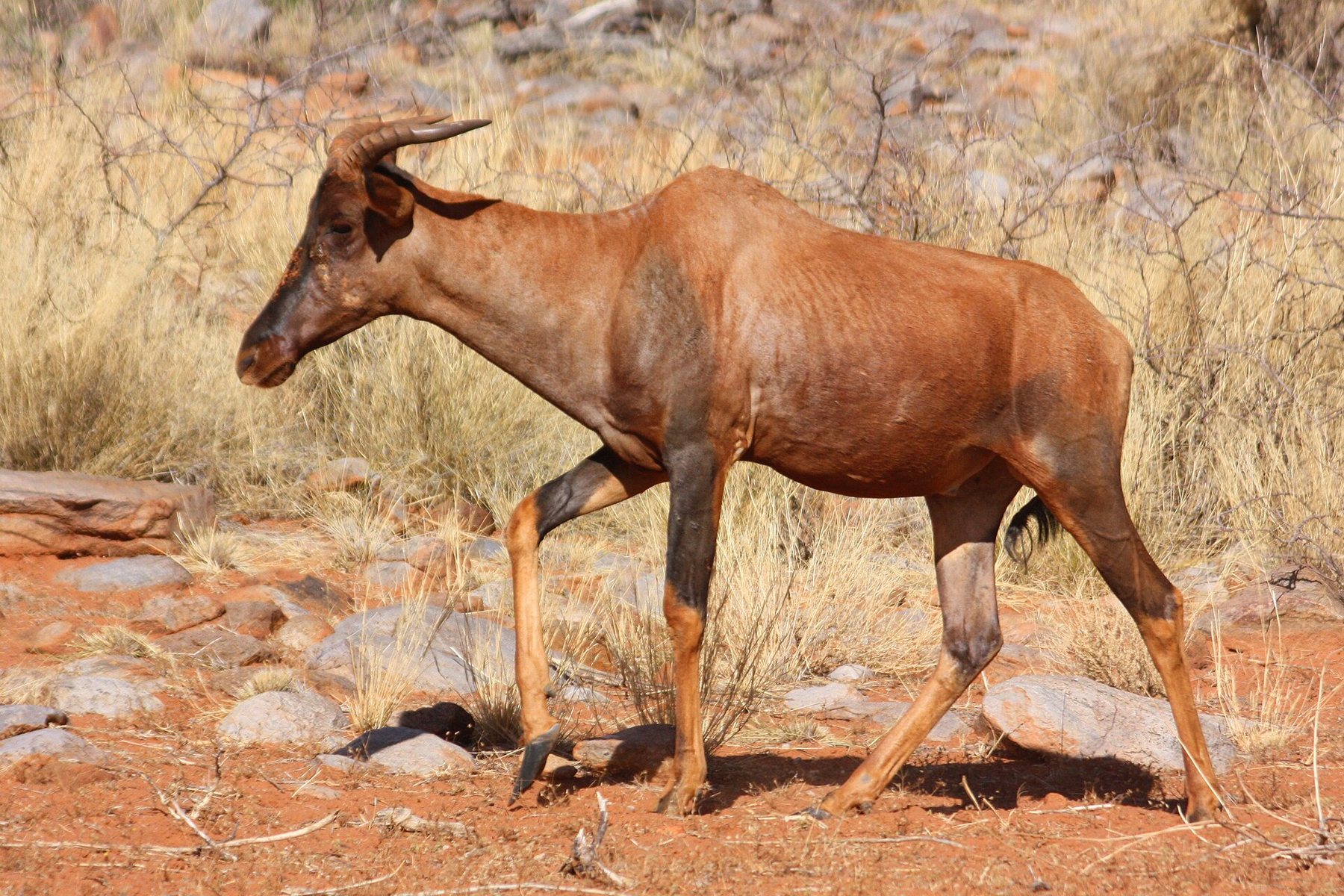
Put a tsessebe next to a hartebeest and you can see why the Afrikaans name is basterhartbees — the bastard hartebeest. Same high shoulders, same sloping back, same long narrow face carried low. It is a build that looks awkward standing still and makes complete sense the moment the animal moves.
The coat is the thing. A good bull is a deep reddish-brown with a distinct purple sheen across the saddle that changes as the light moves over it, set against darker, almost blue-black patches on the face, the thighs and the upper forelegs, and tan on the lower legs. In flat midday light it is a brown antelope. In the first and last hour of the day it is one of the best-looking animals on the continent.
Both sexes carry horns — short, crescent-shaped and heavily ridged — so a bull is picked out by body and mass rather than by headgear. That catches people out.
The fastest thing out here
Tsessebe are generally reckoned the fastest antelope in Africa. Not the quickest off the mark, but the fastest over open ground and able to hold the pace for a long way.
What saves the hunter is that they are curious. A tsessebe will run three hundred metres, stop, turn, and look back at what disturbed it. That habit is the reason tsessebe get shot at all, and it is the reason you keep the rifle up rather than relaxing when one runs.
Territorial bulls also stand on termite mounds and other high ground to watch their patch. A lone animal skylined on a mound at distance is very often a mature bull.
How the hunt runs
Open country, long glassing, long shots.
Tsessebe want short grass with water nearby — the edges of vleis, floodplain margins, open grassland in lightly wooded savanna. They do not use thick bush, which makes them easier to find and much harder to approach. There is usually nothing between you and them.
Expect to spend a morning glassing, pick out a bull among cows that look much the same, and then work out a stalk across ground that offers very little. Expect to be seen at least once. Expect the shot to be longer than you wanted.
Rifle and shot placement
A .270, 7mm or .30-06 with a premium expanding bullet.
They are roughly blue wildebeest weight and carry lead in the same determined way, so place it on the shoulder rather than back in the lungs. A tsessebe hit soft will run a very long way across open ground, and there is nothing fast enough on the property to catch it.
Practicalities
Book it early. The permit is the whole constraint. Raise it at the enquiry stage and we will tell you whether your dates work.
Taxidermy. That purple sheen on the saddle is what makes the animal, and it is the first thing a poorly handled cape loses. Say before the shot whether you want a shoulder mount or a full mount so the skinners handle it accordingly.
Import rules differ by country. Check your own position before booking. See our firearms and CITES notice.