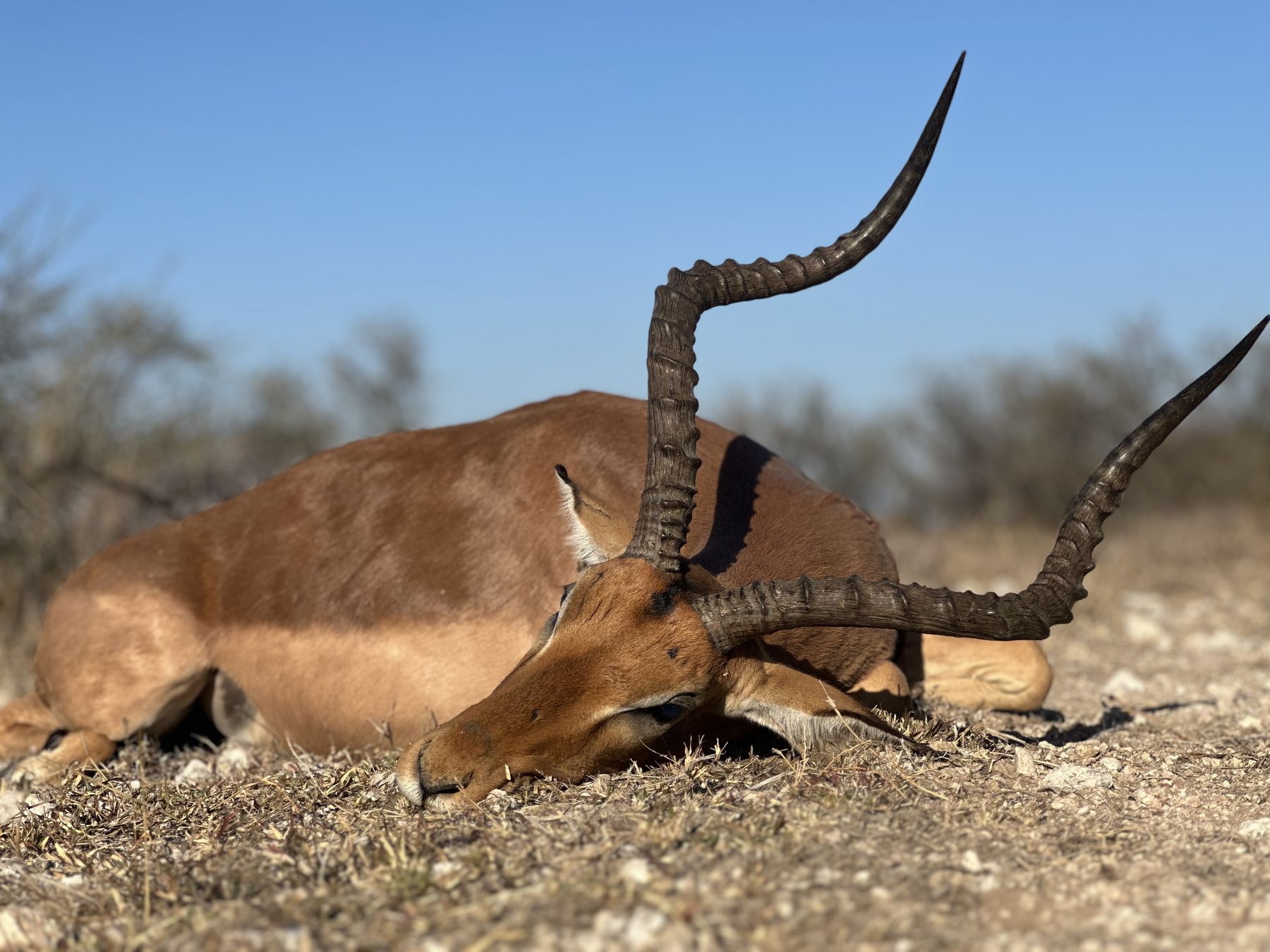
A hundred eyes
Impala are the most numerous antelope across most of our concessions and the cheapest animal on any species list, which leads first-time hunters to assume they are easy. They are not, and the reason is arithmetic.
A herd of a hundred and fifty impala has three hundred eyes, three hundred ears, and a hundred and fifty noses, all pointed in different directions. Getting inside a hundred metres of the one ram you want, in that, without a single animal noticing, is a genuine stalk. Most first-time hunters blow two or three approaches before they get one right.
They are also fast and extraordinarily agile — an alarmed impala clears three metres vertically and ten horizontally without apparent effort, and a herd exploding in every direction at once is deliberately confusing to a predator.
Judging a ram
Ewes carry no horns, so identification is simple. The trophy judgement is about shape and mass.
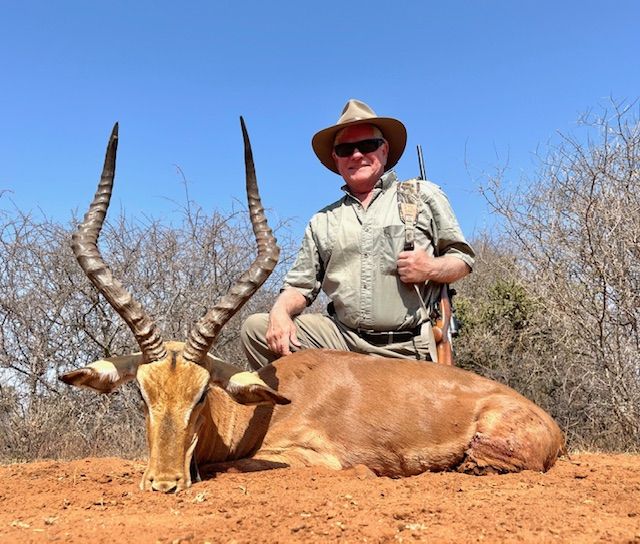
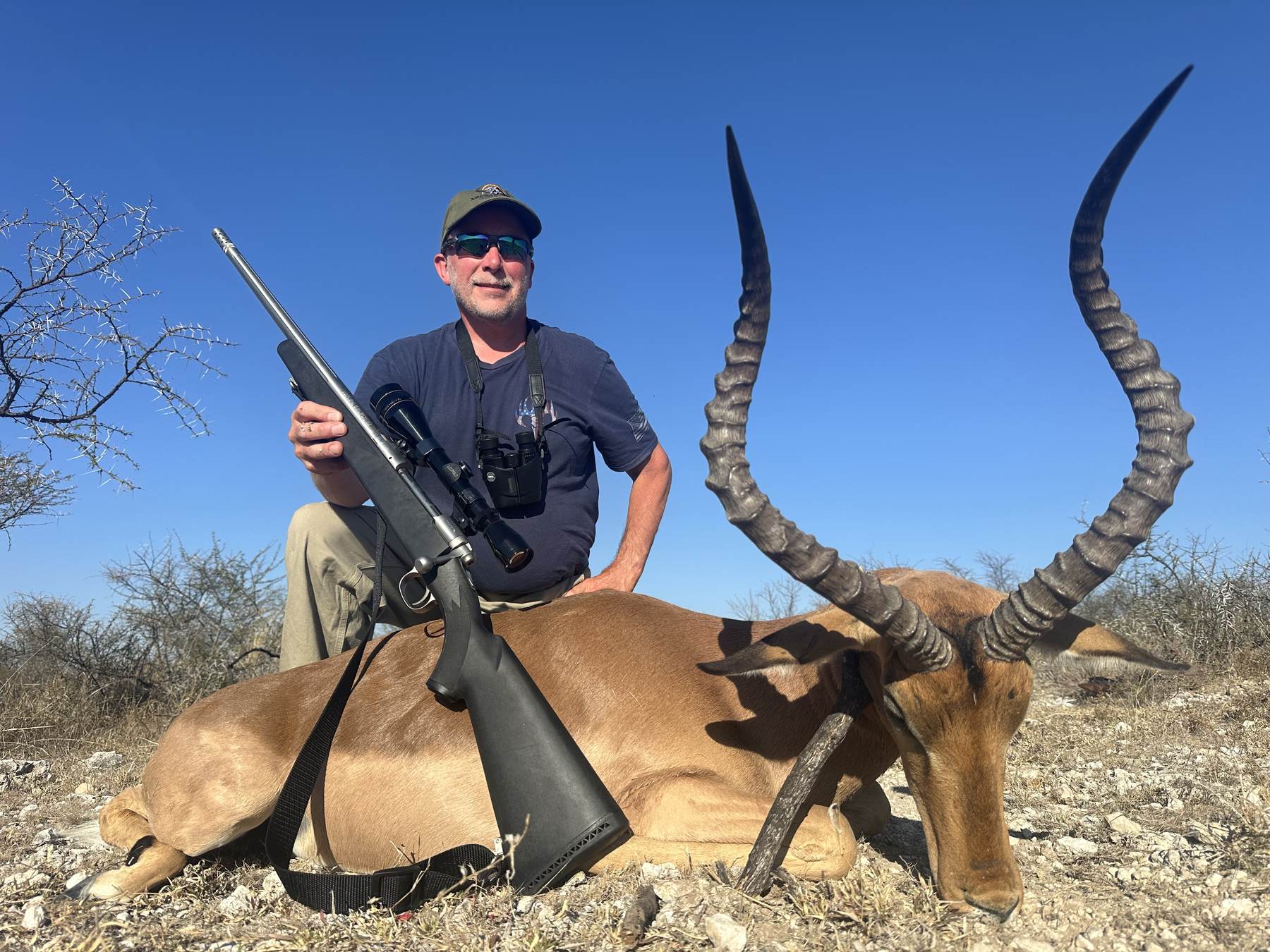
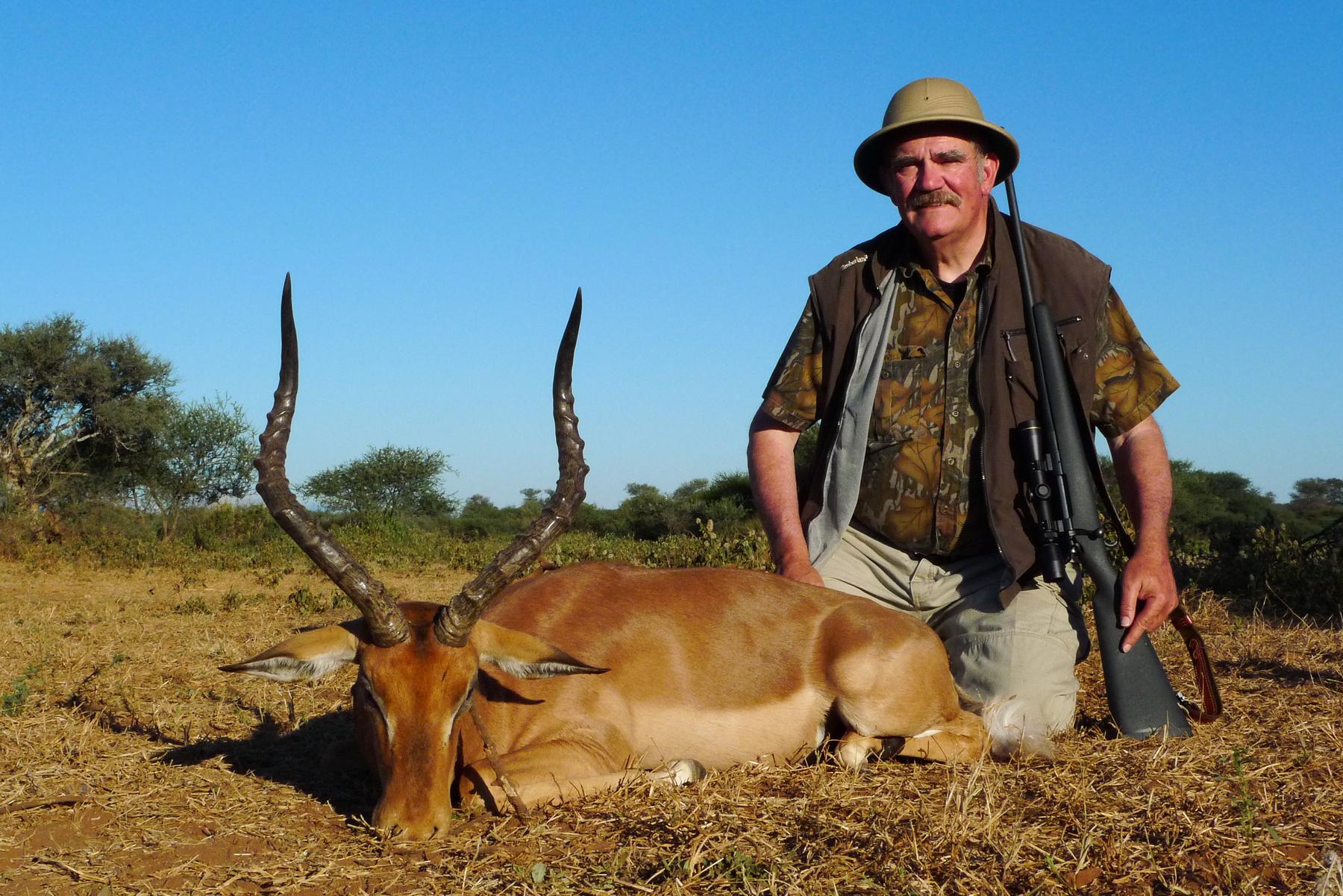
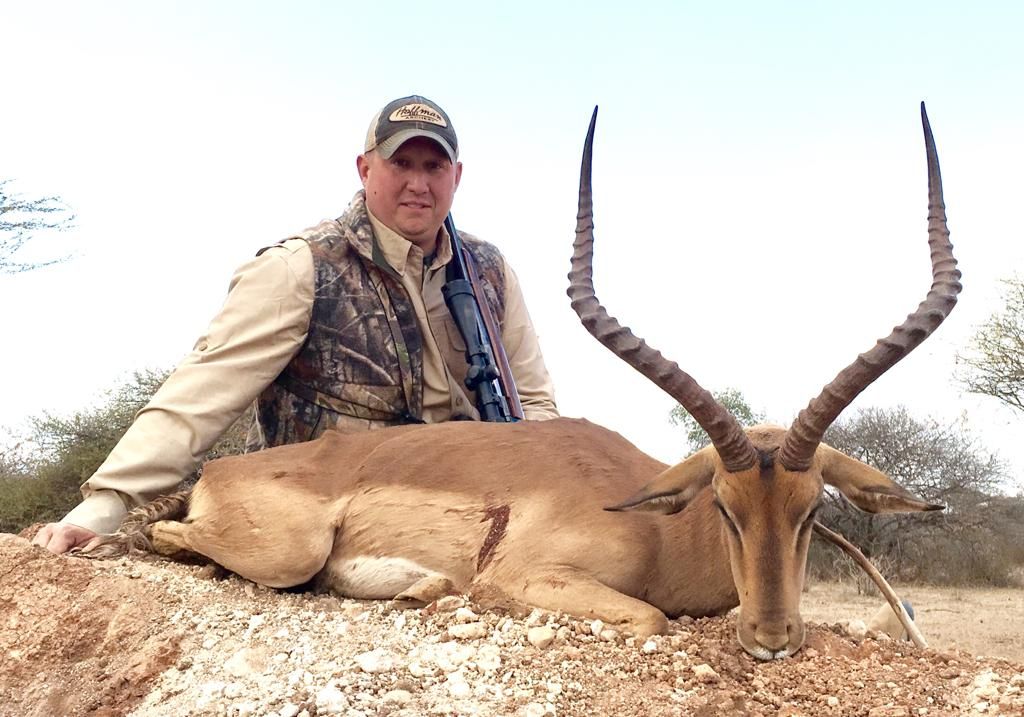
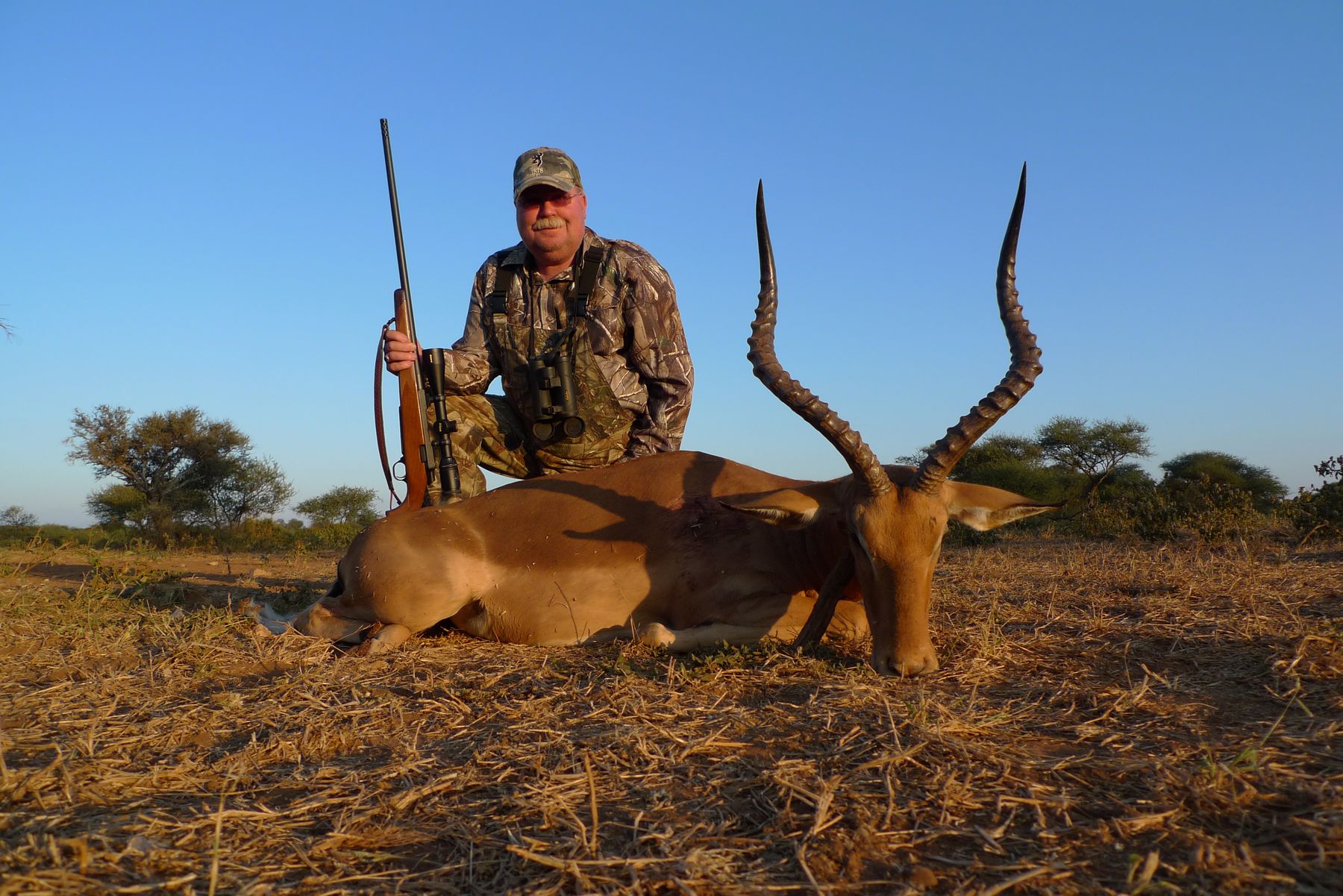
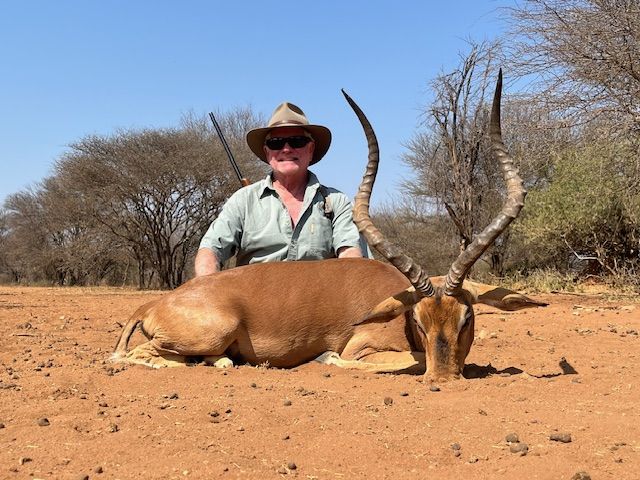
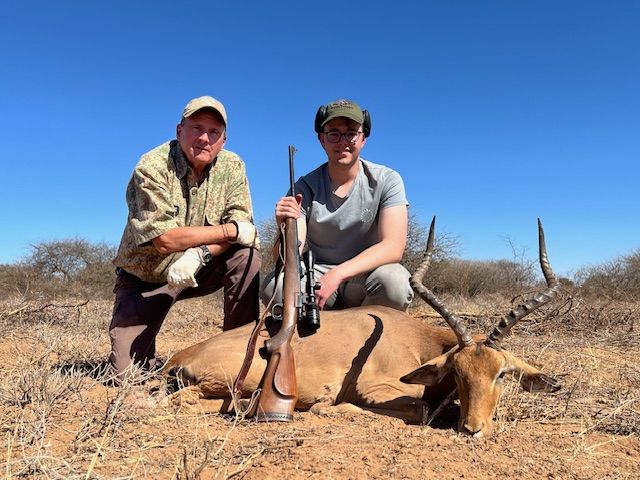
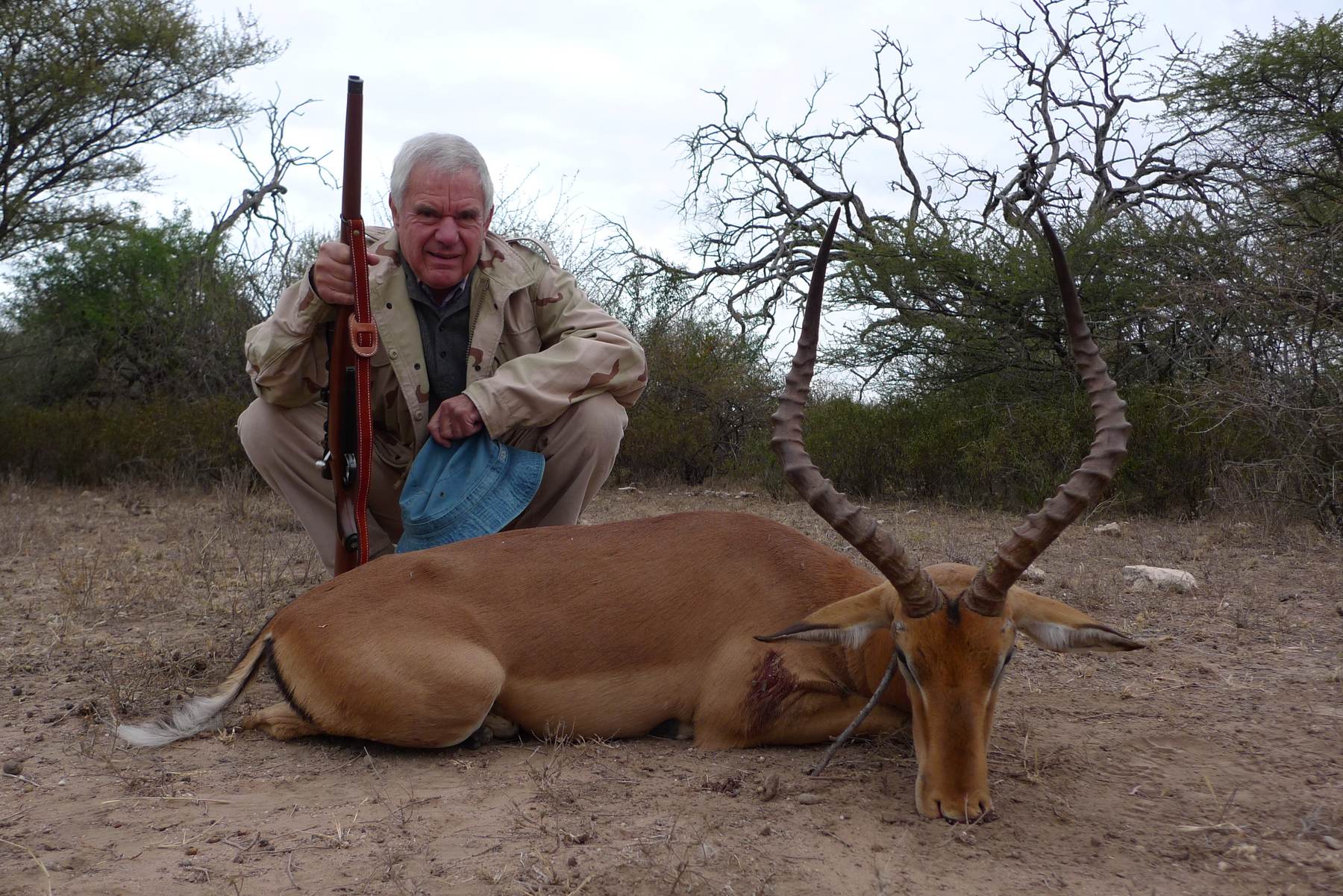
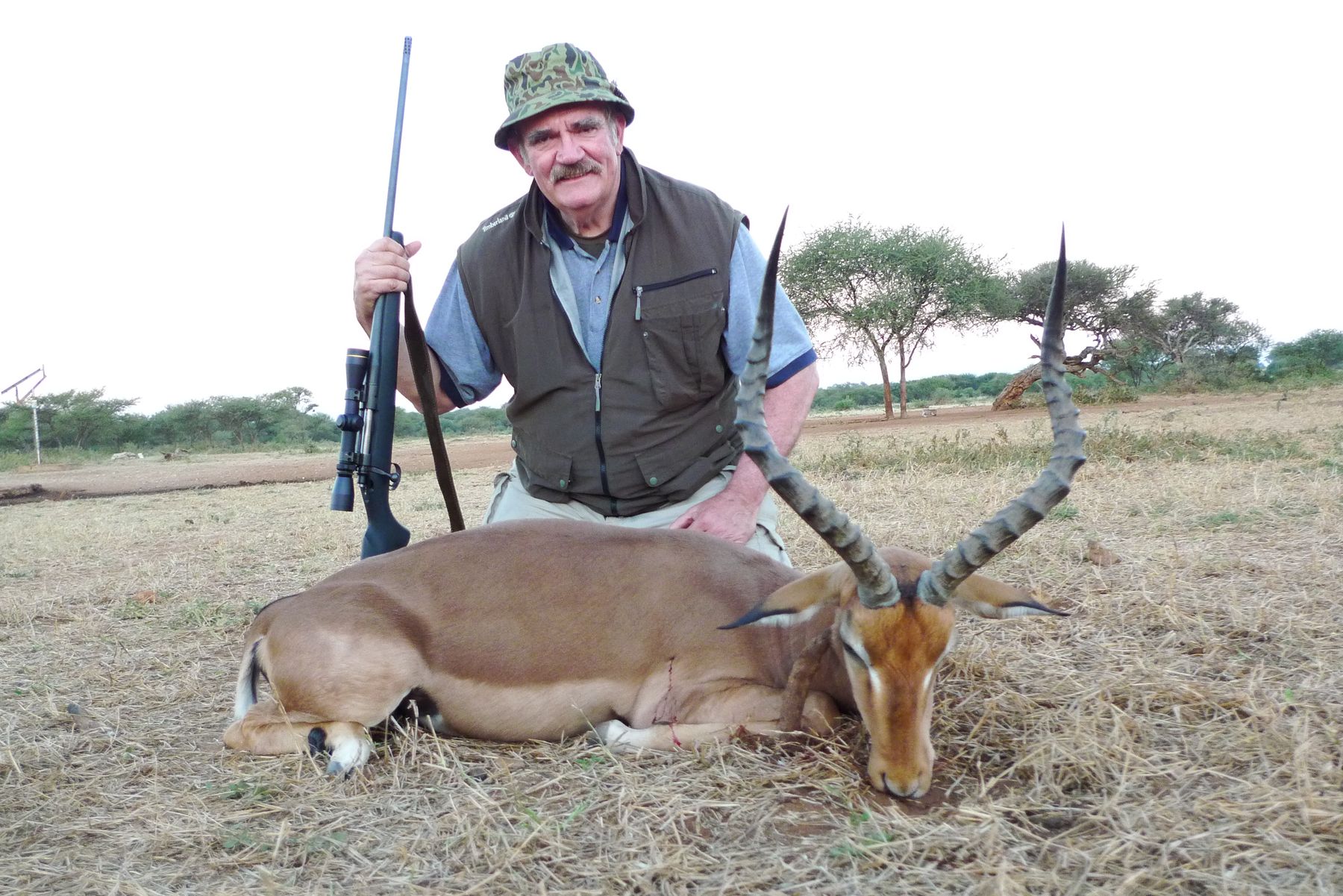
Look for length along the curve, but more importantly for width and for the lyre shape. A good ram shows horns that sweep out and back, then turn up and in at the tips, forming a clean lyre when viewed from the front. Narrow horns that run parallel are less impressive regardless of length.
Heavy ringing should carry two-thirds of the way up. Tips should be smooth, dark and reasonably sharp. A ram of 22 to 24 inches is a good representative animal in most of our areas.
Old rams also carry a heavier neck and darker face, and during the rut they are noticeably more solitary.
The rut
The May rut changes everything. Rams that spend most of the year in bachelor groups begin holding territory, roaring — a genuinely startling noise the first time you hear it, somewhere between a lion and a rusty gate — and chasing each other constantly.
A territorial ram in rut is distracted, standing in the open, and roaring at intervals that tell you exactly where he is. It is the best few weeks of the year to take a good one.
The hunt
Spot-and-stalk through bushveld, generally early morning and late afternoon. Shots are usually 80 to 200 metres.
A .243 upward is entirely sufficient — impala weigh 40 to 60 kilograms and do not require a heavy rifle. Take the shoulder.
Why they matter beyond the trophy
Impala are the standard bait animal for leopard across Southern Africa, and on a cat hunt you will take several. They are also excellent eating — the best meat in camp by a comfortable margin, and what you will be served most often.
For a first-time hunter, an impala on day one is the right way to start a safari. It settles the nerves, confirms your rifle is shooting where you think, and gives you a real stalk without a great deal of pressure attached to it.
Bow hunting
One of the best bow species in Africa. They come to water constantly in the dry months, they are the right size for a clean shot at blind ranges, and there are enough of them that you will get multiple opportunities. Sixty pounds of draw weight upward.