The poor man’s buffalo
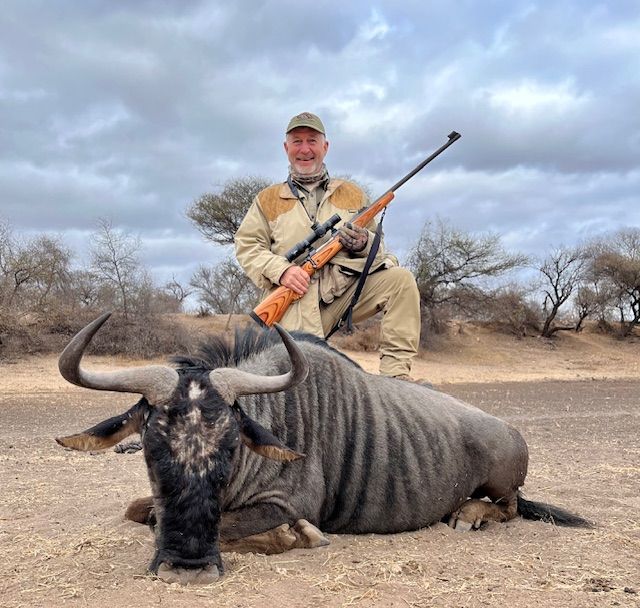
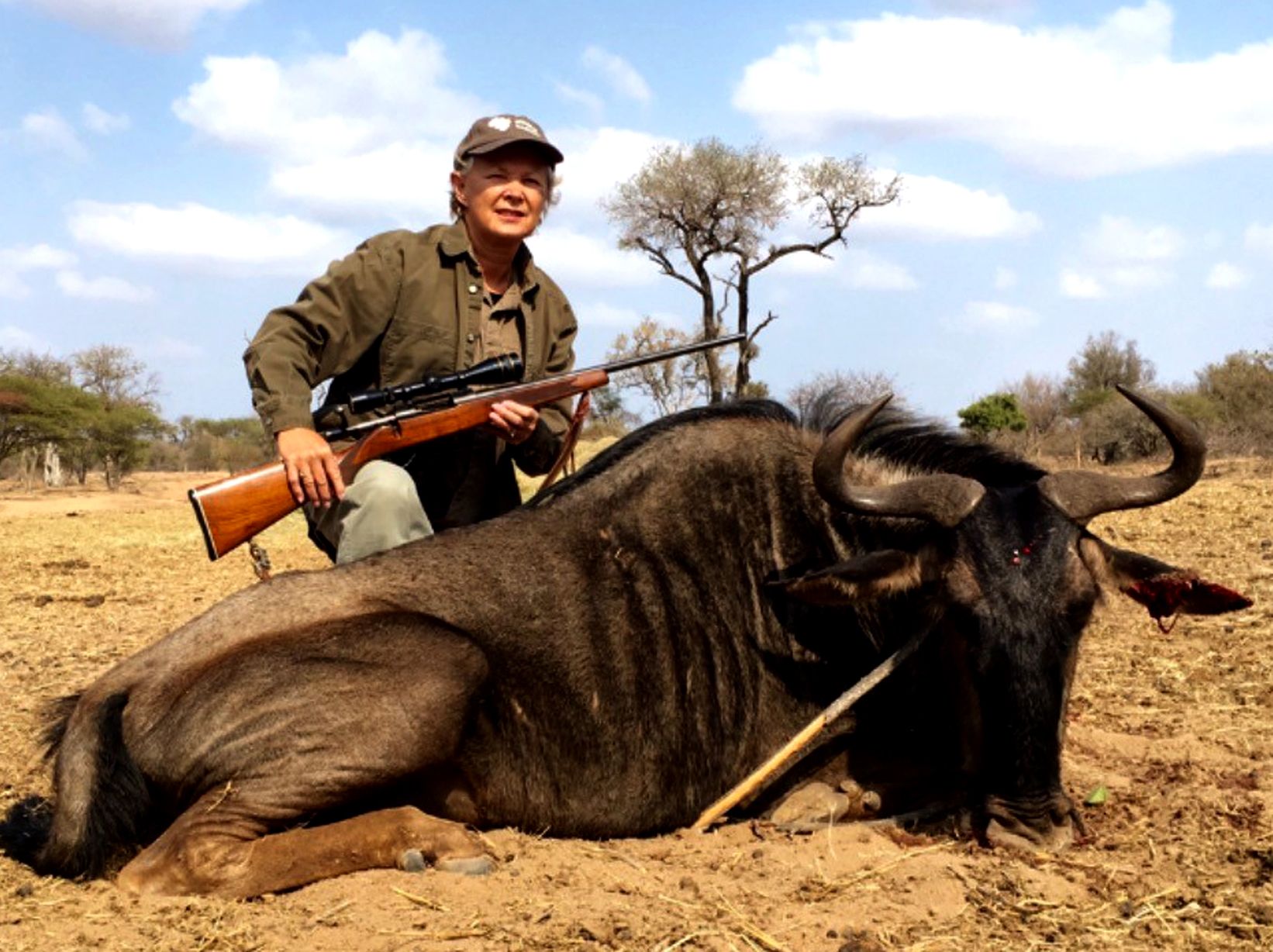
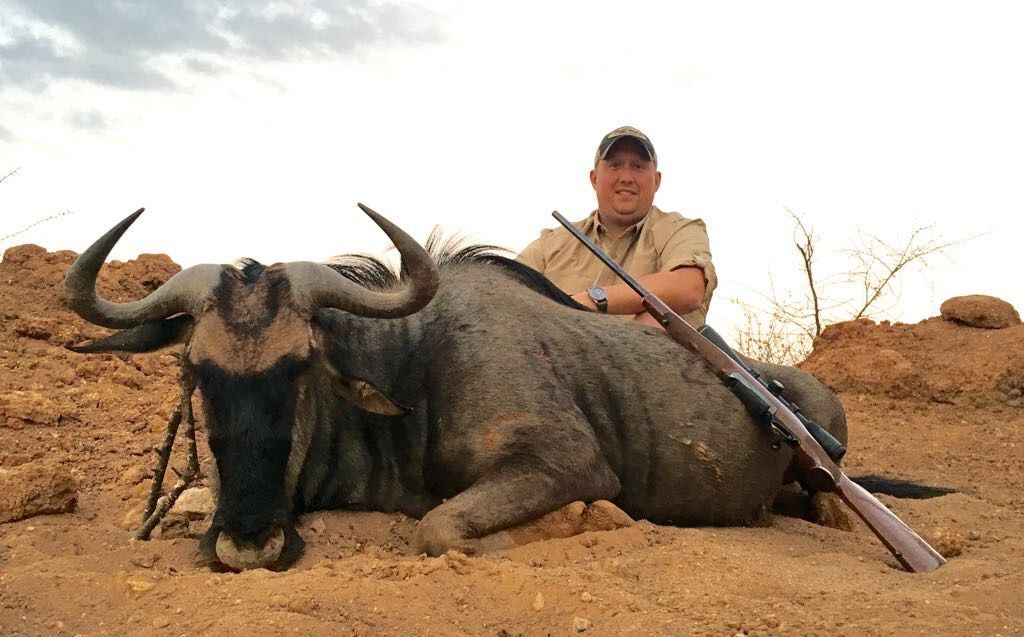
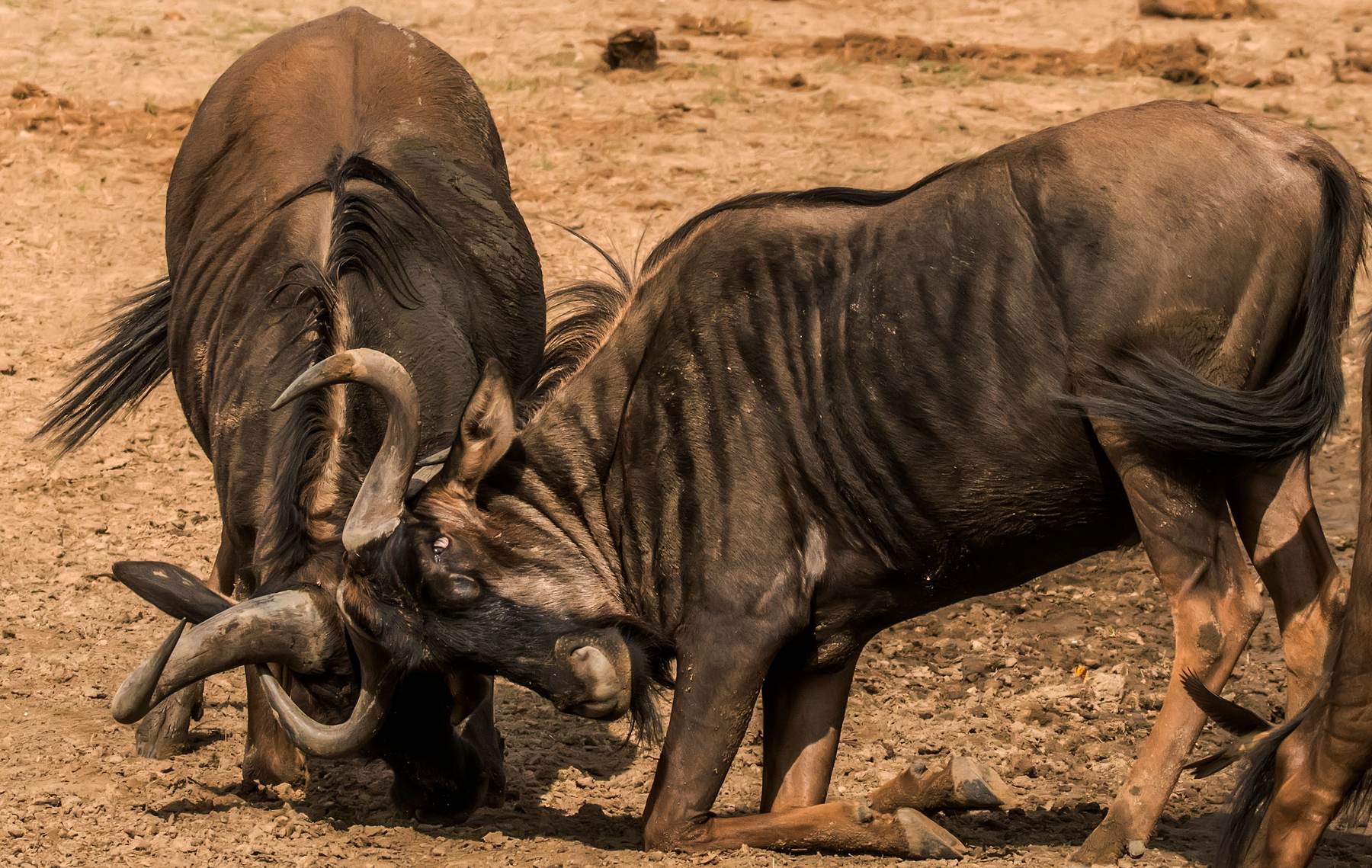
Professional hunters call blue wildebeest the poor man’s buffalo, and it is not a joke about price. Pound for pound they are the toughest animal in Africa, they carry a boss that hardens with age exactly as a buffalo’s does, and they will absorb a well-placed shot and still run three hundred metres into thick bush.
They are also plentiful, available in all three of our countries, and among the least expensive animals on a plains game list. That combination makes them the single best value trophy in Africa and the animal we most often recommend to a first-time hunter as their second or third animal.
Judging a bull
The boss is the whole thing, exactly as it is on buffalo.
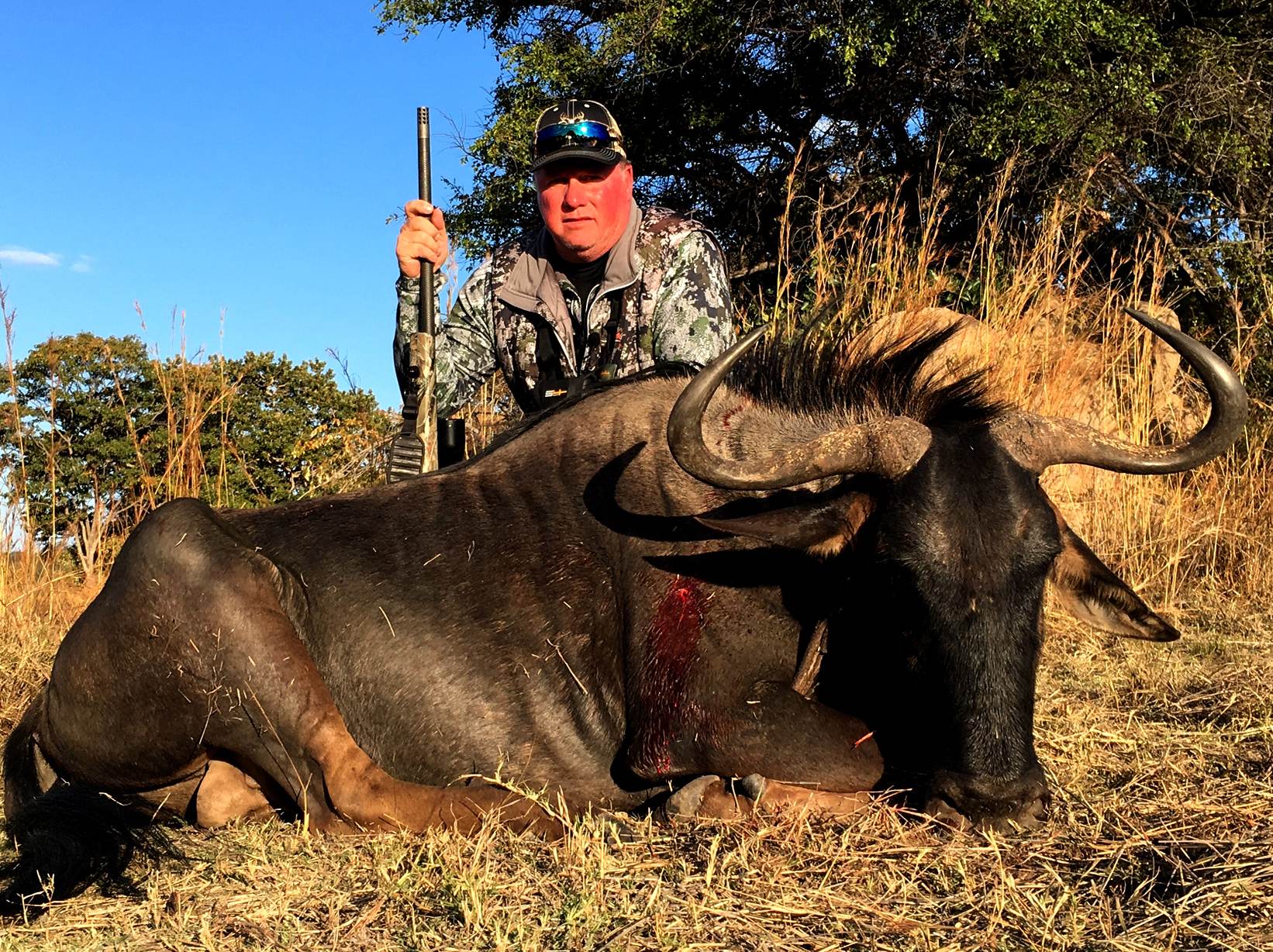
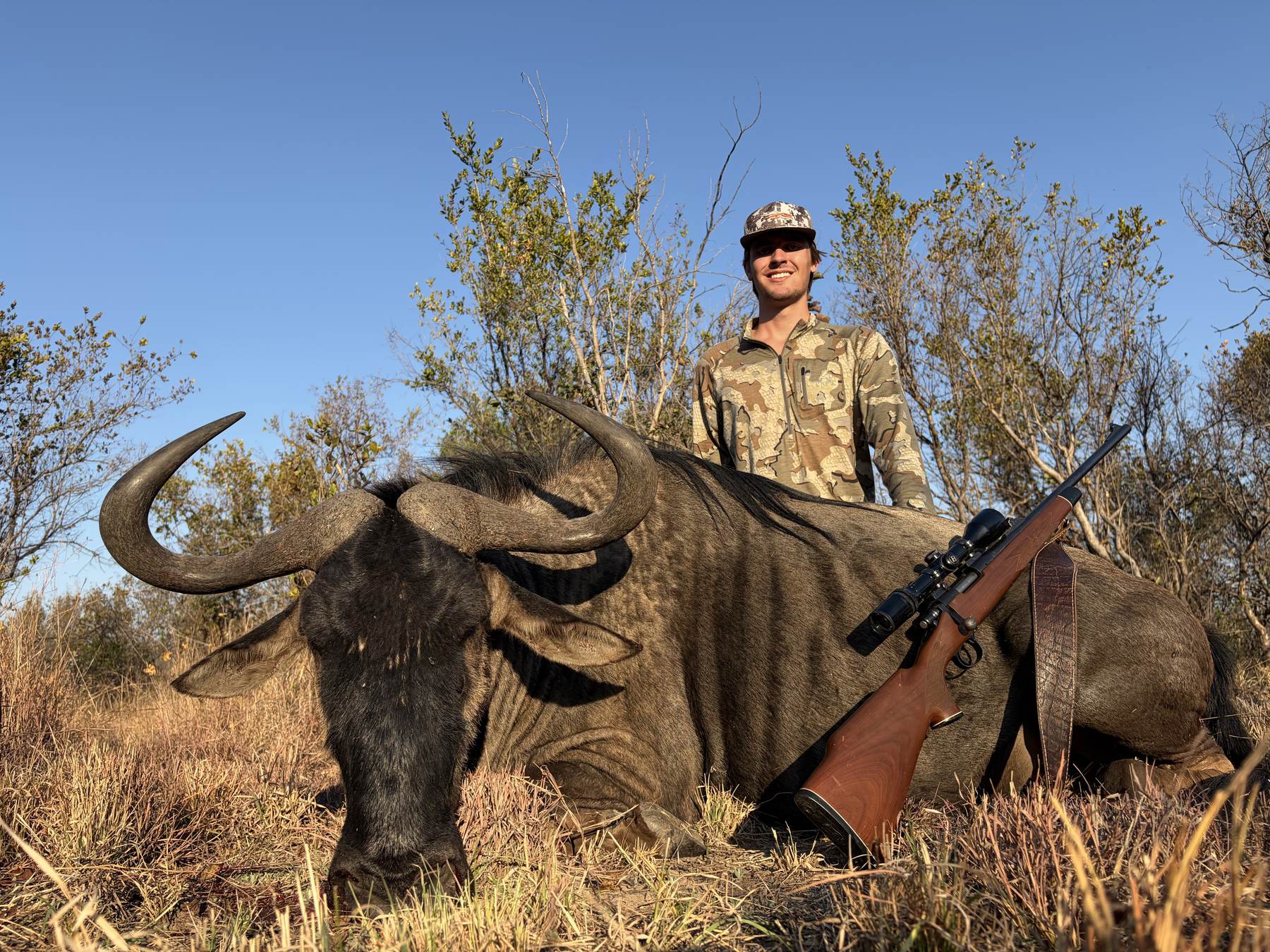
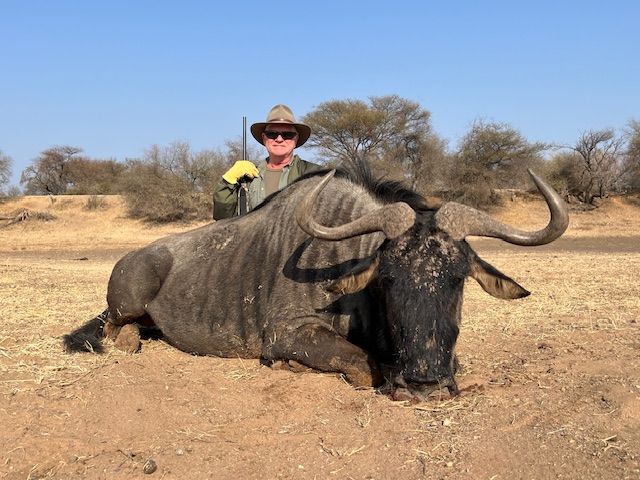
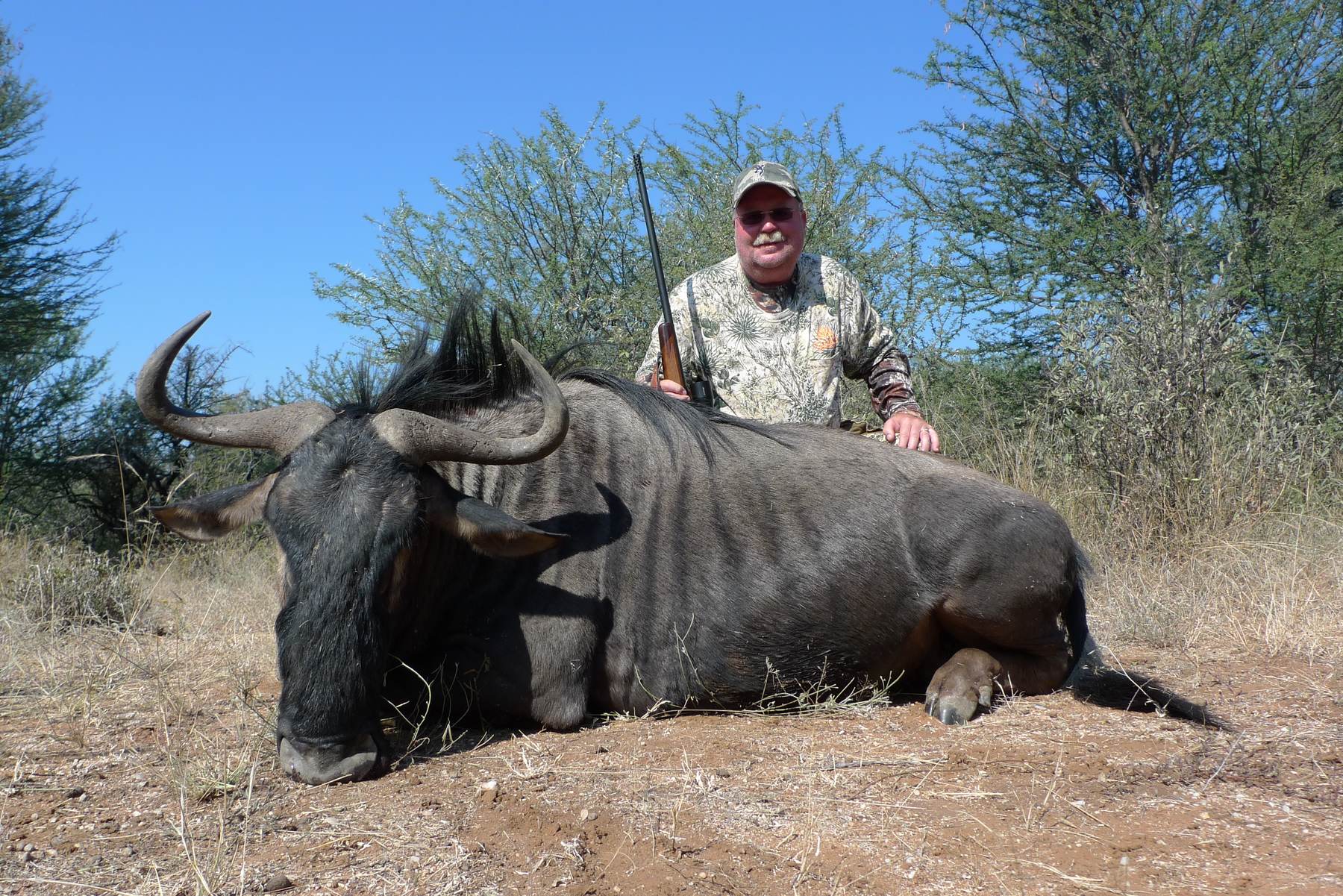
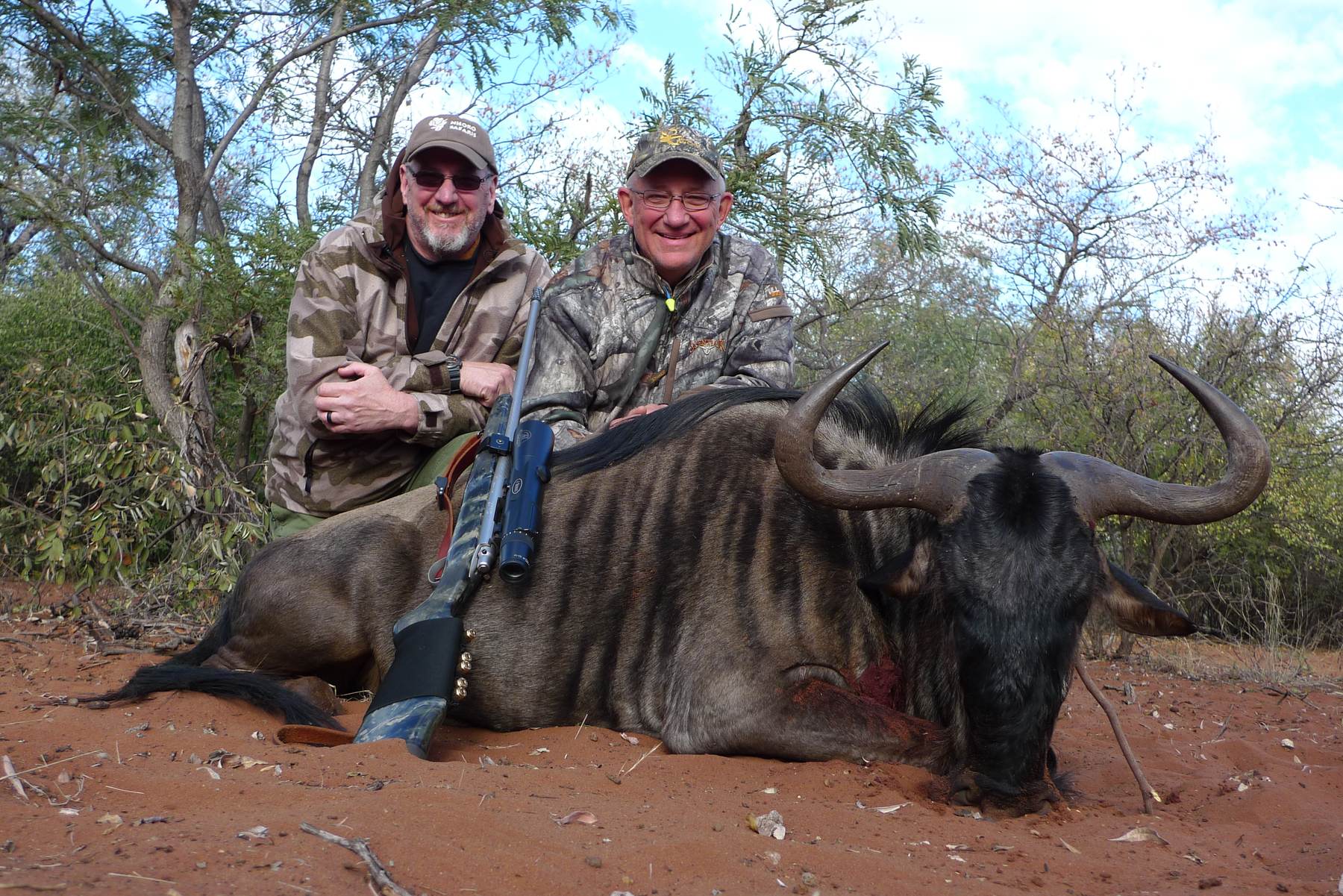
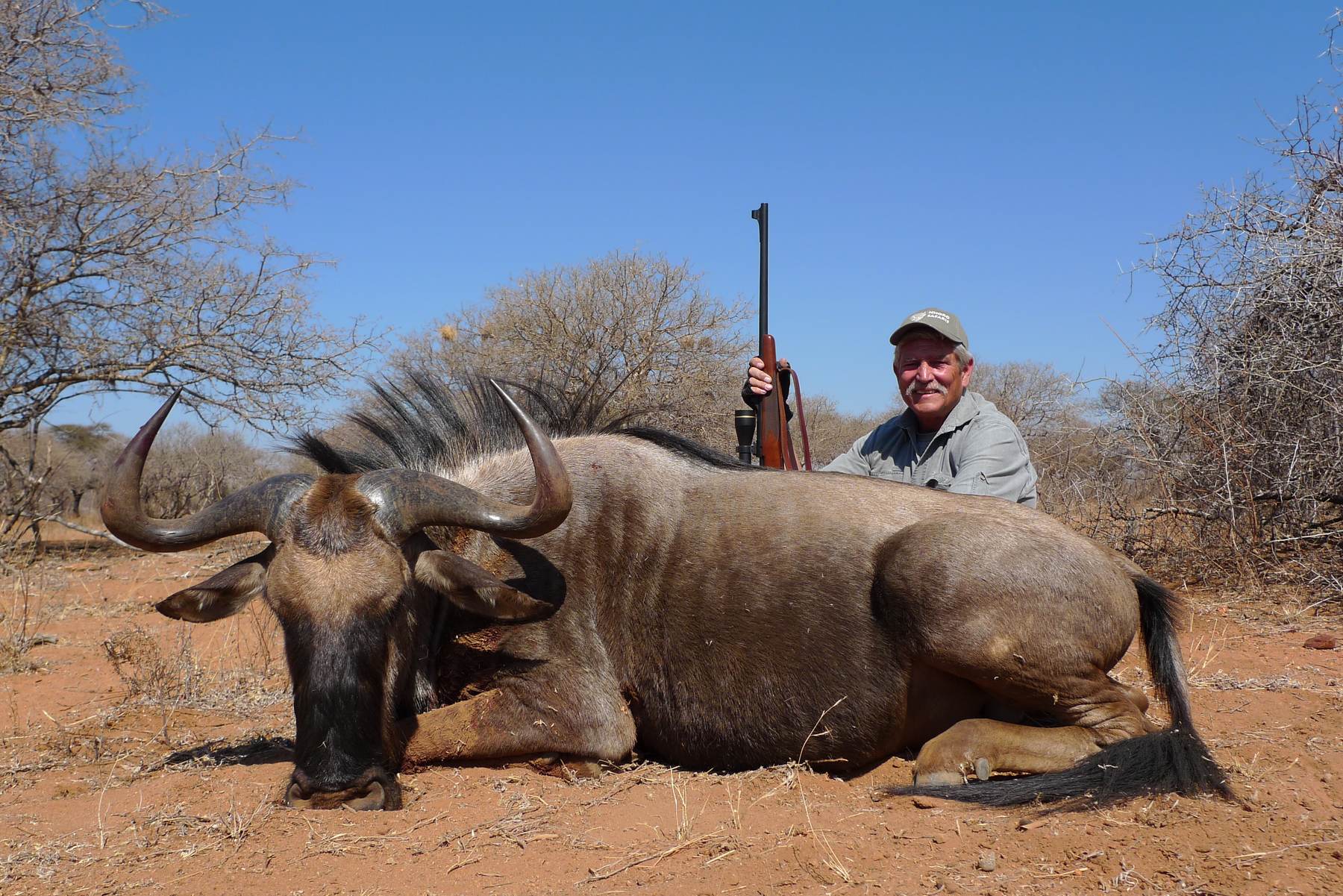
A young bull has horns that rise from two separate bases with a strip of hair between them. As he matures the bases thicken, harden, corrugate, and eventually meet in a solid helmet across the forehead. A fully hard-bossed bull is at least six years old.
Spread is what photographs well and what clients ask about, but a 30-inch soft-bossed four-year-old is a worse trophy than a 26-inch bull with a boss like a rock. Look for heavy corrugation, worn and blunted tips, and no hair between the bases.
Bulls are darker and heavier through the neck and shoulders than cows, and cows carry noticeably thinner horns. In a herd, mature bulls are frequently standing off to one side.
The hunt
Blue wildebeest live in open grassland, light woodland and the edges of both, usually in herds. They are alert, they run at the first suggestion of trouble, and they have a habit of running a short distance, stopping, and looking back — which is frequently the shot you get.
Hunting is spot-and-stalk. Glass a herd, identify the bull, and close the distance using whatever cover exists. Because they favour open country, shots tend to be 150 to 250 metres.
They are also strongly territorial during the rut, when dominant bulls hold small patches of ground and become considerably easier to approach because they refuse to leave.
Rifle and shot placement
Bring enough gun. A .30-06 with premium 180-grain bullets is the practical minimum and a .300 magnum is better. Wildebeest have heavy shoulder bone and a genuine capacity to keep going.
Take the shoulder. A lung-shot wildebeest will run, and following one into thick thornveld at last light is a job nobody wants. Break bone and be prepared for a second shot.
Bow hunting
Excellent from blinds over water in the dry months. They come to drink daily and they are big enough to make a clean shot straightforward at blind ranges. Sixty pounds upward, and expect a long recovery even on a good hit.
On a species list
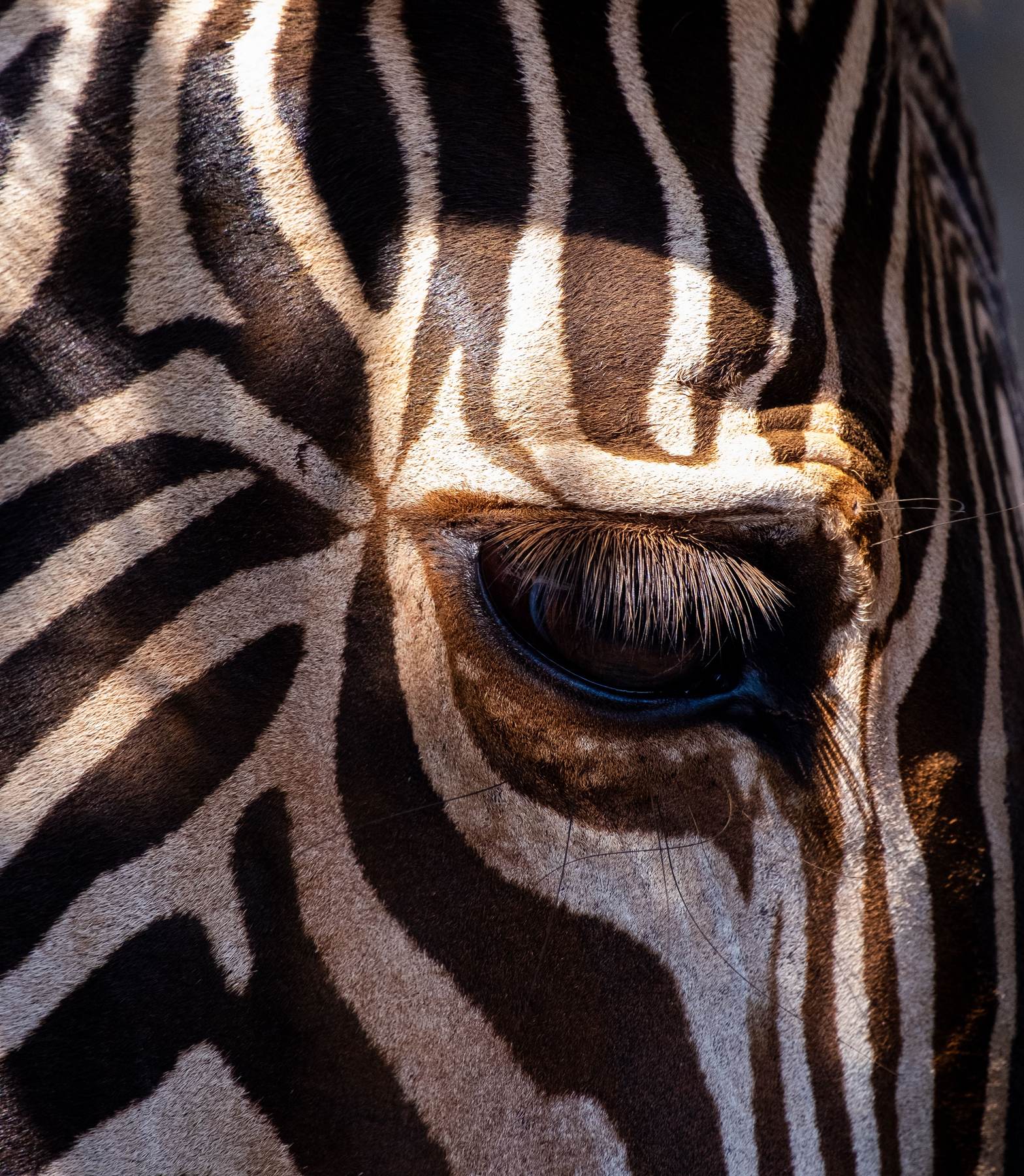
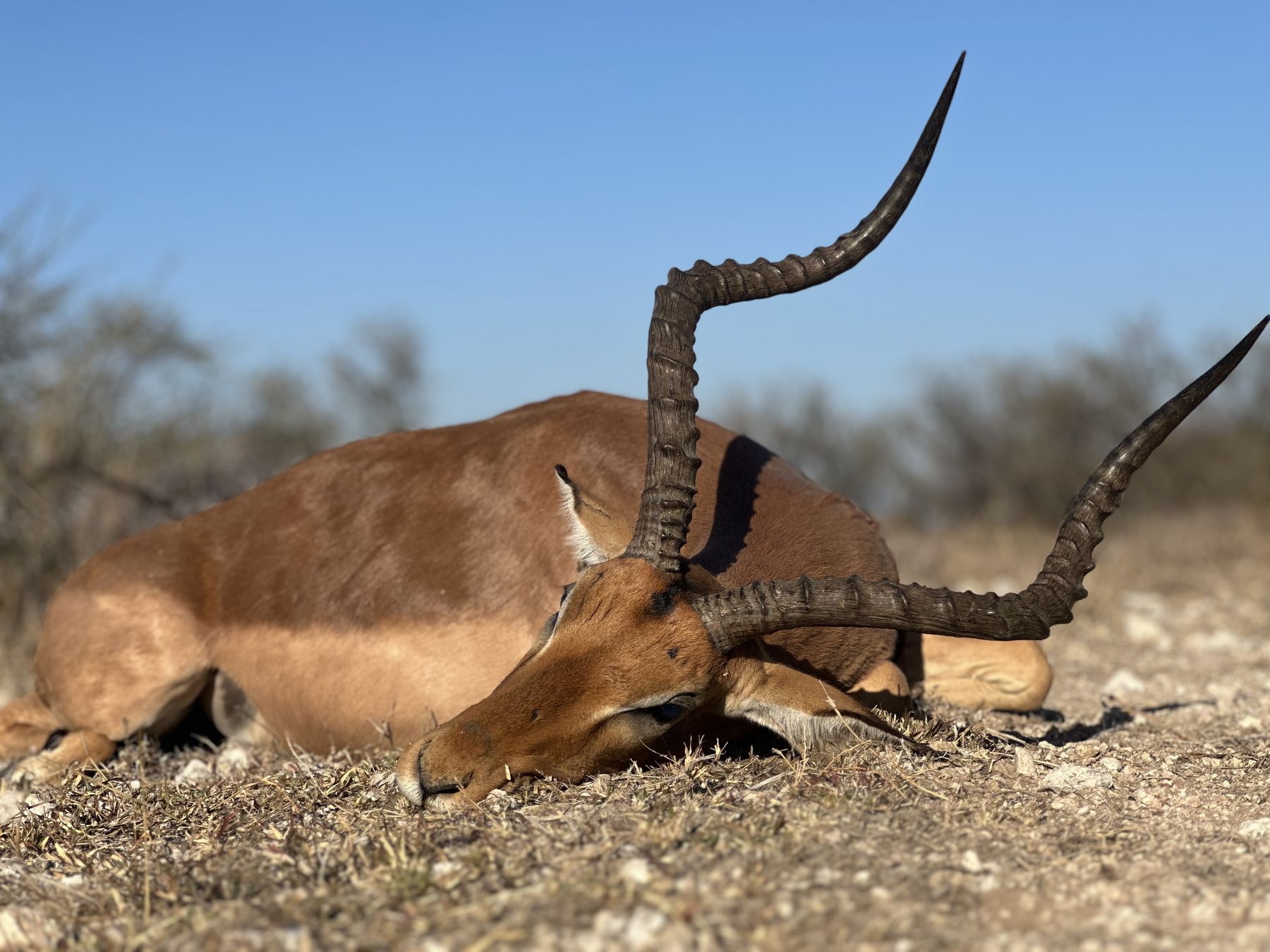
Blue wildebeest pair naturally with zebra, impala, kudu and warthog on a standard bushveld safari. They are also one of the more useful bait animals for leopard, and on a dangerous game hunt a wildebeest on quota frequently ends up serving both purposes.