Not the pushover they look
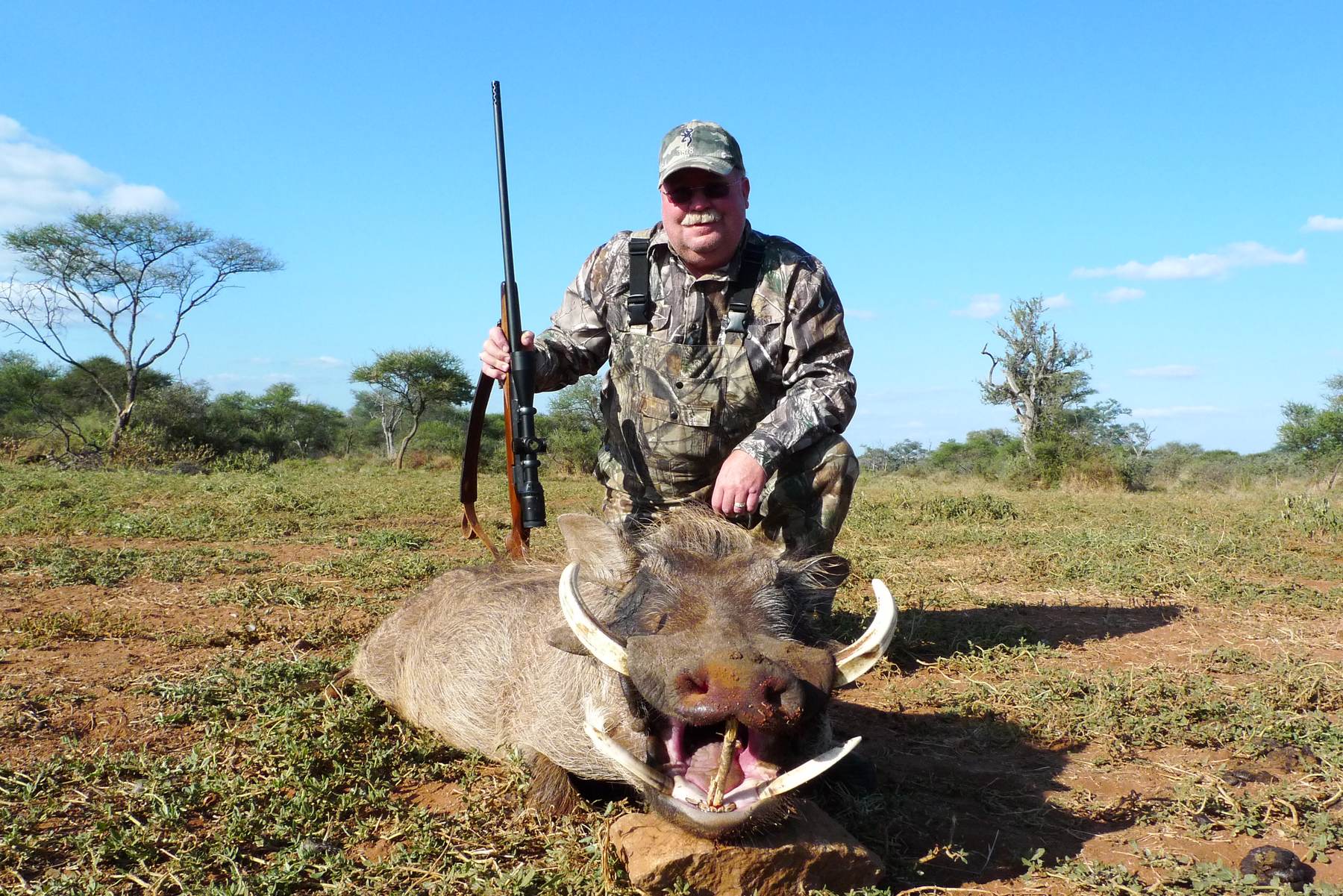
Warthog get treated as a joke animal — the running-with-tail-up thing does not help — and then hunters discover that a mature boar is genuinely wary, considerably tougher than his size suggests, and equipped with lower tusks honed to razor edges against the uppers every time he opens his mouth.
Those lower tusks are the dangerous ones. A cornered boar goes low and slashes sideways, and he will open a leg to the bone. Wounded warthog going into a burrow is a situation professional hunters approach with genuine care.
Judging a boar
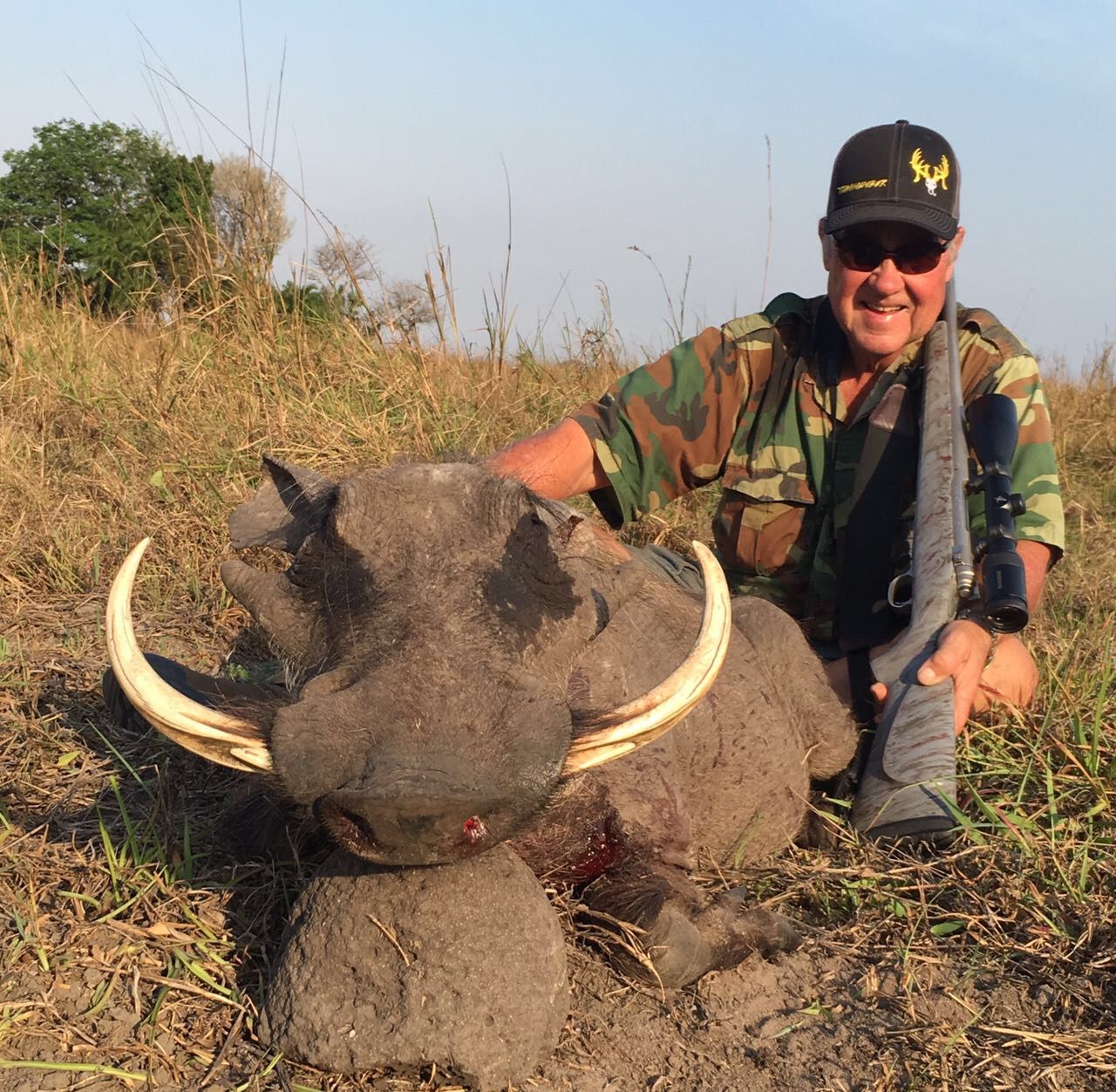
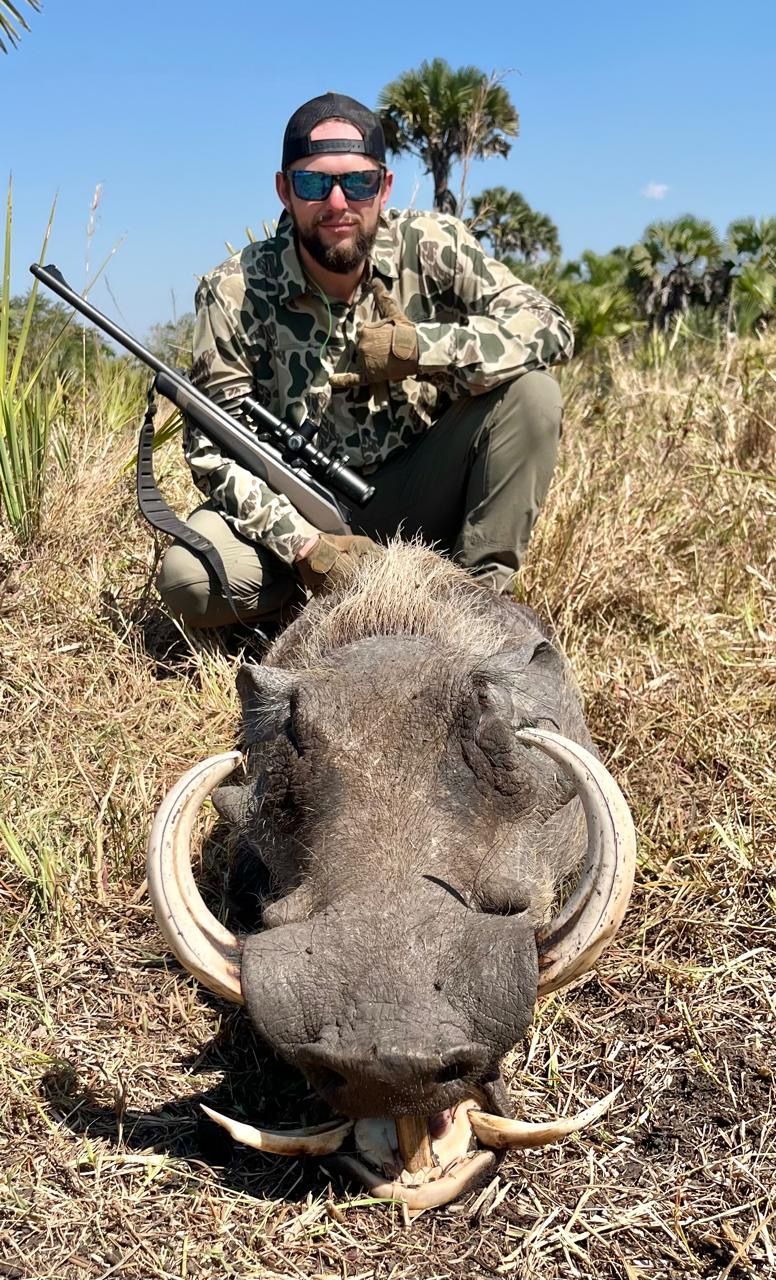
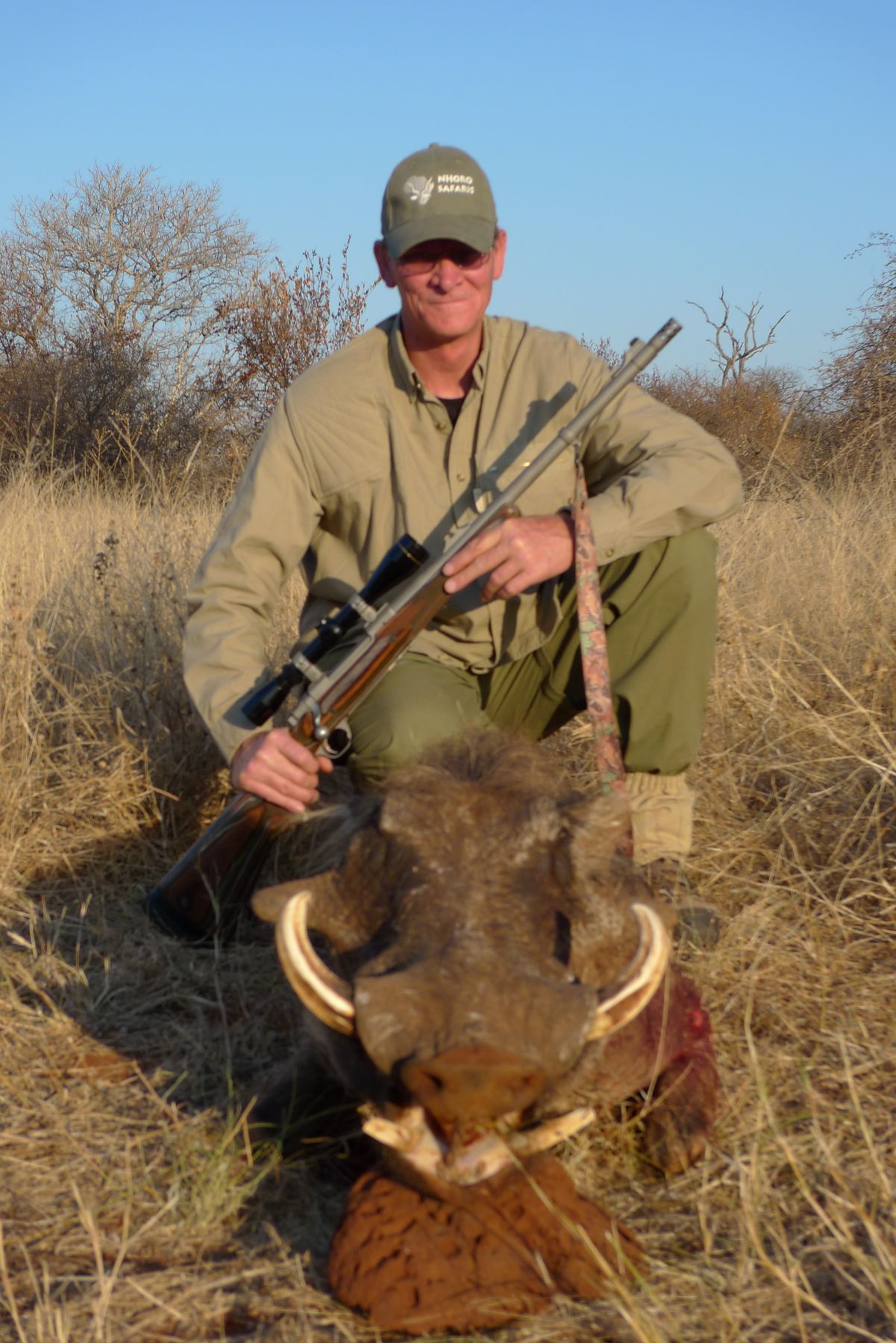
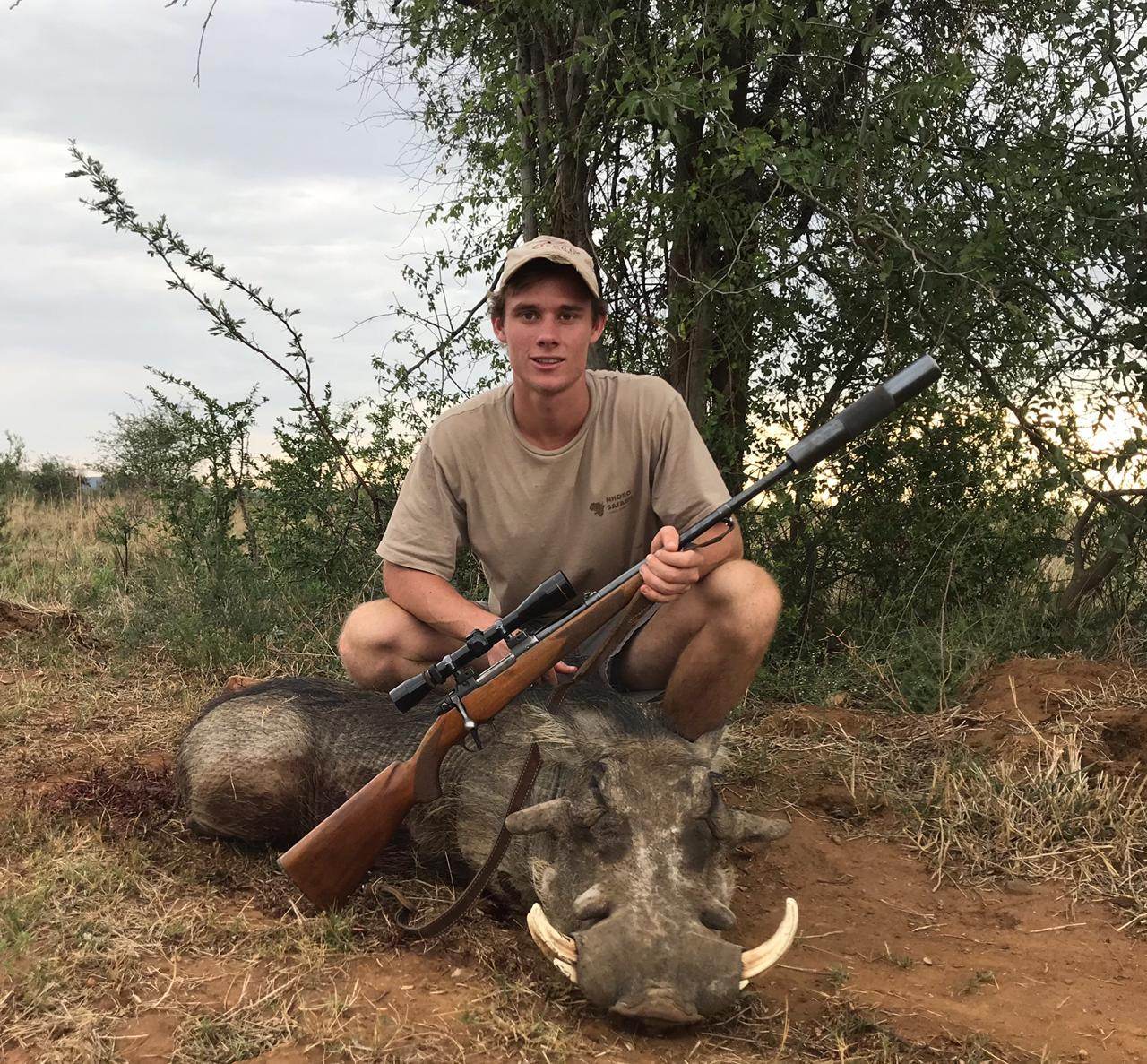
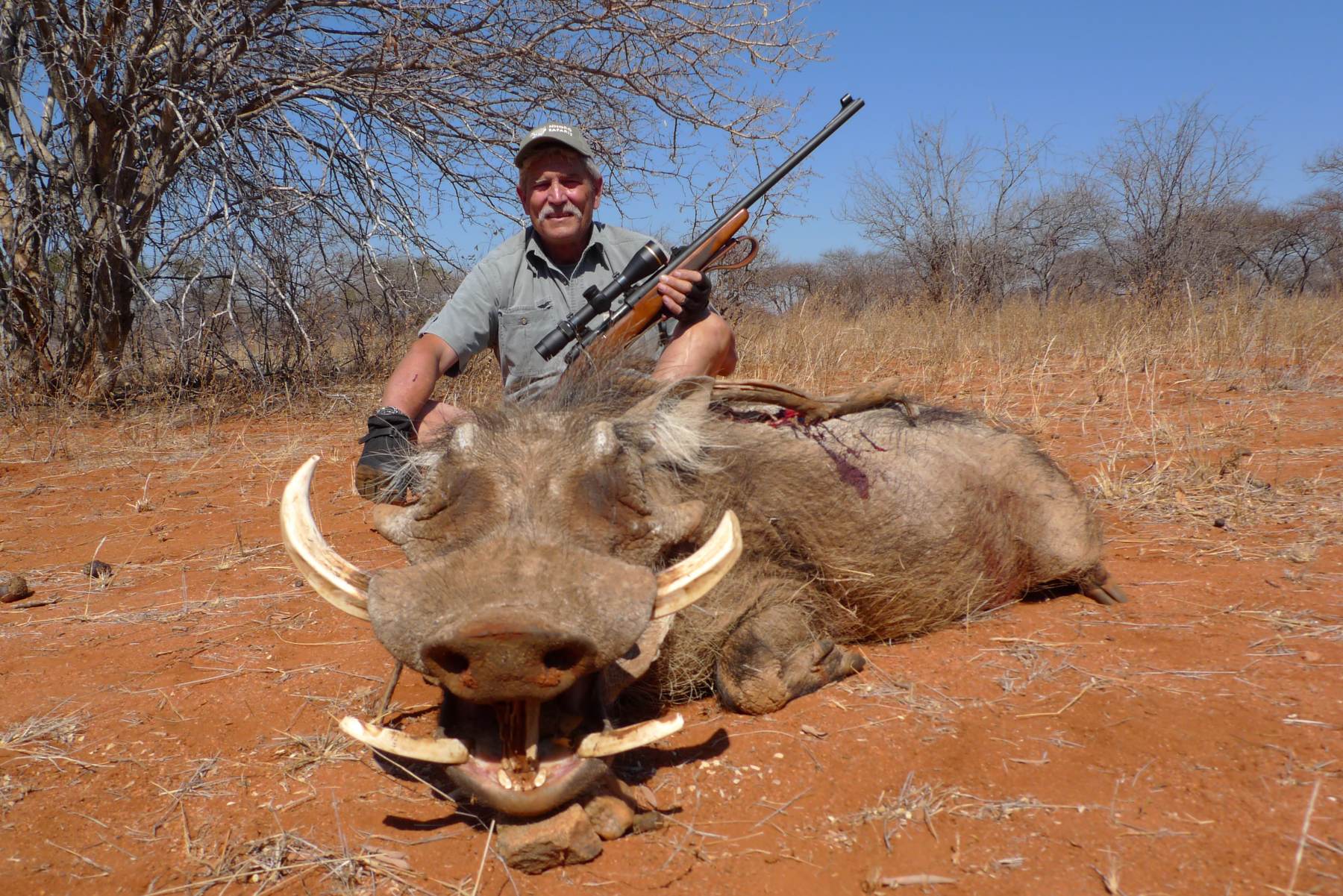
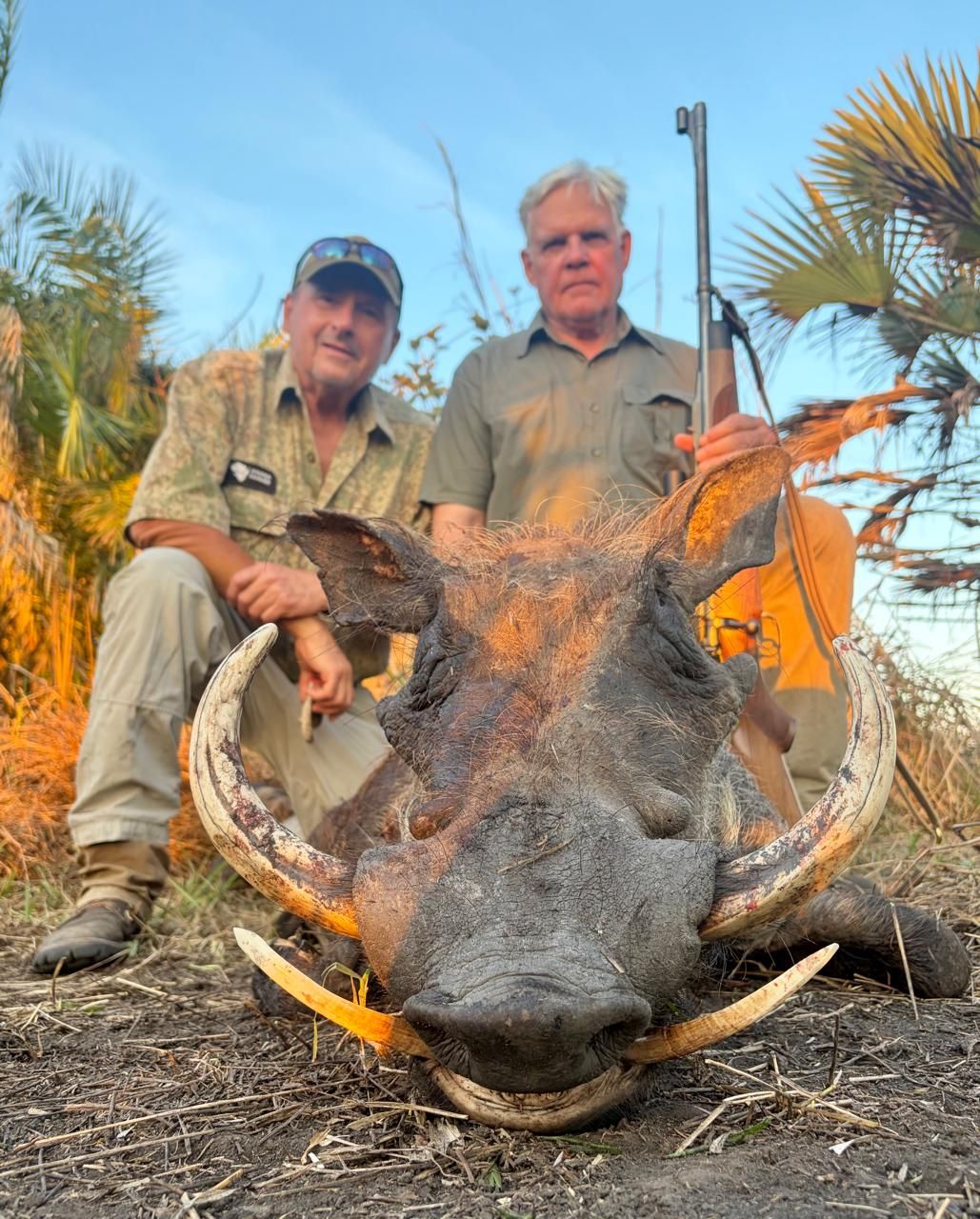
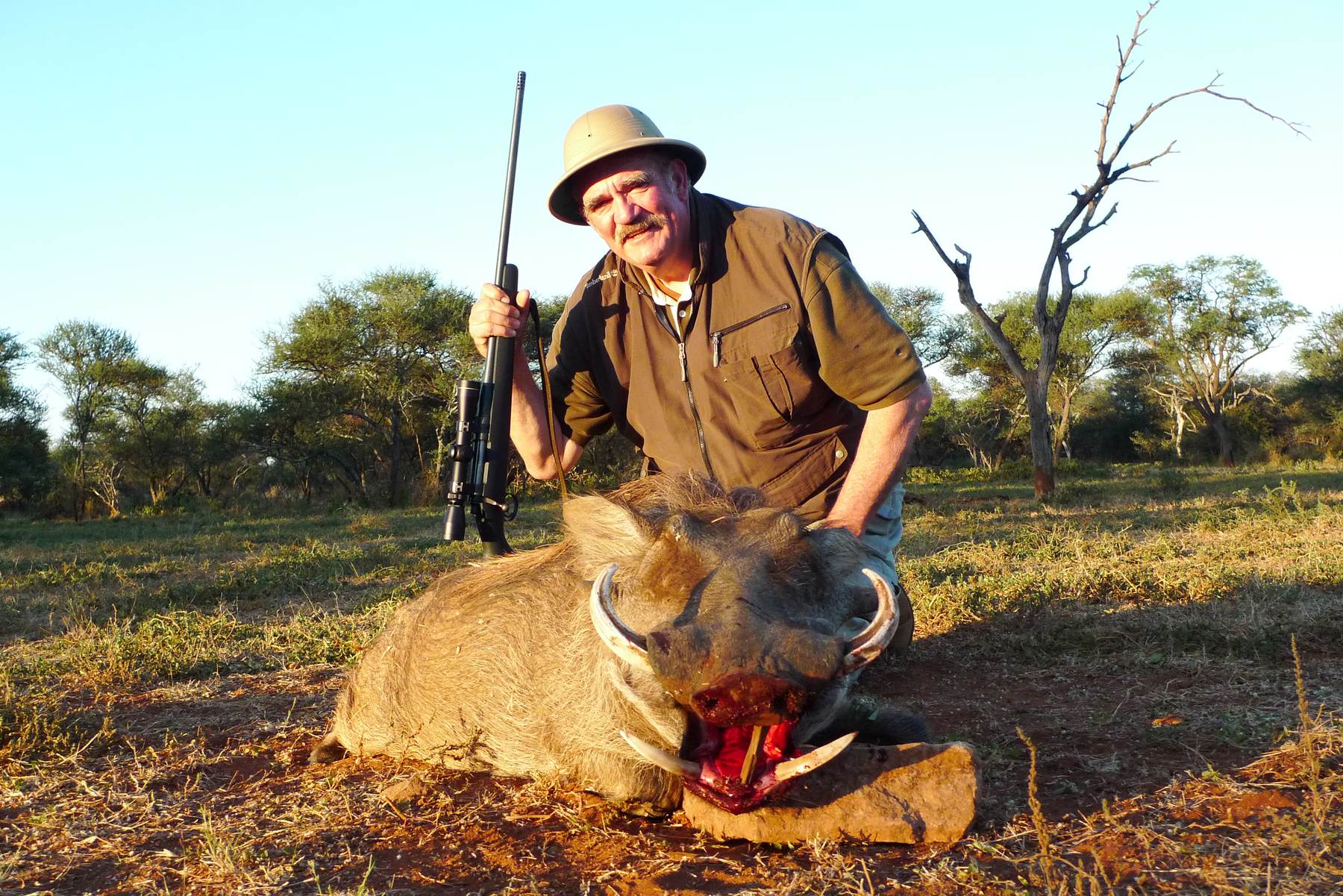
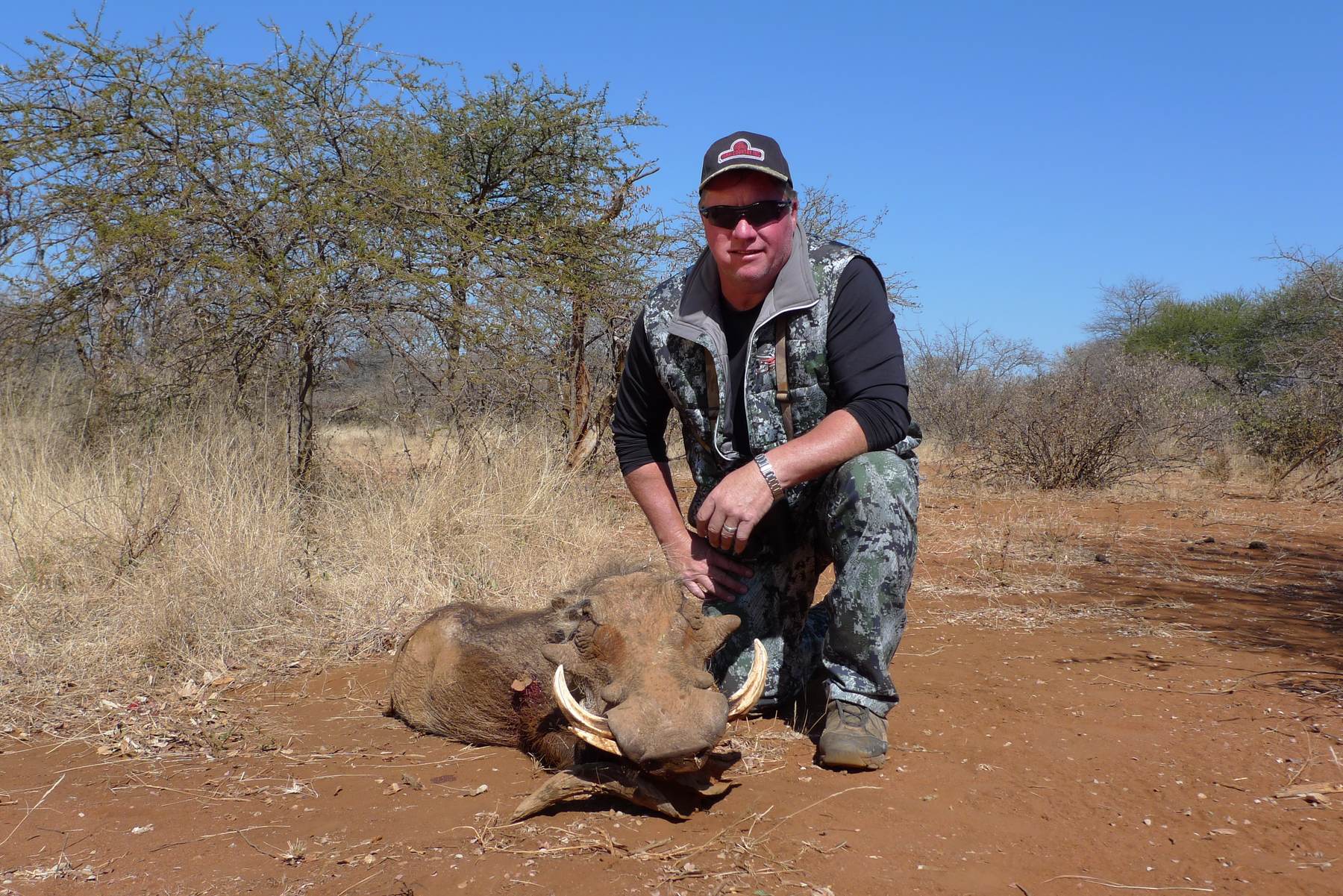
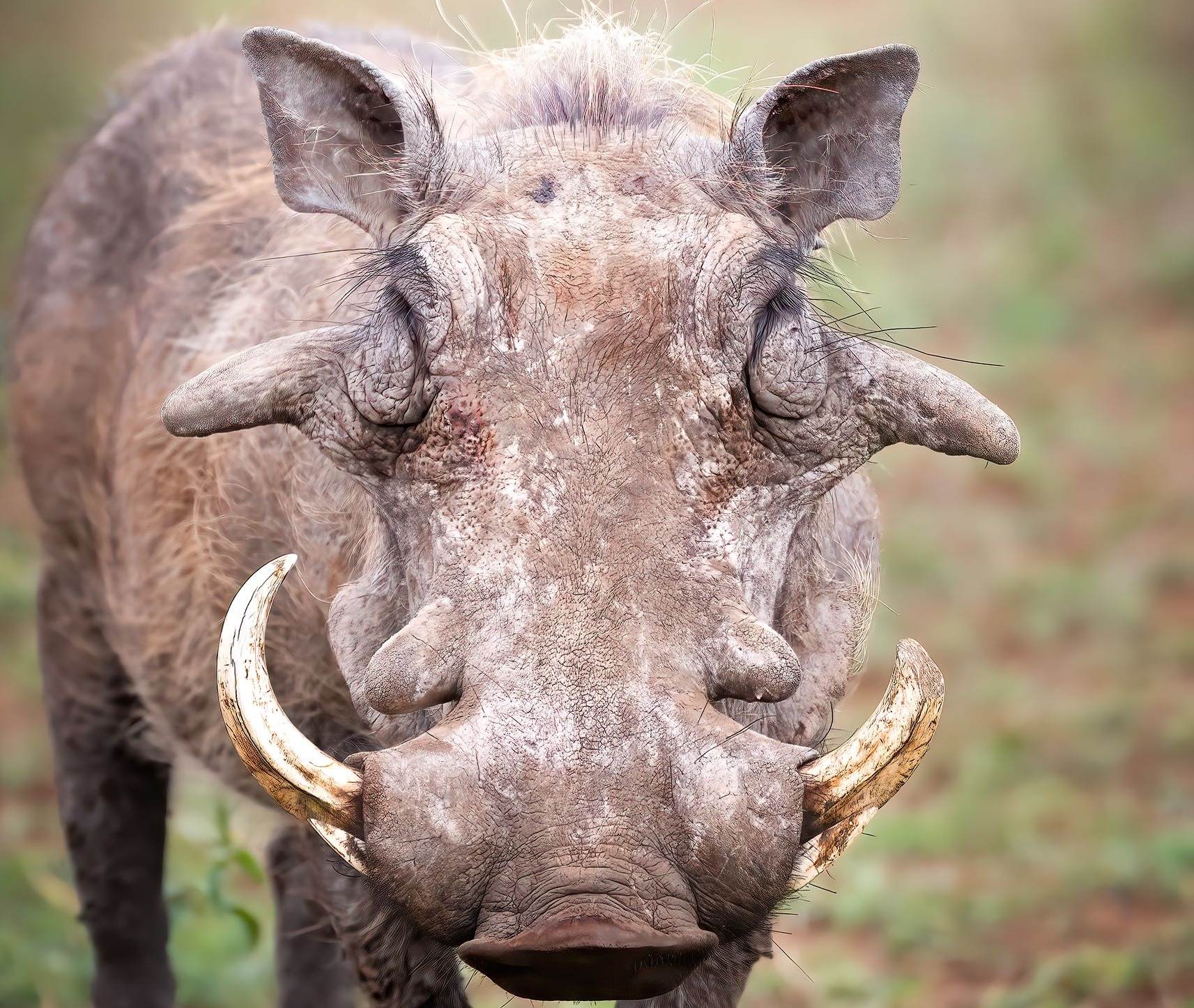
The trophy is the upper tusks — the long curved ones that sweep up and out from the jaw. What you see is roughly two-thirds of the total; the rest is embedded.
A mature boar carries uppers of 9 to 11 inches, and 13 is exceptional. Judge on thickness at the base as much as on length: a heavy, thick-based 10-inch tusk is a better trophy than a thin 12.
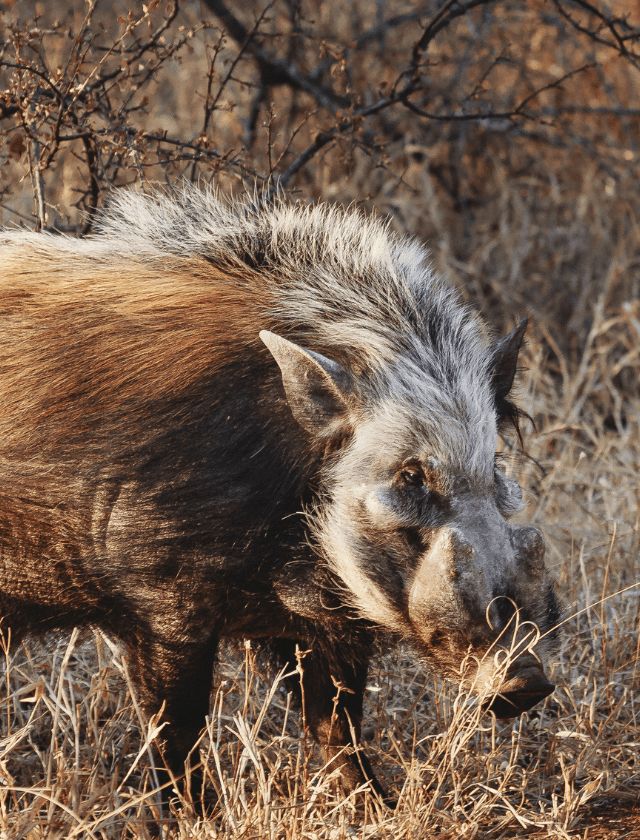
The other markers of an old boar are the warts themselves, which grow larger and more pronounced with age, and the general heaviness through the head and shoulders. Sows are smaller, carry much shorter tusks and lack the large facial warts.
At distance, a boar’s tusks catch light against the dark head. In practice you frequently have four or five seconds to judge before the animal moves.
The hunt
Warthog are diurnal, which makes them unusual and useful. They feed through the middle of the day when kudu, impala and most everything else have gone into deep shade, so a warthog is often the animal you hunt during the hours that would otherwise be dead.
They feed on their front knees, rooting for bulbs and roots, and this is the classic sight. A feeding boar with his head down is preoccupied, which is your opportunity — but they lift their heads at intervals and they see well.
They also come to water and to mud wallows extremely reliably in the dry season.
Shots are usually 60 to 150 metres. Take the shoulder — warthog carry a shield of thick gristle over the shoulders and a marginal shot will not get through it. They also head for a burrow when hit, and a warthog that reaches one is very difficult to recover.
Bow hunting
One of the best bow species in Africa. They come to water and wallows daily in the dry months, they hold still while feeding, and blinds over waterholes from August to October produce consistently. Sixty pounds of draw weight upward.
Eating and bait
Warthog is genuinely excellent — the loin and the hams are among the best meat in camp, and warthog ribs over coals are worth the trip on their own.
They are also a standard leopard bait across Southern Africa, and on a cat hunt you will likely take one for that purpose.
The trophy itself
Most clients take a European mount showing the skull and tusks, which displays them well. A full shoulder mount is dramatic and captures the warts and the mane. Decide before skinning.