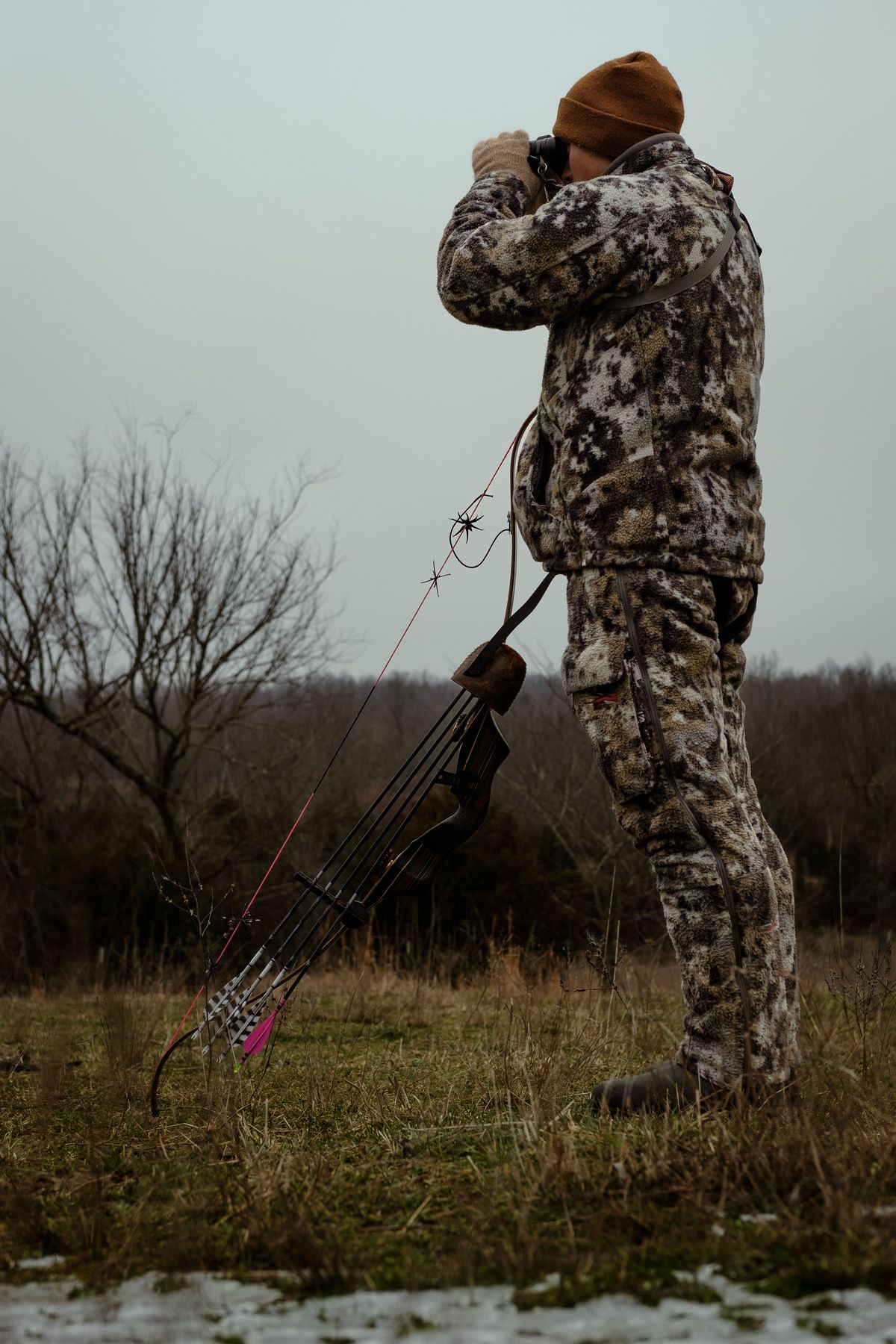
- Length
- 10 days
- Where
- South Africa
- Party size
- 1–2 hunters
- Season
- August to October
Built around blinds over water in the dry months, when heat forces daily drinking and animals come in close. Purpose-built blinds at ranges suited to archery, and a professional hunter who bow hunts himself. Sixty pounds of draw weight minimum, more for the heavier species. Season-dependent, so book for the right months.
How bow hunting changes the week
Everything slows down and the distances collapse.
A rifle hunter is looking for a shot at a hundred and fifty metres. You are looking for twenty-five, and getting there changes how the whole day is planned — which wind, which water, which approach, and a great deal more sitting still.
Most bow hunting here is from blinds over water and active trails, particularly in the hotter months when game comes to drink predictably. Spot-and-stalk is possible on some species and much harder.
Why ten days
Because you will pass on more than you take.
Marginal angles that a rifle hunter would shoot are not shots with a bow, and your professional hunter will stop you taking them. Over a seven-day trip that can mean going home light. Ten days gives the opportunities room to come round again.
What to bring, and what to expect
Bring your own bow and shoot it before you travel — not at a target at twenty metres on a range, but from a seated position, through a blind window, with a rangefinder.
Practise the shot you will actually take. The most common reason a bow safari disappoints is a hunter who shoots beautifully standing and has never drawn sitting down.
September and October suit bow hunting best, when the heat concentrates game on water. It is also the hottest part of the season, and you will be sitting in it.
What you would be hunting
Every animal below links to its own page, where the trophy judging, rifle and season are covered properly. The figures here are the same ones we would quote you in writing.
| Species | A good trophy | Rifle | Difficulty |
|---|---|---|---|
| Kudu | 52"+ spiral | .270 to .375 | Demanding |
| Nyala | 27"+ ivory tips | .270 to .30-06 | Accessible |
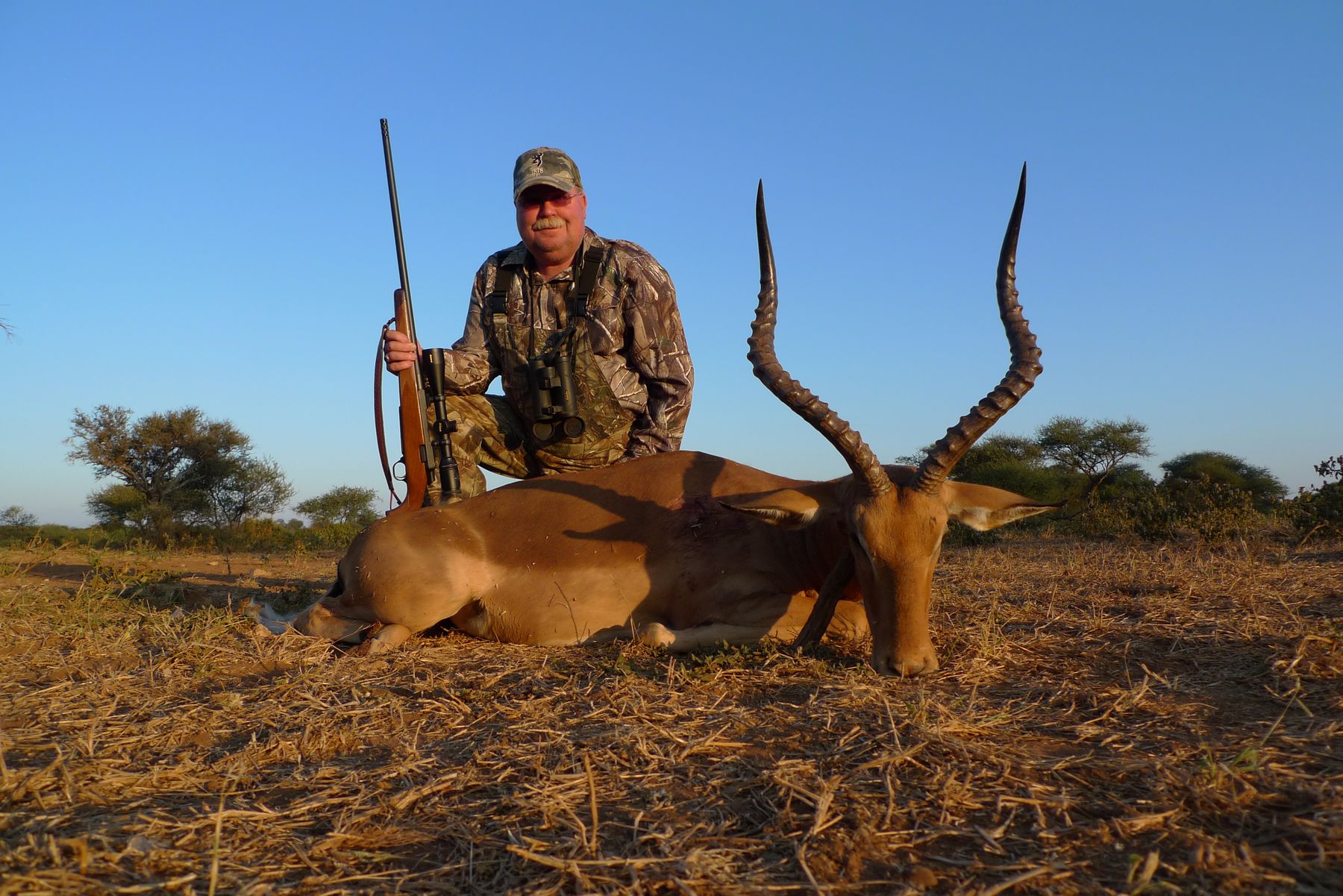
| Impala | 22"+ lyre horns | .243 to .30-06 | Accessible |
| Warthog | 9"+ upper tusks | .243 to .30-06 | Accessible |
| Gemsbok | 38"+ heavy bases | .270 to .300 | Demanding |
What is included
The daily rate, trophy fees for the animals in this package, hunting licences and permits, trackers, skinners and drivers, lodge accommodation, all meals and drinks prepared by our chef, daily housekeeping and laundry, field preparation of your trophies, and on South African hunts, delivery of your trophies to a licensed taxidermist.
Not included: gratuities, trophy fees for animals beyond the package (including any wounded but not recovered), dip and pack, shipping and taxidermy, transfers, charter and international flights, and rifle rental. We can help arrange airport transfers, on your account. Full detail is on the what's included page.
On price
This package is quoted on request, because the total depends on what you take and how long you stay. The daily rate is US$500 per hunter with one professional hunter and US$250 for a non-hunting observer, and our 2027 South African plains game trophy fees are published in full. Dangerous game and hunts in Zimbabwe and Mozambique are quoted individually. Every proposal is in writing with each trophy fee itemised. Gratuities are never included and never expected; the tipping guide sets out sensible amounts if you would like to.
This is a starting point rather than a fixed menu. Most of our safaris end up as something between two of these.