- Length
- 5–7 days
- Where
- South Africa
- Party size
- 1–6 hunters
- Season
- March to October
The safari we recommend to almost everyone making a first trip. Five to seven days on our 20,000-acre Limpopo property with a species list broad enough that you will take four to six animals. The lodge is on the ground itself, so no time is lost transferring, and a non-hunting partner is easy to accommodate.
How the week runs
You land in Johannesburg and transfer north to the property — we can help arrange it. That afternoon is for checking the rifle on the range and walking off the flight.
From there the days settle into a rhythm. Coffee before first light, out on the ground as it gets light enough to see, back to the lodge through the heat of the middle of the day, and out again from mid-afternoon until dark. Because the lodge sits on the property itself, there is no transfer eating into either end of the day — you step out of your room and you are already hunting.
Most hunters take their first animal on day one or day two. By the middle of the week you will have settled, and the animals you are passing on day five are ones you would have shot on day two.
Who it suits
This is the safari we recommend to almost everyone making a first trip to Africa, and we are not being modest about the others when we say so. Seven days and a broad species list means you learn how African hunting actually works — glassing, tracking, judging, shooting off sticks — across four to six animals rather than staking the whole trip on one.
It also suits a hunter coming back with a partner or a family member. The lodge is comfortable, the ground is varied, and a non-hunting guest has somewhere to be that is not a tent two hours from anywhere.
What to know before you book
Five days is tight and seven is comfortable. If kudu is the animal you care about most, take the seven and say so at the enquiry stage — a good bull can take three or four days on his own, and we would rather plan the week around him than have you discover on day five that you have run out of time.
The season runs March to October. June and July are the best of it. September and October are hot but the bush is at its most open.
What you would be hunting
Every animal below links to its own page, where the trophy judging, rifle and season are covered properly. The figures here are the same ones we would quote you in writing.
| Species | A good trophy | Rifle | Difficulty |
|---|---|---|---|
| Kudu | 52"+ spiral | .270 to .375 | Demanding |
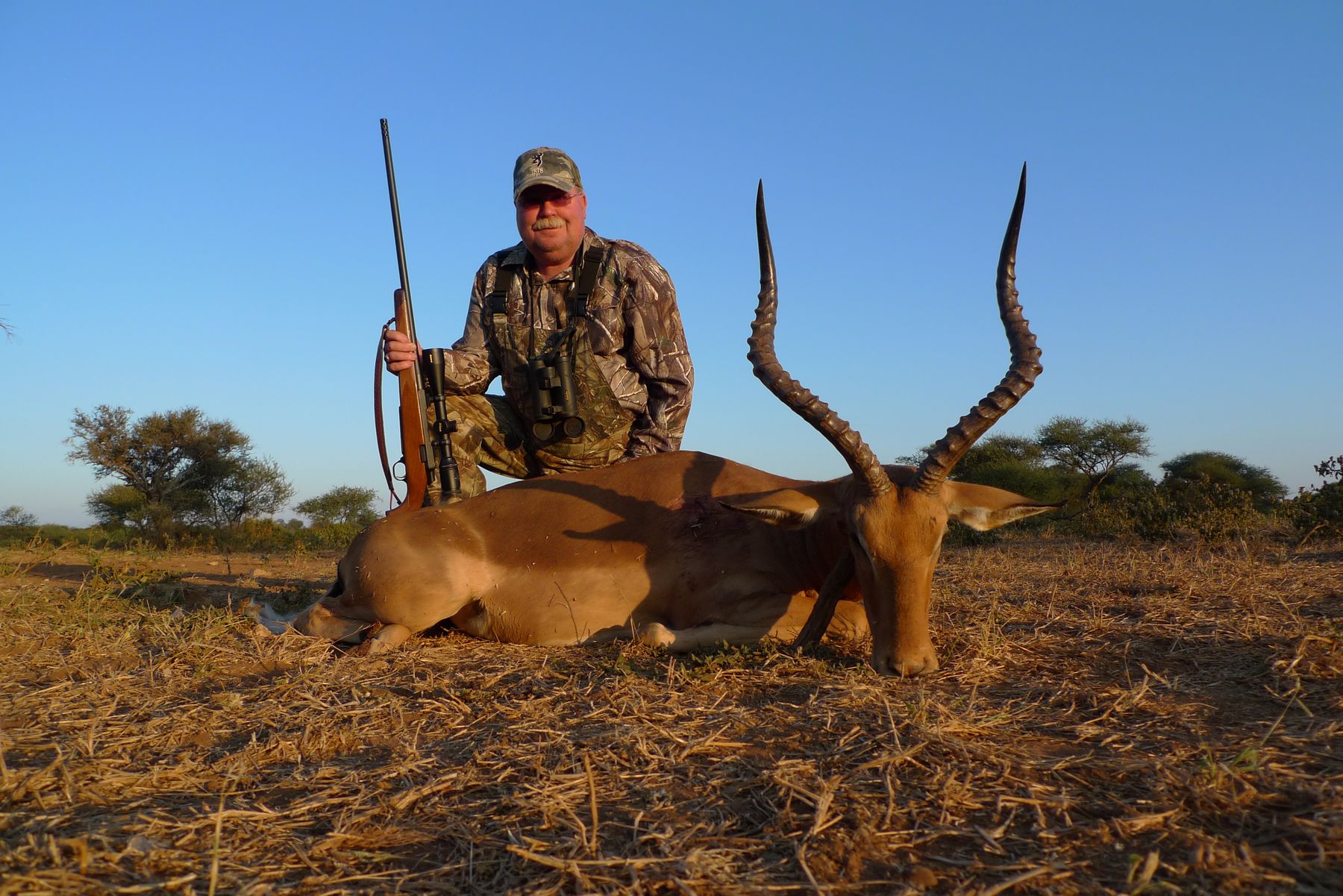
| Impala | 22"+ lyre horns | .243 to .30-06 | Accessible |
| Warthog | 9"+ upper tusks | .243 to .30-06 | Accessible |
| Blesbok | 15"+ ringed horns | .243 to .300 | Demanding |
| Blue Wildebeest | 26"+ hard boss | .30-06 and up | Accessible |
What is included
The daily rate, trophy fees for the animals in this package, hunting licences and permits, trackers, skinners and drivers, lodge accommodation, all meals and drinks prepared by our chef, daily housekeeping and laundry, field preparation of your trophies, and on South African hunts, delivery of your trophies to a licensed taxidermist.
Not included: gratuities, trophy fees for animals beyond the package (including any wounded but not recovered), dip and pack, shipping and taxidermy, transfers, charter and international flights, and rifle rental. We can help arrange airport transfers, on your account. Full detail is on the what's included page.
On price
This package is quoted on request, because the total depends on what you take and how long you stay. The daily rate is US$500 per hunter with one professional hunter and US$250 for a non-hunting observer, and our 2027 South African plains game trophy fees are published in full. Dangerous game and hunts in Zimbabwe and Mozambique are quoted individually. Every proposal is in writing with each trophy fee itemised. Gratuities are never included and never expected; the tipping guide sets out sensible amounts if you would like to.
This is a starting point rather than a fixed menu. Most of our safaris end up as something between two of these.